





 Portuguese
  English
  Spanish
  5 min of reading
  0 comments


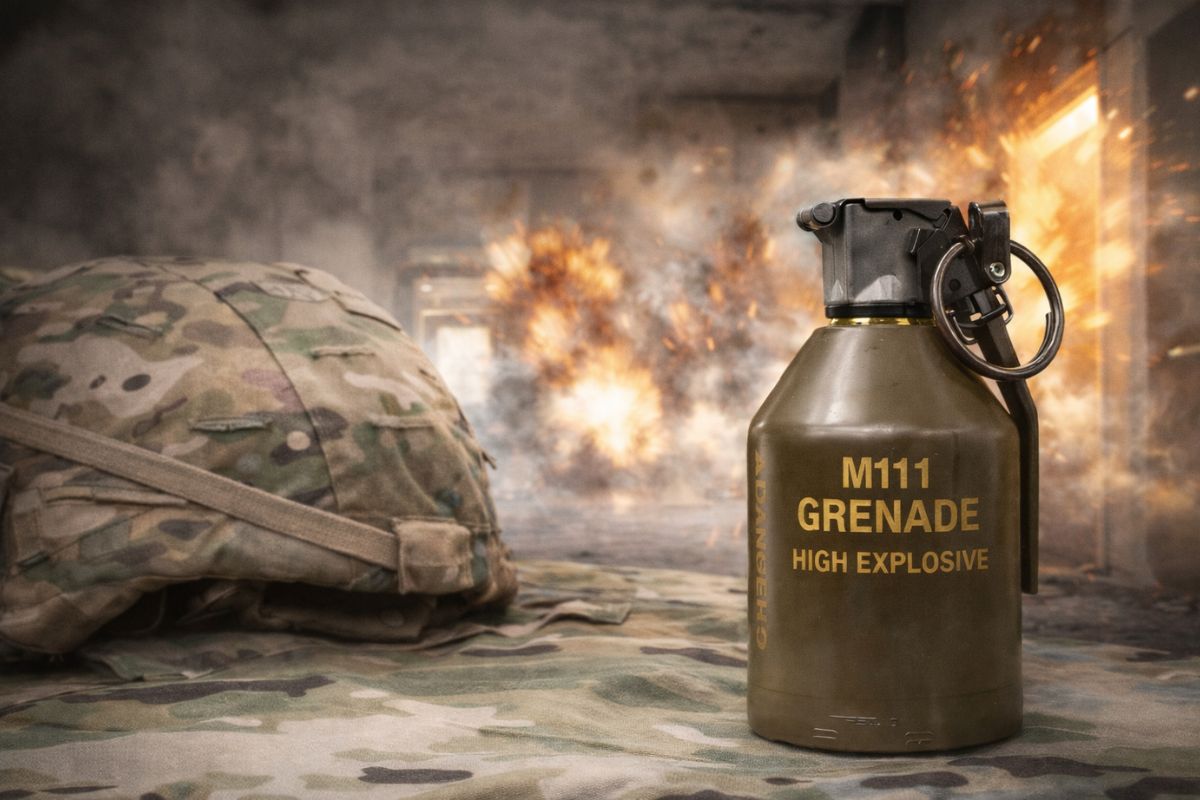
The M111 grenade is the first new lethal weapon incorporated into the arsenal of the United States Army in nearly 60 years since the Vietnam War. Instead of shrapnel, the grenade uses overpressure shock waves that reflect off the walls of enclosed spaces and can cause anything from concussion to instant death by lung explosion.
The United States Army has just introduced the first new lethal grenade since the Vietnam War. According to information from the G1 portal, the M111 grenade does not produce shrapnel; it kills using pressure shock waves that travel at the speed of sound, reflect off the walls of enclosed spaces, and can explode the enemy’s lungs. It is a technology called Blast Overpressure (BOP), specifically designed for close-quarters urban combat, the type of scenario that defines 21st-century wars.
The last lethal grenade incorporated into the American arsenal was launched in 1968, during the Vietnam War, nearly 60 years ago. The M111 grenade will be used alongside the M67, the standard fragmentation grenade of American troops since the 1960s, but with a fundamental difference: while the M67 relies on shrapnel, the M111 grenade uses pure pressure. And in confined environments like rooms, hallways, and bunkers, pressure finds no obstacles. It reflects, multiplies, and has nowhere to hide.
How the M111 grenade kills without producing a single shard

The M111 grenade operates on a different principle than any conventional grenade. Upon detonation, it violently compresses the air and produces a pressure wave that travels at the speed of sound.
-
The heatwave in Brazil that hit in March is set to end as a cold front arrives between Good Friday and Easter Sunday, causing a temperature drop of up to 6 degrees and rain in the Central-South region, according to the Easter weather forecast.

-
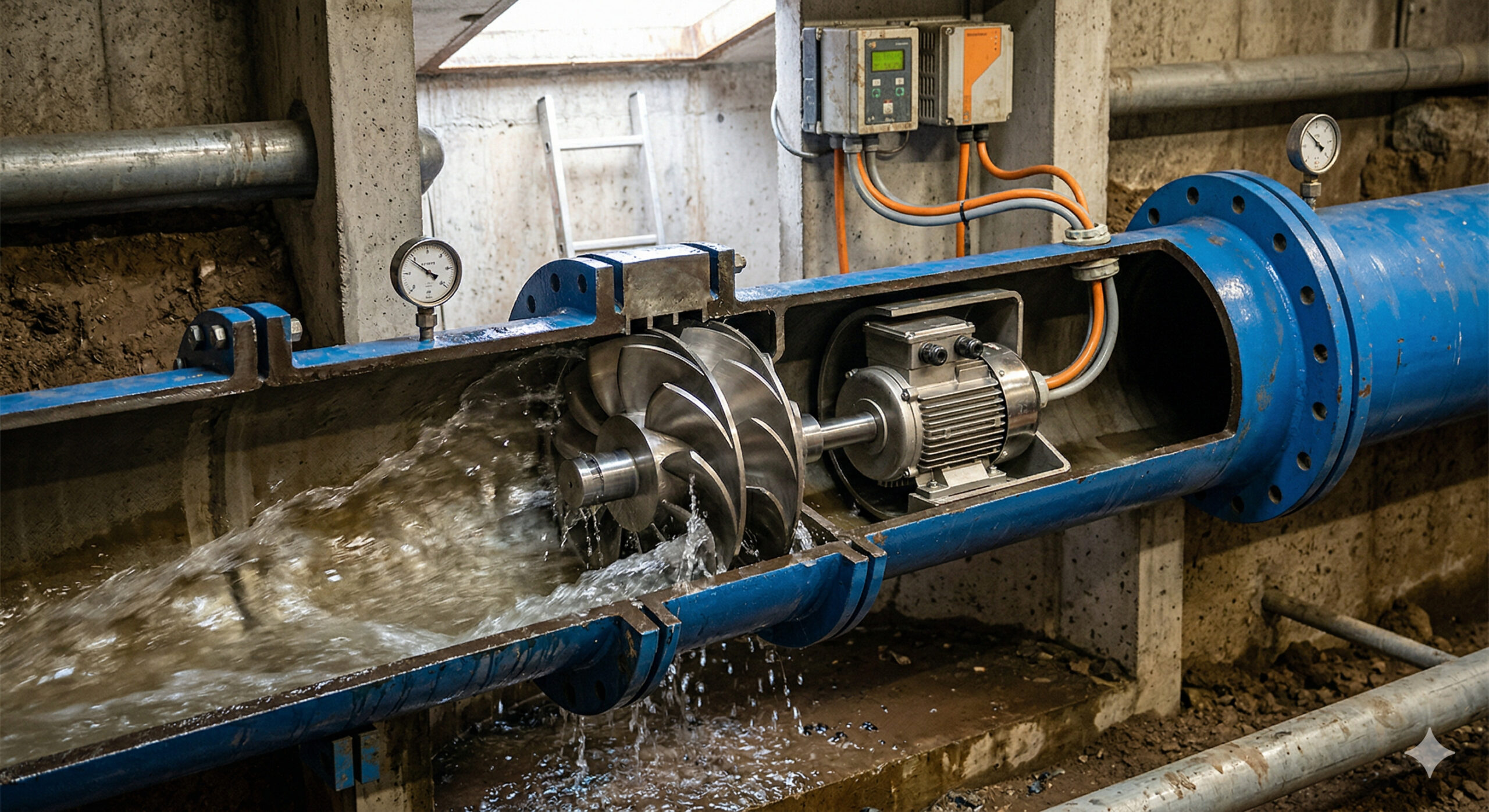
Engineers are replacing pressure valves with hydraulic microturbines within drinking water networks and are generating up to 1,100 MWh per year with in-pipe hydropower technology that harnesses energy previously wasted in urban pipelines.
-
Elon Musk focused on Brazil and lowered the price of Starlink, his internet service, but the question remains: is it worth it? An expert provides a detailed analysis of the internet that promises to connect any part of Brazil.

-
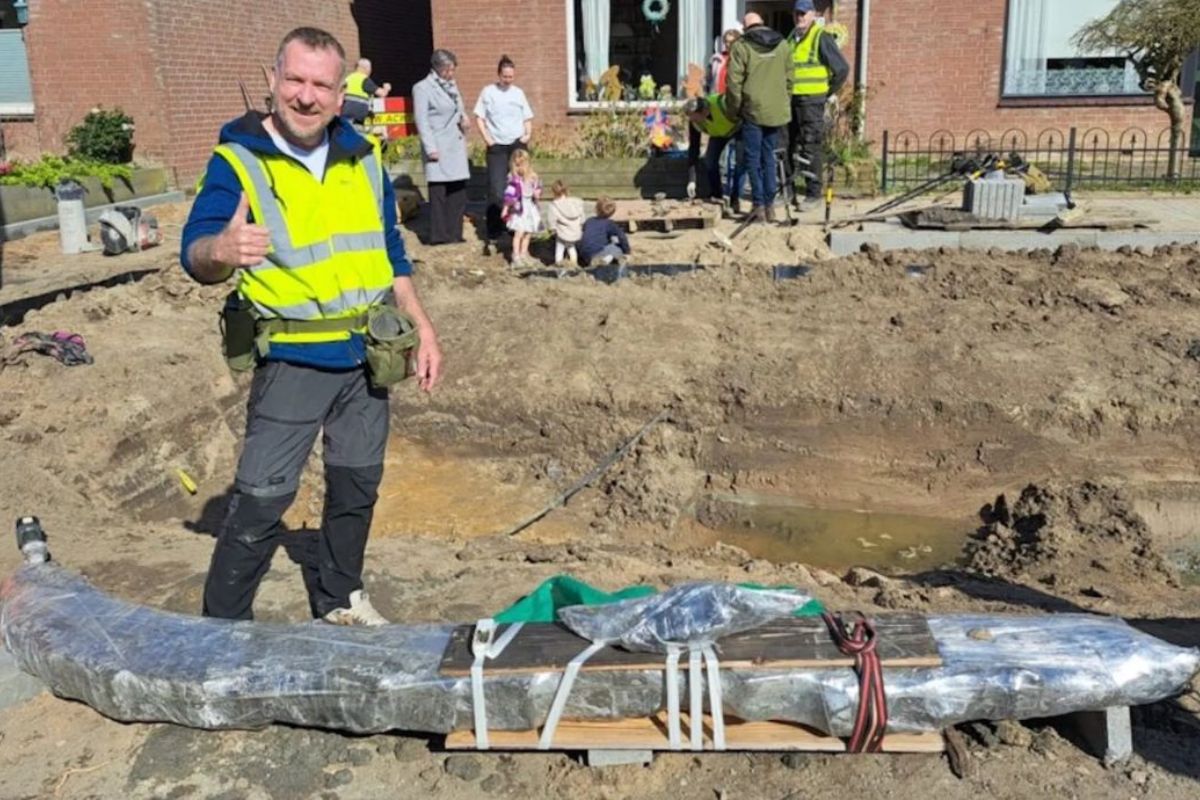
Workers were performing maintenance on the sewage system when they found a 3.2-meter beam that may be part of a 1,300-year-old Viking ship buried under the pipes since the medieval period in Europe.
In a confined space, this shock wave from the grenade reflects multiple times off the walls and surfaces, creating multiple pressure waves that add up. The atmospheric pressure is multiplied at the center of the explosion and then drops sharply, creating a temporary “vacuum wave” effect.
This brutal pressure variation is what gives the technology its name: overpressure explosion. Unlike a fragmentation grenade, which relies on pieces of metal flying at high speed, the M111 grenade uses the air itself as a weapon.
There are no shrapnel to protect against; the grenade’s shock wave penetrates any position within the environment. It is the type of weapon designed for scenarios where the enemy is entrenched in rooms, buildings, or urban structures.
What the shock wave of the M111 grenade does to the human body
The effects of the M111 grenade on the human body depend on the intensity of the pressure wave and the distance. A moderate impact from the grenade can cause minor bleeding in the lungs, eardrum rupture, and mild concussion. A high-pressure impact can cause severe lung injuries, internal bleeding, and brain trauma.
A very high-pressure impact, such as that generated by the M111 grenade in a confined environment, can literally explode the lungs, cause widespread internal bleeding, and, in some cases, instant death.
The U.S. Army classifies the grenade as more effective than the M67 in enclosed spaces precisely because the overpressure explosion is not affected by obstacles: furniture, internal walls, and improvised barriers do not block the grenade’s pressure wave as they would shrapnel.
Why the M111 grenade is the first in 60 years and what the Vietnam War has to do with it
The last lethal grenade adopted by the U.S. Army was the M67, introduced in 1968 during the Vietnam War. The M67 is a classic fragmentation grenade: upon exploding, its metal casing shatters into hundreds of shards that fly in all directions, causing injury or death by piercing.
It remains the standard grenade for American forces and will not be replaced by the M111; both will be used together.
The M111 grenade fills a gap that has existed for decades. In modern urban combat, where soldiers need to enter rooms and buildings, a fragmentation grenade like the M67 can be dangerous for the troops themselves; shrapnel does not distinguish friend from foe.
The M111 grenade, by using pressure instead of fragmentation, offers a lethal option with greater control in confined environments, where close-quarters combat is the reality. The Army describes the grenade as a “significant tactical advantage on the battlefield.”
The M111 grenade and the future of urban combat: what changes on the battlefield
The U.S. Army stated in a statement that the M111 grenade “gives military personnel the ability to engage more effectively in short-range urban environments.”
The grenade was designed for scenarios where tactical entries into rooms or buildings are frequent—exactly the type of combat that dominates modern conflicts in cities. There is currently no evidence that the M111 grenade will be used in the war against Iran.
The overpressure technology of the M111 grenade represents a paradigm shift: instead of projecting metal against the enemy, it projects compressed air at the speed of sound. And in an enclosed environment, where the grenade’s pressure waves reflect and multiply, there is no possible shelter.
This is the first time in nearly 60 years that the American Army adds a lethal grenade to its arsenal, and the choice of a pressure-based weapon, rather than fragmentation, says a lot about how wars will be fought in the coming decades.
A grenade that uses air as a weapon: what the M111 says about the future of war
The M111 grenade is not just a new weapon; it is a shift in how the U.S. Army thinks about combat in enclosed spaces.
No shrapnel, no fragmentation, no flying metal: just a pressure shock wave that reflects off the walls and leaves no place to hide. It is the first new lethal grenade in nearly 60 years, and it was designed for the type of warfare that armed forces are most engaged in today in cities, buildings, and hallways.
The M67 grenade killed with metal. The M111 grenade kills with air. And on the 21st-century battlefield, where combat occurs within four walls, air can be more lethal than any shrapnel.
What do you think of a grenade that kills with pressure waves instead of shrapnel? Should this type of weapon be regulated internationally? Leave your opinion in the comments.





Seja o primeiro a reagir!