





 Portuguese
  English
  Spanish
  4 min of reading
  0 comments


The Nuclear Force of the United States Includes 5,550 Warheads, Submarines That Operate for 90 Consecutive Days, and Missiles with a Range of 13 Thousand Km Ready for Immediate Launch.
In the event of a nuclear attack, the US President has between 10 and 15 minutes to order a retaliation with the nuclear force capable of changing the fate of the planet. Therefore, the country maintains a three-pronged system, land, sea, and air, designed to ensure destruction in any scenario.
The Nuclear Power of the US Exceeds 5 Thousand Warheads and Combines Reserve, Readiness, and Global Precision Missiles
The United States has approximately 5,550 nuclear warheads, according to estimates that sum up active arsenals and strategic reserves. Within this volume are about 650 B83 bombs, gravity weapons designed to destroy highly fortified underground targets.
-
How an innovative city combines high technology, well-being, and sustainability to become the largest reference in clean energy on the planet.

-
Couple buys 1846 church in ruins for R$ 660,000, invests R$ 3.2 million in renovations, transforms it into a millionaire mansion, and even preserved a historic cemetery with over 300 graves.

-
He started running at 66 years old, broke records at 82, and is now a subject of study for having a metabolic age comparable to that of a 20-year-old, in a case that is intriguing scientists and inspiring the world.

-
Oldest tree on the planet reappears after 130 years of searches: Wattieza, 385 million years old, was 10 meters tall and had no leaves or seeds; Gilboa fossils in New York solved the mystery in 2007.

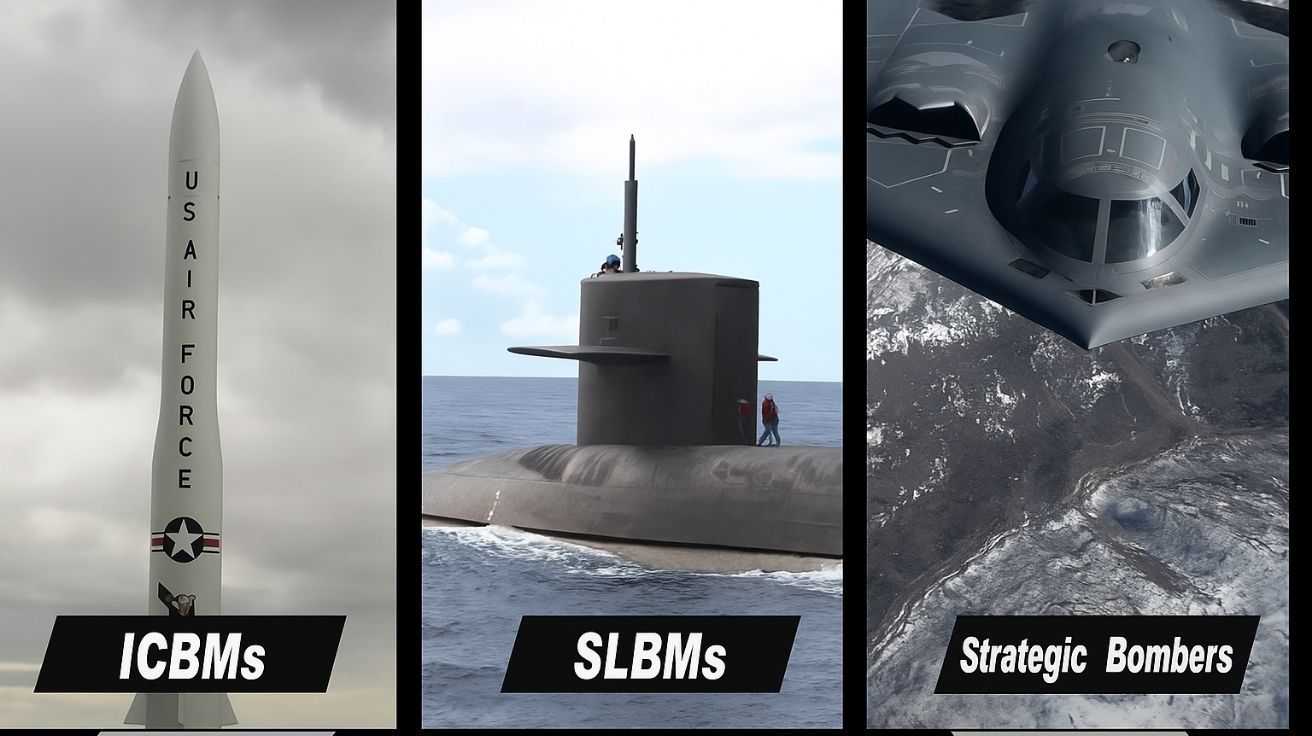
In addition to the bombs, the American arsenal includes two main types of nuclear-capable missiles: the Minuteman III, launched from ground silos, and the Trident II, installed on submarines. Both are central elements of the nuclear triad, the foundation of US deterrence strategy.

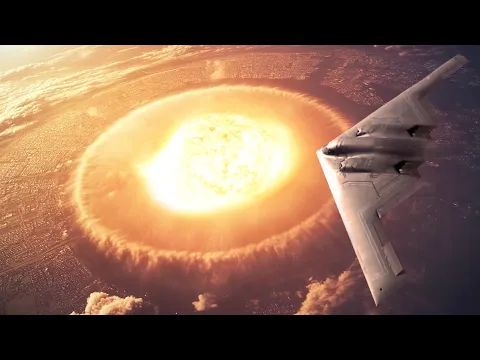

How the Nuclear Triad Works: Missiles in Silos, Hidden Submarines, and Bombers on Alert
The triad consists of three strategic components:
- 400 Minuteman III missiles in silos in the states of Montana, North Dakota, Wyoming, Colorado, and Nebraska. Each has a range greater than 13,000 km and a yield of up to 475 kilotons.
- 14 Ohio-class submarines, with 20 Trident II missiles each, patrol the oceans from bases in Washington and Georgia. These missiles have a range of 12,000 km and an accuracy of less than 100 meters.
- Strategic bombers, such as the B-2 Spirit and the B-52, which can launch nuclear bombs from bases in US or foreign soil.
This structure ensures the capability to respond even if one or two fronts are neutralized.
Satellite Detection System and Ground Radars Identify Missiles in Seconds
A nuclear attack against the US would trigger a three-phase alert system. The boost phase detects the launch with infrared sensors in orbit, through the Space-Based Infrared System (SBIRS). Soon after, ground radars confirm the threat based on the Ground-Based Midcourse Defense.
During the midcourse phase, the missile reaches space, traveling at Mach 20, about 24,000 km/h. This is the critical moment for attempting interceptions. In the terminal phase, the warhead reenters the atmosphere and impact becomes almost inevitable.
US President Can Authorize Retaliation in Up to 15 Minutes with Codes Kept in the “Football”
The response to a nuclear attack is centralized in the president. He has a period of 10 to 15 minutes to authorize retaliation, using a system known as the “Football”, a briefcase with codes and attack plans.
Inside it are:
- The “biscuit”, the president’s authentication card.
- The “black book”, which contains multiple attack options: limited, selected, or total.
- A direct channel with the National Military Command Center (NMCC).
If the president is incapacitated, the chain of command automatically passes to the vice president or another designated official, ensuring the continuity of the response decision.
Historic Nuclear Plan Predicted 3,200 Warheads and More than 285 Million Deaths in Total Attack
The US nuclear war plan, known as the SIOP (Single Integrated Operational Plan), was created in 1961 and remained in effect until 2003. Its first version, the SIOP-62, envisioned the use of all 3,200 nuclear warheads at the time in an attack against the USSR, China, and allies.
The total yield would be equivalent to 8,000 megatons of TNT, or more than 500,000 Hiroshima bombs. The estimated casualties exceeded 285 million deaths just among the primary targets. Even smaller countries like Albania would be completely destroyed for hosting Soviet military assets.
In the following decades, the plan was adapted for gradual attacks, preserving less destructive options. But recent simulations, like one from Princeton University, suggest that even a “limited” war between Russia and the US would cause more than 90 million dead and injured in the first hours.
The nuclear threat Still Defines the Global Balance, Even 60 Years After the Creation of the SIOP. Do You Believe This Type of Armament Can Still Ensure Peace? Share with Those Who Need to Understand the Weight of These Decisions.







-

Uma pessoa reagiu a isso.