





 Portuguese
  English
  Spanish
  6 min of reading
  0 comments


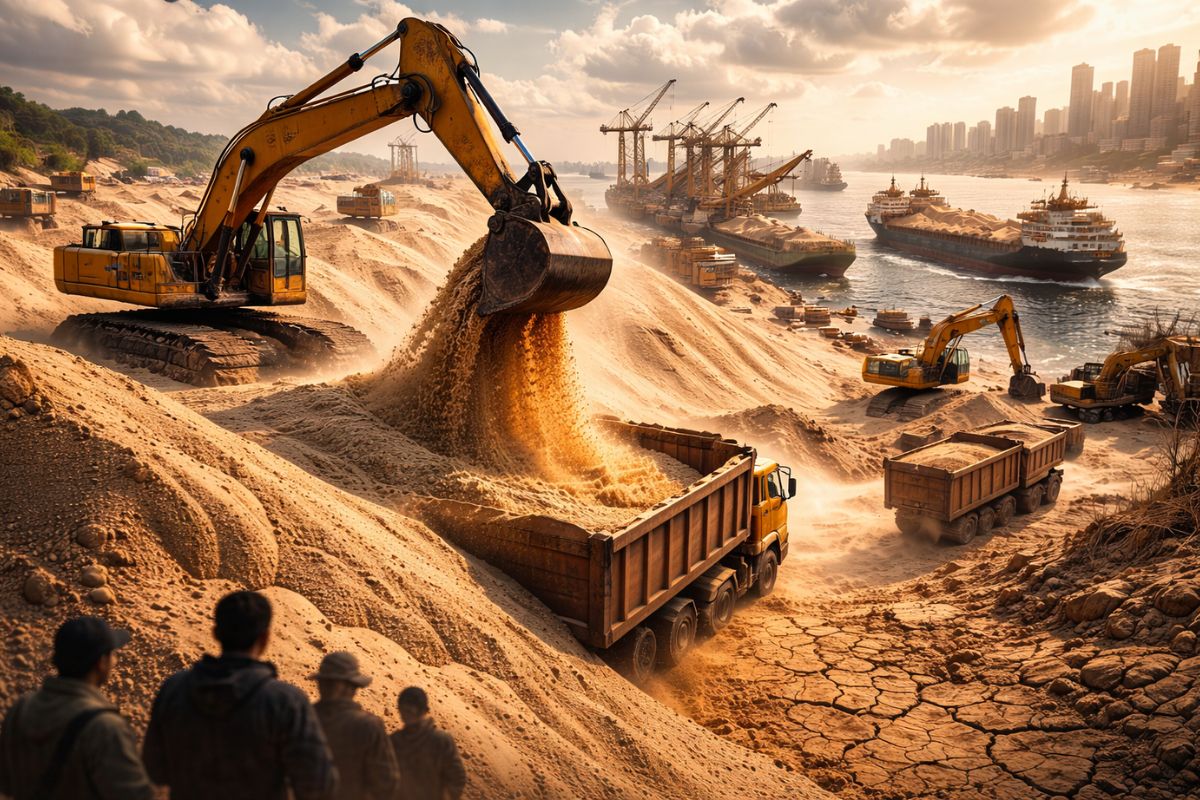
Sand is the second most consumed natural resource on the planet after water, but its extraction is not regulated in large parts of the world: the UN has already warned that the current rate of 50 billion tons per year is unsustainable and that the depletion of this resource has even generated an international mafia.
It may seem absurd to say that the world is running out of sand. It is on the beaches, in the deserts, in the rivers, everywhere. But the sand you see on the beach is not the same as the one that builds cities. The construction industry needs sand with rough and angular grains, found in riverbeds, lakes, and coastlines. Desert sand, eroded by the wind, has grains that are too smooth to bond in concrete. And it is precisely this useful sand that is being extracted at a rate that the planet cannot replenish.
The United Nations Environment Programme (UNEP) estimates that 50 billion metric tons of sand are extracted each year, a volume sufficient to build a wall 27 meters high by 27 meters wide around the Earth. The extraction grows about 6% per year and has tripled in the last two decades. The UNEP itself classified the situation as a crisis that has been “neglected” and called for sand to be recognized as a strategic resource. Meanwhile, an international mafia already controls part of this trade, with murders and bribes. This is not a movie plot. It is reality.
Why sand is so important and is everywhere around you

Sand is in the buildings where you live, on the streets you walk, and probably in the device you are using to read this text. The main ingredient of concrete? Sand.
-
With a length of 211 meters, a double iron hull, and propulsion by sails, paddles, and a screw propeller simultaneously, the Great Eastern was the largest ship on the planet and ultimately laid the first successful transatlantic telegraph cable.

-
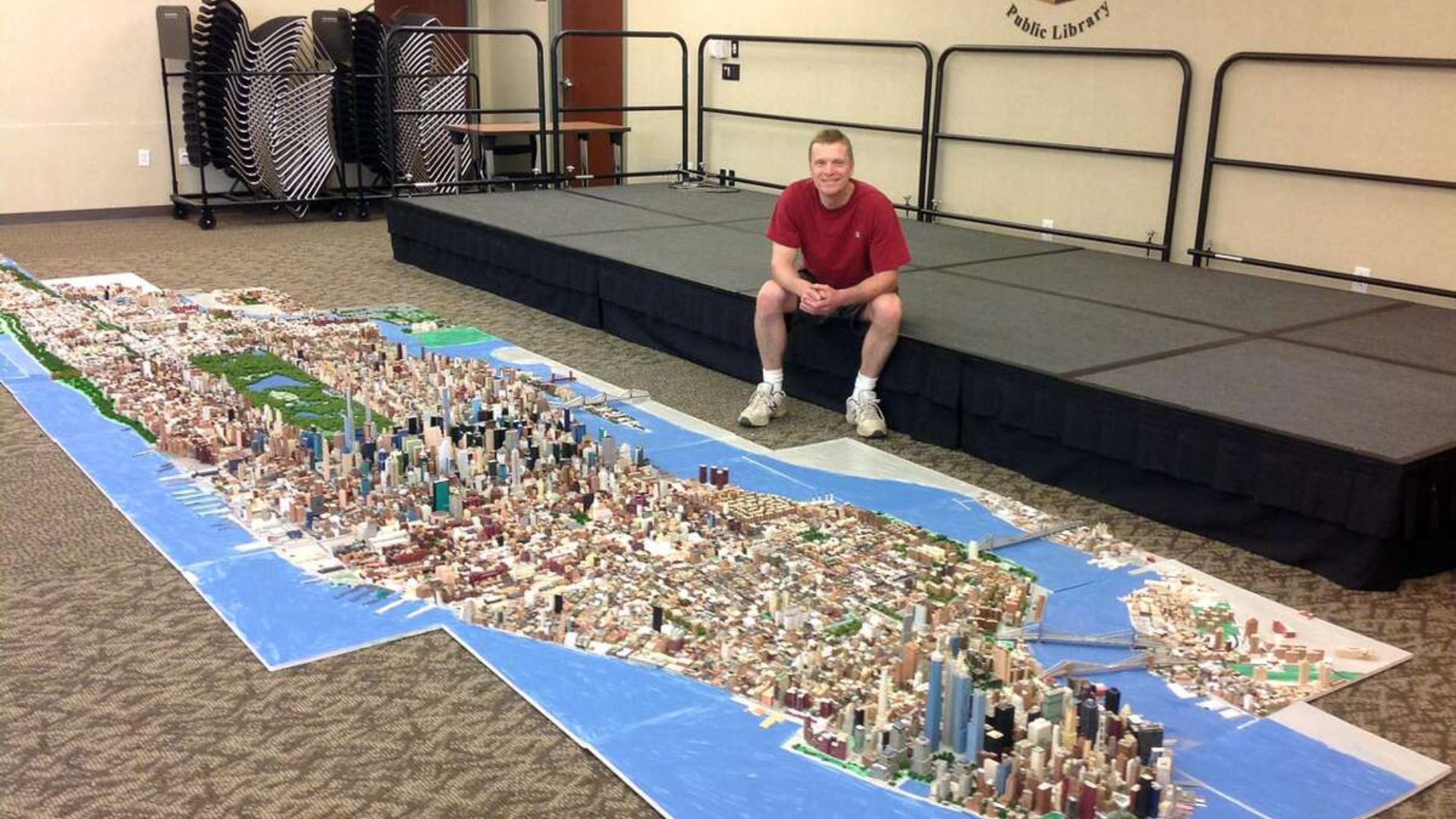
A truck driver spent 21 years building a 15-meter replica of New York using balsa wood, cardboard, and regular glue; the work, featuring hundreds of thousands of buildings, has become an attraction in a museum in the city itself.
-
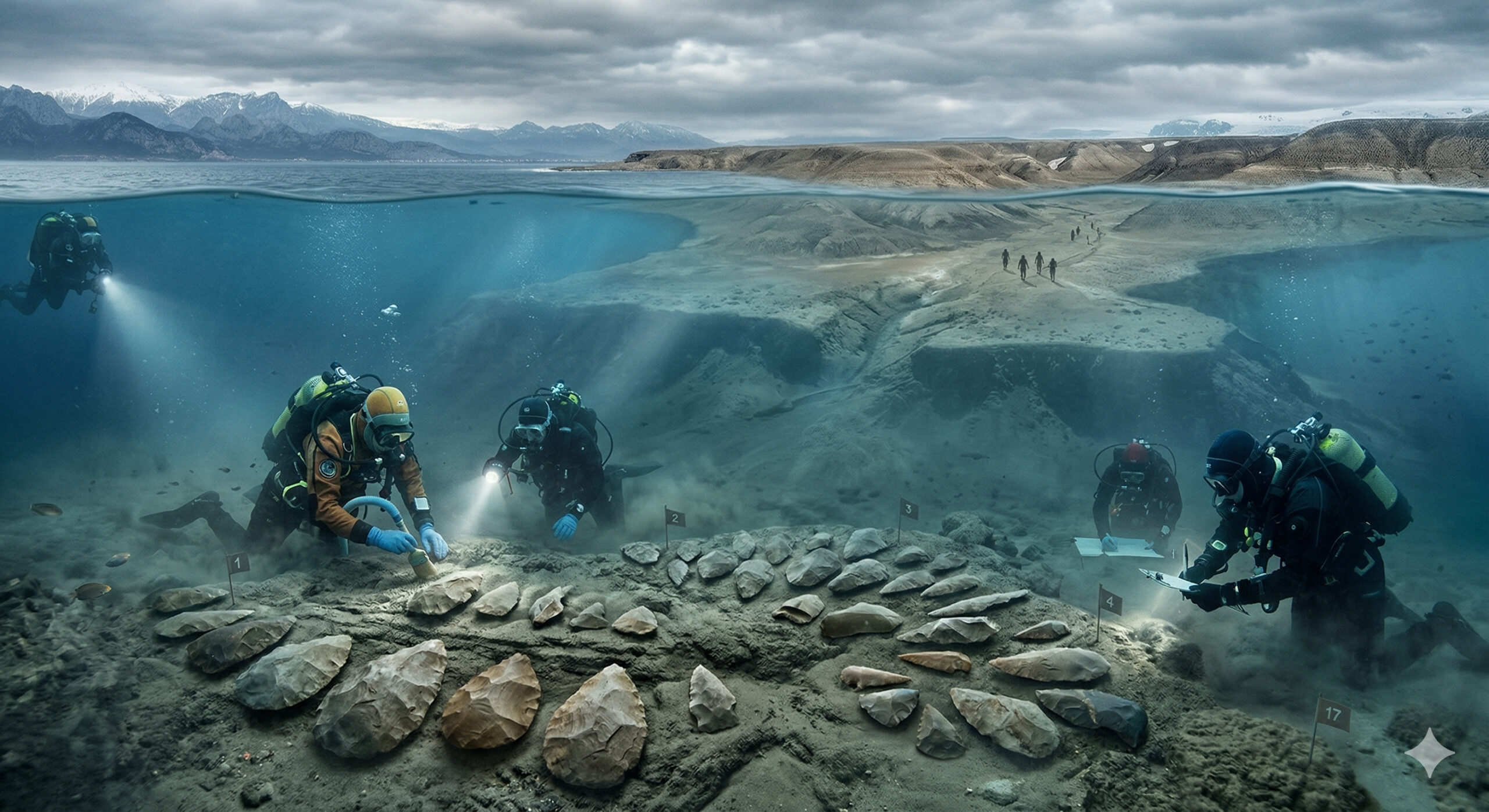
More than 138 stone tools found on the seabed between Turkey and Europe reignite the hypothesis of a lost land bridge from the Ice Age that may have been used by humans to cross continents.
-
Argentina places the first U.S. Stryker 8×8 armored vehicles in operational units, while Brazil sets a record of $3.1 billion in military exports, reaching 140 countries and strengthening the Defense Industrial Base.


What is glass? Melted sand. What is the basis of silicon, the element that drives the technology industry and the manufacturing of chips and cell phones? Sand. Sand is the most extracted solid material in the world and the second most used natural resource on the planet, second only to water.
Besides construction and technology, sand plays essential environmental roles that are rarely discussed. It is an important factor in storm protection, ensures healthy natural habitats for various species, and protects against coastal erosion.
When sand is removed from sensitive areas without control, it harms biodiversity, causes salinization of aquifers, destroys fishing grounds, and removes the natural barrier that protects coastal communities from storm surges and rising sea levels. Sand is not just raw material. It is natural infrastructure.
The sand mafia exists and has killed for it
The sand extraction sector is not regulated in large parts of the world. This lack of oversight, combined with growing demand, has created a predictable scenario: organized crime has entered the business.
According to journalist Vince Beiser, author of investigations on the subject, “organized crime has taken over the sand business. They do what mafias do anywhere. They bribe the police. And if you really get in their way, they kill you.”
This sand mafia operates mainly in countries like India, Indonesia, and other regions of Southeast Asia, where the demand for construction is intense and oversight is weak. Small islands in Southeast Asia have been devastated by illegal sand mining.
In the Mekong River delta, excessive extraction has caused the delta to sink and the salinization of previously fertile lands, threatening agriculture and local livelihoods. China alone consumes approximately half of all the sand used in the world, a colossal volume that fuels the fastest urbanization rate in history.
What the UN recommends to avoid the sand collapse
UNEP has published two central reports on the subject: one in 2019, which first warned of the crisis, and another in 2022, titled “Sand and Sustainability: 10 Strategic Recommendations to Avert a Crisis.”
The agency advocates that sand be recognized as a strategic resource at all levels of government and calls for the creation of a central authority to monitor global use.
Among the recommendations are: establishing an international standard for sand extraction in marine environments, creating incentives for construction projects that dispense with natural sand, and promoting alternatives such as crushed rock, recycled construction and demolition material, and mineral sand (a byproduct of mining).
Germany, for example, already recycles 87% of its aggregate waste. Pascal Peduzzi, UNEP coordinator for the report, summarized: “Our sand resources are not infinite, and we need to use them wisely. We cannot extract 50 billion tons per year of any material without causing massive impacts on the planet.”
Desert sand is useless and this is part of the problem

image: Super. abril
One of the most counterintuitive aspects of this crisis is that the world is full of sand, but not the right kind of sand. Desert sand, eroded by thousands of years of wind, has rounded and too smooth grains to interlock in the concrete mix.
Therefore, the construction industry needs sand extracted from rivers, lakes, and coastlines, where water erosion produces angular and rough grains. Natural sand takes thousands, sometimes hundreds of thousands of years to form. Most originates in the mountains and shapes along the river’s path to the ocean.
This mismatch between natural formation and human consumption is at the center of the crisis. Accelerated urbanization, especially in Asia and Africa, demands ever-increasing volumes of sand for construction. More than half of the world’s population lives in cities, and this number is only growing.
The Marine Sand Watch platform, launched by UNEP, estimates that between 4 and 8 billion tons of marine sand are dredged each year, equivalent to 1 million truckloads per day. And between 2018 and 2022, up to one-sixth of this dredging occurred in protected marine areas, zones that should serve as sanctuaries for aquatic life.
The sand crisis has arrived and is not going to disappear
Sand feeds the materials that build a growing world. It is in the concrete of buildings, in the glass of windows, in the asphalt of streets, and in the chips of cell phones. It is nothing more and nothing less than the physical foundation of modern civilization.
And what the UN is saying, increasingly emphatically, is that this foundation is being destroyed faster than it can be replenished.
The solution involves regulation, recycling of construction materials, development of alternatives, and, above all, a change in mindset: understanding that sand is not an infinite resource.
As Peduzzi wrote in the UNEP report: “If we can understand how to manage the most extracted solid material in the world, we can avert a crisis and move towards a circular economy.” The sand crisis is already here. The question is whether we will act before it becomes irreversible.
Most people have never thought of sand as a scarce resource.
But it is. And the current rate of extraction has already generated environmental crises, mafias, murders, and UN alerts. All because of something we walk on at the beach without a second thought.
And you, did you already know that sand was running out? Does this change the way you look at a building or a sidewalk? Let us know in the comments.






Seja o primeiro a reagir!