





 Portuguese
  English
  Spanish
  6 min of reading
  0 comments


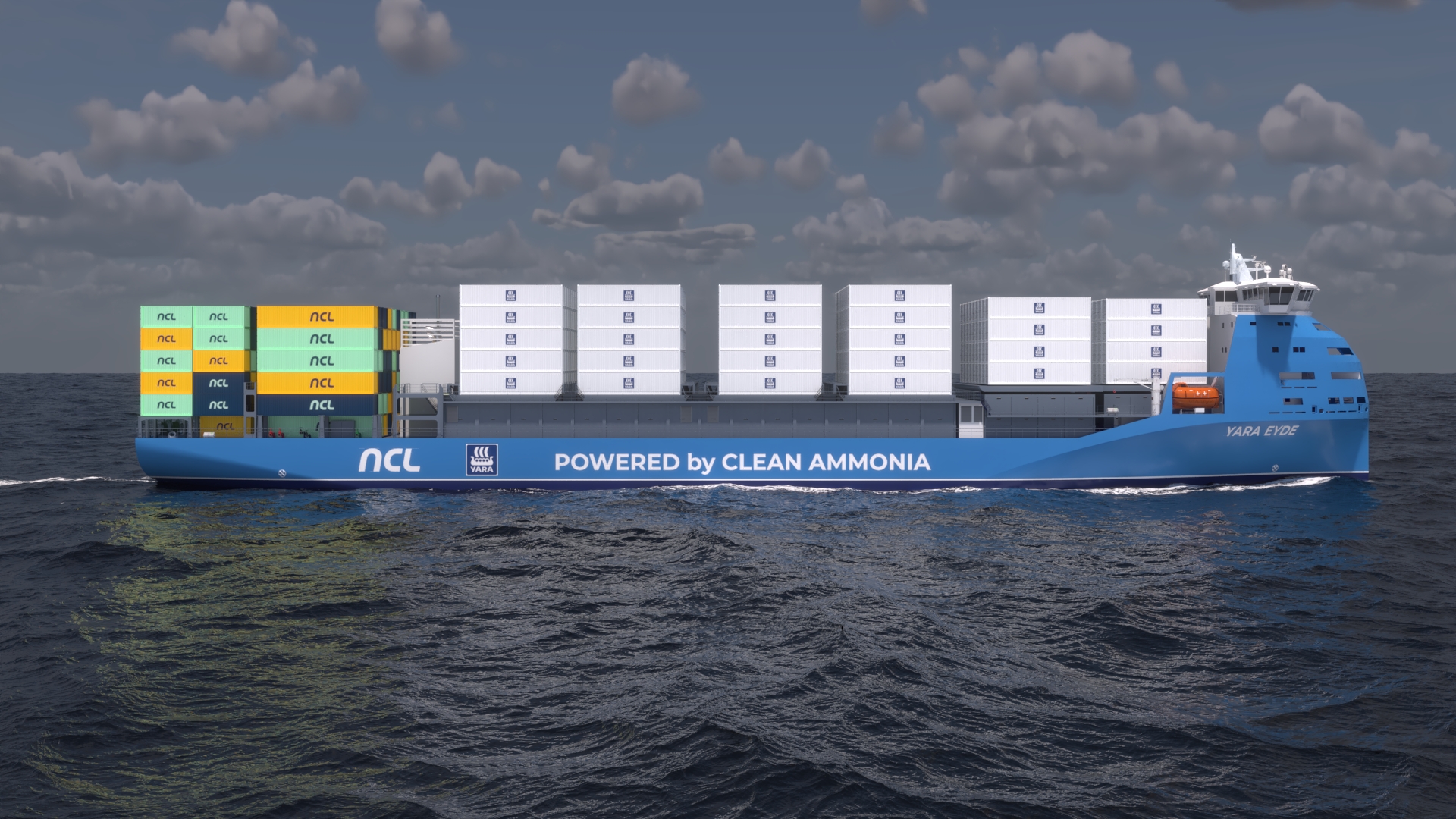
Ammonia-powered ship promises to cut 11 thousand tons of CO₂ per year and inaugurate a new era of maritime transport in Europe starting in 2026.
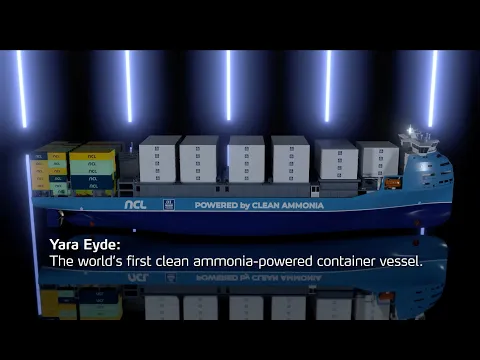
In 2023, Yara International officially announced the development of the Yara Eyde, a container ship designed to operate with renewable ammonia as its main fuel. According to the company itself, in partnership with North Sea Container Line, the project was conceived to become the world’s first clean ammonia-powered container ship, marking one of the most concrete attempts to introduce a carbon-free fuel into regular commercial operations in maritime transport.
The vessel is expected to enter operation by the end of 2026 and will operate on a short route in northern Europe, connecting ports in Norway, Germany, and also in the Netherlands, according to the latest official project material, which describes the Oslo–Porsgrunn–Bremerhaven–Rotterdam corridor. The goal is to replace fossil fuel-powered vessels with an alternative that, by using ammonia as an energy source, advances the decarbonization of maritime transport and significantly reduces emissions from the logistics chain.
The Yara Eyde thus emerges as one of the first projects in the world to move from the conceptual stage to practical application on a commercial scale using ammonia as marine fuel. According to Yara, the vessel was designed to enable a low-emission shipping route between Norway and the European continent, functioning not only as a technological demonstration but also as a real commercial operation aimed at the energy transition of the naval sector.
-
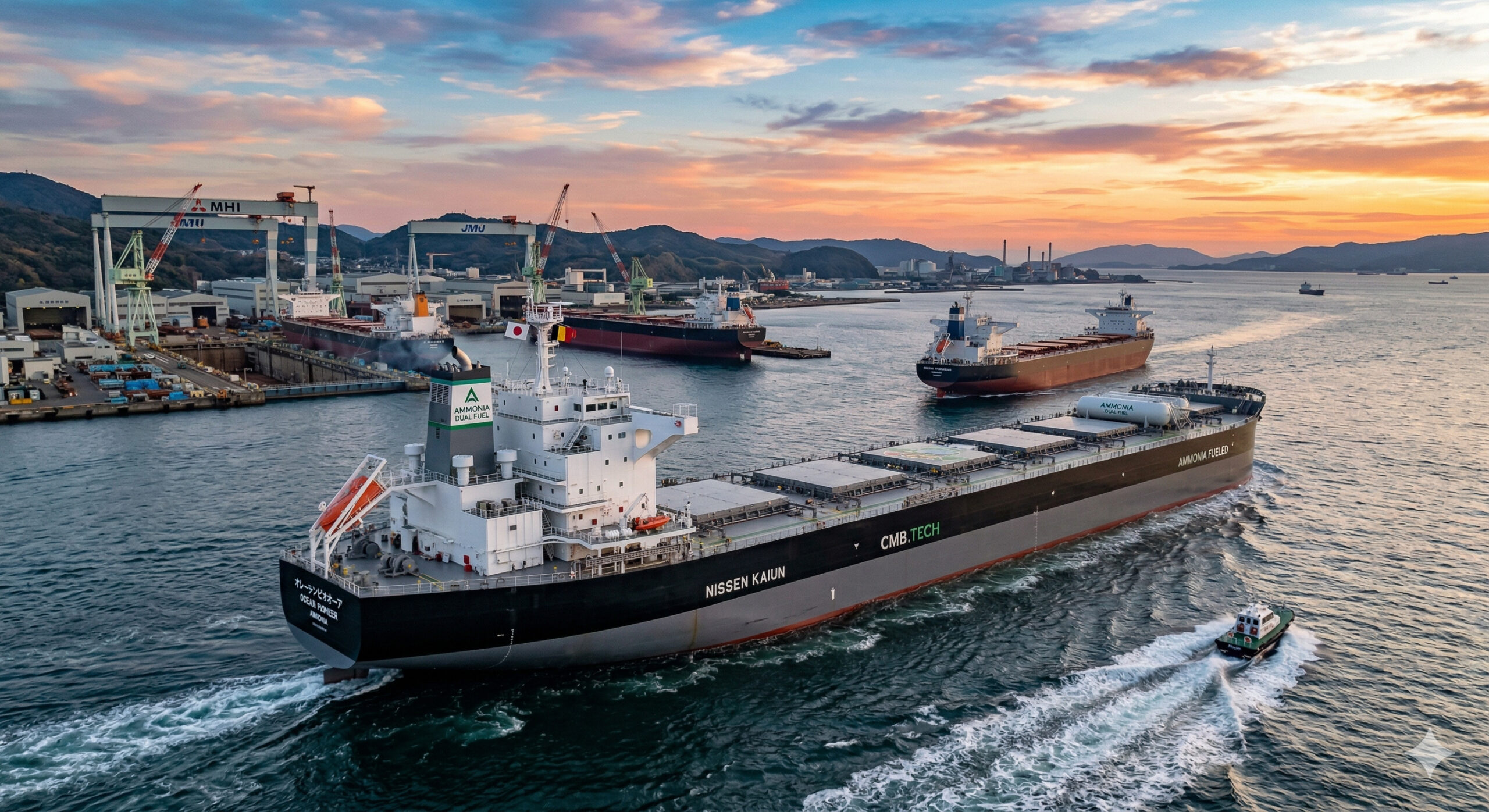
Nine giant ships of up to 210,000 gross tons equipped with dual fuel ammonia engines are being launched by Japan and Belgium. The project includes the world’s first Capesize vessels using this fuel, with contracts of up to 12 years, marking the beginning of a carbon-free ocean fleet starting in 2026.
-
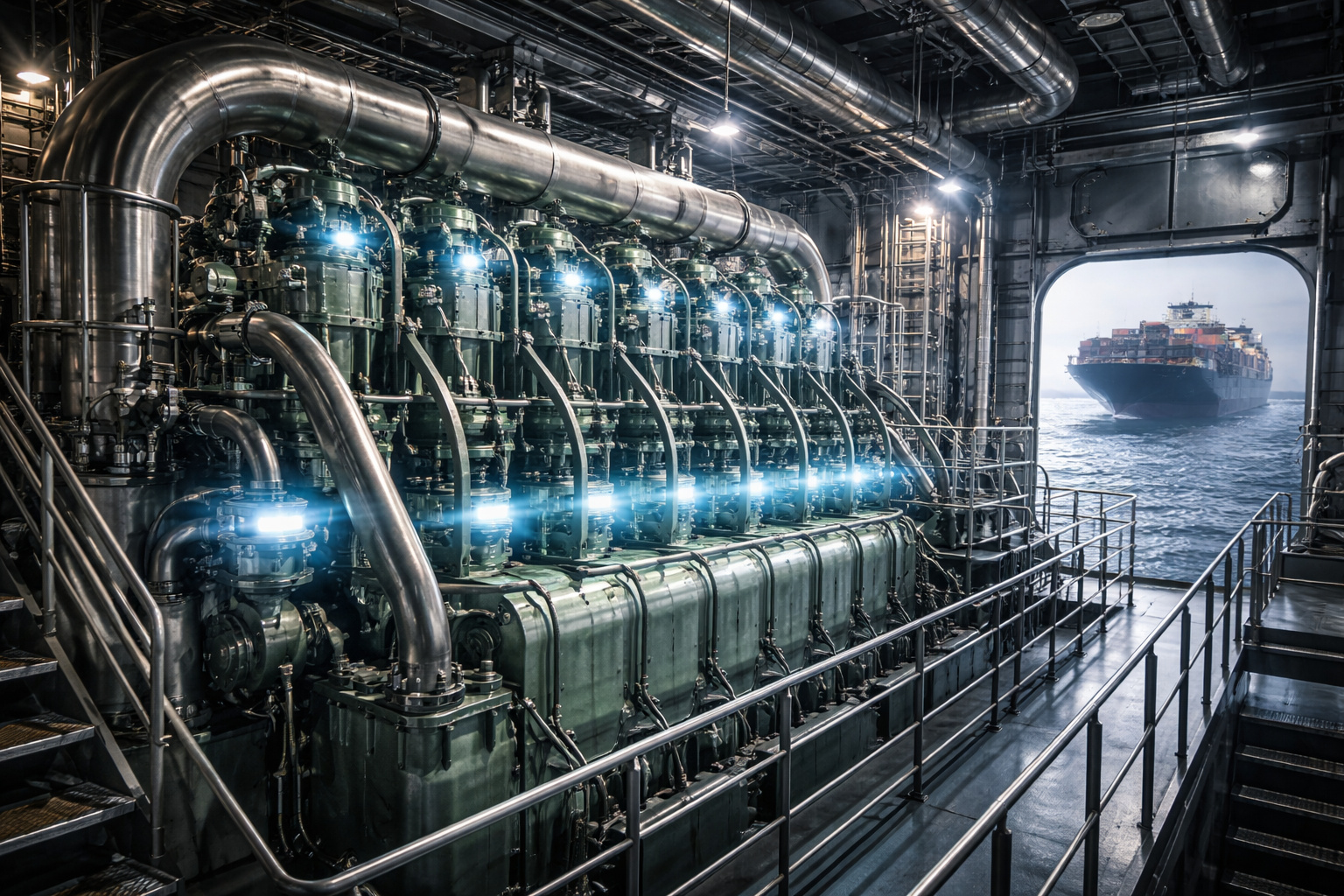
Europe is trying to create an ammonia-powered marine engine without auxiliary fuel, which could unlock the race for giant emission-free ships. The technology aims to eliminate one of the biggest obstacles to clean maritime propulsion.
-
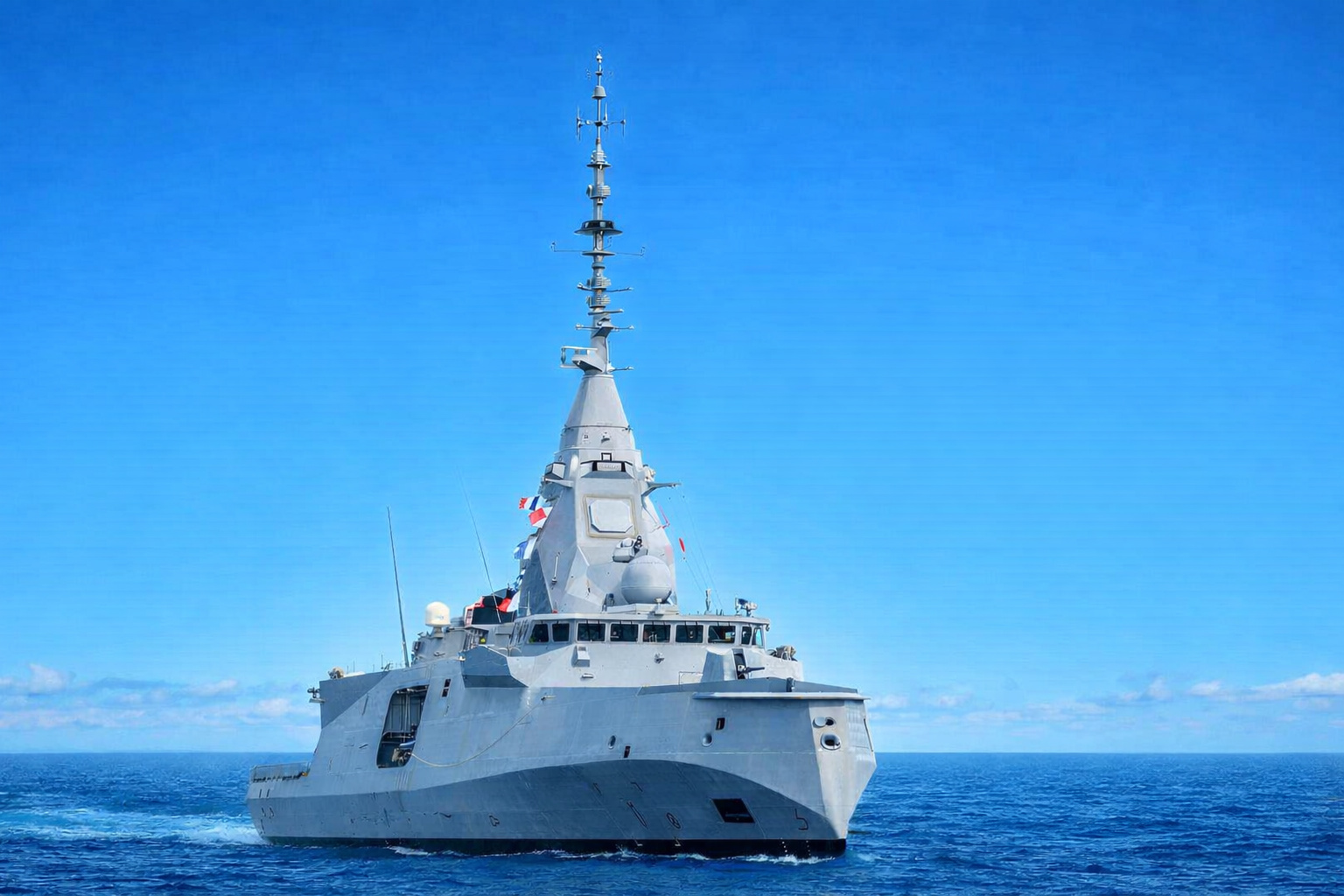
A 4,500-ton frigate with just over 100 crew members, state-of-the-art radar, and cruise missiles is being touted as the new standard of naval warfare in the 21st century.
-
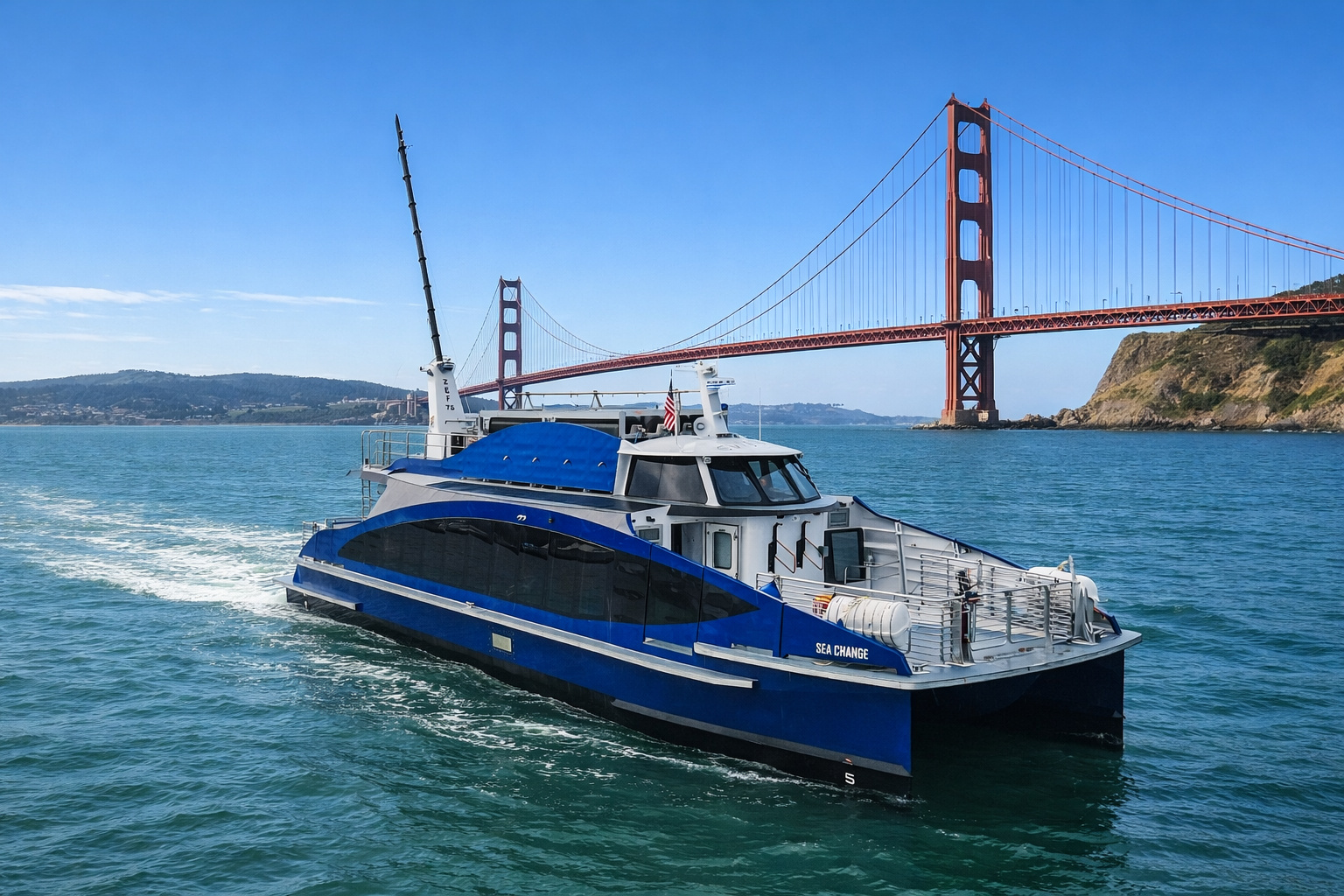
The first commercial hydrogen-powered ferry enters operation in the U.S., eliminates the use of diesel, uses fuel cells to generate clean energy on board, and transforms San Francisco Bay into a landmark of the new era of emission-free navigation.
Ship promises to avoid about 11 thousand tons of CO₂ per year
One of the most relevant data from the project is the projected environmental impact. According to Yara, the ship has the potential to avoid approximately 11 thousand tons of carbon dioxide emissions per year, replacing conventional vessels operating on the same route.
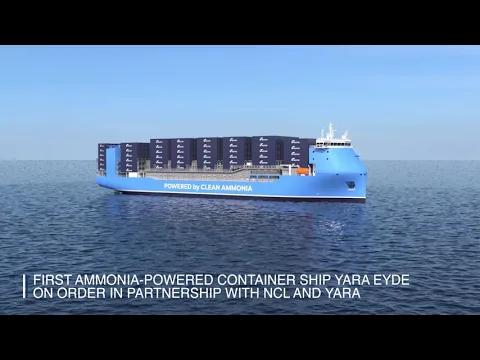

This number reflects the direct difference between the use of traditional fossil fuels and ammonia, which contains no carbon in its composition. In practice, this means that the combustion of ammonia does not generate CO₂, one of the main gases responsible for global warming.
The reduction is especially relevant on short-distance routes, where the frequency of trips is high and the accumulated impact over time becomes significant.
Renewable ammonia eliminates carbon, but requires new naval engineering
The ammonia used in the project is produced from renewable sources, which differentiates it from conventional ammonia, usually associated with the chemical industry and fertilizer production.
To operate with this fuel, the ship requires specific storage and combustion systems. Ammonia is a chemical compound with distinct properties, including toxicity and the need for strict temperature and pressure control.
This requires a new generation of naval engineering, with adaptations in tanks, safety systems, and engines capable of operating with this type of fuel.
Despite the challenges, the absence of carbon in the composition of ammonia makes it one of the most promising alternatives for decarbonizing maritime transport.
Project connects Norway, Germany, and Holland on a strategic route
The Yara Eyde will be used on a regional route that connects three strategic countries in northern Europe: Norway, Germany, and Holland. This region concentrates important ports and trade flows, making it an ideal environment to test new technologies.
The choice of a short route is not by chance. Shorter routes allow for greater operational control, facilitating the initial implementation of the technology and reducing risks associated with the energy transition.
Additionally, the proximity between the ports facilitates the development of the necessary infrastructure for ammonia refueling, one of the main challenges for the global expansion of the technology.
Maritime sector responds to global pressure for emission reduction
Maritime transport is responsible for about 3% of global greenhouse gas emissions, according to data from the International Maritime Organization. With increasingly stringent international targets, the sector faces pressure to reduce its carbon footprint.
In this context, projects like the Yara Eyde gain prominence by offering a potentially viable solution to eliminate emissions on specific routes.
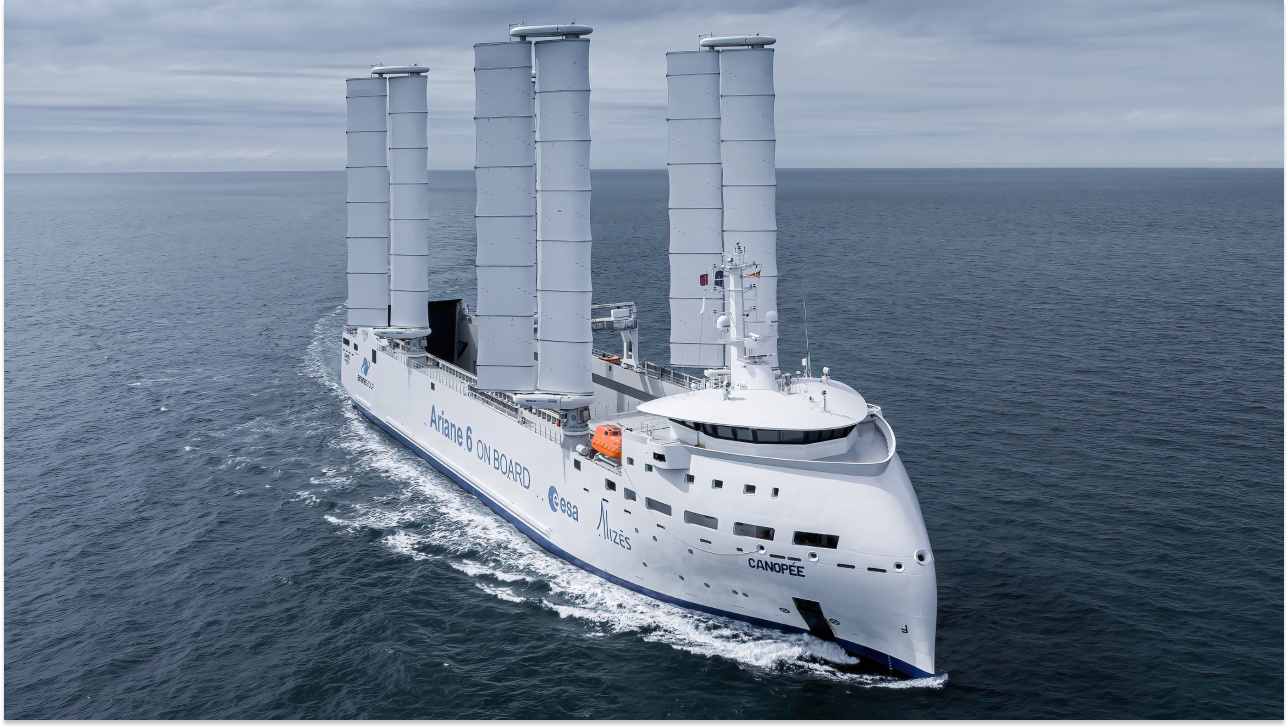
The adoption of alternative fuels like ammonia is part of a broader effort to transform the energy base of maritime transport, which has historically relied on heavy fuels derived from oil.
Ammonia competes with methanol and hydrogen in the race for marine fuels
Ammonia is not the only alternative in development. The maritime sector is also exploring other options, such as methanol, hydrogen, and biofuels.
Each fuel presents advantages and challenges. Methanol, for example, is already being used in some ships but still contains carbon in its composition. Hydrogen, on the other hand, faces storage and energy density challenges.
Ammonia stands out for combining the absence of carbon with greater ease of storage compared to hydrogen, although it still requires significant adaptations. The competition among these technologies will define the future energy landscape of global shipping.
Supply infrastructure will be decisive for technology expansion
One of the main challenges for the adoption of ammonia as marine fuel is the creation of a global supply infrastructure. Ports need to be adapted to safely store and provide the fuel.
In the case of the Yara Eyde, operating on a regional route facilitates this process, allowing the infrastructure to be developed locally.
The expansion of the technology will depend on the ability to replicate this model in other regions of the world, creating a supply network compatible with the demands of maritime transport.
Project integrates fertilizer production and maritime logistics
Yara International has a strategic advantage in this project: the company is already one of the largest producers of ammonia in the world, primarily used in the manufacture of fertilizers.
This allows for the integration of fuel production with its application in maritime transport, creating a verticalized chain.
This integration reduces costs, facilitates refueling, and increases the economic viability of the project, making it one of the most advanced in the sector.
First operations will test economic and technical viability
The entry into operation of the Yara Eyde in 2026 will be an important milestone for the maritime sector. It will be the first opportunity to evaluate the performance of ammonia under real commercial conditions.
Aspects such as efficiency, operational costs, maintenance, and safety will be analyzed throughout the operations.

The results of this project are expected to influence future investment decisions in new vessels and technologies, potentially accelerating or redefining the energy transition in the sector.
For decades, the idea of emission-free ships was considered distant. Projects like the Yara Eyde show that this reality is beginning to materialize.
The combination of technology, investment, and regulatory pressure is creating the necessary conditions for a structural transformation in maritime transport. Although challenges still exist, the entry into operation of ammonia-powered ships indicates that the sector is making concrete progress.
Do you believe that fuels like ammonia can replace maritime diesel in the coming decades?
Leave your opinion in the comments and say whether projects like the Yara Eyde represent the beginning of a new era for global transport.






Seja o primeiro a reagir!