





 Portuguese
  English
  Spanish
  3 min of reading
  0 comments


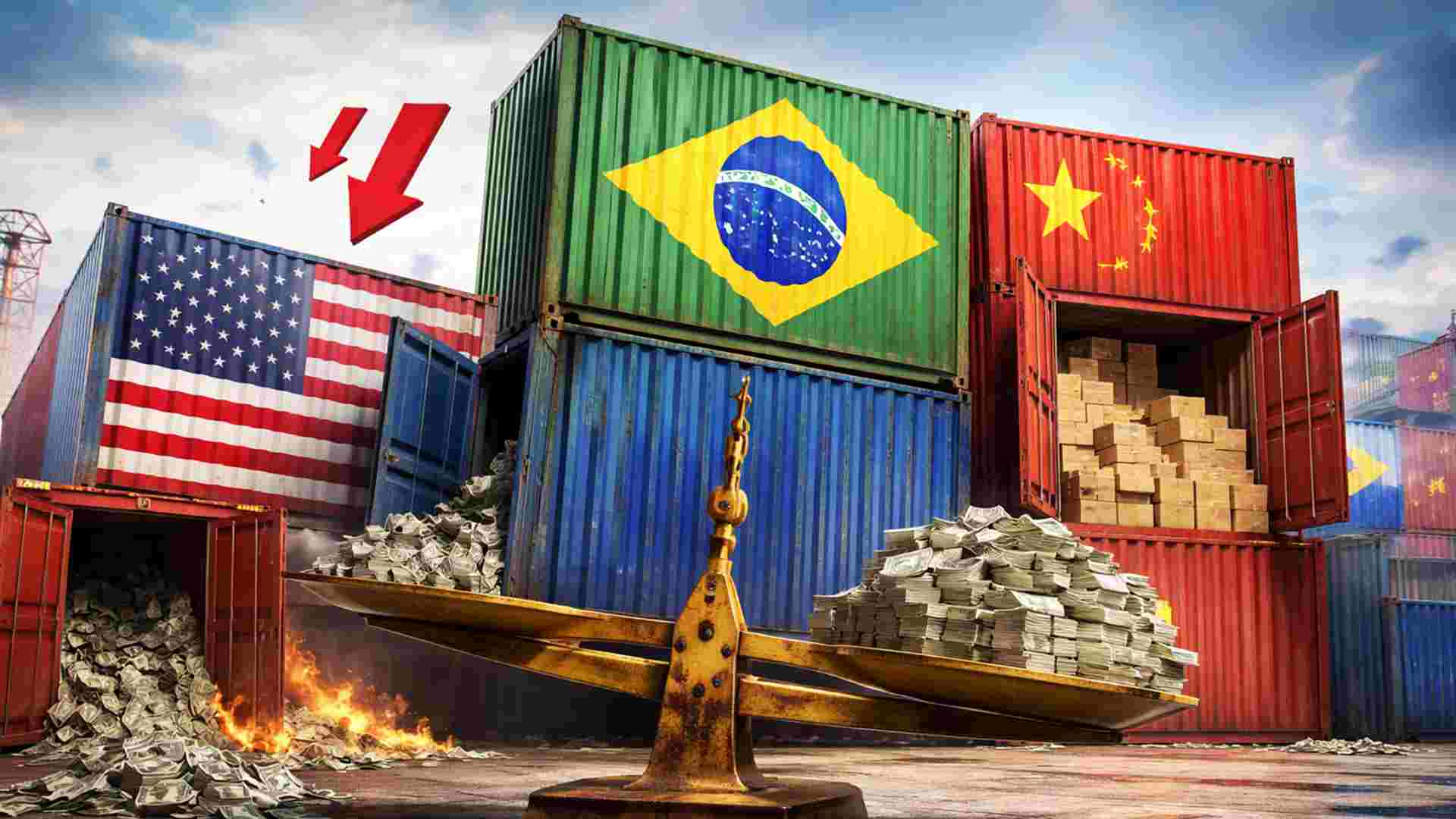
Brazilian product exports to the United States fell 9.1% in March 2026 and registered the eighth consecutive decline after the surcharge imposed in 2025, while China increased purchases, opened a billion-dollar surplus, and reinforced the change in the weight of Brazil’s main trading partners
Brazilian product exports to the United States decreased by 9.1% in March 2026, totaling US$ 2.894 billion, while imports from the North American market fell by 6.31%, to US$ 3.314 billion. With this result, the trade balance between the two countries closed the month with a deficit of US$ 420 million.
The figures were released on Tuesday, the 7th, by the Foreign Trade Secretariat of the Ministry of Development, Industry, Commerce, and Services. The decline in sales to the United States marked the eighth consecutive drop after the 50% surcharge imposed by the Donald Trump administration on Brazilian products in mid-2025.
At the end of 2025, some Brazilian products were no longer subject to the additional tariffs. Still, the ministry estimates that 22% of Brazilian exports remain subject to the tariffs established in July, including goods that pay an extra rate of 40% and others subject to the sum of this rate with the base tariff of 10%.
-
Rio wants to use Petrobras’ billion-dollar credit to reduce its R$ 203 billion debt with the Union and cut monthly payments by more than R$ 300 million.

-
Few people know this, but Nestlé created a campaign that paid R$ 162 to pet owners with pets named Nescau, Galak, Chokito, or KitKat, turning dog and cat names into advertising within the home.
-
CRM with AI: How to Optimize Sales and Customer Service in 2026

-
The rise in interest rates in the U.S., to contain local inflation, is expected to accentuate the ‘flight’ of foreign capital from the Brazilian stock market, in addition to appreciating the dollar against the real, thereby also putting pressure on prices in the Brazilian economy.


Brazilian product exports to the USA continue to decline
From January to March 2026, Brazilian product exports to the United States fell by 18.7% compared to the same period the previous year. Sales totaled US$ 7.781 billion, while imports decreased by 11.1%, to US$ 9.169 billion.
As a result, the trade balance with the United States recorded a deficit of US$ 1.388 billion in the first quarter. The performance reinforces the sequence of losses in bilateral trade since the adoption of additional tariffs on Brazilian products.
China increases purchases and secures surplus for Brazil
In relation to China, the scenario was the opposite of that observed with the United States. In March 2026, Brazilian product exports to the Asian country grew by 17.8% and reached US$ 10.490 billion, up from US$ 8.903 billion recorded in March 2025.
Imports from China also increased during the month, rising by 32.9%, totaling US$ 6.664 billion. Nevertheless, Brazil ended March with a surplus of US$ 3.826 billion in the trade balance with the Asian partner.
From January to March, sales to China rose by 21.7% and reached US$ 23.890 billion. Meanwhile, imports fell by 6.0% during the period, to US$ 17.907 billion, resulting in a surplus of US$ 5.983 billion in the first quarter.
European Union and Argentina had distinct results
Brazilian product exports to the European Union grew by 7.3% in March, totaling US$ 4.110 billion. Imports from the bloc increased by 14.9%, to US$ 4.687 billion, and the trade balance for the month ended with a deficit of US$ 577 million.
However, in the first quarter, the balance with the European Union was positive. Between January and March, exports rose by 9.7%, to US$ 12.232 billion, while imports fell by 2.2%, totaling US$ 11.607 billion, resulting in a surplus of US$ 625 million.
In trade with Argentina, exports fell by 5.9% in March, to US$ 1.470 billion. Imports grew by 13.1% and reached US$ 1.128 billion, ensuring a surplus of US$ 342 million for the month.
Between January and March, sales to Argentina decreased by 18.1% and totaled US$ 3.447 billion. Imports also fell by 6.5%, to US$ 2.744 billion, and the trade balance with the neighboring country ended the period with a positive balance of US$ 703 million.
Main partners concentrate the quarterly results
China, the United States, the European Union, and Argentina remain among Brazil’s main trading partners. The performance of these markets helped shape the overall result of the trade balance in March, which recorded a surplus of US$ 6.405 billion.
The data was presented by Secex of MDIC along with the consolidated result for the month. The performance of Brazilian product exports showed a decline in sales to the United States and Argentina, while there was an increase in exports to China and the European Union.







Be the first to react!