





 Portuguese
  English
  Spanish
  6 min of reading
  0 comments


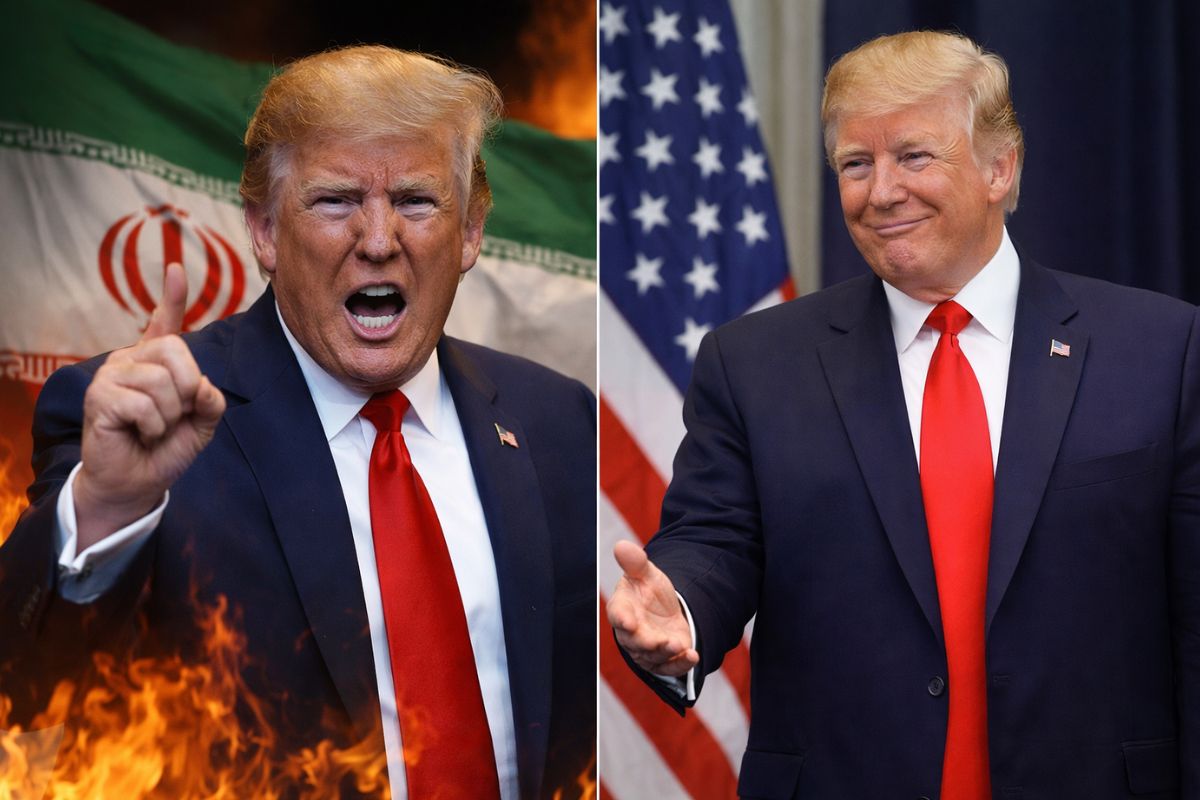
The Madman Theory is a strategy where the leader pretends to be unpredictable to force concessions from the opponent, and experts point out that Trump applied this tactic by threatening to destroy Iran and hours later announcing a two-week ceasefire, generating fluctuations in oil and stock markets that benefit positioned investors.
On Tuesday (7), the world witnessed a change in tone that seemed inexplicable. Trump declared that an entire civilization could be destroyed in one night and, hours later, announced a two-week ceasefire with Iran, as if the previous threat had simply not existed. For those following international politics, this pattern has a name: Madman Theory, a negotiation strategy where the leader seeks to appear irrational and capable of extreme actions to force the opponent to yield out of fear of disproportionate consequences. The concept is not new and was used by Richard Nixon during the Vietnam War.
The Madman Theory works in three stages that were precisely repeated this week. First came the extreme threat of total destruction. Then, the unpredictability of the abrupt retreat. Finally, the offer of an exit that the opponent, relieved not to have been attacked, tends to accept. While governments and diplomats try to decipher the next move, the financial market reacts to each statement with brutal fluctuations in the price of oil and stock markets, creating profit opportunities for those who know how to navigate volatility.
What is the Madman Theory and how did it emerge in international politics
According to Pragmatism, the Madman Theory was coined during Richard Nixon’s administration in the 1960s and 1970s. Nixon wanted North Vietnam to believe that he was so obsessed with winning the war that he would be capable of using nuclear weapons, forcing the communists to sit at the negotiating table out of fear of a catastrophic escalation.
-
Oil secures a larger drop, exports advance in March, and Brazil ends the month with a surplus of $6.4 billion despite the strong rise in imports.

-
The largest chicken processor is closing factories in series and has already cut thousands of jobs in just a few months in a crisis that reveals the extent of the problems in the meat sector in the USA.

-
New fuel prices were announced following government intervention, and the price of gasoline surprised those who expected a significant drop in the amount charged at Brazilian gas stations.
-
Global trade hit a record and surpassed $35 trillion in 2025, but one-third of the growth came from a single sector that did not exist on a large scale five years ago, and the countries that profited the most were not the United States or China, but Taiwan, South Korea, and Southeast Asia, which have become the heart of the AI revolution supply chain.

The goal was never really to use maximum force, but to make the opponent believe that the leader was capable of doing so.
The logic behind the Madman Theory is counterintuitive: appearing irrational is, in fact, a calculated form of rationality. If the opponent believes they are dealing with someone unpredictable and potentially extreme, they tend to make concessions they would not make in front of a predictable negotiator.
The fear of the unknown is more powerful than the fear of a specific threat. And it is exactly this fear that the Madman Theory seeks to create and exploit in negotiations.
How Trump applied the Madman Theory in the case of Iran this week
The pattern observed this week follows the classic manual of the Madman Theory in three phases. In the first, Trump made the extreme threat: he declared that all of Iran could be destroyed in one night, language that generated global panic and paralyzed the opponent in the face of the possibility of immediate military action.
The statement was made at a press conference and reverberated across all financial markets on the planet.
In the second phase of the Madman Theory, unpredictability came. What was total destruction in a matter of hours turned into a two-week ceasefire announced on the same Tuesday.
The change in tone was so abrupt that it left analysts, diplomats, and the Iranian government itself unsure of how to react or plan. In the third phase, the offer of an exit: the proposal for negotiation with conditions that Iran, relieved not to have been attacked, may consider more seriously than it would under normal circumstances.
What happened to oil and the stock markets during the application of the Madman Theory
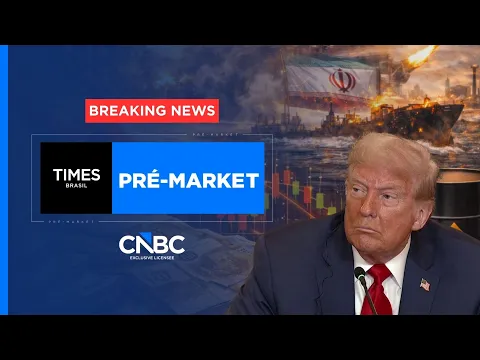

The fluctuations in the financial market were as predictable as the strategy itself. When Trump threatened to destroy Iran, the price of oil skyrocketed because the market priced in the risk of total disruption in the Strait of Hormuz, through which about 20% of the world’s seaborne oil passes.
The stock markets fell due to fear of global instability. Investors rushed to safe-haven assets, such as gold and the dollar.
When the two-week ceasefire was announced, the movement reversed. Oil futures sharply retreated in after-hours trading, the stock markets recovered, and panic gave way to relief.
For those who understand the Madman Theory and follow the pattern of statements, these fluctuations are predictable. And for those trading in the financial market, predictability in volatility is synonymous with profit opportunity.
Who profits from the fluctuations generated by the Madman Theory
Specific groups benefit directly from the rollercoaster created by this type of strategy. Day traders and hedge funds operate in volatility using derivatives, financial instruments that allow them to profit both in rising and falling prices.
For these operators, a declaration of war followed by a ceasefire within hours is the perfect scenario: two sharp movements in the same day mean two profit opportunities.
Oil producers and storage companies also benefit from the Madman Theory applied to geopolitics. The sudden increase in the price of the barrel allows energy companies to sell their reserves at prices inflated by tension. Investors who bought gold before the threat and sold at the peak of tension made significant profits in a matter of hours.
The most serious criticism is about the timing of the announcements: statements made minutes before or after market closures raise questions about who had insider information to position themselves ahead of the rest of the public.
The real risks of the Madman Theory when applied to a conflict with Iran
The Madman Theory can function as a negotiation tool, but it carries risks that can spiral out of control.
The first is the miscalculation: if Iran believes that an attack is inevitable, it may decide to strike first as a preventive measure, turning a bluff tactic into a trigger for real escalation. The line between appearing willing to do anything and provoking a desperate response from the opponent is extremely thin.
The second risk of the Madman Theory is the loss of credibility. If Trump threatens total destruction and then repeatedly retreats, the opponent begins to ignore the threats as bluffs, and the strategy loses effectiveness.
The third risk is the domestic economic impact: brutal fluctuations in oil prices affect the cost of living for hundreds of millions of people and generate uncertainty that can deter long-term investments. Investors hate prolonged uncertainty, and if the market concludes that the president is genuinely unstable, capital flees to more predictable economies.
What the two-week ceasefire means within the logic of the Madman Theory
The 14-day suspension is not a retreat. Within the logic of the Madman Theory, the ceasefire serves to transfer the burden of peace to Iran.
If the Strait of Hormuz is reopened during this period, Trump can claim a diplomatic victory without having fired a shot. If Iran does not comply, the narrative shifts to “I gave diplomacy a chance and they refused,” justifying future military actions as a last resort.
The Madman Theory creates the fire and then sells the extinguisher. The leader who threatened destruction appears as the great negotiator who avoided the war that he himself made possible.
It is a tactic that requires nerves of steel, precise timing, and the willingness to accept that millions of people around the world will live in a state of anxiety while the strategy unfolds. If it works, Trump emerges as a diplomatic genius. If it fails, the world pays the price of a gamble that spiraled out of control.
What do you think of Trump’s application of the Madman Theory in the conflict with Iran? Do you believe it is a calculated strategy or that the risk of real escalation is too great? Share in the comments. This is the kind of debate that mixes geopolitics, economics, and psychology, where each opinion reveals how each person sees the power game.









Seja o primeiro a reagir!