





 Portuguese
  English
  Spanish
  6 min of reading
  0 comments


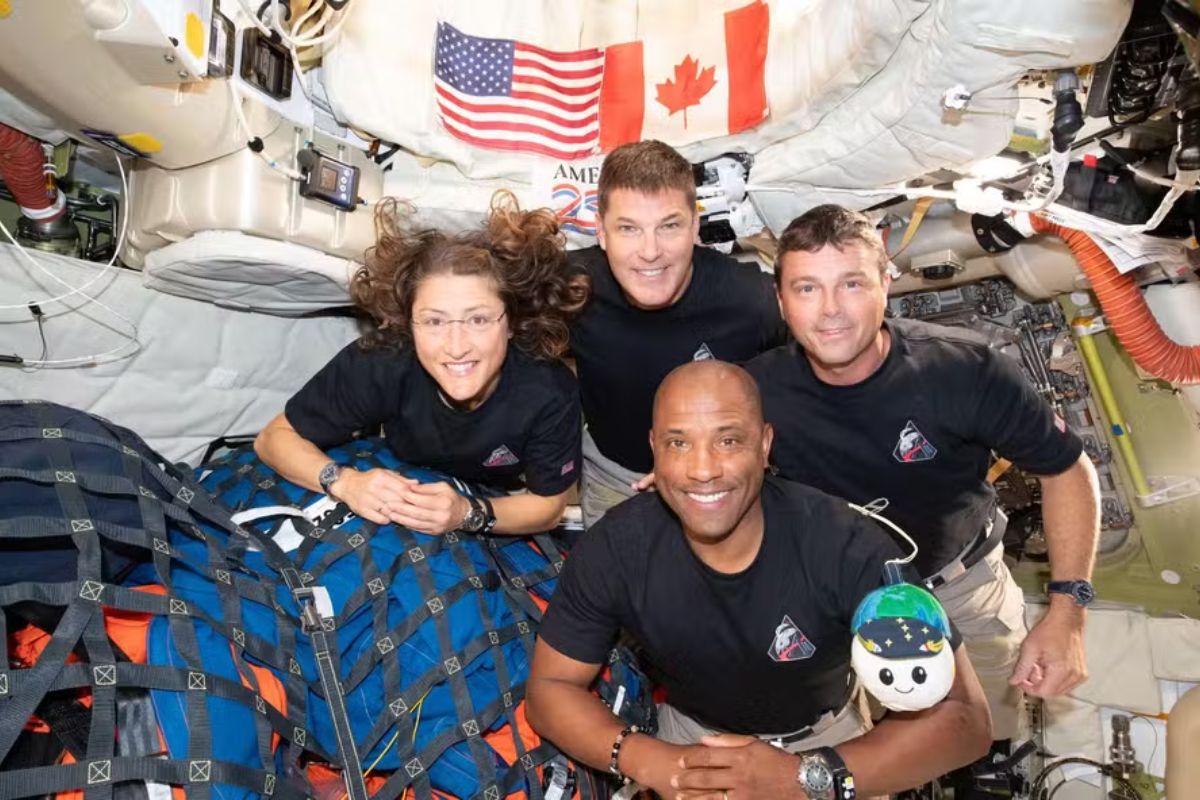
NASA confirmed that the return of Artemis II to Earth will take place this Friday, with a landing in the ocean expected at 21:07 Brasília time off the coast of San Diego. The four astronauts are facing atmospheric reentry at 40,000 km/h, the most dangerous phase of the mission that brought humans back to the Moon after 53 years.
The Moon has never been closer to returning to the center of human history than it is now. This Friday (10), the four astronauts of the Artemis II mission complete the riskiest stage of their 10-day journey: reentry into the Earth’s atmosphere at approximately 40,000 kilometers per hour and landing in the Pacific Ocean. The Orion capsule, named Integrity by the crew, is expected to touch the water around 21:07 Brasília time, off the coast of San Diego, California, concluding the first crewed mission around the Moon since Apollo 17 in 1972.
What is at stake is not just the safe return of Reid Wiseman, Victor Glover, Christina Koch, and Jeremy Hansen. The reentry is the ultimate test of Orion’s thermal shield, a component that had issues during the uncrewed Artemis I mission in 2022. The NASA adjusted the descent trajectory to reduce exposure to extreme heat, but acknowledges that this is the highest risk phase of the entire mission. Six minutes of communication blackout, temperatures of 2,700 degrees Celsius, and gravitational forces of up to 3.9 times the normal weight of the body—all while the Moon, which they just circled, recedes in the cosmic rearview mirror.
The lunar flyby that broke a 55-year record
Artemis II is not only the first crewed mission around the Moon in over half a century. It also set a new absolute record for distance traveled by humans in space. On Monday (6), the Orion capsule reached 406,777 kilometers from Earth, surpassing Apollo 13’s record by over 6,000 kilometers, which had held the record since 1970. The moment was recorded at 14:57 Brasília time, as the spacecraft approached the gravitational influence of the Moon.
-
In the heart of the Sahara, the Ounianga Lakes form 18 permanent mirrors of water in an area of 62,000 hectares where it has hardly rained for decades, creating a blue archipelago fed by underground aquifers in the driest desert on the planet.

-
An American has spent over 30 years building a 34-meter training ship in his backyard in Maine using recycled steel from Navy ships, and is now trying to win the dispute that keeps the vessel grounded.

-
With 17 seniors aged between 90 and 99, the group breaks the record for the oldest choir in the world and becomes news in the United Kingdom.

-
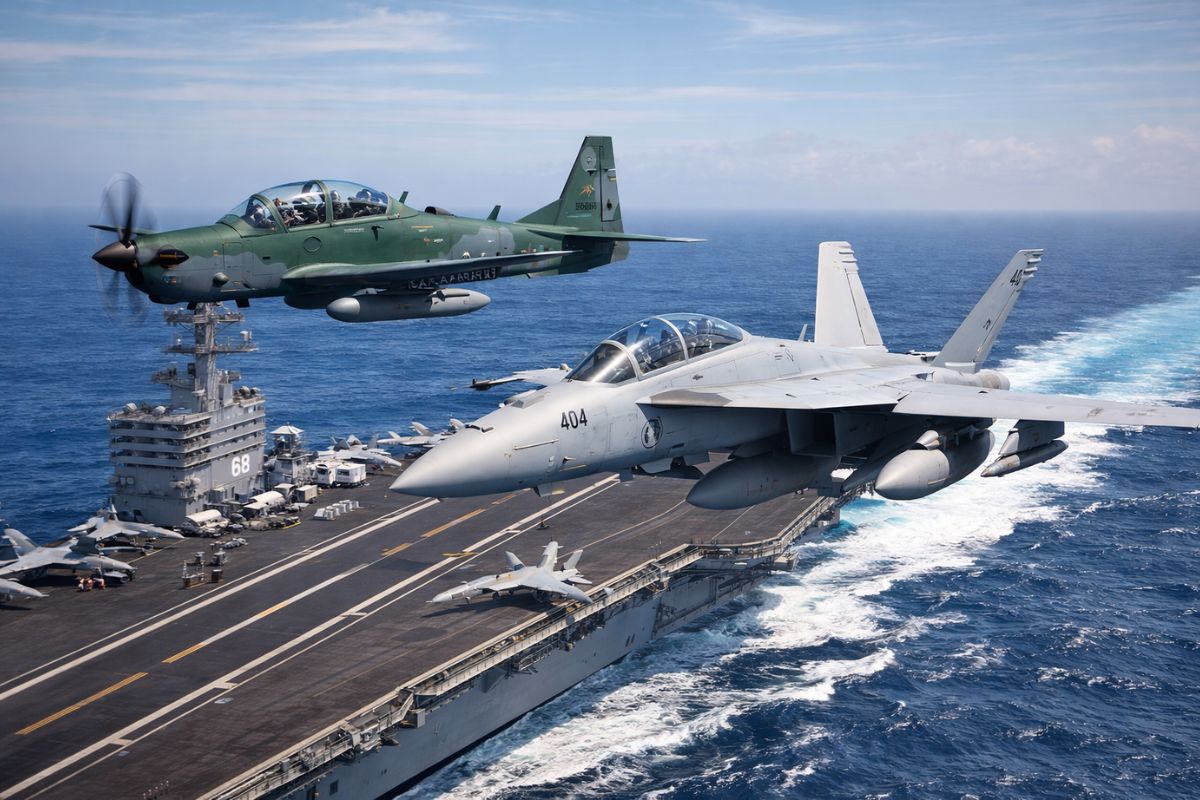
The propeller plane manufactured by Embraer in Brazil flew side by side with the most lethal supersonic fighter of the American Navy over the deck of the largest nuclear aircraft carrier in the world, and the photos of the Super Tucano next to the F/A-18 Super Hornet over the USS Nimitz prove that the Brazilian turboprop has earned a place that no one thought possible for an aircraft of this category.
During the lunar flyby, which lasted about six hours, the astronauts observed regions of the far side of the Moon with the naked eye that no human had seen before in sunlight.
The spacecraft came within just 6,545 kilometers of the lunar surface, a proximity that allowed detailed observations of craters and basins that complement decades of data obtained by uncrewed probes. Jeremy Hansen, the Canadian astronaut on the mission, suggested naming one of the observed craters “Carroll Crater,” in honor of the late wife of commander Reid Wiseman. The passage over the far side of the Moon included 40 minutes of complete radio silence, as the lunar mass blocked all communications with Earth.
What happens in the next hours before landing
According to the CBN portal, the last full day in space began with the song “Run to the Water” by the band Live—a fitting choice for a crew just hours away from landing in the ocean. The astronauts began final preparations for reentry, organizing the Orion cabin, stowing equipment, and adjusting the seats to withstand the extreme forces of descent.
NASA confirmed that weather conditions in the landing zone are within acceptable parameters.
Before the actual reentry, the Orion capsule will execute a precise sequence of maneuvers. About 42 minutes before splashdown, the service module will be jettisoned, leaving only the crewed capsule to face the atmosphere.
Around 19:37 Brasília time, the Orion will perform a fine-tuning burn to position the spacecraft in the correct attitude. At 19:53, the capsule will enter the atmosphere at an altitude of 122 kilometers, initiating a 13-minute descent of 3,287 kilometers to the landing point in the Pacific. The Moon, which dominated the capsule’s windows for six hours, will have been left behind for good.
The six minutes of silence that will define the mission
The most tense moment of the descent will be the communication blackout expected to last approximately six minutes, starting at 19:53. When Orion hits the atmosphere at 40,000 km/h, the air in front of the capsule compresses violently, generating a plasma layer at about 2,700 degrees Celsius—higher than volcanic lava. This envelope of ionized gas blocks all radio transmissions between the spacecraft and mission control in Houston.
During these six minutes, the astronauts will be completely alone. It is during this interval that Orion’s thermal shield does its most critical work, absorbing and dissipating heat through an ablative coating called Avcoat, which is designed to burn and disintegrate in a controlled manner.
The crew will experience forces of up to 3.9 times Earth’s gravity as the capsule decelerates violently. NASA acknowledges that this is the highest risk point of the mission and that, until communications are restored, there is no way to confirm if everything is going as planned. The Moon, with all its beauty observed days earlier, will become irrelevant if the shield fails.
Eleven parachutes between the astronauts and the ocean
After crossing the atmosphere and emerging from the communication blackout, Orion will still be traveling too fast for a safe landing. From this point, a sequence of 11 parachutes will be deployed in precise stages to slow the capsule from thousands of kilometers per hour to a modest 32 km/h. The system includes stabilization parachutes, aerodynamic brakes, and three large main parachutes.
The first stabilization parachutes deploy at about 6.7 kilometers altitude, around 20:03. The three main parachutes are released at approximately 1.8 kilometers from the ground, reducing the capsule’s speed to a safe impact range with the water.
This is the same system tested in Artemis I, but now with four human lives depending on every stitch and every cable. Orion’s landing in the Pacific will mark the first splashdown of a crewed capsule returning from the Moon since December 1972 when the Apollo 17 astronauts made the same journey that Artemis II is now repeating with 21st-century technology.
The rescue at sea and what comes after the Moon
As soon as Orion touches the water, NASA and U.S. Department of Defense teams will spring into action. The military ship USS John P. Murtha will be positioned in the landing zone, accompanied by MH-60 Seahawk helicopters and an elite team of Navy divers. The plan is to extract the four astronauts from the capsule within two hours and transport them by helicopter to the ship for initial medical evaluations.
After evaluations aboard the USS Murtha, the crew will proceed to the Johnson Space Center in Houston, Texas, where they will continue post-mission follow-up.
Artemis II is the first in a series of missions that plan to return humans to the surface of the Moon.
NASA anticipates that Artemis III, scheduled for early 2028, will include docking maneuvers in low Earth orbit, while Artemis IV, at the end of 2028, will attempt to land two astronauts near the lunar south pole, paving the way for what the agency hopes will become a sustainable human presence on the Moon.
Why Artemis II matters beyond the space achievement
It is tempting to treat the return of Artemis II as a repeat of the Apollo era with a modern twist. But the mission represents something structurally different. For the first time, the crew of a lunar flight includes a woman (Christina Koch), a Black person (Victor Glover), and a Canadian astronaut (Jeremy Hansen)—a profile of diversity unimaginable in the 1960s.
The 10-day mission tested life support, navigation, and thermal protection systems that will be essential for all future lunar missions.
The Moon has returned as the declared destination of the world’s space agencies, and Artemis II is the step that transforms this plan into operational reality. The thermal shield, the parachutes, the free-return trajectory, and the ocean splashdown—all will be validated or questioned in the coming hours.
If the four astronauts emerge from the Orion capsule safe and sound in the Pacific, humanity will have confirmed that it has the technology to return to the Moon and, eventually, go beyond it. The clock is ticking down: at 21:07 Brasília time, the answer will be in the water.
Artemis II is hours away from completing the first crewed journey to the Moon in over half a century. Will you watch the landing live? Do you believe humanity should invest more in lunar exploration or prioritize other challenges here on Earth?







Seja o primeiro a reagir!