





 Portuguese
  English
  Spanish
  5 min of reading
  0 comments


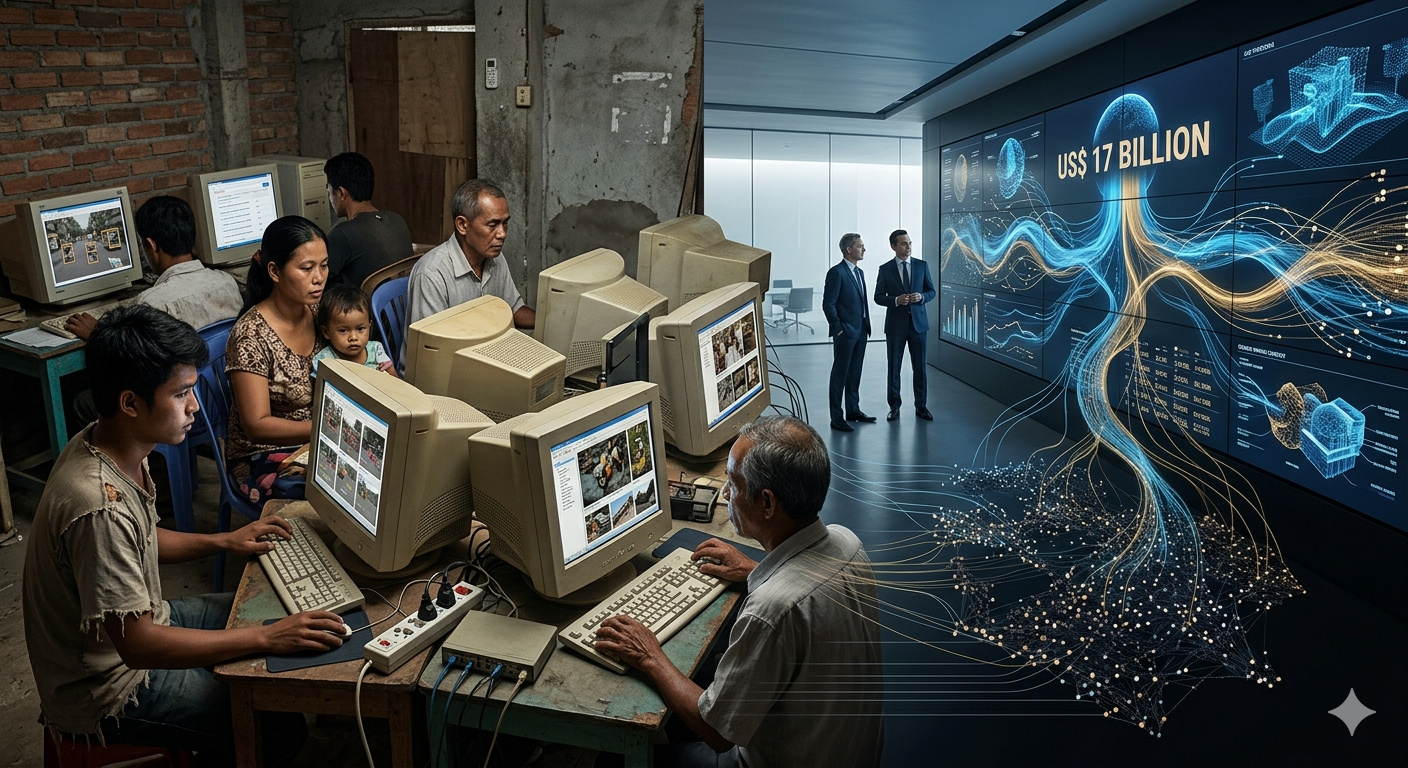
Invisible work of artificial intelligence pays pennies to workers in poor countries and sustains a global market of US$ 17 billion
In the 2020s, international reports such as the one from CBS News 60 Minutes revealed the existence of a little-visible global chain that supports the advancement of artificial intelligence. At the center of this system are workers like Naftali Wambalo, a mathematician residing in Nairobi, Kenya, who spent months performing repetitive data labeling tasks to train algorithms. According to data from Grand View Research, this invisible work feeds a global market that could reach US$ 17 billion by 2030, connecting Silicon Valley tech companies to a workforce distributed in countries with high unemployment rates and low wages.
Data labeling in artificial intelligence: why AI does not learn on its own
Artificial intelligence, despite being advanced, does not emerge autonomously. Systems like language models, self-driving cars, and visual recognition tools rely on intensive training with data previously classified by humans.
This process, known as data labeling or “human in the loop,” involves tasks such as identifying objects in images, classifying emotions in texts, transcribing audio, moderating sensitive content, and, more recently, recording human actions to train robots.
-
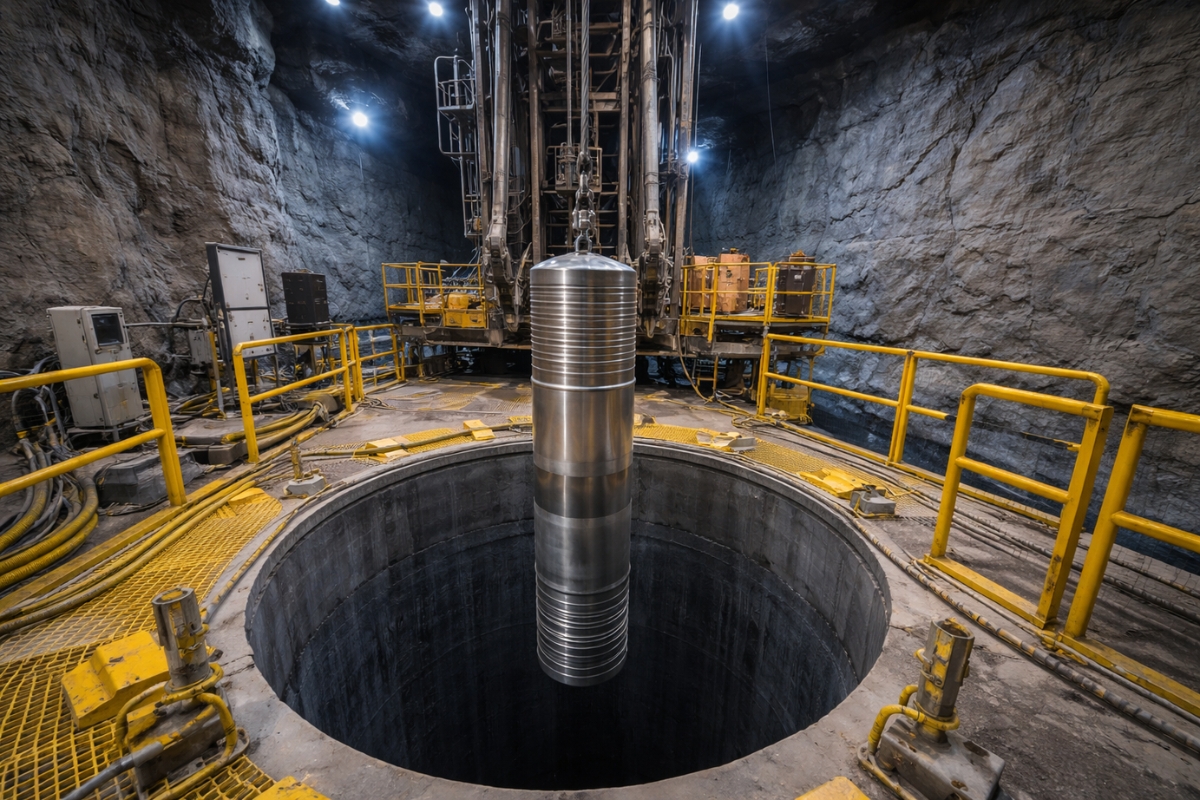
Technology created in the United States uses deep drilling to store high-level nuclear waste.
-
Dozens of Chinese research ships are discreetly mapping the ocean floor in three oceans – and naval analysts see a military pattern.

-
The winter of 2026 in Brazil will not be what you expect: meteorologists warn that the season will be warm and rainy at the same time due to the advance of El Niño, which is already warming the Pacific and changing the climate of the entire country.

-
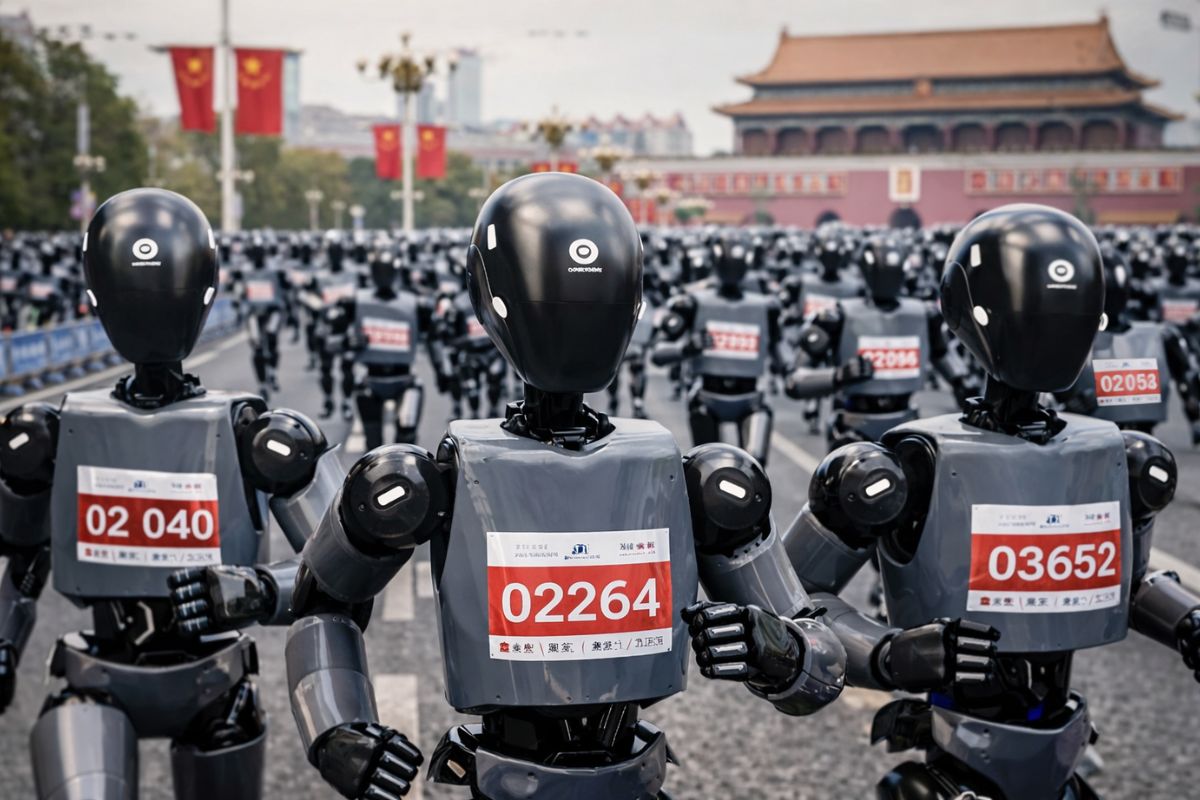
For the first time, humanoid robots will compete in a full half-marathon without any human assistance in Beijing, with over 100 teams from China registering machines that need to complete the course with autonomous navigation on two legs.

Without this massive human work, no functional artificial intelligence system could exist, making this step one of the most critical in the technological chain.
Global economy of AI: poor countries concentrate data annotation work
Data labeling is largely outsourced to countries with abundant, young, and digitally connected labor. Among the main hubs are Kenya, India, the Philippines, Venezuela, Ghana, and Colombia.


According to the World Bank, between 154 million and 435 million people participate in the global digital economy. An increasing share works directly in training artificial intelligence models.
The Fairwork project from the University of Oxford evaluated over 700 workers on digital platforms and concluded that none of them meet minimum fair work standards. This reveals a structural asymmetry between the value generated by AI and the compensation of the workers who enable it.
Chain of intermediaries in artificial intelligence reduces workers’ salaries
The business model of data labeling involves multiple intermediary layers. Tech companies hire specialized firms, which in turn operate platforms where workers perform tasks.
In the case documented by CBS News, the company Sama received up to US$ 12 per hour per worker, while Naftali Wambalo received only US$ 2. The rest was absorbed by the intermediary chain.
This structure dilutes transparency and significantly reduces the final income of the worker, while maintaining high margins for intermediary companies.
AI content moderators face severe psychological impact
A significant part of the labeling work involves exposure to extreme content. Workers in Kenya, Ghana, and Colombia have been responsible for classifying materials involving violence, abuse, and hate speech.
Research by the organization Equidem identified reports of anxiety, depression, post-traumatic stress disorder, and other severe psychological effects.
One moderator reported analyzing up to 700 explicit contents per day. This type of work, essential for filtering content on digital platforms, has high and often neglected human costs.
Tech companies migrate operations to lower-cost countries
When workers begin to demand better conditions, companies often shut down operations and migrate to regions with lower costs.
Kenyan activist Nerima Wako-Ojiwa described this pattern as a continuous cycle of geographical labor replacement. Countries like Nepal and the Philippines start receiving these operations when other markets become less advantageous.
This model creates a global dynamic of competition based on low wages and a lack of robust regulation.
AI work in China grows with less transparency and informal recruitment
Investigations by Rest of World revealed that Chinese companies recruit workers via WhatsApp groups for data labeling.

These workers often do not know the end client, do not have formal contracts, and receive low payments for long hours.
According to Professor Payal Arora from the University of Utrecht, the economy of artificial intelligence relies on a traditional logic of exploiting cheap labor, despite its advanced technological appearance.
Training robots expands demand for human data in the physical world
The new frontier of artificial intelligence involves robotics. Companies need data on human movements to teach machines to perform physical tasks.
Startups like Sunain pay around US$ 80 for two hours of recording household activities. Companies like Sunday Robotics use sensors and gloves to capture manual movements.
In China, state centers use operators with virtual reality to control robots, recording every movement. This expansion transforms the human body into a direct source of data for physical artificial intelligence systems.
Humanoid robot market grows while workers receive pennies
Goldman Sachs projections indicate that the humanoid robot market could reach US$ 38 billion by 2035. The Bank of America estimates a significant decrease in the production cost of these machines in the next decade.

Meanwhile, workers continue to receive low amounts for essential tasks for training these systems.
Companies like Scale AI have already accumulated over 100,000 hours of data for robotics. The growth of the sector directly depends on the availability of cheap labor to feed the algorithms.
Workers train the artificial intelligence that may replace them
One of the central contradictions of this model is that workers train systems that may replace their own functions. As models evolve, the need for human supervision decreases. Self-labeling technologies are already under development.
This creates a cycle where human work is essential at the beginning but tends to be eliminated as technology matures.

The contracts offered are generally temporary, task-based, and without guarantees. Workers compete for activities and are paid per completed unit. Task rejections can result in non-payment. Accounts can be closed without warning, eliminating accumulated earnings.
Reports indicate constant financial difficulties, with workers living without the ability to save.
Movements for labor rights begin to emerge in the AI industry
Organizations like the Data Labelers Association in Kenya and the African Content Moderators Union seek better working conditions.
Legal proceedings and government investigations are underway in countries like Ghana and Colombia. The International Labour Organization is discussing new regulations for the digital economy.
Despite this, the speed of industry expansion outpaces the capacity for global regulation. The phrase from activist Nerima Wako-Ojiwa summarizes the dynamic: companies operate in countries where they can reduce costs without facing the same regulatory demands.
The most advanced artificial intelligence in the world relies on an invisible base of poorly paid workers, whose contribution is essential for the functioning of the systems. The current model sustains itself as long as this labor remains available and accessible.









Seja o primeiro a reagir!