





 Portuguese
  English
  Spanish
  4 min of reading
  0 comments


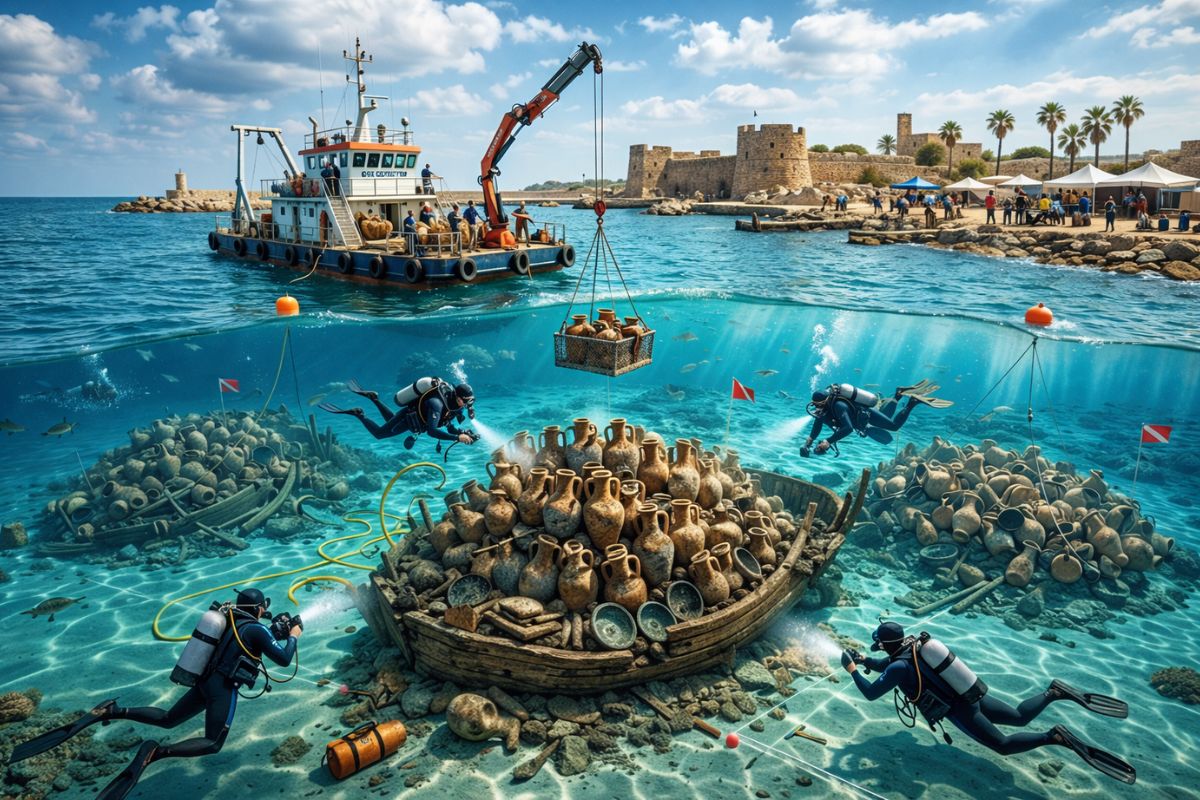
Port of Dor, in Israel, holds submerged sets of up to 3,000 years that prove a much more complex maritime network than previously imagined, and only 25% of the site has been excavated
Three submerged loads found at the bottom of Dor lagoon, south of Haifa, Israel, are forcing historians to rethink everything they knew about maritime trade in the Iron Age. Dated between the 11th and 6th centuries BC, the sets offer something rare in archaeology: direct evidence of maritime circulation at a time that, until now, relied almost exclusively on land finds to be reconstructed.
The study was conducted by researchers from the University of California San Diego and the University of Haifa, using 3D modeling, multispectral imaging, and underwater digital mapping.
The result is a concrete portrait of how goods, political influences, and regional connections moved through the eastern Mediterranean three millennia ago. And the most curious thing is that the discovery is still far from over.
-
Dialysis as we know it may be numbered: researchers at the University of Southern California have managed to cultivate kidney cells in the lab that refuse to die and form mini-structures that mimic the actual functioning of a kidney.

-
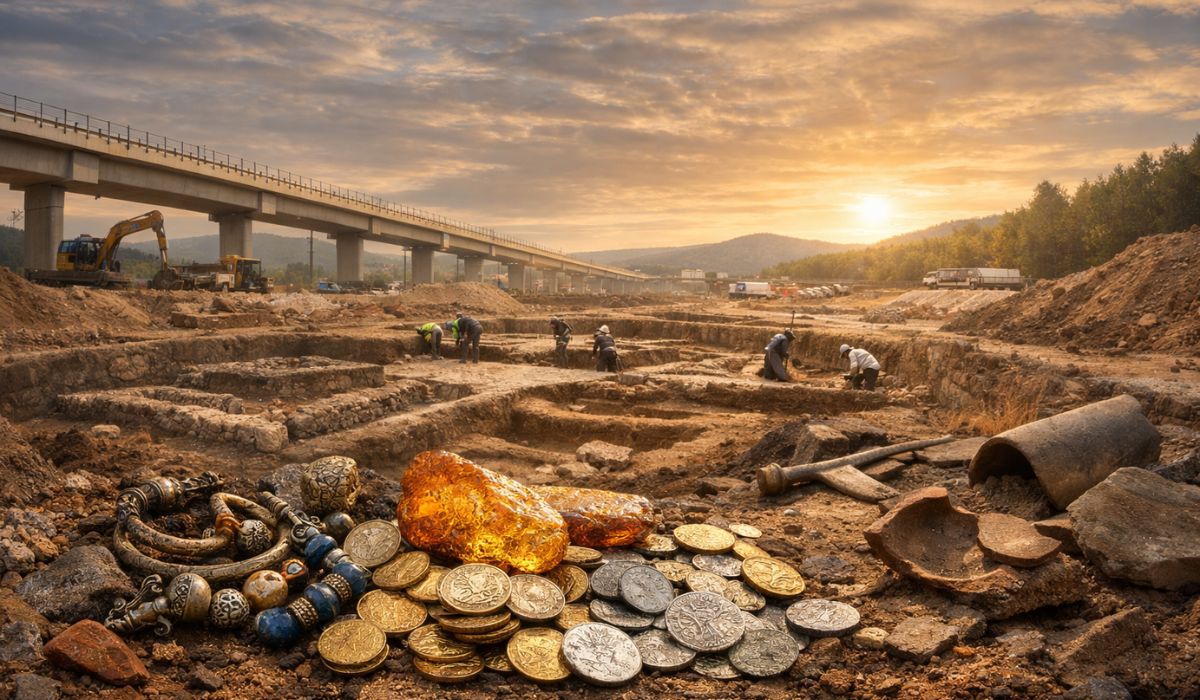
They were going to build a highway, but they ended up finding in the Czech Republic an entire Celtic city buried for more than 2,000 years, with hundreds of gold and silver coins, precious amber, and one of the largest archaeological treasures ever discovered.
-
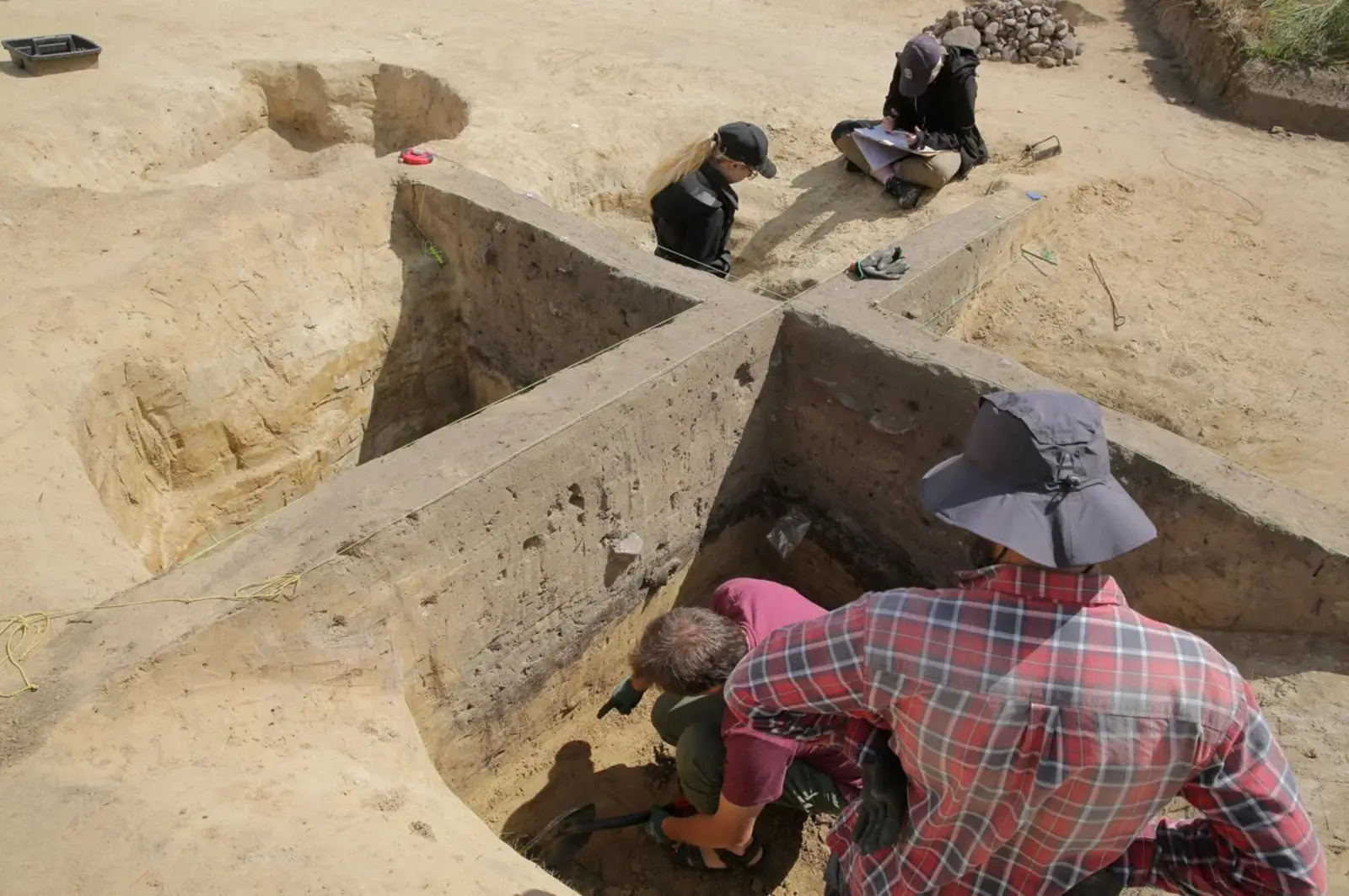
Archaeologists find lost medieval city in Poland with a central square, cemetery, forge, and more than 500 buried artifacts.
-
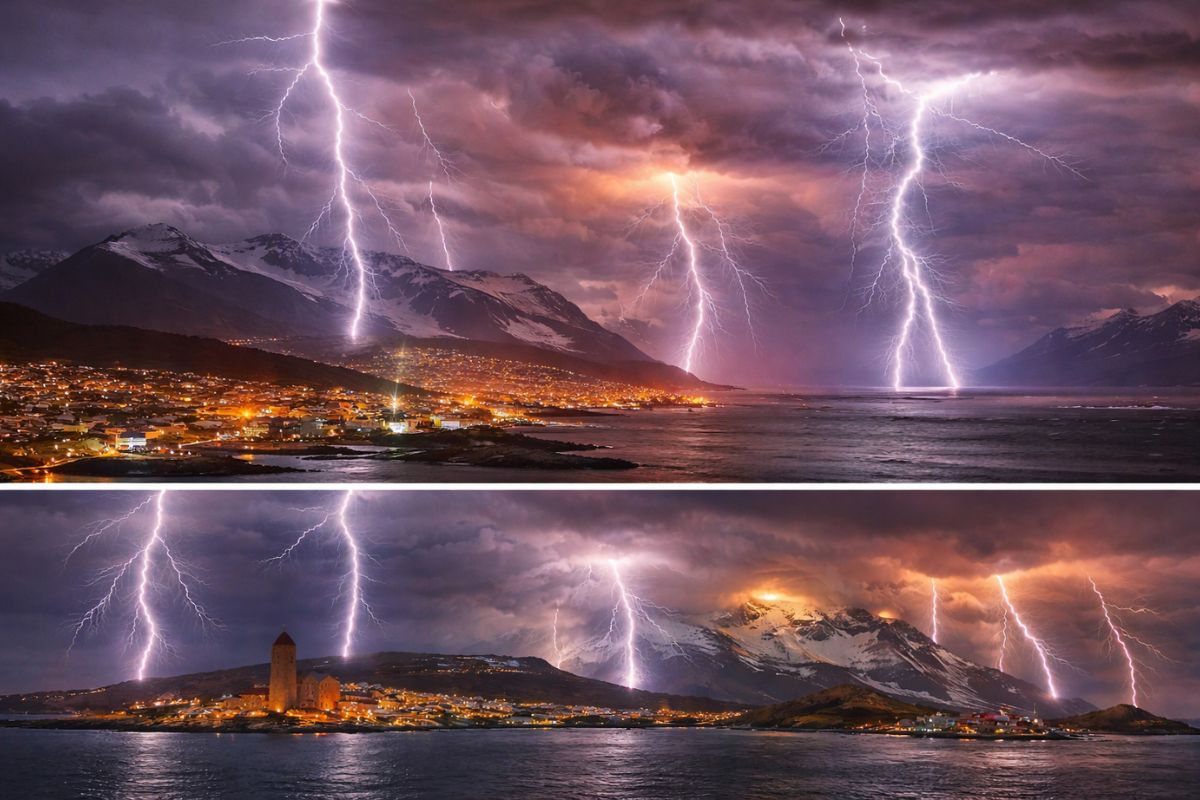
A massive warm air mass stretched from Brazil to near Antarctica and caused something that almost never happens: lightning and thunderstorms in Ushuaia, in the Falkland Islands, and in the South Georgia Islands.

What was found in the submerged loads of Dor
The three submerged sets, called Dor M, Dor L1, and Dor L2, were located within the Tantura lagoon, an alternative name for Dor lagoon, on the Carmel coast. Each set belongs to a different phase of Mediterranean trade, and together they cover almost five centuries of maritime activity.
The oldest, Dor M, dates back to the 11th century BC and includes storage jars and an anchor with a Cypro-Minoan inscription, a direct indication of contact with Cyprus, Egypt, and the Phoenician coast.
Dor L1, situated between the end of the 9th century and the beginning of the 8th century BC, brought Phoenician-style jars and thin-walled bowls. The third set, Dor L2, dated to the late 7th or early 6th century BC, is the most complete of the three and carries the most surprising discoveries.
The find that changed the interpretation of the period

In Dor L2, in addition to “basket-handled” amphorae, researchers found something no one expected to find in such good condition: iron masses and slag interpreted as evidence of metal trade on an almost industrial scale for the standards of the time.
Organic remains such as grape seeds and date pits helped further detail the context of the goods transported, giving a human dimension to what circulated among the peoples of that time.
This set revealed that Dor was not a secondary or peripheral port, but an active hub within the maritime networks of the eastern Mediterranean. The presence of docks, stone anchors, and structures that functioned as breakwaters reinforces this reading.
The port gained and lost importance as the geopolitical changes in the region occurred, sometimes integrated with Egypt and Cyprus, sometimes marked by Phoenician influence.
Why these submerged loads are so rare
Researchers highlight that these finds are among the very few Iron Age cargo sets known throughout the Mediterranean. More than that: they are the first directly linked to a documented port city in the southern Levant.
Before these submerged loads, the reconstruction of maritime trade during this period relied on objects found on land, which left huge gaps about what actually circulated among civilizations.
Now, with goods preserved within the port space itself, the debate moves from the realm of hypotheses and gains anchorage in concrete evidence. It is as if the sea had kept, for three thousand years, the proof that historians needed.
What may still emerge from the excavations
The discovery is far from definitive. According to the study, only about 25% of the sandbank that holds the sets has been excavated so far. New objects may emerge at any moment, and researchers do not rule out finding parts of the hull of one of the vessels.
This means that Dor may still have much to tell about ancient Mediterranean trade. What has already come to light, however, is enough to change the map: a dynamic port, connected to multiple civilizations and active for centuries, quietly preserved at the bottom of a lagoon on the coast of Israel, waiting to be discovered.
If 25% has already rewritten history, imagine what the other 75% still has to say.
And you: what do you think might be preserved in the rest of the site that has not yet been excavated? Leave your thoughts in the comments.








Seja o primeiro a reagir!