





 Portuguese
  English
  Spanish
  4 min of reading
  0 comments


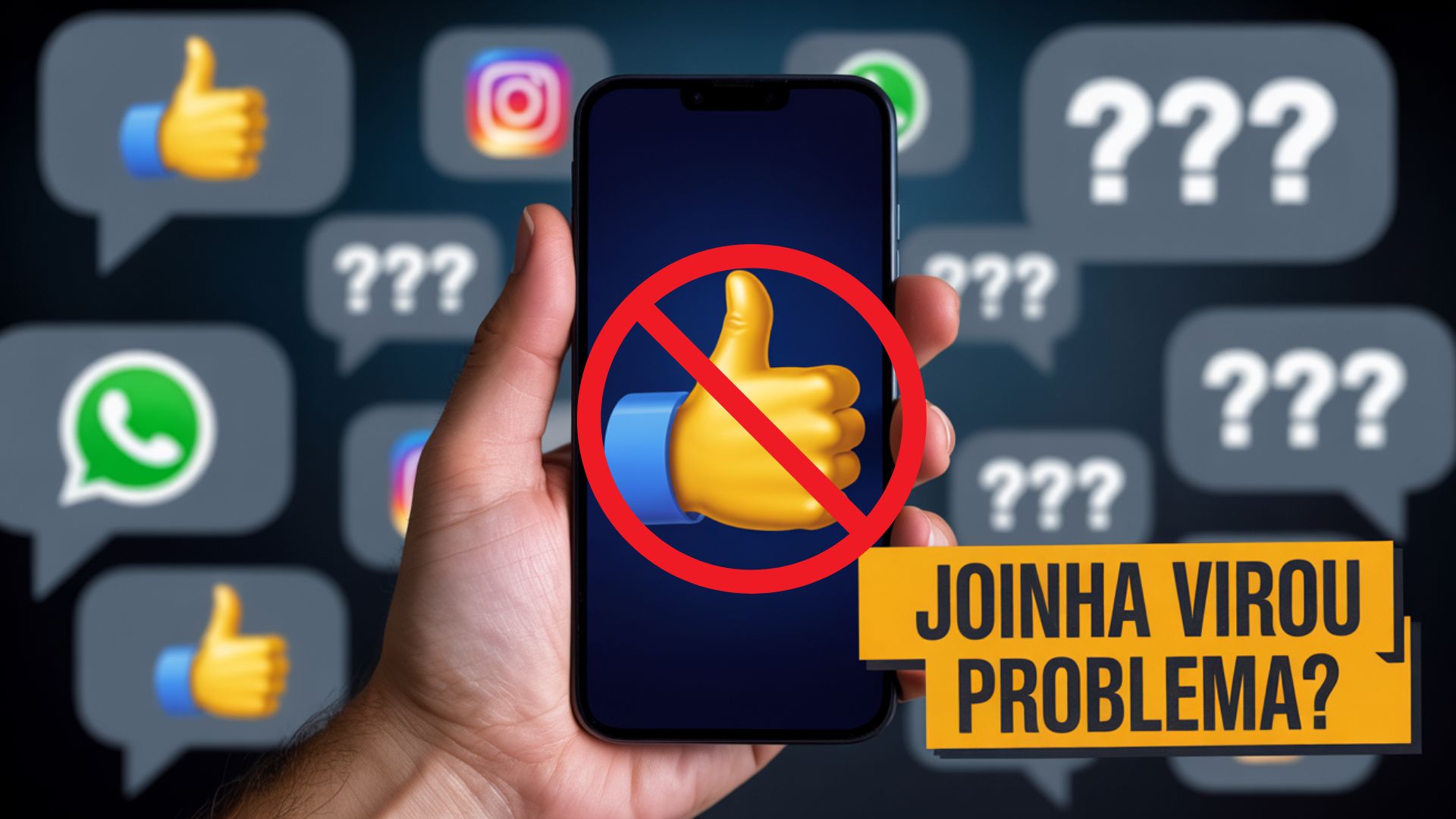
Symbols That Once Were Consensus Can Gain New Meanings Over Time, Creating Opposite Interpretations Between Generations and Virtual Contexts, as Is Currently the Case With the Thumbs-Up Emoji in Digital Communication.
The thumbs-up emoji (), once widely recognized as a universal sign of approval and positivity, has begun to be interpreted negatively in many contexts of digital communication, especially among younger users.
Currently, the symbol that represented “all good” or “ok” can convey coldness, indifference, or even a passive-aggressive tone in online messages, according to various research studies and reports from internet users.
The change in perception regarding the thumbs-up emoji reflects profound transformations in the dynamics of digital interaction and highlights the role of context and generations in the meaning of virtual symbols.
-
79-year-old woman challenges limits, visits 193 countries in the world after 56 years of planning and reveals the behind-the-scenes of a global journey that few have managed to accomplish.

-
These are the drivers who may stop paying tolls on highways in a project that promises to reduce costs for those who live from transportation in Brazil.

-
(Video): Italian pilot lands plane on moving train at 120 km/h and achieves unprecedented feat in aviation, even with a narrow runway and without direct visual contact.

-
It seems to have come out of a science fiction movie: A Brazilian city where it rains almost every day, recording over 4,000 mm per year, driven by climatic factors — a direct result of its strategic location in the Amazon.


Origin and Popularity of the Thumbs-Up Emoji
The origin of the thumbs-up emoji dates back to the early days of digital communications, when visual gestures were adapted for electronic messaging.
The raised thumb gesture, which has been used for decades as a symbol of approval in various cultures, gained global status on social media platforms and messaging applications.
Its popularity was solidified starting in 2009, when it became the official icon for the “like” button on Facebook, reinforcing the image of positivity and agreement in posts and comments.
However, the meaning of the thumbs-up emoji has evolved as new generations have adopted digital platforms as their primary means of communication.
Among young people of Generation Z, born roughly between the mid-1990s and the early 2010s, the use of the emoji () in conversations, especially when sent alone, has come to be interpreted as dry, indifferent, or even uninterested response.
The shift in perception does not imply a rigid rule but demonstrates how digital communication is permeated with nuances and unique codes, often misunderstood by other age groups.
How the Thumbs-Up Emoji Became Misinterpreted
The TechTudo survey, conducted with readers on Instagram in July 2025, illustrates this generational divide well.
Among the participants, 48% said they always use the thumbs-up emoji, while 43% use it occasionally, and only 9% claimed they never resort to the symbol.
When asked which emoji they would prefer to end a conversation neutrally, 40% chose the thumbs-up (), 27% said they would not use any emoji, 24% opted for the smiling emoji (☺️), and 9% preferred the wave emoji ().
The results suggest that, despite its popularity, the thumbs-up has lost some of its neutrality, becoming subject to more complex interpretations.
To better understand the emotional impact of using the thumbs-up, the survey also asked: “What do you feel when you receive just a as a response?”
More than half (51%) responded that they consider it normal, while 32% said it depends on the context, and 17% considered the response rude.
The data shows that the majority still sees the emoji as a practical resource, but the number of people who perceive the symbol as an indication of coldness or abrupt conversation closure is growing.
Generational Differences in the Use of the Thumbs-Up Emoji
These transformations do not occur homogeneously.
While older generation users, such as Boomers and Millennials, maintain the perception that the thumbs-up emoji is cordial, objective, and even efficient in signaling understanding or agreement, young people from Generation Z tend to prefer more expressive or personalized emojis, like the “hang loose” () or the cowboy emoji (), which are considered friendlier and warmer.
Thus, the difference in interpretation between age groups contributes to potential “communication shocks” on social media and messaging applications.


Digital Communication and the Zone of Discomfort With the Thumbs-Up Emoji
The popularization of social media and the intensification of messaging app use during social isolation have also contributed to solidifying new communication patterns.
On platforms like WhatsApp, Instagram, and TikTok, the brevity of responses often carries ambiguous interpretations, especially when the context of the conversation is not explicit.
The thumbs-up emoji, when used in isolation, can suggest impatience, distancing, or even irony, contradicting the original idea of positivity.
This change in perception regarding the thumbs-up emoji reveals a larger phenomenon: the “digital zone of discomfort”, where symbols once considered neutral come to have multiple meanings, depending on the environment, the interlocutor, and the tone of the conversation.
In a professional setting, for example, the use of the thumbs-up may be seen as inappropriate or insufficient to demonstrate engagement, whereas, in family conversations or among friends, the meaning may vary depending on the closeness between the parties.
With so many nuances and constant changes, have you ever stopped to think about how your emojis are perceived by people of different ages or contexts? Are we aware of the impact of small symbols in our digital daily lives?








-

-

2 pessoas reagiram a isso.