





 Portuguese
  English
  Spanish
  7 min of reading
  0 comments


Tilapia Enters Invasive Species List, But Government Discards Ban on Cultivation in Brazil
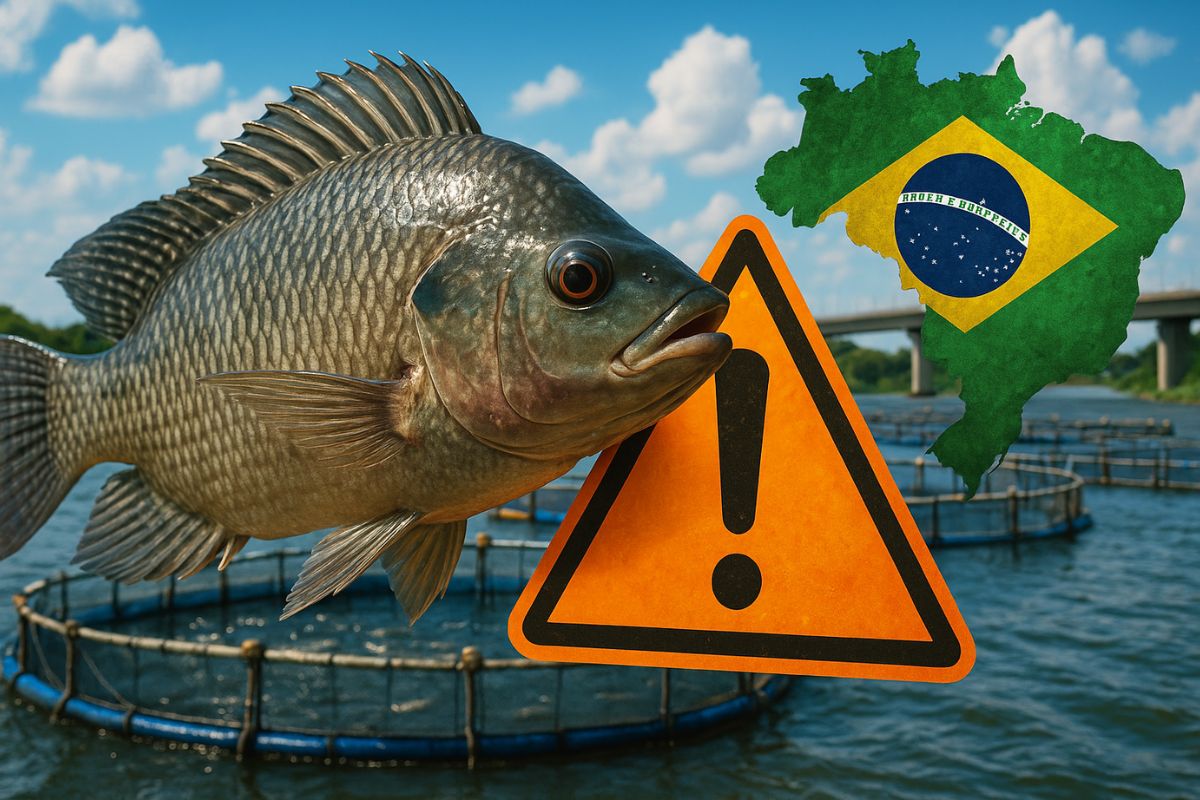
The inclusion of tilapia in the national list of exotic invasive species raised alarms on two fronts in Brazil: on one side, researchers and environmental agencies emphasize the risks to rivers, lakes, and protected areas; on the other, the government tries to calm a billion-dollar productive sector by repeating that there is currently no proposal to ban the cultivation of the species in the country. The decision exposes the challenge of reconciling environmental safety, international competitiveness, and regulatory predictability in a supply chain that is central to fish consumption in the domestic market today.
In practice, the measure acknowledges that tilapia, originally from the African continent and the Nile River basin, is establishing itself in environments where it is not native, and that escapes from farms have been recorded even in protected areas and coastal regions. At the same time, the Ministry of the Environment insists that inclusion on the list serves as a technical reference for public policies and not as an automatic trigger for prohibition. The official message is that Brazil will continue to produce tilapia, but under greater scrutiny regarding environmental impacts, licensing, and management conditions adopted by the sector.
What It Means for Tilapia to Be Considered an Exotic Invasive Species
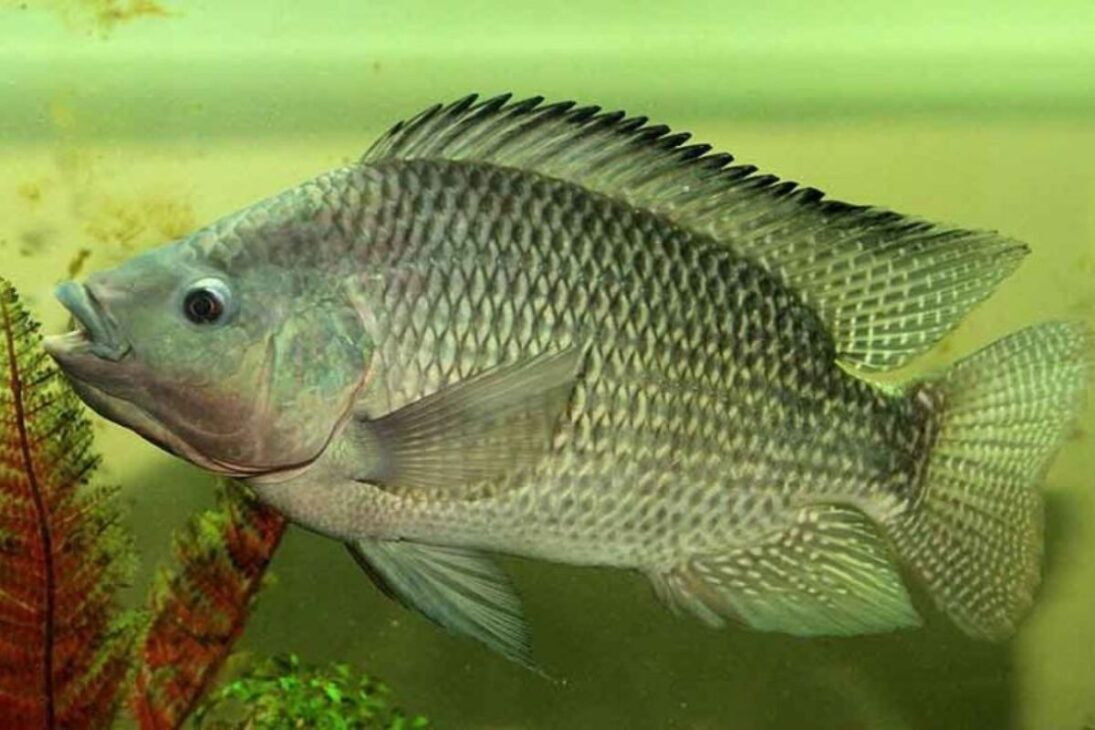
From a technical perspective, an invasive species is one that occurs in areas outside its natural distribution and causes ecological imbalances.
-
From 130 producers in the year 2000 to just 15 today: the dramatic decline of passion fruit in Araguari shows how the lack of labor in the Brazilian countryside is killing a decades-old agricultural tradition, even with Brazil being the largest producer in the world.
-
Agricultural drone sprayed poison into the air and destroyed the neighbor’s crops, causing 1 million in damages; 48 cows died from nitrite poisoning in the pasture, and Russia is hiding a possible outbreak of foot-and-mouth disease: the week was brutal for the rural sector.
-
Russia cut fertilizers, China cut fertilizers, and oil prices soared with the war in the Middle East: sugarcane producers in the interior of São Paulo are seeing costs explode from all sides and warn that the effects will take months to be absorbed.
-
It does not come from flowers, is produced only every two years, and more than 90% goes straight to Europe: meet the bracatinga honeydew honey from Santa Catarina, considered one of the rarest in the world and overlooked by Brazil itself.

In the case of tilapia, the frequent sightings of fish in rivers and lakes outside of farming areas led the Ministry of the Environment to include it in the Official National List of Exotic Invasive Species, prepared under the National Biodiversity Commission.
This classification is not symbolic. It guides policies for prevention, control, and monitoring of environmental impacts.
The term “exotic” indicates that tilapia is not native to Brazilian biomes. It is an introduced fish that has adapted well to local conditions and has been widely used in aquaculture.
By entering the invasive exotics list, the species is no longer viewed solely as an economic asset but is also treated as a potential vector for biodiversity loss, competition with native species, and alteration of aquatic ecosystems.
The central message is that ecological risk becomes a structural part of the discussion on rules for tilapia cultivation in the country.
Why Tilapia Concerns Researchers and Environmental Agencies
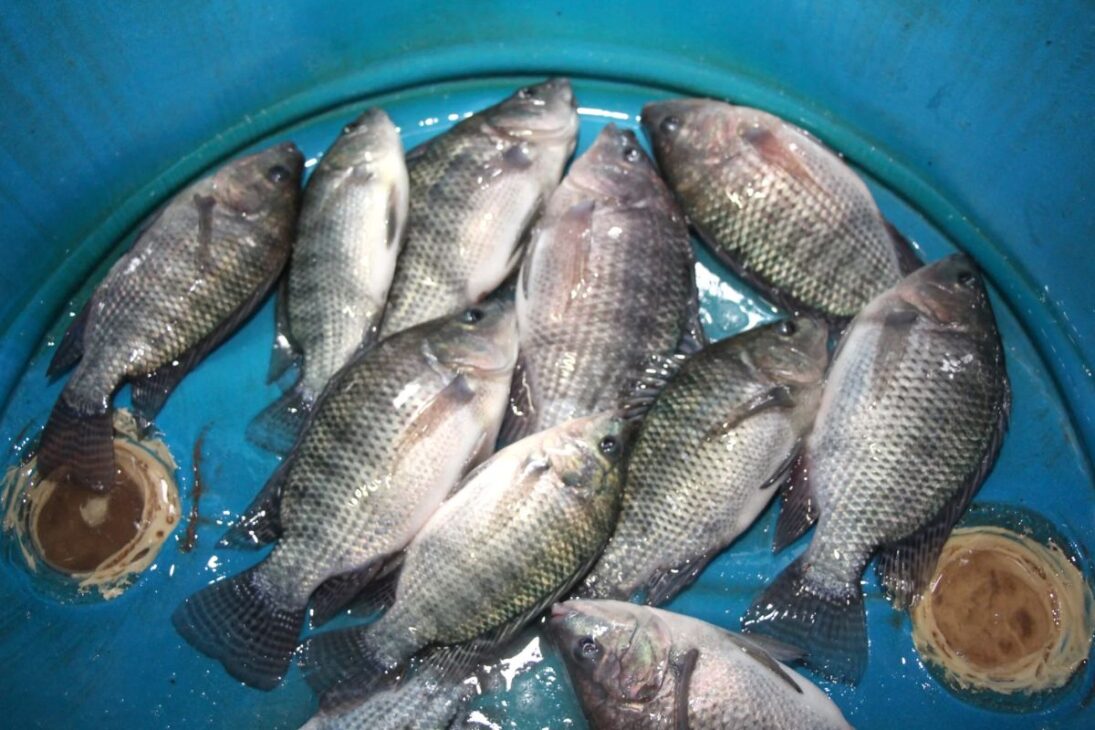
Recent research indicates that tilapia exhibits characteristics typical of species with high invasive potential.
It is a territorial fish, capable of competing for space and food with native species, and is omnivorous, meaning it can consume both plant material and other organisms, including fish.
This behavior amplifies the impact on local food chains and nutrient dynamics in aquatic environments.
There have been records of tilapia in protected areas and even in marine environments, a phenomenon associated with the combination of the species’ high resilience and extreme weather events that facilitate mass escapes.
In recent floods, thousands of fish escaped from structures considered well-managed, indicating that the risk of dispersion is not restricted to systems with operational failures.
When tilapia escapes, it not only brings the risk of direct competition but also the potential spread of parasites that can contaminate native populations and compromise the health of entire fish stocks.
How the Government Explains the Inclusion of Tilapia on the List
The Ministry of the Environment states that the list was built from an extensive review of scientific literature, with hundreds of articles, books, and specific databases on exotic invasive species.
In the case of tilapia, the evidence regarding occurrences outside of farming areas, adaptation to different environments, and records of ecological impacts was deemed sufficient to classify it as invasive.
In addition to scientific analyses, the government informs that the definition of the list also took into account Brazil’s commercial context and relationships with countries that maintain species with high invasion potential for Brazilian biomes.
There were public consultations, with participation from experts and civil society institutions, where proposals for inclusion and exclusion of species were made.
According to the Ministry of the Environment, the process was technical, gradual, and transparent, and the presence of tilapia on the list reflects a consolidated risk diagnosis, not an isolated decision of sector policy.
Government Promises to Maintain Tilapia Cultivation and Tries to Contain Sector Reaction
Despite its classification as invasive, the Ministry of the Environment emphasizes that the measure does not imply a ban on the use or cultivation of tilapia.
The agency recalls that Ibama remains responsible for authorizing the breeding of exotic species and that, currently, it allows tilapia production in the country.
The official position is categorical in affirming that there is no proposal or planning to interrupt this activity and that the consumption of the fish will continue to be possible in the domestic market.
Even with this stance, associations and representatives from the fishing industry express concern about what they see as a negative signal.
Industry leaders highlight that tilapia is currently a key player in Brazilian aquaculture, significantly contributing to income generation, jobs, and exports, and fear that the classification as invasive could open the door to new requirements or indirect restrictions.
In practice, the sector interprets the inclusion in the list as a potential increase in regulatory costs and as a factor of insecurity for long-term investments in cultivation and processing structures.
Divergences Between Environment, Agriculture, and Fishing
The decision to classify tilapia as an exotic invasive species also exposed differences within the federal government itself.
The ministries of Agriculture and Fisheries and Aquaculture disagree with the position of the Ministry of the Environment and assess that the measure may raise production costs and hinder market openings or expansions abroad.
The Fisheries area is preparing a technical opinion to request the removal of tilapia from the list, arguing that the economic and social impact of the species is underestimated in the environmental analysis.
There is also a conflict of regulatory foundations. In 2022, the Ministry of Agriculture published a list of species considered domesticated, which includes tilapia.
For representatives of the Fisheries area, the same species should not simultaneously be classified as domesticated and invasive.
Researchers, on the other hand, contest the notion of domestication used in the Agriculture document and assert that tilapia is far from the level of domestication observed in animals like chickens, reinforcing that it is an exotic species dependent on intensive management and capable of causing significant impacts if it escapes.
This internal dispute adds uncertainty regarding which interpretation will prevail in the future design of norms for tilapia cultivation.
Cultivation Practices and the Issue of Escapes
Tilapia producers emphasize that environmental licensing already imposes obligations to reduce the risk of escapes, such as specific containment structures and, in some cases, sex reversal of fish to males, a strategy that decreases the likelihood of reproduction in the wild.
Techniques like cage-based farming and excavated ponds are accompanied by requirements for physical barriers, settling ponds, and protection systems to prevent animals from escaping in routine operating situations.
However, researchers believe these measures are important but insufficient to eliminate the risk entirely. Smaller females may escape more easily, extreme weather events may overcome existing barriers, and as tilapia production expands, the absolute number of structures subject to failures increases.
Field studies have already identified escaped fish in protected areas and marine environments, something unlikely to occur without the combination of the species’ resilience and containment gaps.
The technical consensus is that the risk of escape will never be completely eliminated, reinforcing the need to treat tilapia as a species requiring rigorous and ongoing environmental management.
Economic Impacts, Exports, and Risk of Legal Uncertainty
For the production chain, the greatest concern lies in the possibility that the presence of tilapia on the invasive list will result in more expensive and lengthy licensing processes, in addition to increasing the level of legal uncertainty.
Sector representatives argue that, in many cases, producers already face an extensive sequence of authorizations involving water agencies, heritage of the Union, state environmental licensing, and rural registrations, which can take years before a new venture is approved.
There is also concern regarding the country’s image in international negotiations. The classification of tilapia as invasive could be used, in the view of parts of the sector, as an argument to impose non-tariff barriers or question the sustainability standards of Brazilian aquaculture.
Leaders argue that the government should reinforce, in official documents, that it does not intend to prohibit the activity, in order to mitigate the risk of interpreting it as an environmentally unviable practice.
The fear is that, without regulatory clarity, the combination of the invasive list, complex licensing, and uncertainties regarding new requirements could ultimately discourage investments and stall the expansion of production units.
Balancing Environmental Protection and Maintaining Tilapia Production
At the center of the discussion is the search for a balance between environmental conservation and maintaining tilapia as a pillar of fish supply in Brazil.
On one side, recognizing the species as an exotic invasive responds to scientific evidence and the need to limit damage to fragile ecosystems.
On the other, the economic and social relevance of tilapia makes any measure that could be interpreted as a step towards prohibition or drastic reduction of cultivation politically sensitive.
The solution lies in clearer norms, transparent criteria, and investments in containment and monitoring technology.
More efficient physical barriers, flood alert systems, and rapid response protocols for escapes can mitigate risks without necessarily undermining production.
If the country can turn the classification of tilapia into a trigger for improving environmental standards, and not just a source of conflict among agencies, there is room for aquaculture that acknowledges ecological risks while keeping the species at the center of a productive strategy.
In your opinion, is Brazil managing to balance environmental protection and legal security for tilapia cultivation, or do you think that one of these agendas is still tipping the scale too much?









Seja o primeiro a reagir!