





 Portuguese
  English
  Spanish
  3 min of reading


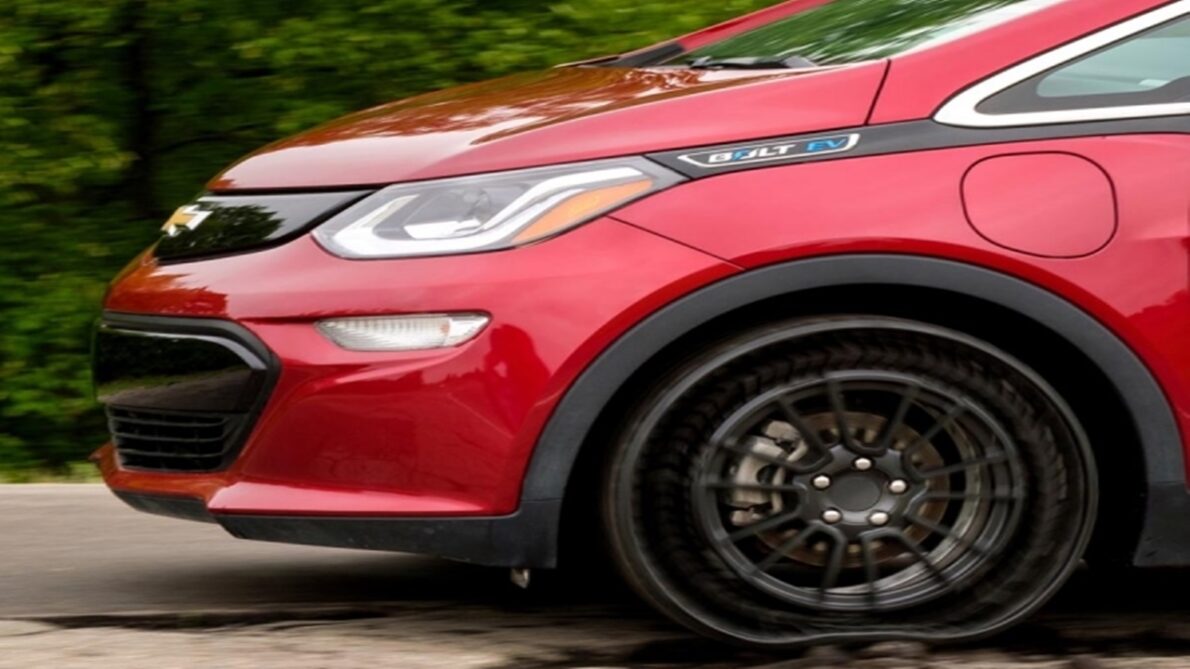
The Automotive Industry Giants, Michelin and General Motors, Developed an Airless Tire That Does Not Puncture. The Technology Eliminates Explosions as Well as Reduces the Use of Raw Materials and Waste, Contributing to a World with Zero Accidents, Zero Emissions, and Zero Congestion.
The development was long and took more than ten years for the automotive industry giants, General Motors and Michelin, to find the definitive solution. But the project seems to be ahead of the curve, and the sale of the long-awaited Uptis – the airless tire of the future that does not puncture – could happen within a year.
The idea behind the Uptis (Unique Puncture-Proof Tyre System) is that the wheel supports the weight of the car through flexible spokes made of a blend of fiberglass and rubber, materials that provide the necessary flexibility and rigidity to roll, instead of using pressurized air as the internal element.
Watch the Video Below to Learn About the New Airless Tire That Does Not Puncture Developed by Michelin and General Motors


The Advantages Are Numerous, Since Uptis Tires Eliminate the Risk of Punctures, Blowouts, or Irremediably Damaged Tires, and They Also Do Not Require Periodic Inflation Pressure Checks.
The airless technology ensures that the Uptis Prototype eliminates punctures and blowouts. This means that the Uptis offers significant potential to reduce the use of raw materials and waste, contributing to GM’s vision for a world with zero accidents, zero emissions, and zero congestion.
-
Caoa Chery Tiggo 5X skyrockets in sales in Brazil: a 2,318% increase and waiting lists of up to 4 months to acquire the model.
-
Goodbye falls: Singaporean company Omoway begins production of a motorcycle that doesn’t fall and surprises the market by offering automatic balance technology that reduces accidents and transforms the urban riding experience.
-
A French brand placed a car on four huge red balloons to prove that its suspension made the vehicle “float,” and the surreal scene became one of the most iconic and unusual images in automotive history.

-
Jeep Avenger begins production in Brazil, debuting as the brand’s new entry-level SUV and inaugurating an unprecedented phase by becoming the first national Jeep manufactured outside of Goiana, as part of a R$ 3 billion plan.

Michelin also states that they will be more durable than traditional tires and greener in their usage cycle. It is estimated that 200 million tires suffer structural damage each year (or premature wear on their treads) and need to be discarded.
Another argument in favor of Uptis is the benefits for fleet managers, who will see their maintenance costs considerably reduced.
So far, this airless technology had only been applied to very special vehicles, such as space exploration rovers. However, they could soon replace conventional tires on a large scale, although it is still unknown what price they will have in the market.
Even before its appearance, the Michelin Uptis, which has already registered over 50 of its own patents, has been recognized with significant innovation awards in Europe and America, such as the Golden Steering Wheel Award 2019 (Germany) and the Avt Aces Award 2020 (USA).
GM Tested and Validated the Uptis Prototype in a Michigan Test Fleet of Chevrolet Bolt EVs.
The tests began in 2019 with the Chevrolet Bolt. Sales are expected to start in 2024. Bridgestone wants to be the first to launch them in their companies, prioritizing commercial vehicles.
“General Motors is excited about the possibilities that Uptis presents, and we are thrilled to collaborate with Michelin on this innovative technology,” said Steve Kiefer, Senior Vice President of Purchasing and Supply Chain at General Motors. “UPTIS is a perfect fit to drive the automotive industry into the future and a great example of how our customers benefit when we collaborate and innovate with our supplier partners.”
More information about the MICHELIN Uptis Prototype can be found here.





Seja o primeiro a reagir!