





 Portuguese
  English
  Spanish
  3 min of reading
  9 comments


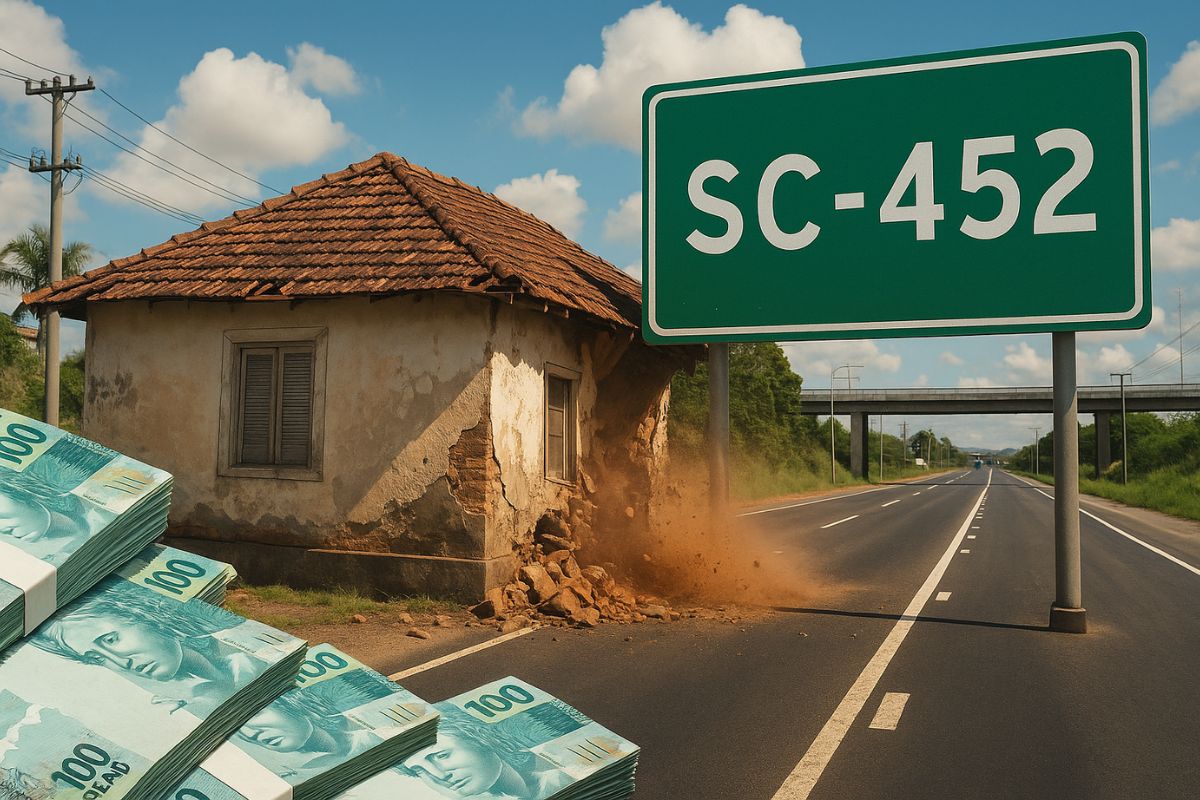


Court Applied STJ Understanding and Denied Compensation Request for Property in Area Impacted by Highway Existing Since 1961.
The Court of Justice of Santa Catarina (TJ-SC) decided that heirs have no right to compensation for property already affected by the construction of Highway SC-452 before the succession that occurred in 1995. The case involved a request for financial compensation for alleged indirect expropriation, but the court concluded that the road had existed since the 1960s.
According to the decision, the occupancy of the area occurred long before the transfer of ownership, which eliminates the possibility of reparation.
The panel followed the guidance of the Superior Court of Justice (STJ), which has already consolidated the understanding that those who inherit or purchase a property already affected by governmental action cannot claim compensation. The information comes from Conjur.
-
The Senate approves a bill that criminalizes misogyny, hatred, or aversion towards women, and includes the crime in the Racism Law with a penalty of up to 5 years.

-
Chamber Approves Bill That Allows Pepper Spray for Women Over 16 and Imposes Strict Rules for Purchase, Possession, and Use as Self-Defense

-
Chamber Approves Law to Combat Leucaena, Fast-Growing Plant That Dominates Land and Threatens Native Species in Various Regions of the Country

-
Asset Division: Know What Cannot Be Divided in Case of Divorce


The Case Reviewed by TJ-SC
The process originated in Joaçaba and was initiated by heirs who claimed that the highway’s domain had only been occupied after the succession.
To support the request, the defense argued that the effective intervention occurred in 1996, which would guarantee them a right to compensation.
However, the expert opinion concluded that the road had existed since 1961, originally as a dirt road, and underwent paving between 1985 and 2004.
Thus, it was demonstrated that, at the time of the succession in 1995, the property was already affected by the presence of the highway. This point was decisive for the court to reject the appeal.
Application of STJ Theme 1.004
The rapporteur highlighted that the case falls under Theme 1.004 of the STJ repetitive appeals, which establishes that those acquiring property after administrative appropriation have no legitimacy to request compensation.
The judge emphasized that, in these cases, the property’s value already reflects the existing restrictions, and therefore there is no claimable loss.
This understanding seeks to prevent what is called unjust enrichment, preserving the principles of good faith and administrative morality.
According to the rapporteur, accepting the heirs’ request would set a precedent for individuals seeking profits in situations where there was no actual loss of property.
Possible Exceptions and Court Analysis
The STJ admits exceptions in specific hypotheses, such as when there is a gratuitous acquisition or when the successor demonstrates evident economic vulnerability.
However, the TJ-SC considered that none of these circumstances applied to the case in question.
Moreover, the court emphasized that the objective good faith, which could justify reparation in particular cases, was also not proven.
Thus, it concluded that the first-instance decision should be maintained in its entirety.
Unanimous Decision and Legal Effects
The Delegated Resources Chamber of TJ-SC voted unanimously to reject the request. For the judges, the precedent set by the STJ is clear and must be observed to ensure legal security and uniformity in decisions.
As a result, it was recognized that the heirs have no right to compensation for property due to Highway SC-452, since the public intervention occurred before the succession.
The decision reinforces the understanding consolidated in higher courts and serves as a reference for similar cases throughout the country.
The decision reignites the debate over the limits of state responsibility in cases of indirect expropriation and the rights of those who inherit properties already affected.
Do you think the decision to deny compensation in these cases is fair, or do you believe that heirs should be compensated? Leave your opinion in the comments; your viewpoint can enrich this discussion.










Quem está atrasado na obras quando abriu a rua já deveria ter feito o asfalto os políticos são muito senvergonha mesmo se fosse eles que tem direito a indenização já resolve em dois dias mas para população demora anos e ainda os políticos roubam o povo o Lula mesmo por causa do dedo resolveu dar uma indenização de milhões para si mesmo depois deu tbm para Dilma uma indenização por ela ter sido afastada da presidência
Quando houve o apossamento administrativo por parte do Estado, quem era dono ou possuidor da terra deveria ter entrado com a ação de desapropriacao indireta: para isso teve 20 anos de prazo. Todavia, como nao entrou a tempo e a hora, prescreveu o direto (o direito nao socorre quem dorme), e quem adquiriu depois, viu a rodovia lá, mesmo como estrada sem asfalto, portanto, já era uma via pública. Fato notorio nao precisa ser provado.
Não existe mais justiça infelizmente