





 Portuguese
  English
  Spanish
  3 min of reading
  0 comments



New Decision from TJDFT Ensures That People with Autism Have the Right to Spots Reserved for People with Disabilities in Public Exams, Regardless of Support Level.
In a historic decision of great relevance for social inclusion, the Court of Justice of the Federal District and Territories (TJDFT) confirmed, in October 2025, that individuals with Autism Spectrum Disorder (ASD) have the right to compete for spots reserved for people with disabilities (PwD) in public exams — regardless of the level of support they may need.
The decision, issued by the 4th Civil Chamber, upheld a first-instance ruling that had granted an autistic candidate the right to participate in the selection within the quota allocated for people with disabilities. The candidate had been prevented by the organizing committee from registering as a PwD, on the grounds that his level of support was not sufficient to qualify for the quotas.
The Case That Led to the Decision
The candidate presented medical reports confirming the autism diagnosis, but the exam board questioned the classification, claiming that he did not have significant limitations. The case was brought to court, and a forensic examination was performed to clarify the extent of the participant’s limitations.
-
The noise law will no longer be in effect at 10 PM starting in June with a new rule valid during the 2026 World Cup.

-
The Chamber opens a debate on driver’s licenses at 16 years old as part of a reform that includes around 270 proposals to change the Brazilian Traffic Code and may redesign rules for licensing, enforcement, and circulation in the country.

-
The new Civil Code could revolutionize marriages in Brazil with “express divorce” and changes that could exclude spouses from inheritance.

-
Banco do Brasil sues famous influencer for million-dollar debt and intensifies debate on delinquency, risks of seizure, and direct impact on Gkay’s credibility.


The expert confirmed that the candidate exhibited significant difficulties in social communication and adapting to collective contexts, which directly impacted his routine and justified the recognition of the right.
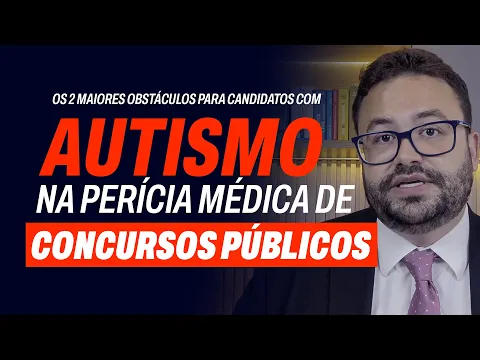

In light of this, the first-instance judge granted the right to register as a person with a disability, based on the Law No. 12.764/2012, known as the Berenice Piana Law, which recognizes autism as a disability for all legal purposes.
The organizing committee appealed the decision, but the TJDFT fully upheld the ruling.
What the Rapporteur of the Case Said
The rapporteur of the case was categorical in stating that it is not the degree of autism that determines the right to classification, but rather the barriers faced by the individual in social and professional environments.
According to the magistrate, the restrictive interpretation made by examining boards — which often require evidence of severe disability or functional incapacity — goes against the spirit of the legislation that seeks to promote equality of opportunities and combat discrimination against individuals with ASD.
“The recognition of the condition of disability arises from the barriers and social limitations faced by the individual, not from the intensity of the medical diagnosis,” the rapporteur emphasized in his vote.
A Landmark for the Rights of People with Autism
The TJDFT’s decision was celebrated by entities linked to autism and inclusion. Experts point out that the understanding reinforces the comprehensive and protective nature of Law 12.764/2012 and the Brazilian Inclusion Law (Law No. 13.146/2015), which establishes that any person with long-term impairments, whether physical, mental, intellectual, or sensory, has the right to legal protection as a PwD.
Moreover, the judicial precedent may guide future decisions in public examinations and national selections, ensuring that candidates with ASD are not discriminated against or excluded based on subjective evaluations of their condition.
Advancement in the Fight for Equality
The case analyzed by the TJDFT reinforces that the State must act inclusively, removing barriers that hinder access for autistic individuals to public service.
The decision also demonstrates that Brazil is advancing in recognizing diversity within the autism spectrum, overcoming the outdated view that only severe cases deserve protection.
More than an individual process, this is a legal and social milestone that reaffirms the right of all autistic individuals to full participation in society, as provided by international conventions ratified by Brazil.










-

Uma pessoa reagiu a isso.