





 Portuguese
  English
  Spanish
  4 min of reading
  12 comments





Interstellar Object 3I/ATLAS, the Third Confirmed by Science, Reveals Unprecedented Composition and Reinforces the Mystery of the Origin of Comets
NASA confirmed this week the passage of comet 3I/ATLAS at its closest point to the Sun, traveling at a speed of 58 km per second, occurring between today 28/10 and tomorrow 29/10. The celestial body, detected in July by the ATLAS telescope in Chile, is only the third known object coming from outside the Solar System and is now headed toward interstellar space after a brief encounter with the Sun.
With a hyperbolic trajectory and a chemical composition different from any local comet, 3I/ATLAS offers new clues about the formation of distant planetary systems. Its spectroscopic analysis revealed high levels of carbon dioxide, fine dust, and an absence of common organic compounds, raising hypotheses about an origin in extremely cold and ancient regions of the cosmos.
Origin and Trajectory of the Comet
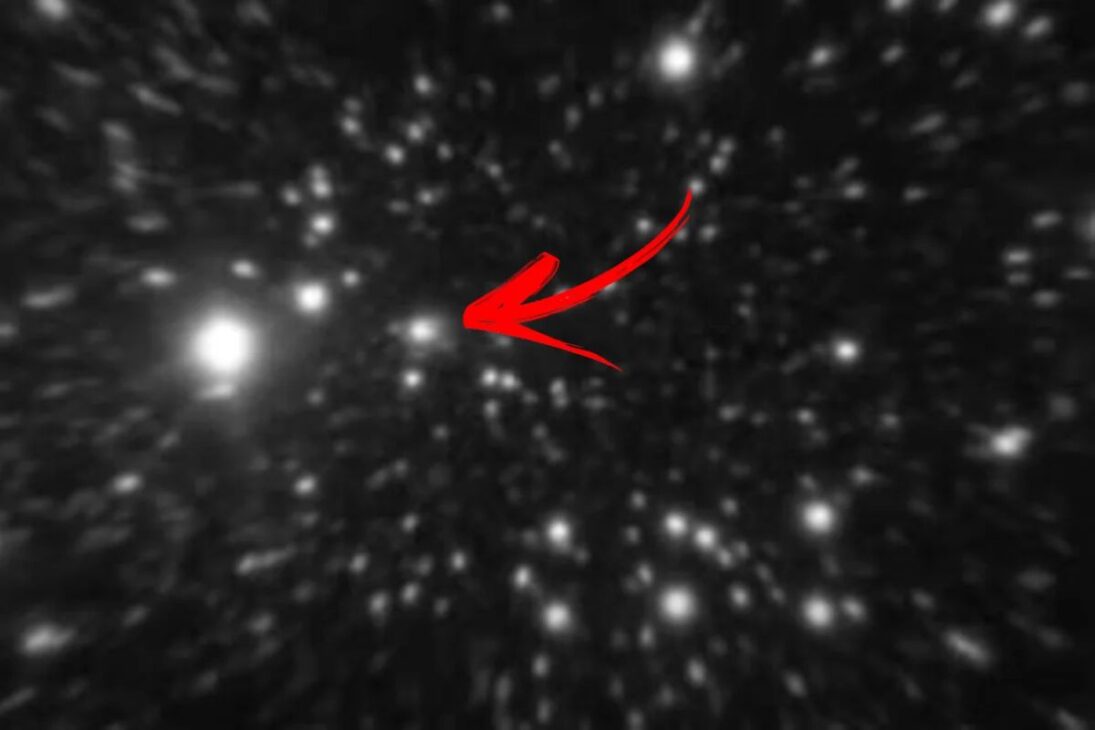
Detected on July 1, 2025, at the Río Hurtado Observatory, the comet 3I/ATLAS traveled through the Solar System in an open orbit, without return.
-
These living root bridges and ladders are over 700 years old and help indigenous people survive in one of the rainiest regions in the world.

-
From sertanejo star to international investor: Ana Castela invests millions in a mansion in the USA, creates a themed accommodation in Orlando, and shows that the “boiadeira” also wants to grow away from the stage.

-
The 10 most stunning motorhomes in the world: a $3 million trailer with a rooftop nightclub and garage for a Ferrari, “palaces on wheels” with Italian marble, private cinema, and five-star hotel luxury for billionaires.

-
Trump wanted to spend $400 million on the White House, but the courts prohibited the million-dollar construction.


The perihelion passage on October 29 will occur at 1.36 astronomical units from the Sun, between the orbits of Earth and Mars.
Its speed and approach angle indicate a unique passage route.
With an eccentricity greater than 5, the object is not gravitationally bound to the Sun, confirming its interstellar nature.
The nucleus, weighing tens of billions of tons, has proven stable and resistant to intense heat, showing no signs of fragmentation during perihelion.
Composition Reveals Signs of Interstellar Origin
Data collected by probes and telescopes, such as the James Webb and the Keck Observatory, suggest a composition dominated by CO₂ and rare metallic minerals.
The absence of organic molecules typical of solar comets suggests formation in environments with temperatures below -250 °C.
The reddish color of the dust and the extreme polarization of reflected light indicate prolonged exposure to cosmic radiation outside the heliosphere.
This type of surface alteration is typical of objects that have wandered for billions of years in interstellar space before crossing the path of the Sun.
Space Missions and Scientific Observations
During the approach, probes such as Mars Express and the ExoMars Trace Gas Orbiter are recording the comet’s brightness millions of kilometers from Mars.
The Perseverance rover managed to capture the object as a bright spot in the Martian sky, while the Europa Clipper probe aligned with its ion tail to collect charged particles.
Despite the intense solar brightness, ground telescopes identified subtle variations in the coma of 3I/ATLAS, with no visible tail formation.
The measurements will be used to adjust thermal behavior models of interstellar comets, which are fundamental for future interception missions.
Risk of Fragmentation and NASA Protocols
The intense solar heating raised concerns about a possible rupture of the nucleus.
The surface of 3I/ATLAS receives about 33 gigawatts of radiation during perihelion, but with no signs of collapse.
NASA has activated monitoring protocols in partnership with ESA and the International Asteroid Warning Network to track potential fragments and update planetary defense databases.
Orbital simulations confirm that the comet does not pose a risk to Earth, maintaining a minimum distance of about 270 million kilometers in December.
Starting in November, the object will become visible again to amateur telescopes, crossing the constellations of Virgo and Leo before disappearing completely into deep space.
The brief visit of 3I/ATLAS reinforces the role of automated observatories and interplanetary missions in detecting interstellar bodies.
Each passage offers unprecedented data on the chemistry, density, and structure of materials formed outside the Solar System, broadening the understanding of how planets and comets arise in other stellar systems.
Just like ʻOumuamua and Borisov, 3I/ATLAS leaves open questions about cosmic diversity.
Its stable behavior and unusual composition fuel interest in future missions that may capture direct samples of these visitors from other worlds.
And you, do you think we will one day be able to intercept a comet and bring fragments back for study on Earth?








… [Trackback]
[…] There you will find 186 more Info to that Topic: en.en.clickpetroleoegas.com.br/today-nasa-records-alien-comet-3i-atlas-passing-by-the-sun-at-58-km-s-before-disappearing-out-of-the-solar-system-btl96/ […]
… [Trackback]
[…] Information to that Topic: en.en.clickpetroleoegas.com.br/today-nasa-records-alien-comet-3i-atlas-passing-by-the-sun-at-58-km-s-before-disappearing-out-of-the-solar-system-btl96/ […]
… [Trackback]
[…] Read More here to that Topic: en.en.clickpetroleoegas.com.br/today-nasa-records-alien-comet-3i-atlas-passing-by-the-sun-at-58-km-s-before-disappearing-out-of-the-solar-system-btl96/ […]