





 Portuguese
  English
  Spanish
  5 min of reading
  61 comments


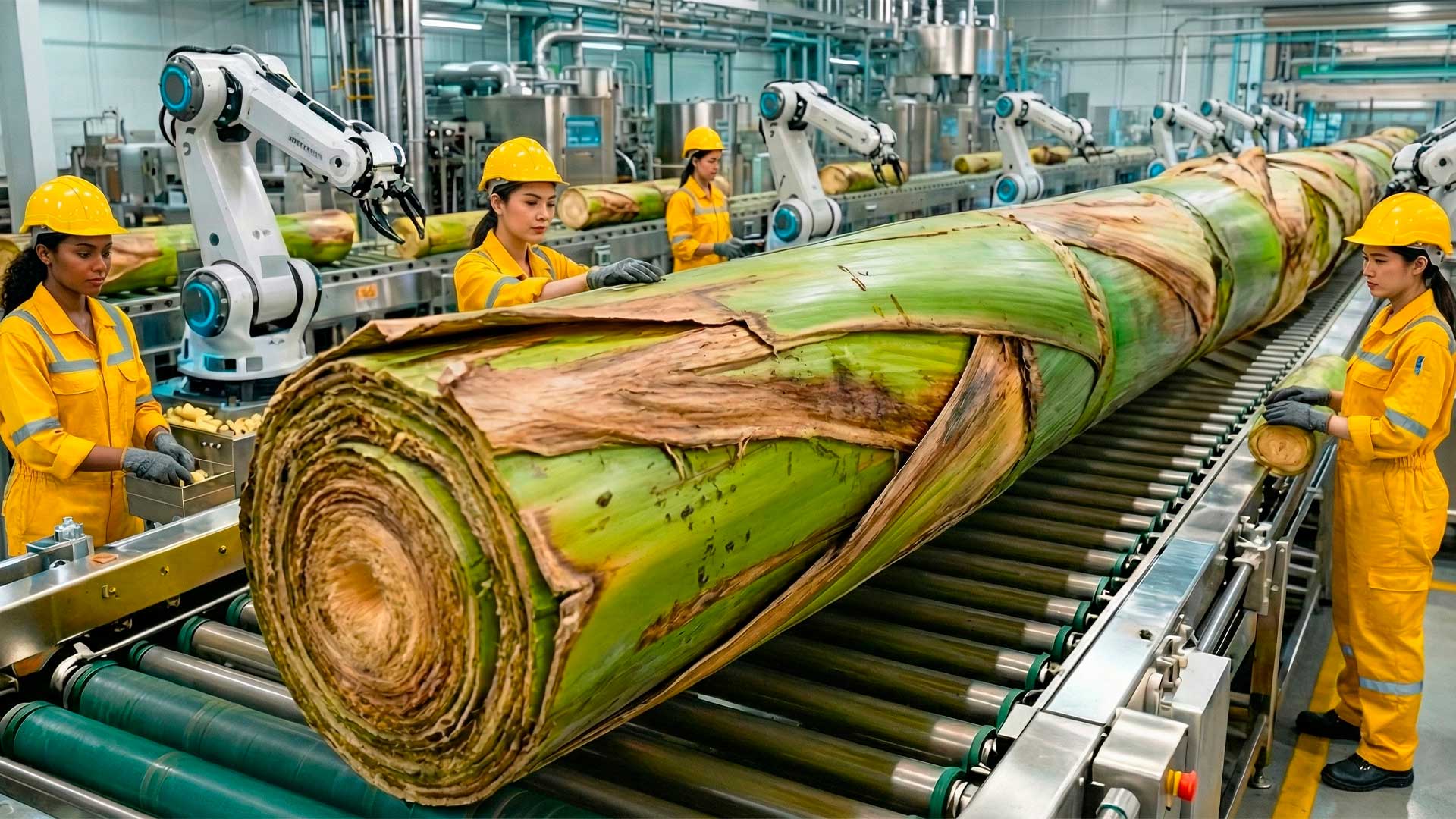


From the Arrival of the Pseudostems to Fiber Ready for the Industry, the Process Combines Extraction Machines, Extensive Washing, Controlled Drying, and Quality Control to Standardize the Material
Banana fiber has moved from being a laboratory curiosity to being on the radar of companies seeking renewable raw materials for sustainable textiles, paper, and composites. The momentum comes from a simple and hard-to-ignore fact: banana cultivation generates a lot of waste, and most of it does not become a product.
Studies on the circularity of the sector indicate that, of the total weight of the banana plant, only a fraction becomes food, while the rest becomes biomass discarded in the field after harvest. Literature estimates suggest about 220 tons of waste per hectare, depending on the production system, which helps explain why the topic has gained industrial urgency.
It is in this context that the modern banana fiber factory emerges. Instead of relying on handicrafts and small batches, it organizes agricultural waste into a production chain, with standards, traceability, and safety and quality routines similar to those of other natural fiber industries.
-
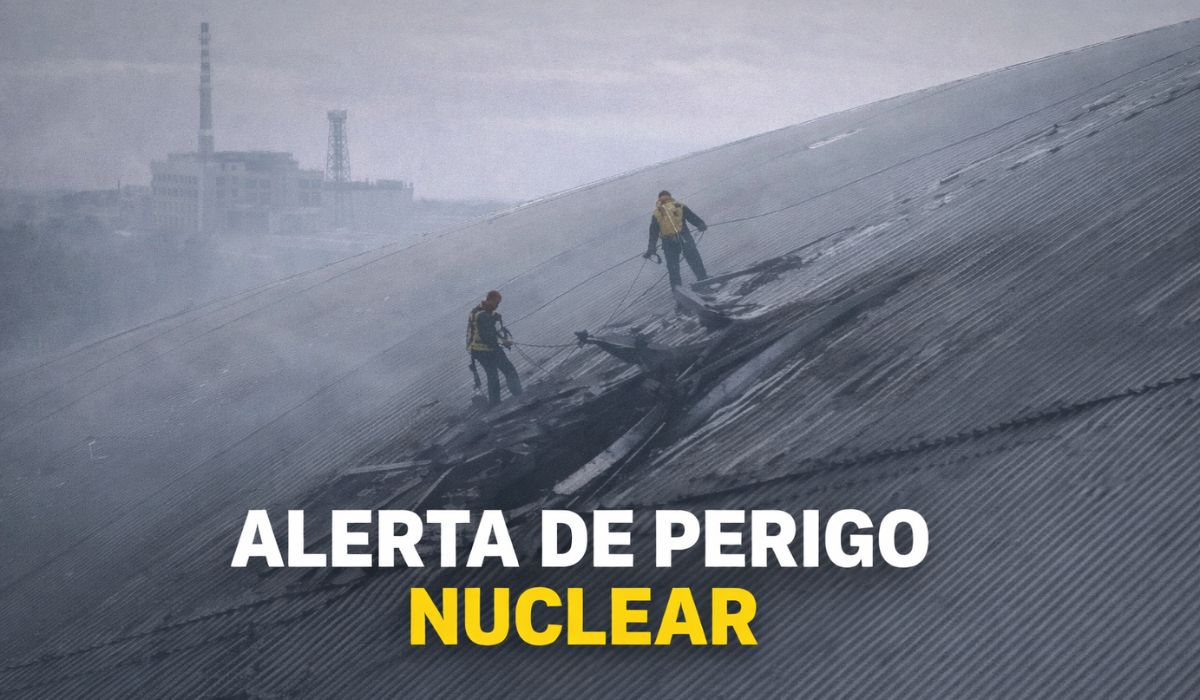
The gigantic steel shell built to contain Chernobyl for a century has been pierced by a drone, exposing a critical system and creating a hole that could cost over 500 million euros to repair.
-
Brazilian Navy reaches a new level by taking over an airport with a 1,600-meter runway used by 1,800 military personnel and autonomous attack drone testing.

-
The Himalayas continue to grow to this day, with tectonic plates advancing 5 cm per year, mountains rising up to 10 mm annually, and the 2015 earthquake that killed 9,000 people may have increased the risk of an even larger seismic mega-event.

-
At an altitude of 400 km by astronauts from the International Space Station, Paris transforms at night into a golden mesh so precise that it reveals the outline of the Seine River, avenues, and entire neighborhoods like a luminous map drawn over the Earth.


In Brazil, recent initiatives have also strengthened the visibility of the topic. In July 2025, FIESC announced that the SENAI Institute of Textile Technology, Clothing, and Design participated in a project to develop fabric from banana stalk fiber with a focus on industrial application, in partnership with companies in the sector.
How the Pseudostems Arrive and What Happens in the Sorting Right at the Entrance; Watch the Video

The operation begins outside, with trucks or utility vehicles bringing fresh pseudostems from nearby properties. The logistics is often short because the material is heavy and moist, which increases transportation costs.
Upon reception, the industrial plant sorts by size, condition, and moisture level. This stage defines the efficiency of the remainder of the process, as highly degraded pseudostems tend to produce shorter fibers with more impurities.
Why Banana Fiber Has Become a Subject of Circular Economy and Sustainable Textiles
The main raw material is not the fruit but the pseudostem, that structure that looks like a trunk and remains after harvest. In many regions, this volume is left in the field, discarded, or in worse cases, burned, which opens up possibilities for repurposing solutions.
Science has already well-mapped the paths for extracting fiber from this material. Technical reviews describe extraction via mechanical methods, as well as through chemical and biological routes, varying in cost, water consumption, and the characteristics of the obtained fiber.
With the market for sustainable materials growing, industrial interest shifts from novelty to consistency, scale, and standardization. In other words, it is not enough to extract; it is necessary to deliver a batch of fiber with repeatable quality.
Mechanical Extraction with Decortication When the Stalk Turns into Bundles of Fiber
The heart of the factory is the extraction line. Many plants employ mechanical decortication, in which rollers and blades crush and scrape the pseudostem to separate the fibrous part from the softer, moister material. This principle appears in technical studies that describe the mechanical route as the basis for industrial scale.
In practice, the machine receives pieces of the pseudostem already cut into standardized dimensions. The material enters, is compressed and scraped, and comes out in two streams, one of fibers and another of pulp and plant sap.
Right after extraction comes intensive washing. The goal is to remove non-fibrous residues, reduce odor, and improve appearance and touch. Depending on the final product, the factory may include softening and cleaning stages with controlled biological or chemical processes, as research shows gains in physical and mechanical properties with different treatments.
When processes like retting are used, the logic is to employ microbiological action to loosen components such as pectins and lignin in part, facilitating separation and improving handling. The literature describes this path as an alternative to improve fiber characteristics, although control of time and hygiene is critical to avoid variability.
The less visible, but more important, aspect is the treatment of effluents and water recirculation. More advanced factories try to reduce water consumption by reusing in a closed loop, as washing is one of the points that most pressures cost and sustainability of the process.
Controlled Drying and Standardization to Meet Industry Needs
After washing, the fiber needs to dry predictably. It is common for the factory to work with air drying in ventilated areas and then complement with drying ovens, always striving to avoid mold and maintain stable color.
Recent studies evaluate how drying temperature influences the physicochemical and mechanical properties of the extracted fiber from the pseudostem, a detail that helps explain why the industry treats this stage as process control and not just waiting.
Next, opening and alignment equipment comes into play, similar to those used for other plant fibers, to reduce knots, separate bundles, and prepare the fiber to become yarn, non-woven fabric, or reinforcement for composites. This is where it is determined whether the batch goes for textile application, paper, or other uses.
Quality control typically measures average length, presence of impurities, moisture content, and, in more structured plants, resistance parameters. The goal is to ensure that the purchasing industry receives standardized banana fiber, minimizing surprises in spinning or mat formation.
Where the Fiber Goes and What Happens to the Remaining Material
The most talked-about destination is textiles. In Brazil, the topic gained prominence with projects to develop yarns and fabrics from banana cultivation waste, such as initiatives announced by SENAI and sector media in 2022 and 2025.
Another route is alternative paper and cellulose. Research reports production of paper from pseudostem fiber, with stages of separation, pulp preparation, and sheet formation in laboratory and pilot processes, indicating potential for niches and blends with other fibers.
There are also applications in composites, packaging, and household products, where fiber acts as a plant reinforcement instead of synthetics. This use depends heavily on the regularity of the batch, hence the industrial obsession with drying and cleaning.
The leftover part, pulp and liquids, can become organic compost, fertilizer, biogas, or input for other chains, but this varies a lot by region and investment. The central point is that the factory can only sustain itself in the long term by maximizing the use of the material and reducing the environmental and financial costs of disposal.
In the end, there is a discussion that divides opinions. Is banana fiber a real solution or just green marketing? since the process can require water, energy, and treatments to reach industrial standards. Do you think this chain will establish itself as a relevant alternative to cotton and polyester, or will it remain in niches due to cost and scale? Leave your comment and share your position.








A água utilizada pode ser reutilizada e usada energia solar…portanto acho super viável…tomara que seja implementada logo em larga escala.
Sou contra, pq o tronco da bananeira é ótimo alimento para os gongolos que transformam em um adubo ( húmus) bem melhor dq o húmus de minhocas para as plantas !!
E tudo de graça que a natureza nos fornece !! 😱😱🫢🫢😪😪😪
Eu acho uma boa ideia, sendo que a parte aproveitada da planta, as bananas, são a menor parte, o que sobra,folgas e o pseudo caule, são descartados.
É preciso haver um estudo que compare os custos, financeiros e ambientais, com as vantagens do processo e também com os produtos que concorrem em finalidade.