





 Portuguese
  English
  Spanish
  4 min of reading
  0 comments


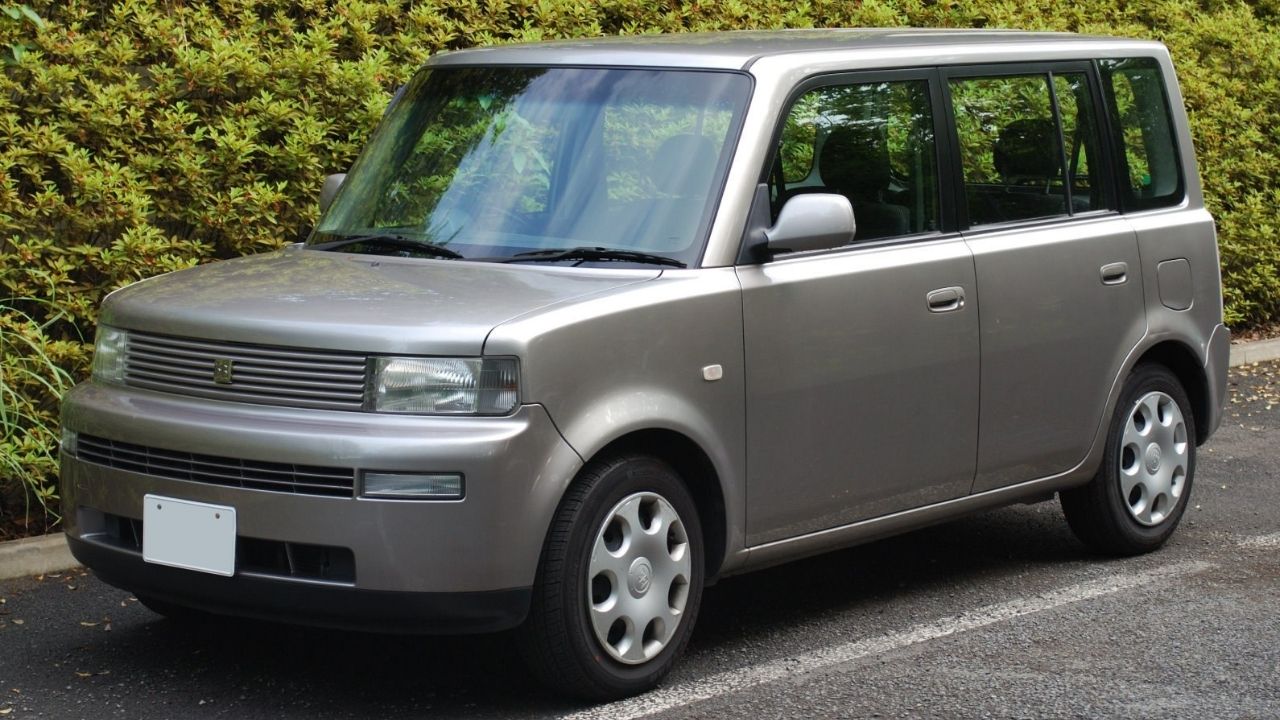
The Japanese Mini-SUV Toyota bB Became an Underground Icon with Its Boxy Design, Fuel Efficient 1.3 or 1.5 Engines, and Surprising Interior, Winning Over Importers and Niche Car Fans.
Few cars represent the Japanese aesthetic of the 2000s as well as the Toyota bB. Boxy, compact, strange to some, and absolutely brilliant to others, it has become one of those models that were not made to please everyone — but those who understand it, really understand it. Created for the Japanese domestic market, it ended up becoming an underground icon among youth, tuners, collectors, and importers who were looking for something “outside the box” both in design and purpose.
In this content, we delve into what makes the Toyota bB one of the most curious cult cars in Japan — and why it still appears as a find among specialized importers in Brazil.
A “Box on Wheels” That Became the Visual Identity of Japan in the 2000s
Launched in 2000 by Toyota, the bB was born at the peak of Japanese urban culture: electronic music, Harajuku fashion, neon lights, and compact cars with a striking aesthetic. It was part of the “WiLL” concept and the logic of “boxy cars” — small vehicles on the outside, but surprisingly spacious on the inside.
-
The car stored for 38 years: when opening the barn door, what appears is breathtaking and looks like a scene from a movie!

-
Fiat works miracles in the Brazilian market, lowers the price of its 0 km hatch to R$ 69,990, reestablishes the model as the cheapest car in the country, and reignites the battle against Kwid and C3.
-
Chevette with cooking gas: How the gas cylinder ends up being used in cars clandestinely and why this makeshift solution can result in leaks, explosions, damaged engines, and seized vehicles.

-
Fiat launches the new 2027 Toro hybrid with 48V, 176 hp, an electric motor of 15.5 hp, a 0.85 kWh battery, up to 7% fuel savings, 8% fewer emissions, and possible exemption from IPVA.

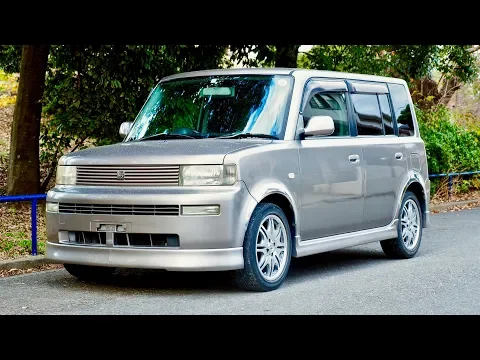
Its design became a reference: straight lines, nearly vertical windshield, high roof, large windows, and proportions that set it apart in traffic. It was not a car intended to be discreet — and it is precisely this personality that transformed it into an icon.

1.3 or 1.5 Engine – Fuel Efficient, Simple, Reliable, and Easy to Maintain
Despite its bold looks, the bB uses completely Toyota mechanics, meaning: zero complications. The most common versions feature:
- 1.3 Engine (K3-VE) with about 92 hp
- 1.5 Engine (3SZ-VE) with about 110 hp
- 4-speed automatic or manual transmission
- Front-wheel drive
In other words: it’s not a sports car, but it is a Japanese car with honest, smooth mechanics, very durable, and known for easily surpassing 200,000 km with basic maintenance.
This setup has become an advantage for those who imported: the mechanical parts are compatible with other Toyotas, making care and repairs simpler in Brazil.
The Interior Really Surprises – and Is More Spacious Than It Looks
While it may look like a “brick” from the outside, the bB offers an interior that rivals larger cars in terms of spaciousness.
Key features include:
- High roof and “vertical” cabin
- Extended wheelbase for its size
- Wide and very comfortable seats
- Extremely reclinable seats
- Good leg and headroom
- Generous trunk for a subcompact car
It is not an exaggeration to say that the bB feels larger on the inside than on the outside — and this has been successful in Japan, where space is a luxury.
Why Did It Become a Craze Among Niche Importers?
Unlike cars like Skyline, Supra, or Evo, which attract collectors, the Toyota bB attracts a different type of audience: those looking for something unique, urban, stylish, and very different from the Brazilian fleet.
Reasons for its popularity among importers include:
- Low price in Japan
- Striking and eccentric style
- Reliable mechanics
- Easy customization
- Spacious interior for its size
- Strong cultural identity (music, street, tuning)
Moreover, the bB is practically an “automotive Lego”: an ideal platform for projects, from sound systems to themed event cars.
Does the Car Appear in Brazil? Yes — But It’s Rare
Although it was not officially sold in the country, some independent importers brought units between the mid-2000s and 2010.
Today, it is possible to find:
- Used units for sale on specialized portals
- Importers looking for orders
- Units transformed into collector’s pieces
Like all JDM cars, it depends on documentation, provenance, and homologation — but those who manage to bring one automatically have a car that attracts attention wherever it goes.
Why Did the Toyota bB Become an International Cult?
Because it is an improbable mix that works:
- Looks strange, but stylish
- Seems small, but spacious
- Seems heavy, but fuel efficient
- Seems modern, but uses simple mechanics
- Appears to be an urban car but has the stance of a mini-SUV
It is the essence of Japanese “weird cool” — the kind of car that only Japan could create.
One of the Most Unique Cars Toyota Has Ever Made
The Toyota bB is not just a car — it is identity.
It is pure Japanese culture, condensed into the form of an automobile: compact, functional, bold, efficient, and with extreme personality.
And that is why, even though it was not officially sold in Brazil, it has become one of the most loved models by those who collect or import JDM cars.






-

Uma pessoa reagiu a isso.