





 Portuguese
  English
  Spanish
  4 min of reading
  0 comments


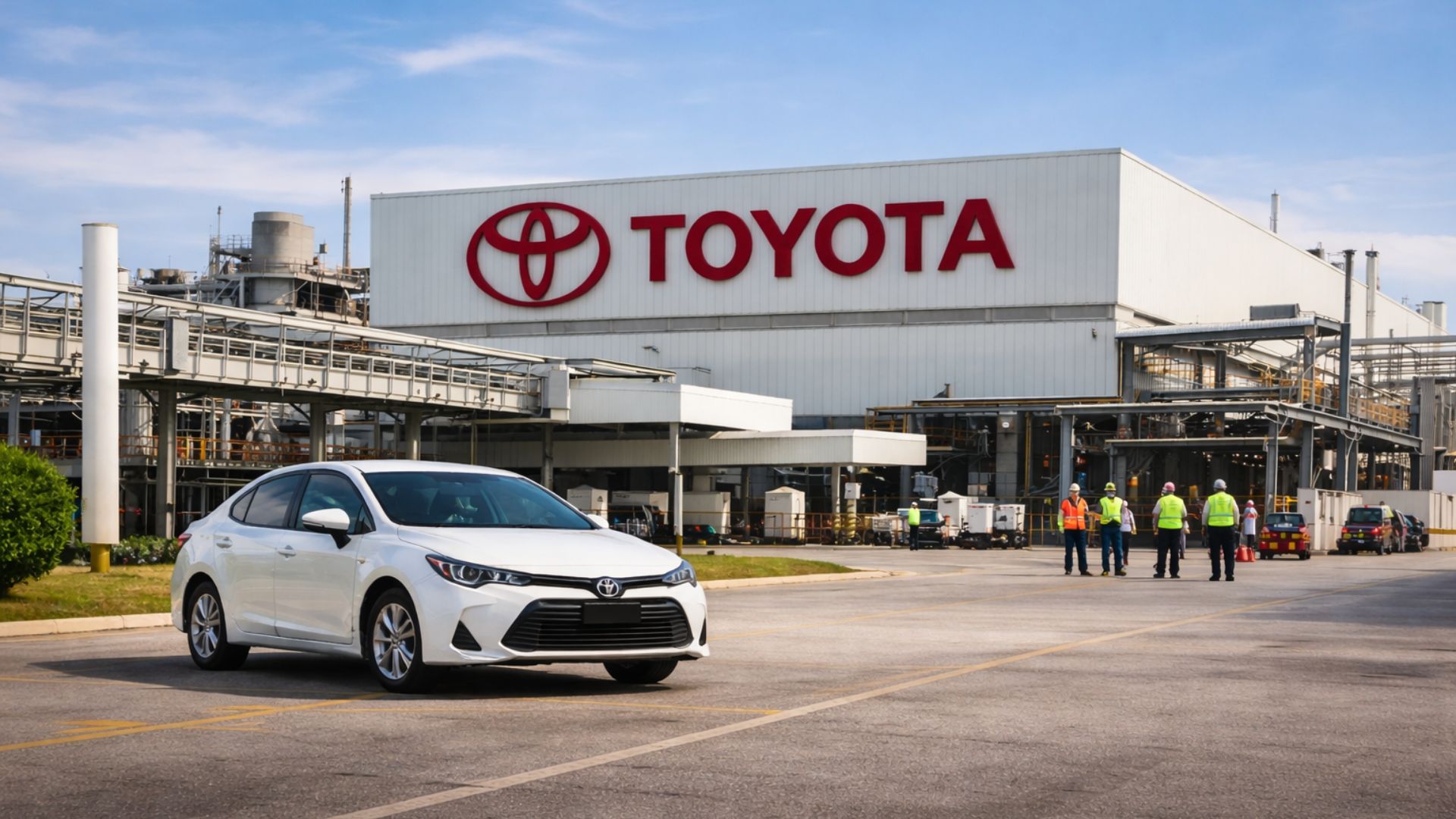
Toyota’s industrial reorganization marks a new phase in Brazil with the transfer of production, increased investments, and job maintenance amid technological modernization and industrial concentration in the interior of São Paulo.
Toyota confirmed that it will close the Indaiatuba factory in the second half of 2026, while transferring the production of the Corolla sedan to Sorocaba, reinforcing a strategy of industrial concentration in the country.
With this change, the automaker expands its production structure in Sorocaba, while directing efforts to consolidate operations in a single hub, a measure aligned with the new investment cycle estimated at R$ 11.5 billion by 2030.
In addition to reorganizing production, the plan includes maintaining jobs at the unit that will be deactivated and creating new positions at the complex that will concentrate a significant portion of industrial operations.
-
India wants to connect BRICS digital currencies for trade and tourism without relying on the dollar; this unprecedented proposal places the bloc back at the center of the global payments dispute.

-
Researchers develop a hybrid air conditioning system that reduces energy consumption by up to 34.3% in humid climates.
-
BRICS power receives the largest oil shipment from Venezuela in six years after the Middle East war closed the route that supplied half of the country.
-
Digital marketing agency unexpectedly shuts down and defaults on over R$ 1 million to about 60 workers who are now filing police reports and seeking justice to receive overdue salaries.

Transfer of Corolla production to Sorocaba
Over nearly three decades, the Indaiatuba factory has established itself as one of the most emblematic in Toyota’s history in Brazil, especially for housing the national production of the Corolla.
In this context, the model has become the highest volume vehicle ever produced by the brand in the country, accumulating 1.5 million units manufactured in Brazil, according to a report released by the automaker in June 2025.
Thus, the closure of activities at the unit represents the end of a significant industrial cycle, although the production of the sedan will be maintained on national territory through the transfer to Sorocaba.
Jobs maintained and new positions expected
Even with the plant’s closure, the company states that there will be no compulsory layoffs, as the approximately 1,500 employees will be able to remain with the company through transfer to the new unit.
In this scenario, the change accompanies the physical and productive expansion of the industrial park in Sorocaba, which is already undergoing structural works to accommodate the increased production.
At the same time, the manufacturer announced the opening of 500 new positions, primarily aimed at the production of models that are part of the next phase of operations in Brazil.
Expansion of the Sorocaba factory and new models
In this industrial redesign, Sorocaba will play a central role in Toyota’s strategy, bringing together production, logistics, and initiatives related to vehicle electrification.
Currently, the unit already manufactures the Corolla Cross and the Yaris hatch, while the arrival of the Yaris Cross, a compact hybrid-flex SUV, expands the portfolio of models produced locally.
With the migration of the Corolla sedan, the city will concentrate vehicles of greater commercial and technological relevance within the automaker’s Brazilian operation.
According to an announcement made in March 2025, the new factory under construction will have 160,000 square meters, with an estimated capacity of 100,000 vehicles per year, increasing the productive capacity of the complex by 50%.
If the official schedule is maintained, the new structure is expected to start operations in 2026, accompanying the gradual transfer of activities currently located in Indaiatuba.
Billion-dollar investments and focus on hybrid technology
At the center of this transformation is Toyota’s advancement in low-emission technologies, focusing on electrified vehicles and increasing local content in production.
As part of this plan, investments will be directed both to expanding production capacity and developing new models and technologies.
In Porto Feliz, for example, the assembly of engines for hybrid systems is already part of the company’s industrial planning.
Meanwhile, in Sorocaba, battery assembly is expected to begin in 2026, which will be used in hybrid vehicles produced in Brazil.
Recent history of closures and industrial concentration
This reorganization movement does not occur in isolation but is part of a broader strategy of concentrating operations in the interior of São Paulo.
Previously, in November 2023, Toyota had already transferred the industrial operation from São Bernardo do Campo to Sorocaba, reinforcing the directive of productive centralization.
With this, the company seeks to reduce manufacturing dispersion while simultaneously gaining scale in units considered more efficient and competitive.
Legacy of the Indaiatuba factory in Toyota’s history
Responsible for consolidating the production of the Corolla in Brazil, the Indaiatuba factory played a central role in the automaker’s trajectory over nearly three decades of operation.
During this period, the unit contributed not only to supplying the domestic market but also to the company’s regional export strategy.
Upon celebrating the milestone of 3 million vehicles produced in the country, Toyota highlighted that the Corolla remains the highest volume model produced nationally.
On the other hand, the transfer of operations to Sorocaba shows that the change does not represent a retreat in the Brazilian market, but rather a reconfiguration of the industrial base.
Initially announced in 2024 as a package of R$ 11 billion, the investment plan was later revised to R$ 11.5 billion in March 2025.
This financial reinforcement accompanies the decarbonization strategy, expansion of hybrid-flex vehicles, and increase in production capacity in the country.
In the short term, the main consequence will be the gradual exit of the Corolla line from Indaiatuba, whose production will be absorbed by a broader industrial complex prepared to receive new models and technologies.






Seja o primeiro a reagir!