





 Portuguese
  English
  Spanish
  5 min of reading
  1 comment


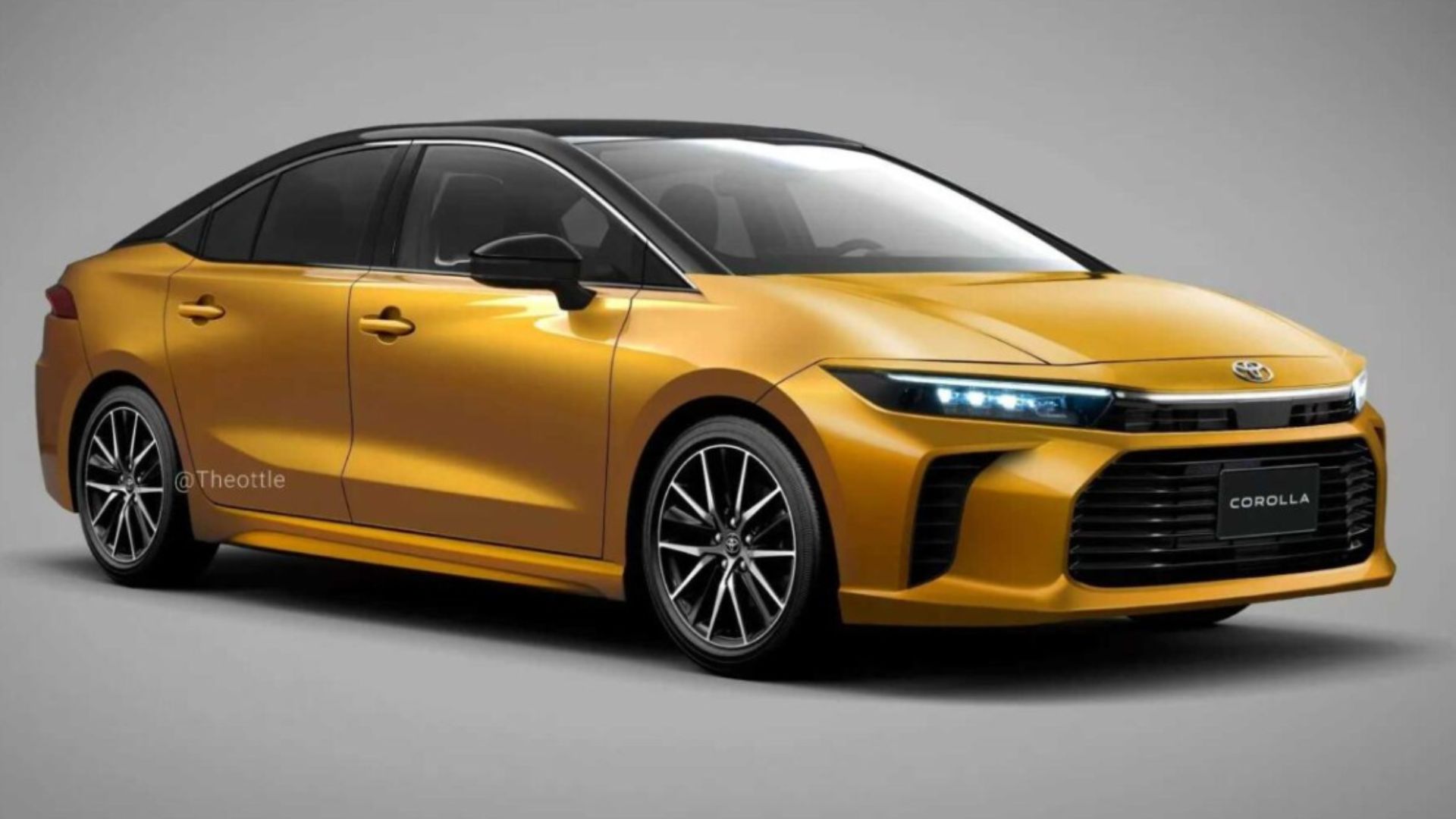


New Generation Of Corolla Will Bring More Efficient Engines, Extended Range, And Options For Different Body Styles. Model Will Seek Global Highlighting In The Face Of Asian Competition, Betting On Technology And Sustainability.
The 13th Generation Of The Toyota Corolla Is Set To Debut In The Global Market: 2026.
The launch marks an important step for the Japanese automaker toward renewing its vehicle lineup, with strong investment in new engine technologies and significant advancements in range and efficiency, especially in light of the accelerated growth of Chinese rivals like BYD.
New Toyota Engines And Extended Range
According to information recently released by the Japanese press, the next generation of the Corolla will be equipped with a new family of combustion engines, currently in the final stages of development by Toyota.
-
The car stored for 38 years: when opening the barn door, what appears is breathtaking and looks like a scene from a movie!

-
Fiat works miracles in the Brazilian market, lowers the price of its 0 km hatch to R$ 69,990, reestablishes the model as the cheapest car in the country, and reignites the battle against Kwid and C3.
-
Chevette with cooking gas: How the gas cylinder ends up being used in cars clandestinely and why this makeshift solution can result in leaks, explosions, damaged engines, and seized vehicles.

-
Fiat launches the new 2027 Toro hybrid with 48V, 176 hp, an electric motor of 15.5 hp, a 0.85 kWh battery, up to 7% fuel savings, 8% fewer emissions, and possible exemption from IPVA.

Among the main highlights is the debut of the plug-in hybrid (PHEV) version, which promises to impress by offering a range of up to 2,100 kilometers on a single tank of fuel, one of the highest figures ever projected for models in the segment.
The expansion of the lineup is also a highlight: innovations are not limited to the traditional sedan.
According to industry sources, the 13th generation will be available in hatchback, wagon, and SUV Corolla Cross versions, catering to different consumer profiles in various global markets.
Efficiency And Technology Of The New Corolla Engines
The new engines have been designed with an emphasis on reducing fuel consumption and minimizing pollutant gas emissions.
For the base configurations, the highlight is the 1.5 naturally aspirated engine with 130 horsepower and 15 kgfm of torque, which will also be present in the hybrid (HEV) variants.
In these, the engine delivers 100 hp and 13 kgfm, always in conjunction with an electric motor, whose technical details have not yet been officially disclosed by the automaker.
In the list of intermediate and top-tier versions, the bet falls on the 1.5 turbo engine, with 130 hp of power and 23 kgfm of torque, designed to replace the current 2.5 naturally aspirated engine, widely used in Toyota’s hybrid models like the RAV4.
Industry experts indicate that this engine will primarily equip the plug-in hybrid version, increasing the Corolla’s competitiveness against BYD vehicles, which are internationally recognized for their advanced solutions in hybrid systems.

Comparative With BYD And Thermal Efficiency
The challenge to achieve a range of over 2,100 kilometers, one of the main differentiators of the future Corolla, involves increasing the thermal efficiency of the engines.
While the rival BYD recently announced a thermal efficiency rate of 46.06% in its plug-in hybrid systems, Toyota’s current lineup reaches 41%.
To overcome this barrier, Toyota has incorporated learnings gained during the development of hydrogen-powered cars, employing cutting-edge technologies to improve the energy efficiency of the new engines.
Based on these innovations, Toyota’s expectation is to reduce fuel consumption of the new engines by up to 30%, including the 1.5 naturally aspirated engine, the 1.5 turbo, and the upcoming 2.0 turbo, which will replace the current 2.4 turbo in its global lineup.
Additionally, the new engines will be more compact and lighter, allowing for installation in a lower position in the engine compartment, thanks to the smaller piston stroke.
This opens up space for designs with a lower hood, which contributes to improving the aerodynamics of the vehicles, a factor increasingly valued in both efficiency and design.


Design And Trends For The Corolla 2026
Design Projections And Trends Are Also Circulating On The Internet, Suggesting A More Modern And Sporty Profile For The Corolla.
According To Analyses By Automotive Design Experts like those released by the YouTube channel Theottle, the next generation of the sedan may adopt more fluid lines, a shorter hood, and redesigned headlights, in tune with segment trends.
Although Toyota has not yet confirmed a specific date for the start of sales in Japan, automotive industry sources indicate that the new Corolla is expected to reach the local market throughout 2026.

In Brazil, the production of the Corolla will undergo significant structural changes.
The factory in Indaiatuba, in the interior of São Paulo, will be deactivated, and the production of the model will be transferred to the Sorocaba unit, also in São Paulo.
According to the schedule set by Toyota, the debut of the new generation in the Brazilian market is expected to occur only in 2027, conditioned to the completion of the transfer process of the assembly line.
Global Competition And Expectation For Brazil
The strategy of offering multiple body styles, combined with the technological advancement of the new engines and the development of more efficient hybrid systems, positions the Corolla as a direct competitor to BYD’s plug-in hybrid models, especially in the medium sedan and SUV segment.
Toyota’s bet is to reinforce its presence in strategic markets, uniting tradition and innovation to face Asian competition, which has been gaining strength with increasingly advanced solutions in sustainable mobility.
In this scenario, it remains to be seen whether the innovations announced for the new generation of the Toyota Corolla, including the unprecedented range of up to 2,100 km, will be sufficient to redefine segment standards and consolidate the model as a benchmark against the growing presence of BYD and other Chinese brands in the global market.







Realmente a autonomia de 2100 km vai pesar na hora da compra, já que nossa estrutura de recarga deixa muito a desejar..