





 Portuguese
  English
  Spanish
  3 min of reading
  0 comments


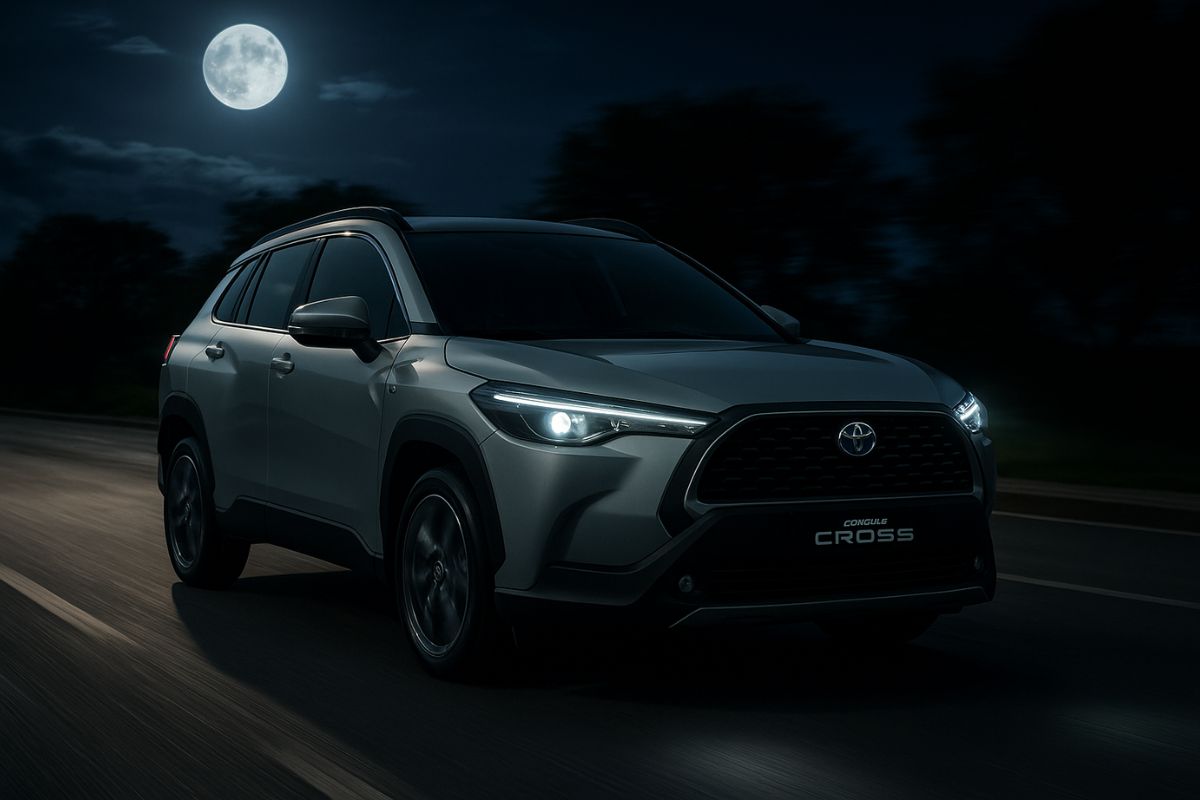
Analysis of the Efficiency of the Toyota Corolla Cross. We Uncover the Technologies of the Hybrid System and the Dynamic Force Engine That Contribute to Low Fuel Consumption in Brazil.
The Toyota Corolla Cross has earned a reputation for its fuel efficiency, especially in its hybrid version. But what makes this SUV an efficient option in the competitive Brazilian market? The answer lies in a combination of advanced engine technology, strategic engineering, and operational characteristics.
This article analyzes the factors that make the Toyota Corolla Cross an economical vehicle. We will explore the hybrid system, the Dynamic Force combustion engine, and other elements of design and engineering that contribute to its low consumption, based on technical and market data.
Toyota’s Powertrain
The efficiency of the Toyota Corolla Cross primarily resides in its powertrain. The hybrid version utilizes Toyota’s renowned Hybrid Synergy Drive system. It intelligently combines a gasoline engine with electric motors. The combustion versions feature the modern 2.0L Dynamic Force engine.
-
Honda performs miracles in fuel consumption with a hatch that marks 13.2 km/l in the city and 15 km/l on the highway, leaving Polo, HB20, 208, and Onix behind and becoming a reference among compact cars without resorting to turbo or hybrid systems.

-
Six diseases that seem common but can prevent the renewal of the driver’s license for the elderly throughout Brazil and surprise experienced drivers — could any of them affect you without showing clear signs?

-
With 122 hp, fuel consumption of up to 17.7 km/l, and a trunk capacity of 440 liters, this hybrid SUV impresses even though it costs up to R$ 47,000 more than the Yaris — meet the Toyota Corolla Cross.
-
600 km with three Chinese plug-in SUVs, same mode and air conditioning on: Jaecoo 7, BYD Song Plus, and Haval H6 hit the road, and the pump reveals who was truly the most economical.

Both systems are designed to optimize fuel usage. The hybrid excels in urban environments, while the combustion engine seeks a balance between performance and efficiency. Factors such as transmission, weight, and aerodynamics also influence consumption.
Corolla Cross Hybrid: The Formula for Maximum Energy Efficiency
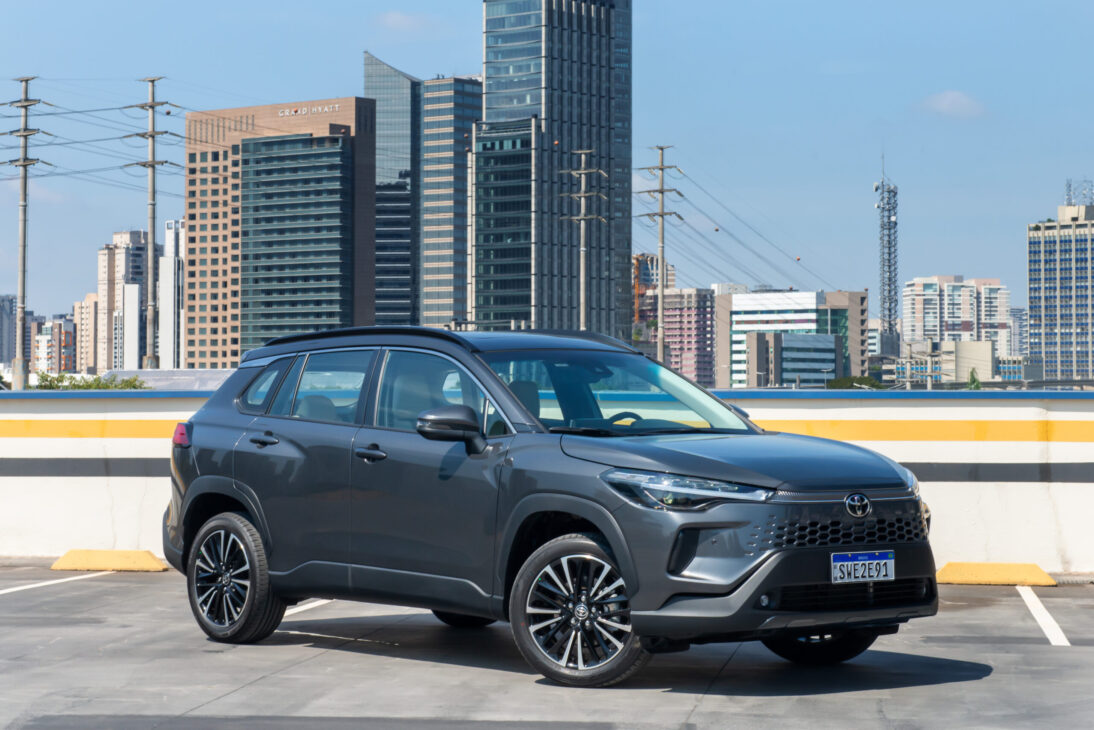
The impressive fuel economy of the Toyota Corolla Cross Hybrid is due to several components:
1.8L Atkinson Cycle Engine (2ZR-FXE): This flex engine with 101 hp (ethanol) prioritizes thermal efficiency over peak power. The Atkinson cycle, with a longer expansion stroke, better utilizes combustion energy.
Electric Motors (MG1 & MG2): With 72 hp, they assist in traction (MG2) or generate power and start the gasoline engine (MG1). They provide instant torque, reducing the load on the combustion engine at low speeds.
Power Control Unit (PCU) and Battery: The PCU manages energy flow. The battery (NiMH or Li-ion, approximately 1.3 kWh) is optimized for frequent charge and discharge cycles.
Hybrid Transmission (e-CVT): Uses planetary gears to blend the power of the motors, keeping the combustion engine in the most efficient RPM range.
Regenerative Braking: Recovers kinetic energy during deceleration and braking, recharging the battery. Essential for urban economy.
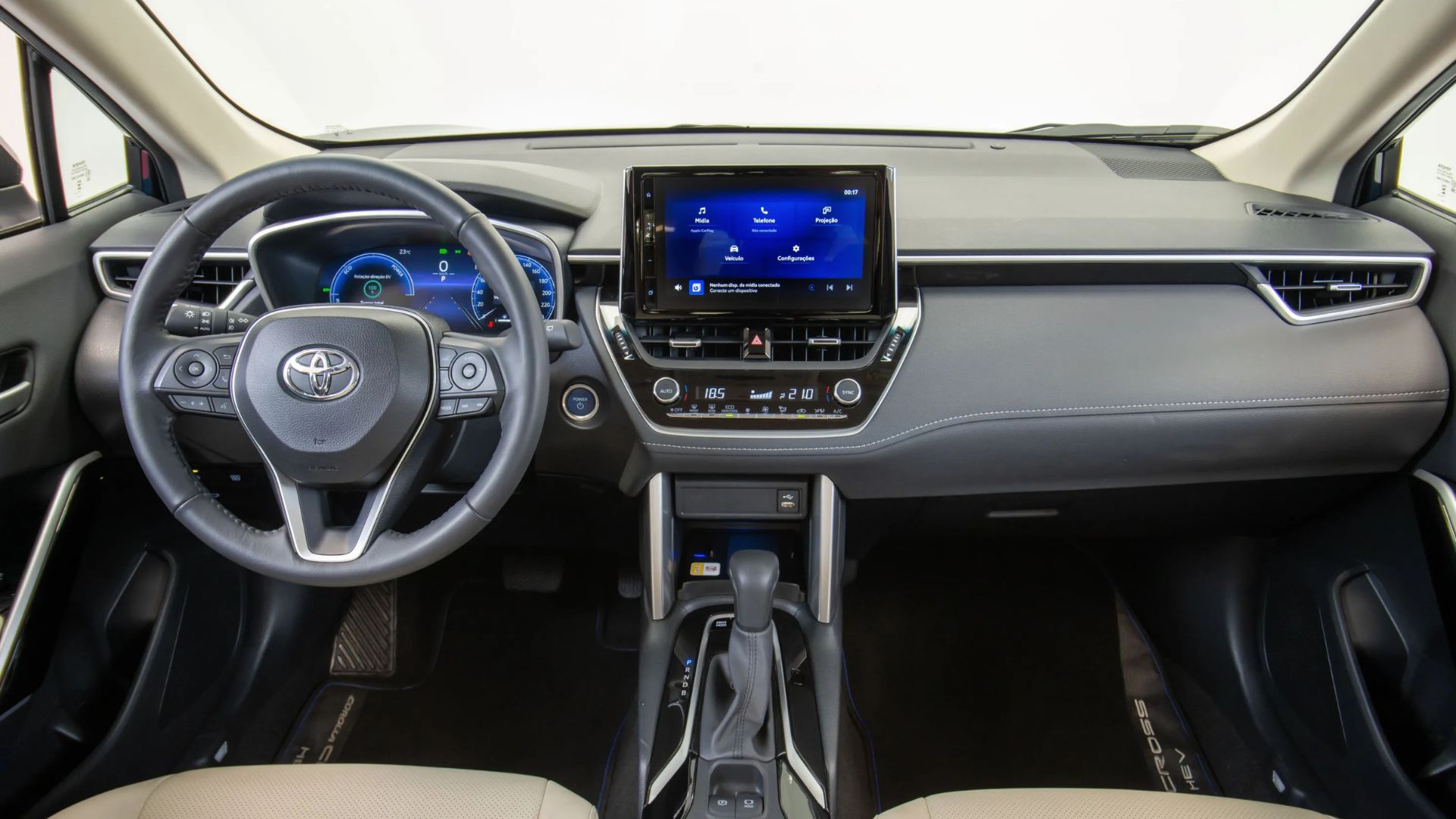
EV Mode: Allows operation in purely electric mode over short distances at low speeds, without consuming fuel. Tests indicate that the electric motor can be used over 50% of the time in urban trips. The combined power of the system is 122 hp.
Corolla Cross 2.0: The Efficiency of the Modern Dynamic Force Engine
The combustion versions of the Toyota Corolla Cross (XRX, XRE, XR) are also efficient:
M20A-FKS Dynamic Force Engine: This 2.0L Flex engine (175 hp with ethanol) has high thermal efficiency (up to 40%). It employs technologies such as high-speed combustion, long stroke, high compression ratio, and D-4S injection (direct and indirect).
VVT-iE (Variable Valve Timing-intelligent by Electric motor): The intake valve timing controlled by an electric motor adjusts timing precisely, enhancing efficiency and performance.
Reduced Internal Friction: Measures such as piston skirts with laser treatment decrease mechanical losses.
Direct Shift-CVT: This continuously variable transmission features a physical launch gear (first gear). This provides more responsive initial acceleration. For the rest of the time, the CVT keeps the engine at the ideal rotation for economy. The Brazilian version does not include a Start-Stop system.
Experts’ Opinion
Experts and data from Inmetro confirm the economy of the Toyota Corolla Cross.
- Corolla Cross Hybrid (Gasoline): 17.8 km/l (city) and 14.7 km/l (highway). With ethanol, 11.8 km/l (city) and 9.7 km/l (highway).
- Corolla Cross 2.0 Flex (Gasoline): 11.7 km/l (city) and 13.0 km/l (highway). With ethanol, 8.2 km/l (city) and 9.0 km/l (highway).
Compared to the Corolla Sedan Hybrid (Gasoline: 18.5 km/l city; 15.7 km/l highway), the SUV is slightly less economical, due to aerodynamics and possibly weight (although Brazilian data from 2025 shows similar weights for certain versions).
Against rivals like the Jeep Compass 1.3 Turbo (Gasoline: 10.3 C / 11.9 E) and VW Taos 1.4 TSI (Gasoline: 11.1 C / 13.1 E), the Corolla Cross Hybrid is significantly more economical, especially in the city. The Corolla Cross 2.0 Flex also proves competitive, surpassing these rivals in the city.








-

-

2 pessoas reagiram a isso.