





 Portuguese
  English
  Spanish
  8 min of reading
  0 comments


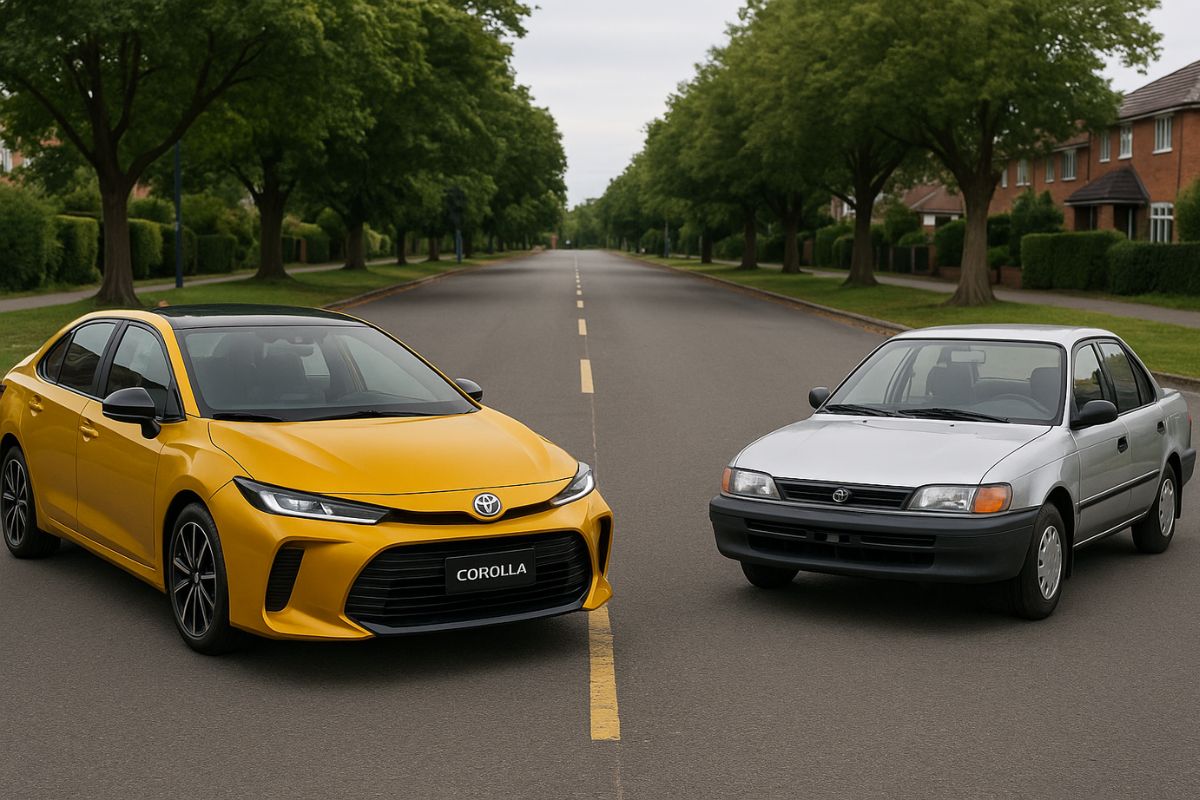
A Complete Analysis of the History of the Toyota Corolla in Brazil, Iconic Japanese Sedan, From Its Importation in the 90s to the Pioneering Innovation of the Flex Hybrid System and Its Consolidation as Market Leader in the Country.
The history of the Toyota Corolla in Brazil began at a time of transformation. The national market was opening up to imports in the early 90s. Toyota identified a unique opportunity. It brought to the country the sedan that was already the best-selling in the world. The positive response led to local production. The factory in Indaiatuba (SP) was inaugurated in 1998.
Since then, the Corolla has evolved constantly. It adapted to the Brazilian consumer. It introduced key technologies, such as the flex engine. It achieved and maintained leadership in its segment. The arrival of the flex hybrid version represented a global technological milestone. This article details the entire success journey of the Toyota Corolla in Brazil.
The Arrival of the Toyota Corolla in Brazil: Importation and the Decision for Local Production
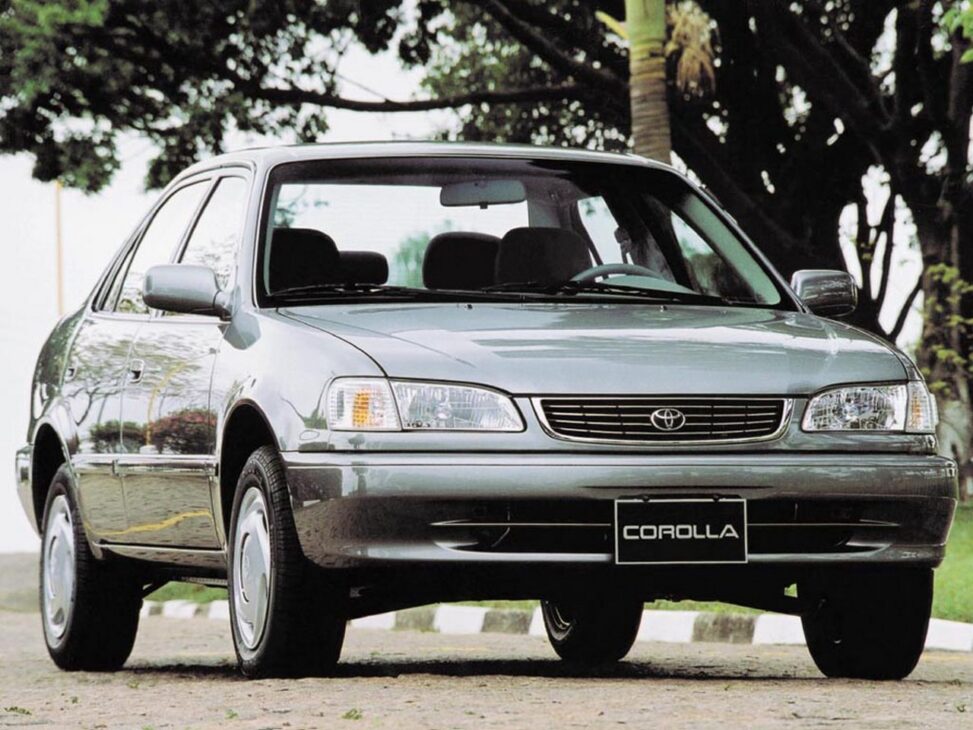
The Brazilian automotive landscape changed in the early 90s. The reopening to imports brought new models. Toyota seized this moment. It officially introduced the Corolla in Brazil in 1994. The first units were imported from Japan. They corresponded to the seventh global generation (E100). The model arrived in sedan and station wagon body styles. The focus soon shifted to the sedan. This format was the favorite in the Brazilian mid-size segment.
-
OMODA & JAECOO grows in Europe in 2026 with an integrated strategy of sales, innovation, local production, and technological advancement in the United Kingdom, Italy, and Spain.
-
OMODA & JAECOO expands after-sales service in Brazil with competitive maintenance, a 7-year warranty, and high availability of parts for technological SUVs.
-
OMODA & JAECOO appoints Alessandra Souza as executive marketing director in Brazil and accelerates brand expansion with a focus on innovation, networking, and hybrid portfolio.

-
Jaecoo 7 with super hybrid SHS system exceeds 1,200 km of combined range with a 1.5 turbo engine, high-density battery, and intelligent energy management.

The reception of the Corolla was very positive. Interest in the sedan grew rapidly in the first three years. The car was already a global sales leader. The constant increase in demand was crucial. It led Toyota to decide on local production. Manufacturing in Brazil was essential for better competition. It would also strengthen Toyota’s operations in Latin America.
In 1997, Toyota announced a significant investment. It was US$ 150 million. The destination was the construction of a new factory in Indaiatuba (SP). The plant was inaugurated in September 1998. The first Toyota Corolla in Brazil rolled off the assembly line at this historic event. It marked the beginning of national production. It represented a long-term commitment by Toyota to the Brazilian market. The transition from importation to local production was a fundamental strategic step.
The First National Generations of the Toyota Corolla in Brazil: Building a Reputation (Generations 8 and 9)
With the factory in Indaiatuba operating, the Corolla entered a new phase. It adapted to the local market. It maintained the brand’s global quality and reliability.
The eighth generation (E110), produced from 1998 to 2002, was the national pioneer. It was the first passenger car from Toyota manufactured in Brazil. The design followed the Japanese/European standard. It differentiated itself from the imported seventh generation. Toyota offered three versions: XLi (base), XEi (intermediate), and SE-G (top of the line). All used the 1.8L 16V engine with 116 hp. There was a choice of 5-speed manual or 4-speed automatic transmission. The XEi version already came with front airbags as standard. The SE-G added ABS brakes and leather trim. This first national Corolla established a reputation for quality and reliability in the country.
The ninth generation (E120) arrived in June 2002 and lasted until 2008. It became known as the “Corolla Brad Pitt.” A new investment of US$ 300 million modernized the factory. The design, inspired by the American market, was more robust. The engine lineup was updated with VVT-i technology. The 1.6L VVT-i engine (110 hp) equipped the XLi version. The XEi and SE-G versions used the 1.8L VVT-i (136 hp). It was in this generation that the Corolla achieved the sales leadership among mid-size sedans in Brazil. Demand was so high that the factory implemented a second shift in 2003. The mark of 100,000 Corollas produced was reached in 2004.
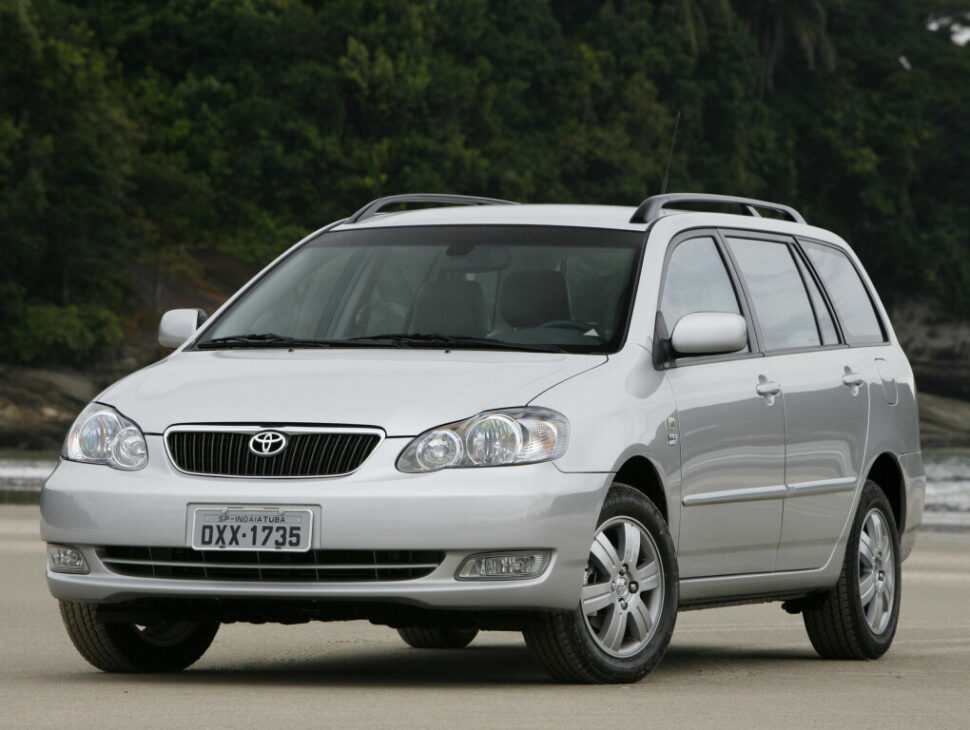
Building on the success, Toyota launched the Corolla Fielder in May 2004. It was the station wagon version, sharing the sedan’s mechanics. The Fielder quickly led its segment. Another important milestone came in 2007. Toyota introduced Flex fuel technology in the 1.8 VVT-i engine. It was a pioneering development by Toyota globally, done in partnership between Brazil and Japan. The adaptation to ethanol was crucial for maintaining competitiveness.
Consolidation and Adaptation: Flex Technology, End of the Fielder and Competition (Generation 10)
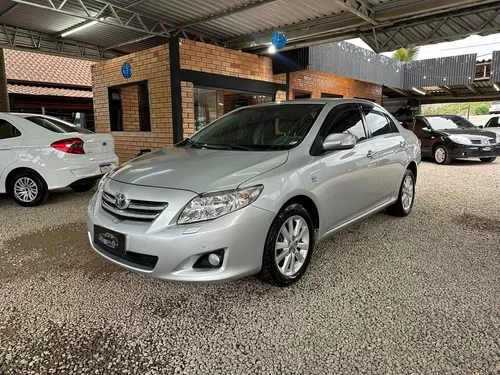
Launched in 2008, the tenth generation (E140/E150) lasted until 2014. Its mission was to maintain leadership. It used the same platform as the previous one. It featured a design considered more conservative. It recalled the Toyota Camry. Flex technology was consolidated across the lineup. The 1.8L Flex engine received Dual VVT-i technology (about 136 hp with ethanol).
For better performance, Toyota introduced the 2.0L 16V Dual VVT-i Flex engine around 2011. It delivered 153 hp with ethanol. The versions were restructured: XLi, GLi, XEi, and Altis (replacing the SE-G as top of the line). A common criticism was maintaining the 4-speed automatic transmission. Competitors had already offered more modern transmissions.
This generation marked the end of the Corolla Fielder in 2008. The decision was attributed to restrictions of the new global platform. The change in consumer preferences, with the rise of SUVs, also played a role. The tenth generation faced strong competition, especially from the Honda Civic. Even so, the Corolla maintained strong sales. Its reputation for comfort, reliability, and low maintenance costs was decisive. A slight visual update occurred in the 2012 lineup.
Modernization and Absolute Leadership: Bold Design, CVT, and Safety (Generation 11)
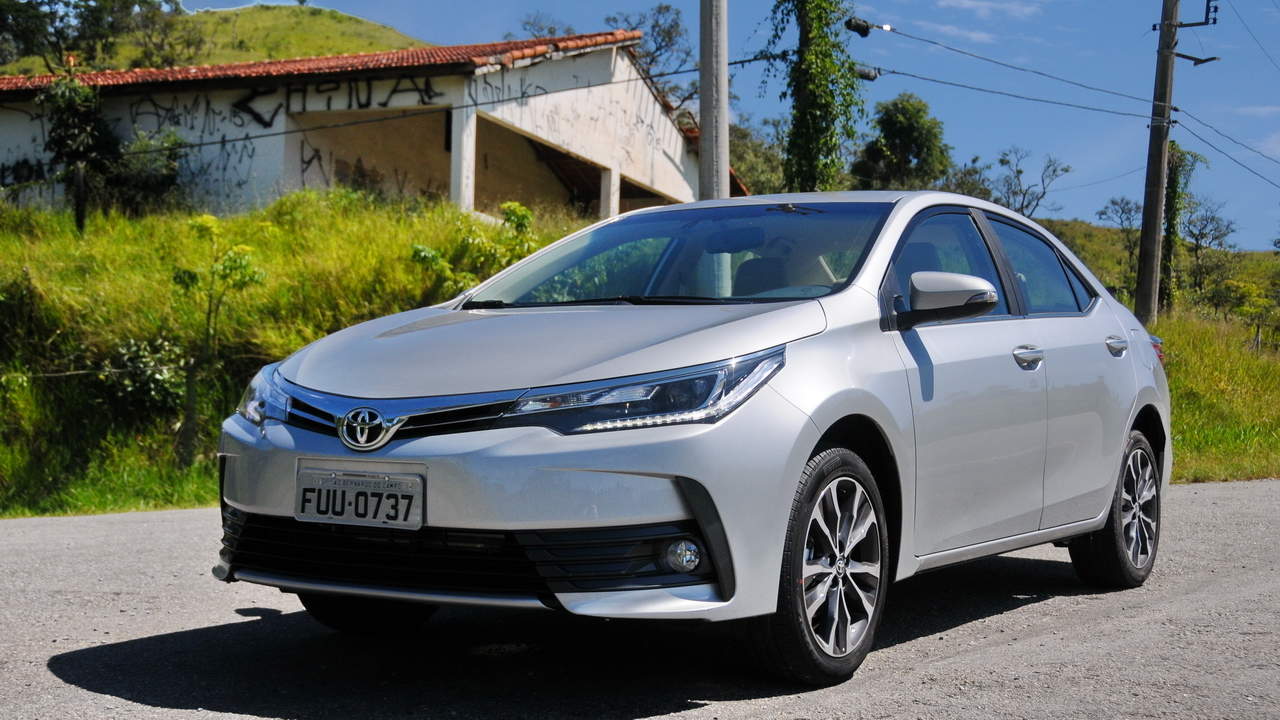
The eleventh generation (E170) arrived in March 2014 and was sold until 2019. It represented a significant change. The design became much more aggressive and modern. It was inspired by the “Corolla Furia” concept. The car grew larger, especially in the wheelbase (2700 mm). This resulted in more interior space.
The 1.8 Flex (144 hp with ethanol) and 2.0 Flex (about 154 hp with ethanol) engines were kept with adjustments. The major innovation was the CVT “Multi-Drive” automatic transmission. It simulated 7 gears. It offered smooth shifts and greater efficiency. The CVT eliminated a disadvantage against rivals. It improved the driving experience. The GLi 1.8 version still had a 6-speed manual transmission option. There was also the XRS version, with sporty visual appeal.
In 2017 (2018 lineup), the Corolla received a facelift. The main news was the inclusion of Electronic Stability Control (ESC) and Traction Control (TC) in all versions. The absence of these items was criticized. Their addition was an important advance in safety.
The impact of this generation was immediate. The new design, the CVT, and reliability regained leadership in a dominant manner. The Corolla frequently ranked among the 10 best-selling cars in Brazil overall. In March 2017, the factory in Indaiatuba celebrated 1 million Corollas produced.
The Flex Hybrid Revolution: TNGA, Efficiency, and Cutting-Edge Technology (Generation 12)
Launched in September 2019 (2020 lineup), the twelfth generation (E210) is the current one. It represents the largest technological leap of the Toyota Corolla in Brazil. It is built on the TNGA platform. This brought improvements in rigidity, handling, and comfort. The adopted design was European, more sophisticated. The rear suspension became independent multilink.
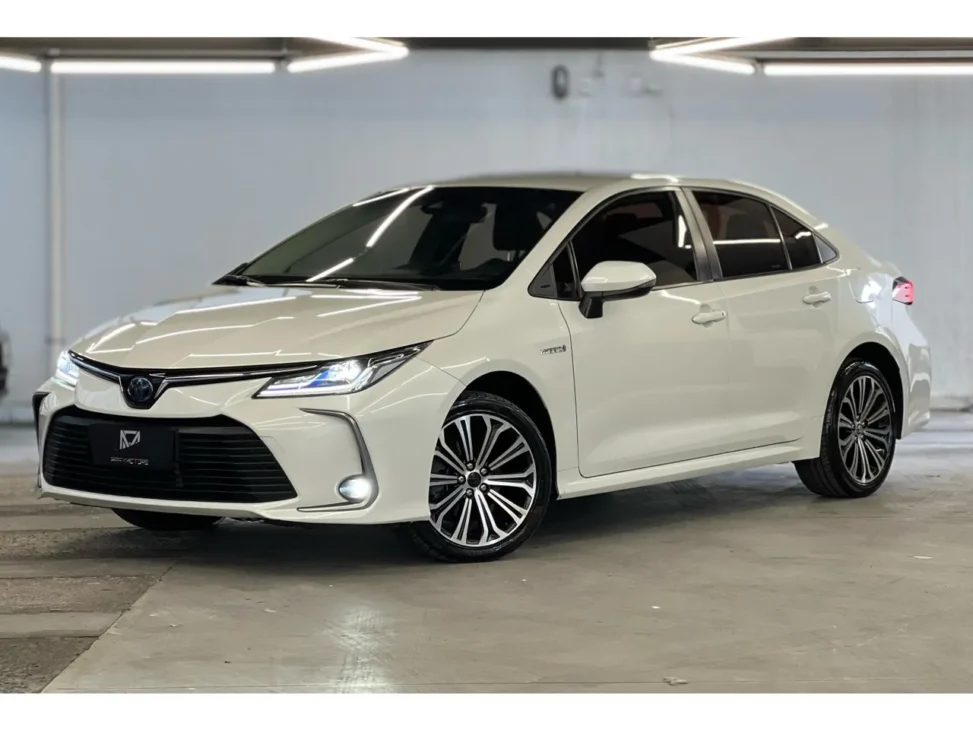
The biggest revolution is in the powertrains:
- 2.0L Dynamic Force Flex: New combustion engine, with 177 hp (ethanol). It uses direct and indirect injection. It is coupled to the Direct Shift CVT (10 simulated gears and 1 physical gear). It equips the GLi, XEi, and Altis Premium versions.
- 1.8L Hybrid Flex: The world’s first mass-produced flex hybrid system. It combines a 1.8 Flex Atkinson cycle engine (101 hp with ethanol) with two electric motors (72 hp). The combined power is 122 hp. It uses the Hybrid Transaxle (e-CVT). It offers exceptional fuel economy, especially with ethanol. It equips the Altis Hybrid and Altis Hybrid Premium versions.
The introduction of the Hybrid Flex was an innovative strategy. It adapted hybrid technology to Brazilian ethanol. It reinforced Toyota’s image and positioned the Corolla uniquely.
This generation also advanced in safety. The top versions bring the Toyota Safety Sense (TSS) package. It includes items such as pre-collision system, adaptive cruise control, and lane departure warning. The model received the highest score in the Latin NCAP in 2022.
Variants and Market: The Legacy of the Fielder and the Sportiness of the GR-S
Although the sedan dominates, the Corolla lineup had other variants in Brazil. The Corolla Fielder (2004-2008), based on the ninth generation, was the station wagon version. It offered more space and versatility. It led its segment, but was discontinued with the rise of SUVs.
Recently, Toyota introduced the GR-S (Gazoo Racing Sport) version in the twelfth generation. It maintains the 2.0 Flex engine and the CVT. It differentiates itself with sporty visuals. It features exclusive bumpers, dark wheels, black roof, spoiler, and GR interior details. It may have slight adjustments to the suspension. It aligns the Brazilian Corolla with the global Gazoo Racing strategy. Global special editions, such as the 50th-anniversary commemorative edition, did not come to Brazil.
Lasting Dominance: Sales, Reputation, and the Future in Brazil
The Toyota Corolla in Brazil has a history of market dominance. It regained leadership with the ninth generation. After a period of intense competition with the Honda Civic, it returned to the top with the eleventh generation. It currently leads the mid-size sedan segment by a wide margin. Even with the popularity of SUVs, the Corolla maintains strong sales.
Its success is based on the reputation of the Toyota brand. The pillars are Quality, Durability, and Reliability (QDR). The car is seen as robust and “indestructible.” It is recognized for comfort, fuel economy, and, crucially, excellent resale value. It is considered a rational and safe purchase. Nicknames like “Vovorolla” have emerged, but the car attracts a broad audience.
The future of the Corolla in Brazil involves changes. Production will move from Indaiatuba to Sorocaba (SP) between 2025 and 2026. Sorocaba is a more modern plant. It will receive part of a R$ 11 billion investment from Toyota by 2030. The focus will be on flex hybrid vehicles. This signals the continuation of the investment in the Corolla. The model, especially in the Hybrid Flex version, is well-positioned for the future. It combines technology, efficiency, and the strong brand image. The Corolla has left an important legacy in the Brazilian automotive industry.








Seja o primeiro a reagir!