





 Portuguese
  English
  Spanish
  3 min of reading
  0 comments


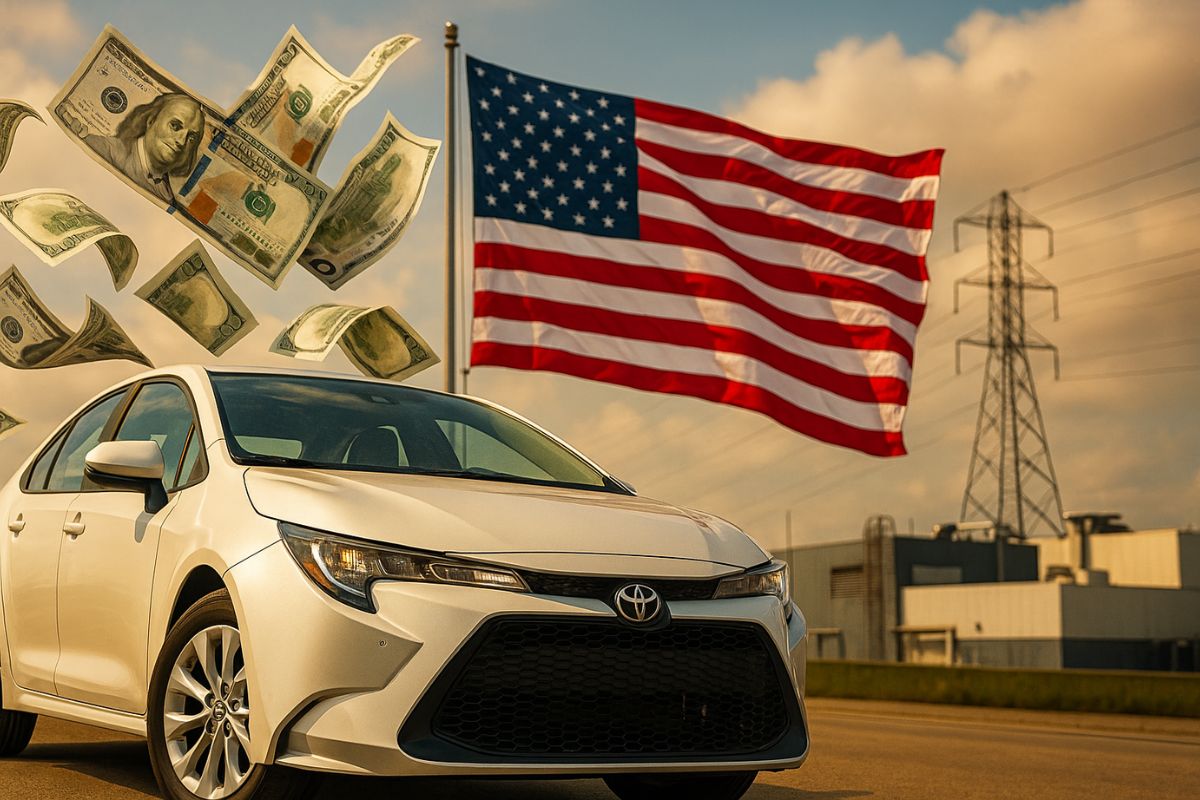
Toyota Denies Donald Trump’s Statements About A Supposed Billion-Dollar Investment In The United States, Stating That There Was No Formal Promise And That The Mention Of US$ 10 Billion Referred To Previous Contributions Already Made By The Company.
Toyota Motor clarified that it did not promise a new billion-dollar investment in the United States, contradicting a statement made by former President Donald Trump during a visit to Japan. According to executive Hiroyuki Ueda, the amount of US$ 10 billion mentioned by Trump refers to contributions made in the past, not a recent commitment.
According to the InfoMoney portal, the case gained attention after Trump stated that the Japanese automaker planned to invest the same amount in the country again, information that Toyota classified as a misinterpretation of diplomatic conversations. The statement aims to contain speculation about a possible new cycle of billion-dollar investments, at a time of uncertainty in the global automotive sector.
Context Of The Statements And The Role Of The U.S. Government
During a visit to Japan, Trump publicly mentioned that Toyota would have plans to invest US$ 10 billion in the United States, associating the announcement with job creation and strengthening the local industry.
-
The largest food company on the planet, JBS, has just opened a 4,000 square meter laboratory in Florianópolis to develop customized proteins that modulate muscle mass gain, immune response, and metabolic performance.

-
After nearly 30 bids and competition among industry giants, a Spanish company purchases one of the largest airports in Brazil for almost R$ 3 billion and takes over the management of Galeão in a concession that will last until 2039.

-
The Federal Revenue Service now automatically cross-references everything you declare with data from banks, credit cards, brokerage firms, and insurance companies, and any discrepancy between your income and your expenses triggers an alert in seconds.

-
Amid global tensions, Brazil blocks the United States’ proposal at the WTO and paves the way for a trade crisis and possible retaliations.


However, the company stated that no formal promise was made and that the topic was not discussed directly with the automaker’s board of directors.
According to Hiroyuki Ueda, the number cited by the former president likely derives from a history of Toyota contributions during his first term, when accumulated investments reached that figure.
“We explained that we would continue to invest and create jobs, but we did not mention any amount or future commitment,” said the executive, reaffirming the diplomatic tone of the correction.
Toyota’s Industrial Strategy And The Impact On Political Relations
Toyota maintains a solid presence in the U.S. market, with dozens of factories and over 40,000 direct employees in the United States.
The company continues to invest in hybrid and electric vehicle production, but has adopted a cautious stance regarding the total transition to 100% electric cars, prioritizing energy efficiency and supply stability.
Analysts interpret Trump’s statement as an attempt to link the U.S. government to industrial recovery, in a context of political and electoral disputes.
The correction made by Toyota, although diplomatic, highlights the importance of accuracy in corporate communications on topics involving large figures and public policies.
Toyota’s Official Position And The Continuity Of Investments
The automaker reiterated that it will continue to invest in its operations in the U.S., but without new announcements of billion-dollar amounts at this time.
The company emphasized its commitment to job creation, technological innovation, and sustainability, stating that its current focus is optimizing existing production and gradually expanding projects related to electric and hybrid mobility.
According to internal sources, the group has long-term plans aimed at modernizing factories and developing batteries in partnership with local companies, but rules out any promise of large-scale investment without formal approval from the global board.
Toyota’s denial shows how political statements can resonate in the market and influence public perception of strategic investments.
In clarifying the episode, the automaker sought to preserve its reputation for transparency and technical rigor, avoiding interpretations that could distort its industrial goals.
Do you think companies should publicly react whenever politicians distort their investment plans?







Seja o primeiro a reagir!