





 Portuguese
  English
  Spanish
  4 min of reading
  0 comments


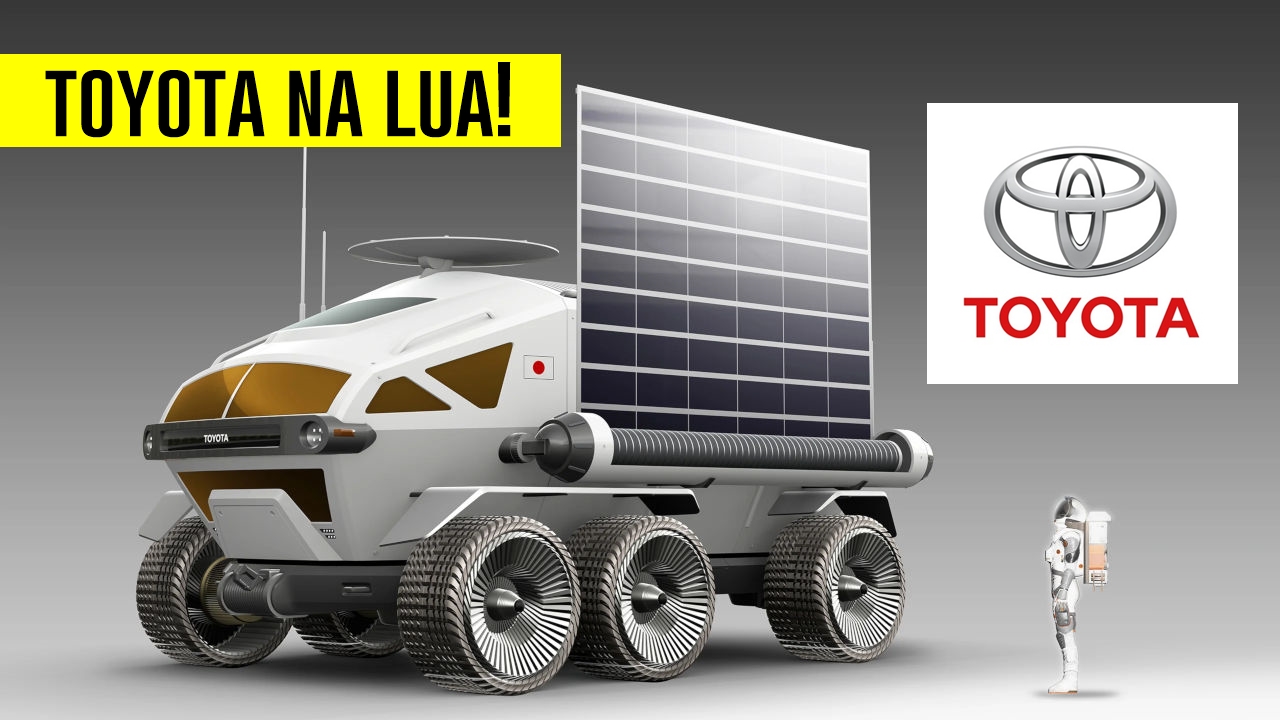
After Sending a Tesla to Space, SpaceX Now Plans to Take a Toyota Vehicle to the Moon, Marking a New Innovative Collaboration Between Technology and Space Exploration.
The Artemis II and III missions, scheduled for 2025 and 2026, are the harbingers of a new era of exploration with significant participation from SpaceX. These ambitious projects go far beyond repeating the feats of the Apollo missions: they are the first steps towards colonizing the satellite and the gateway to even bolder journeys, such as exploring Mars. And, in an unexpected partnership, even the automotive giant Toyota plays a crucial role in this future.
Strategic Partnerships
NASA, aware of the complexity of the mission to establish a sustainable presence on the Moon, recognized that it would need help. Thus, it sought support from the private sector, forming partnerships with leading companies in the space industry.
SpaceX, founded by Elon Musk, and Blue Origin, created by Jeff Bezos, are at the forefront of this collaboration. Both have been tasked with developing lunar modules capable of transporting astronauts from the Orion spacecraft or the future Gateway station to the lunar surface.
-
In a flooded well, archaeologists found a 1,700-year-old Roman egg that still contains clear and yolk intact inside the very thin shell.

-
Something is happening around the Earth: Inside the huge explosion of fireballs in 2026

-
A hot air bubble coming from Argentina expands over Brazil, causing thermometers to exceed 38 degrees with a thermal sensation of 40 degrees in late March, affecting 6 states at once.

-
The radish leaf that almost everyone throws away has more polyphenols, flavonoids, and fiber than the consumed root, and a 2025 study showed that the leaf contains compounds that protect the intestine, combat inflammation, and may inhibit the growth of cancer cells.


Although these modules are still in development, NASA’s trust in their progress is evident. The agency recently announced the expansion of contracts with both companies, asking them to create additional vehicles to transport large structures and equipment to the Moon. These items will be the building blocks of a permanent lunar base, expected in the coming decades.
With these partnerships, NASA aims to transform lunar exploration into an increasingly complex and integrated operation. Starting with Artemis V, the focus will shift to long-duration missions that will require advanced technologies, such as new lunar rovers.
The Lunar Cruiser: Toyota in the Space Race
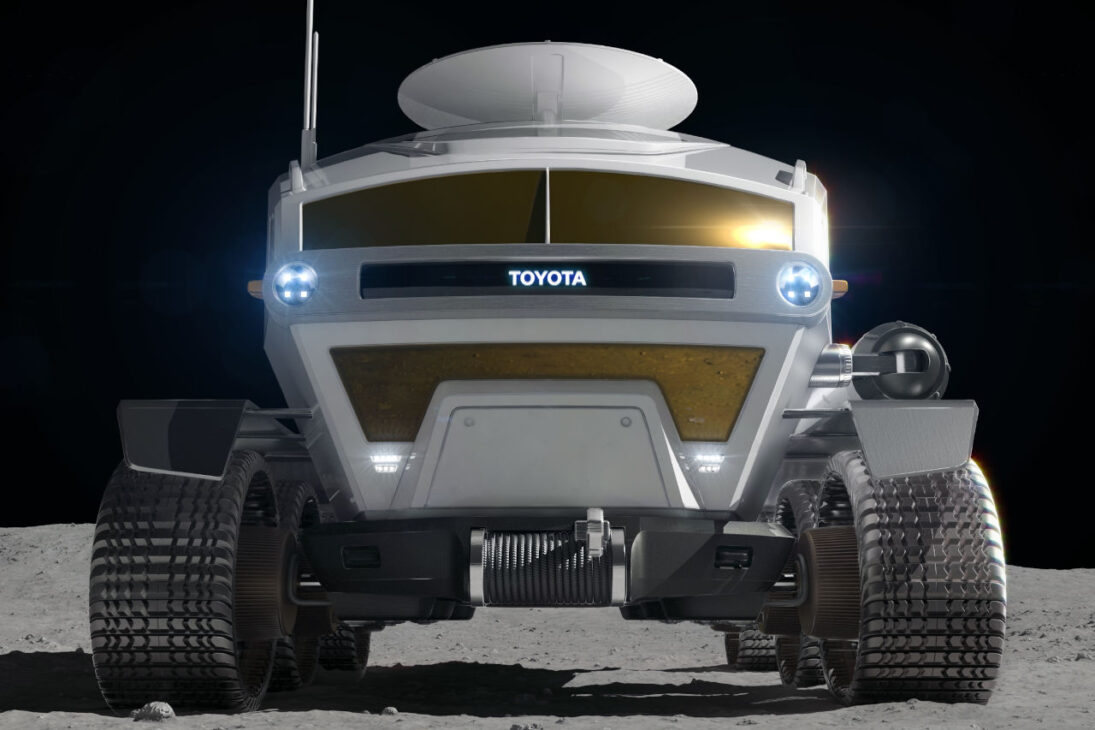
Among the most fascinating projects is the Lunar Cruiser, a pressurized rover developed by the Japan Aerospace Exploration Agency (JAXA) in partnership with Toyota. This collaboration, initiated in 2019, aims to create a vehicle that combines Toyota’s automotive expertise with the extreme demands of the lunar environment.
The name Lunar Cruiser is a tribute to the iconic Land Cruiser, one of the most well-known models from the Japanese automaker. The lunar vehicle follows the tradition of durability and efficiency of the terrestrial model, but with a design and functionalities fully adapted to the hostile conditions of the Moon.
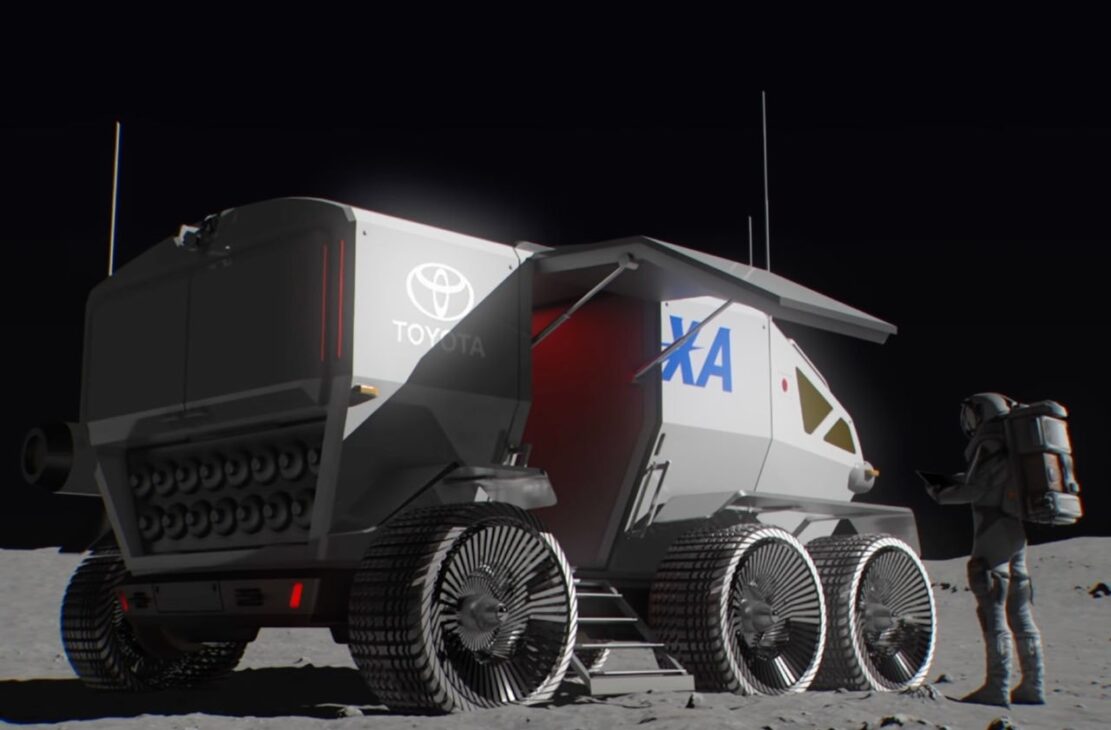
About the size of two minibuses side by side, the pressurized rover will have enough space for two astronauts on extended missions or up to four on shorter trips. Its interior, with 13 cubic meters of volume, will be pressurized, allowing crew members to perform activities without the need for spacesuits the entire time.
Innovation in Sustainable Propulsion
One of the most notable features of the Lunar Cruiser is its propulsion system. Based on the technology of the Toyota Mirai, one of the world’s first commercially sold hydrogen vehicles, the rover will use hydrogen fuel.
This system offers an impressive range of 10,000 km, making the vehicle ideal for exploring large areas of the satellite.
In addition to transporting astronauts, the Lunar Cruiser could be used for scientific missions and logistics operations. This versatility will be essential as NASA and JAXA advance in building a sustainable infrastructure on the Moon.
The Role of SpaceX and Blue Origin
The delivery of the Lunar Cruiser to the Moon will be the responsibility of SpaceX, reinforcing its position as an essential partner of NASA. However, this operation will only occur after 2032.
The mission will not just be another achievement for Elon Musk’s company, but also a milestone in using terrestrial technology adapted for space.
Meanwhile, Blue Origin will play another crucial role: landing a surface habitat on the Moon. This habitable module will be the initial base for lunar colonization, providing a safe and functional space for astronauts to live and work on the satellite. The launch of this habitat is planned for after 2033.
Both projects – Toyota’s rover and Blue Origin’s habitat – are fundamental parts of a larger plan.
Nasa’s vision is to transform the Moon into a strategic point for exploration of the Solar System, with bases serving as research, supply, and launch centers for more distant missions.
A New Era of Space Exploration
The Artemis missions represent more than just a return to the Moon. They are a symbol of global collaboration and technological innovation, bringing together the best of science, engineering, and human vision to achieve extraordinary goals.
The presence of Toyota in this scenario illustrates how companies from different sectors can contribute to the advancement of space exploration.
With SpaceX, Blue Origin, JAXA, and Toyota working together, constructing a lunar base is no longer a distant idea but an increasingly close reality. These efforts promise not only to expand our presence in space but also to inspire a new generation of scientists, engineers, and explorers.
The Moon, which for so long was seen as an unattainable goal, is becoming a testing ground for human ambitions in the cosmos.
From hydrogen-powered vehicles to high-tech habitats, each advance brings the promise of a future where space will not just be the limit, but humanity’s next home. And when a Toyota finally traverses the lunar surface, it will be further proof that space exploration is indeed a mission for all.






-

Uma pessoa reagiu a isso.