





 Portuguese
  English
  Spanish
  4 min of reading
  10 comments


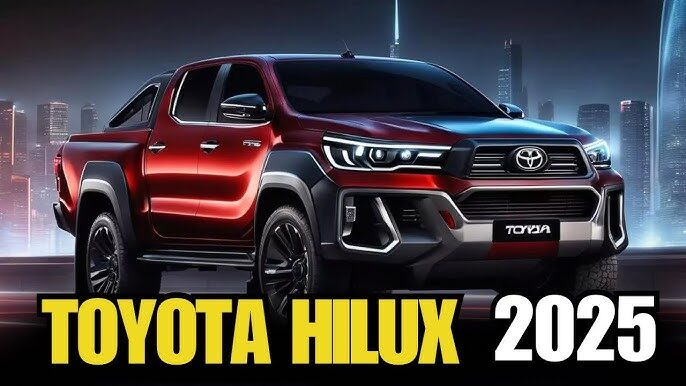


Toyota Promises to Revolutionize the Pickup Market with the Launch of a New 2.0 Turbo Engine for the Hilux. In Addition to Increasing Power and Efficiency, the New Engine Will Be Compatible with Carbon-Neutral Fuels.
Is Toyota About to Revolutionize the Pickup Market? The Japanese automaker, famous for its cutting-edge technology and innovations in the automotive sector, seems to be preparing a bold move to dominate the competition with its new generation of engines.
While everyone expects the future to be electric, Toyota seems to have other plans for its iconic pickups, with the Hilux in the spotlight. But what is the big secret behind this new strategy?
According to the Karuma News website, specializing in news from Japanese automakers, the Hilux may receive the brand-new 2.0 turbo gasoline engine, one of the most ambitious projects from the brand in recent times.
-
Elevator Plummets From Tenth Floor in Commercial Building in Recife, Raising Concerns About Safety and Engineering of Vertical Transport Systems Used Daily in Urban Buildings

-
Cyclist Hit by Car in Sobradinho, DF Is Rescued After Traffic Accident This Sunday

-
Civil Defense Issues Alert and Advises Evacuation in 51 Streets of Juiz de Fora After Risk of Instability; See the Complete List of Affected Neighborhoods

-
Military Plane With Money Crashes In Bolivia, Leaves 20 Dead And Leads Central Bank To Annul 10, 20, And 50 Bolivianos Notes After Chaos At Airport


Designed to Deliver High Performance and Efficiency, this engine promises not only to maintain the relevance of combustion engines but to take a step forward in carbon-neutral fuel technology.
Power and Efficiency: The Differentiator of the New 2.0 Turbo Engine
In the realm of internal combustion, where electrification is gaining traction, Toyota has opted to follow a hybrid strategy, developing engines that combine traditional fuels with more sustainable sources.
The 2.0 turbo engine, part of this new generation of engines from the brand, is designed to equip not only the Hilux but also other legendary models from the brand, such as the MR2 and Celica.
According to information from Karuma News, this engine will be capable of delivering 300 hp and 40.8 kgfm of torque in the Hilux version, while other models will feature variations that can reach 400 hp or even 600 hp in competition-focused editions. The question remains: will this power be enough to keep the Hilux at the top of the pickup market?
Future of the Hilux: New Generation with Even More Innovation
The big question surrounding this new engine line revolves around the timing of its implementation. There are speculations that the current generation of the Hilux, already at the end of its life cycle, may not receive the 2.0 turbo engine, which would be reserved for the next generation scheduled for 2025.
If this is true, Toyota may be saving its biggest card for the future.
Moreover, there are rumors that the new engine will replace the current 2.8 turbodiesel engine with 204 hp in the GR-Sport version, aimed at a more demanding audience seeking both performance and technological innovation.
Partnership with Mazda and Subaru and the Future of Combustion Engines
The development of this new generation of engines by Toyota was not a solo effort.
The Japanese brand collaborated with other giants of the automotive industry, such as Mazda and Subaru, to create a lineup of engines that aims to keep combustion powertrains in the market for a few more years.
Toyota is betting heavily on hybrids, even more so than on full electrification that other automakers have been promoting.
This multi-track approach, as the company calls it, will allow the new engines to run on both fossil fuels, like gasoline and diesel, as well as more eco-friendly options like liquid hydrogen, synthetic fuels, and biofuels, including ethanol.
This flexibility is seen as a solution to ensure the continuity of combustion engines, providing greater efficiency and less environmental impact.
Significant Advances in Engine Technology
Among the most innovative aspects of Toyota’s new engine line is the promise to increase efficiency without sacrificing power.
The 2.0 turbo engine will be 10% smaller than the current 2.4 turbo used in some models, but will be capable of generating up to 30% more efficiency. These figures are impressive and suggest that Toyota may be leading a new phase for combustion engines.
The brand also announced the development of smaller and equally efficient engines, such as the 1.5 naturally aspirated engine and a turbo version of the same engine, which will be about 30% more efficient than the 2.5-liter naturally aspirated engines.
All new engines are of the inline four-cylinder type, a configuration that Toyota believes is the future of combustion engines.
What to Expect from the New Hilux?
As Hilux fans eagerly await news, the future of the pickup looks promising. With the new 2.0 turbo engine, Toyota seeks to give the Hilux a competitive edge, maintaining the robustness and performance that made it famous, but now with even greater efficiency and a lower environmental impact.
It remains to be seen if consumers will be ready to embrace this new phase of internal combustion, where smaller, more powerful, and sustainable engines coexist with electrification.
After all, will Toyota’s bold strategy be able to keep the Hilux as one of the best-selling pickups in the world?
Do you think Toyota’s bet on hybrid engines still has space in the global automotive market, or is total electrification inevitable?








Sou mais híbridos e melhorar a eficiência dos motores a combustão.
Se o slogan… TOYOTA É TOYOTA, é perfeito… entendemos que esse motor 2.0 turbo mostre realmente o que fará numa picape raiz como a HILUX. Que venha inovações tecnológicas a ponto de turbinar essa tão conceituada picape.
A chevrolet usa um 2.5 turbo a gasolina na colorado uma da nossa s10 seria bom trazer pra cá tbm esse motor
Colorado 2.5 turbo gasolina maus 300cv tbm .. será bom usar esse motor na sua irmã s10 aqui do brasil