





 Portuguese
  English
  Spanish
  5 min of reading
  0 comments


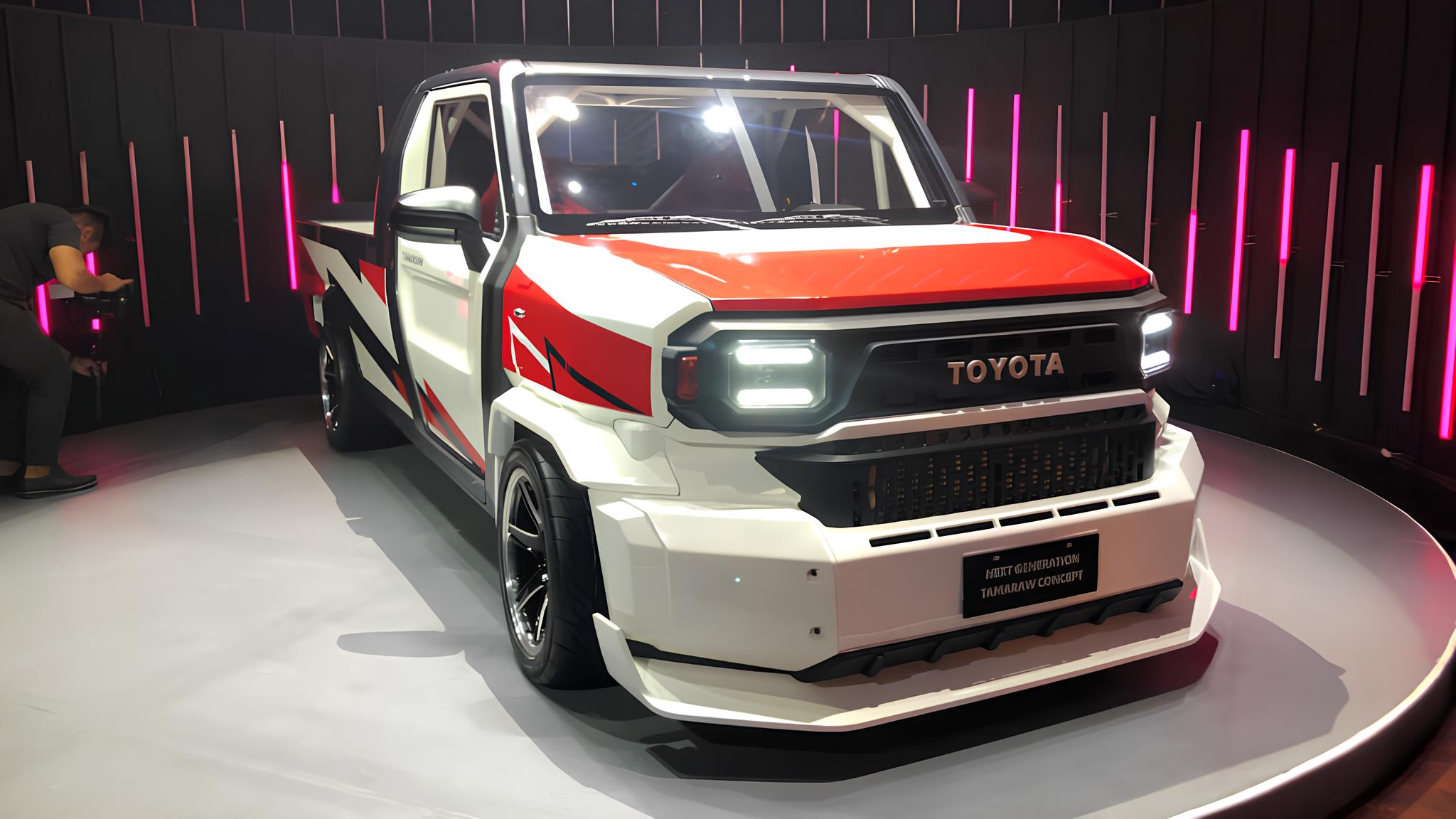
New Toyota Pickup Targets Emerging Markets With Promise of Efficiency, Robustness, and Affordable Price to Compete With Ford Maverick and Fiat Toro
Toyota is about to take a strategic step in the utility segment by launching a new compact pickup, based on the IMV 0 platform, directly targeting emerging markets. The model, known as Toyota Tamaraw in the Philippines, was officially presented as a concept at the Japan Mobility Show and is already in advanced development. With styling inspired by the American Tacoma, efficient hybrid powertrain, and a proposed cost lower than the traditional Hilux, the new pickup aims to cater to both urban and commercial audiences, offering an intermediate option between robustness and economy.
Robust and Modular Visual: Tacoma DNA With Local Practicality
The new Toyota pickup bets on a robust and functional design, directly inspired by the famous Tacoma sold in the U.S. The raised front with trapezoidal grille, square LED headlights, and reinforced bumpers create an aesthetic that conveys strength and reliability. However, the novelty is not just in the looks: the platform IMV 0 features a modular concept, allowing for various body configurations.
According to Toyota, this approach was designed for developing markets, enabling everything from single-cab versions to implementations such as ambulances, school vans, food trucks, and urban delivery units. This makes the new pickup a true multifunctional chassis, ideal for those seeking an adaptable and resilient vehicle.
-
Honda performs miracles in fuel consumption with a hatch that marks 13.2 km/l in the city and 15 km/l on the highway, leaving Polo, HB20, 208, and Onix behind and becoming a reference among compact cars without resorting to turbo or hybrid systems.

-
Six diseases that seem common but can prevent the renewal of the driver’s license for the elderly throughout Brazil and surprise experienced drivers — could any of them affect you without showing clear signs?

-
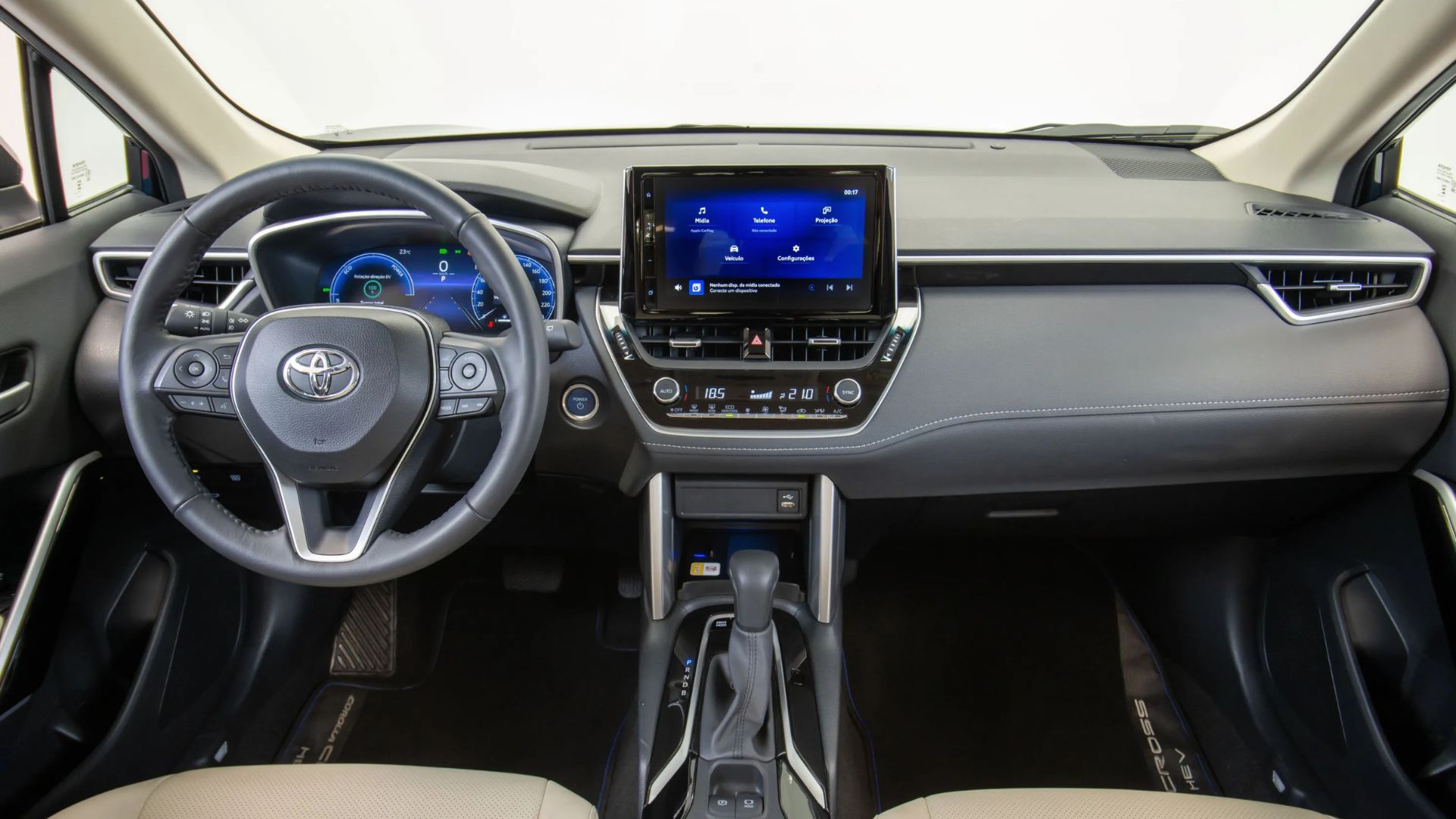
With 122 hp, fuel consumption of up to 17.7 km/l, and a trunk capacity of 440 liters, this hybrid SUV impresses even though it costs up to R$ 47,000 more than the Yaris — meet the Toyota Corolla Cross.
-
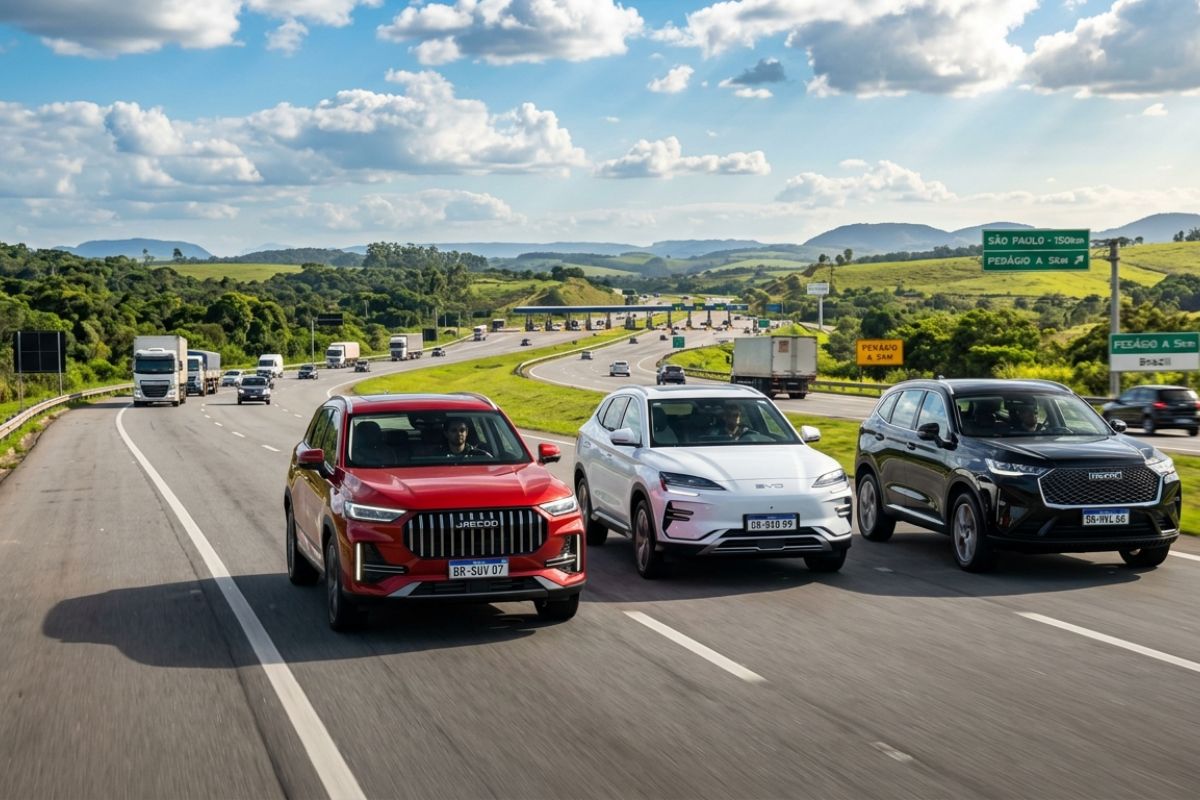
600 km with three Chinese plug-in SUVs, same mode and air conditioning on: Jaecoo 7, BYD Song Plus, and Haval H6 hit the road, and the pump reveals who was truly the most economical.


Mechanics Focused on Efficiency: Hybrid Engine is the Key
One of the standout features of the new Toyota pickup is the inclusion of a hybrid powertrain — a strategic decision that aligns sustainability, fuel economy, and performance. While Toyota has yet to release all technical details, the expectation is that the setup will be based on the brand’s hybrid system already used in the Corolla Cross and Prius, combining a 1.8L naturally aspirated engine with an electric motor.
Toyota’s hybrid system is of the full hybrid type, meaning the pickup will be able to travel short distances solely in electric mode, especially useful for urban commuting. This will significantly reduce CO₂ emissions and lower average consumption to estimated values between 18 and 22 km/l, making the model one of the most economical pickups on the market.
Pricing Strategy: Below the Hilux, Aiming for the Toro and the Maverick
The new Toyota pickup priced below the Hilux is part of a well-defined strategy by the Japanese automaker to cater to consumers seeking a light utility vehicle but who don’t have the budget for a traditional mid-size pickup. In Brazil, the Hilux easily exceeds R$ 230,000 in its more equipped versions. The expectation for the IMV 0 is that it will hit the Brazilian market priced between R$ 130,000 and R$ 160,000, depending on the version and engine.
This means the model will fill an important gap: it will be more accessible than the Hilux but more robust than unibody pickups like the Fiat Strada or Renault Oroch. Its main target will be the Ford Maverick, especially in the hybrid version, which currently exceeds R$ 190,000. Toyota intends to compete by offering similar efficiency but at a more competitive price with a focus on durability.
IMV 0 Platform: What It Is and Why It Matters
The IMV 0 platform represents an evolution of the “Innovative International Multi-purpose Vehicle” architecture that gave rise to the Hilux itself and the SW4. The “zero” version is more affordable, simplified, and designed to be manufactured locally with a high degree of localization. This modular structure allows for the development of vehicles with great variability of applications, from school vans to public security vehicles.
Toyota has stated that the model can be produced in various locations, including Thailand, Philippines, South Africa, and Latin America. In Brazil, the Sorocaba (SP) plant is the main candidate to host the assembly line, which would help reduce logistical costs and allow adaptations to local tastes.
Equipment and Interior: The Essentials With Touches of Modernity
Even as an affordable pickup, Toyota does not skimp on providing a good tech package. The more equipped versions of the new pickup are expected to feature an 8-inch multimedia center, compatible with Android Auto and Apple CarPlay, digital air conditioning, stability and traction control, rearview camera, hill start assist, and emergency automatic braking system.
The interior is expected to follow a minimalist and functional trend, with durable materials and good space for occupants and cargo. There will be single-cab versions aimed at work and double-cab versions with more family and urban appeal.
Carrying Capacity and Off-Road Proposal
Although it’s not a mid-size pickup, the IMV 0 promises to deliver good numbers in carrying capacity and structural resistance. Initial data indicates a capacity for about 1 ton of payload, depending on the configuration. The suspension will be leaf spring type at the rear, which favors robustness on uneven terrain, something common in developing markets.
Versions with 4×4 traction are also planned, especially for rural, industrial, or governmental use. The increased ground clearance, optimized approach and departure angles, and the use of all-terrain tires should ensure that the pickup can travel safely on dirt roads, flooded areas, and rugged terrain.
Production and Launch: Official Dates and Estimates
The production of the IMV 0 officially began in 2024 in the Philippines, with an initial focus on the Asian market. According to Toyota Global Newsroom, the model is already being offered to fleet operators and local companies.
For the Brazilian market, industry sources indicate that Toyota is considering a launch between 2025 and 2026, depending on industrial viability and government incentives. The combustion engine would be launched first, followed by hybrid versions.
Toyota Attacks Where the Market Grows the Most
The new Toyota pickup represents a strategic response to changing consumer behaviors in emerging markets. By offering a robust, hybrid, affordable, and multifunctional vehicle, the Japanese brand shows it is attentive to the demand for more sustainable and adaptable utilities.
The model has the potential not only to compete with the Ford Maverick and Fiat Toro but also to fill the gap left by models like the Volkswagen Saveiro and Chevrolet Montana, which do not offer enough robustness for certain commercial applications.
If it can balance price, economy, and reliability, the Toyota IMV 0 / Tamaraw could become a new sales phenomenon in Brazil and solidify Toyota’s dominance in yet another segment.








-

-

-

-

5 pessoas reagiram a isso.