





 Portuguese
  English
  Spanish
 3 min of reading
  0 comments


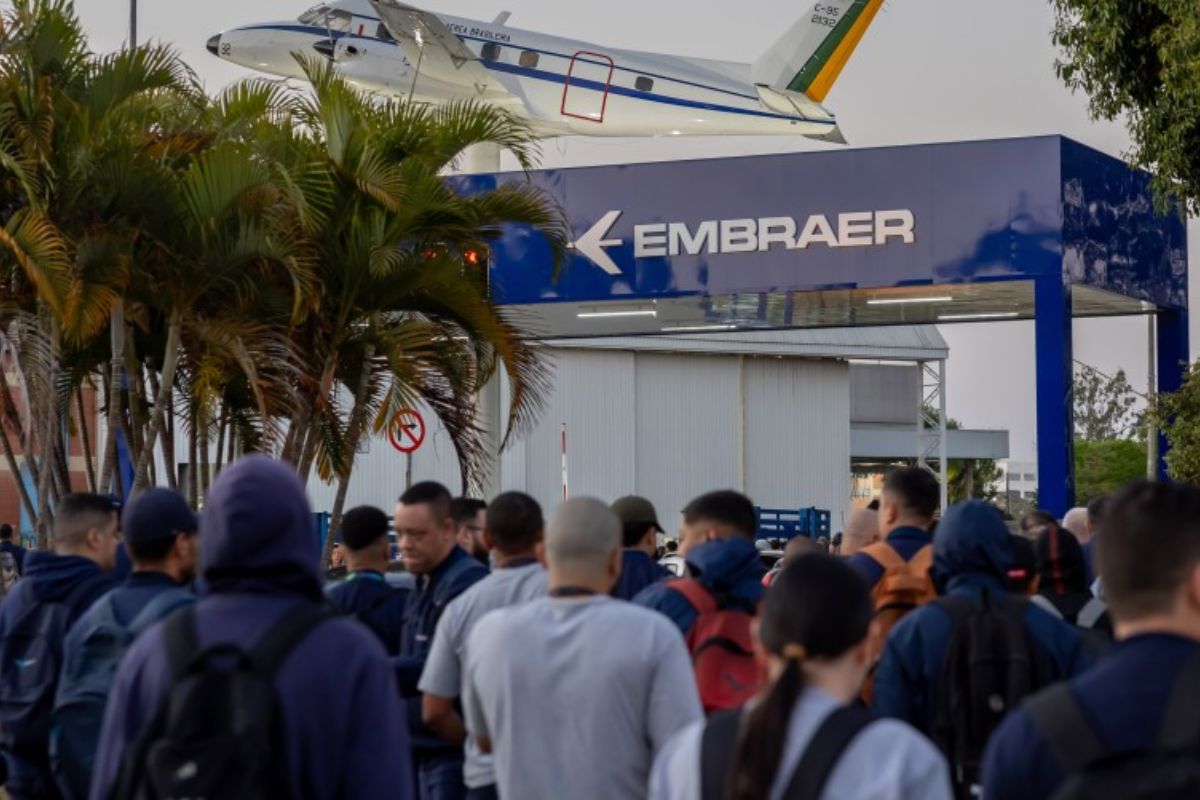
Strike Was Approved in Assembly After Rejection of 5.05% Proposal from Fiesp; Embraer Workers Ask for 11% Increase and Benefit of R$ 1 Thousand.
The Embraer workers in São José dos Campos began a strike this Wednesday, September 17, 2025, according to the Terra portal. The stoppage occurred at the factory on Avenida Faria Lima, the headquarters of the aircraft manufacturer, after an assembly that rejected the employer’s proposal of 5.05% salary increase. The movement, organized by the Metalworkers’ Union, demands 11% increase, as well as food assistance of R$ 1 thousand and the signing of the collective agreement.
The decision had been maturing since September 9, when employees approved the strike notice in a previous assembly. The category found the offer made by Fiesp, the entity representing the aviation sector in negotiations, to be insufficient. The climate of dissatisfaction solidified with the maintenance of a proposal considered below the inflationary losses and new clauses that reduced labor protection.
The Impasse in Negotiations
The main disagreement lies in the difference between what workers are asking for and what the employer is offering.
-
Oil surged to $115 a barrel due to the war in the Middle East, and diesel in Brazil has already risen to R$ 7.45 per liter, while the United States…

-
Brazilian city bets on the business environment to generate jobs and attract investments in the energy sector — secretary reveals strategy at Macaé Energy 2026.

-
50 viaducts, 4 tunnels, 28 bridges, and 40 kilometers of bike paths: BR-262 in Espírito Santo will receive 8.6 billion reais for the largest engineering project in the state’s history, inspired by the Immigrant Highway in São Paulo.

-
Brazil produces too much clean energy and doesn’t know what to do with it: over 20% of solar and wind capacity was wasted in 2025 while investors flee and 509 renewable generation projects were abandoned in the last year.

On one side, the Metalworkers’ Union is demanding 11% increase, arguing that inflation has eroded salaries and that the aviation sector is experiencing a moment of economic recovery.
On the other hand, Fiesp presented a proposal of 5.05%, limited to inflation compensation, without real salary increase.
Another point of friction was the attempt to reduce job security for injured workers and those with occupational diseases.
Currently, the protection extends until retirement, but the proposal presented restricted this right, which increased rejection among employees.
Mobilization in the Factory
On the morning of this Wednesday, the factory yard was occupied by hundreds of employees who crossed their arms.
The union emphasized that the decision for the strike was unanimous and reflects general discontent with the proposed conditions.
For the entity, this is a struggle not only for salary adjustment but also for the preservation of historically acquired rights.
The Terra portal reported that Embraer has not yet made an official statement regarding the movement.
The expectation is that the stoppage will pressure the company and Fiesp to reopen negotiations, as the strike may directly impact production and delivery timelines of the manufacturer.
What Is at Stake
According to the union, the demand for food assistance of R$ 1 thousand aims to compensate for the rising cost of living, especially with food, one of the items that weighs most on family budgets.
The 11% increase index is defended as a way to recover accumulated losses and guarantee purchasing power for workers.
However, the employer’s stance suggests that the impasse may prolong.
If there is no progress, the strike is likely to intensify, increasing the strain between Embraer, employees, and union representation.
The strike by the Embraer workers in São José dos Campos highlights the dispute for fair adjustment and the preservation of labor benefits.
With demands that go beyond inflation compensation, the mobilization reveals the weight of collective negotiations in strategic sectors of the national industry.
And you, what do you think about this strike? Do you believe that the demand for 11% and food assistance of R$ 1 thousand is fair given the current economic scenario? Or do you think that Fiesp’s proposal reflects the limits of the sector? Share your opinion in the comments — your perspective can enrich the debate on the future of labor relations in Brazil.










-

Uma pessoa reagiu a isso.