





 Portuguese
  English
  Spanish
  3 min of reading
  0 comments


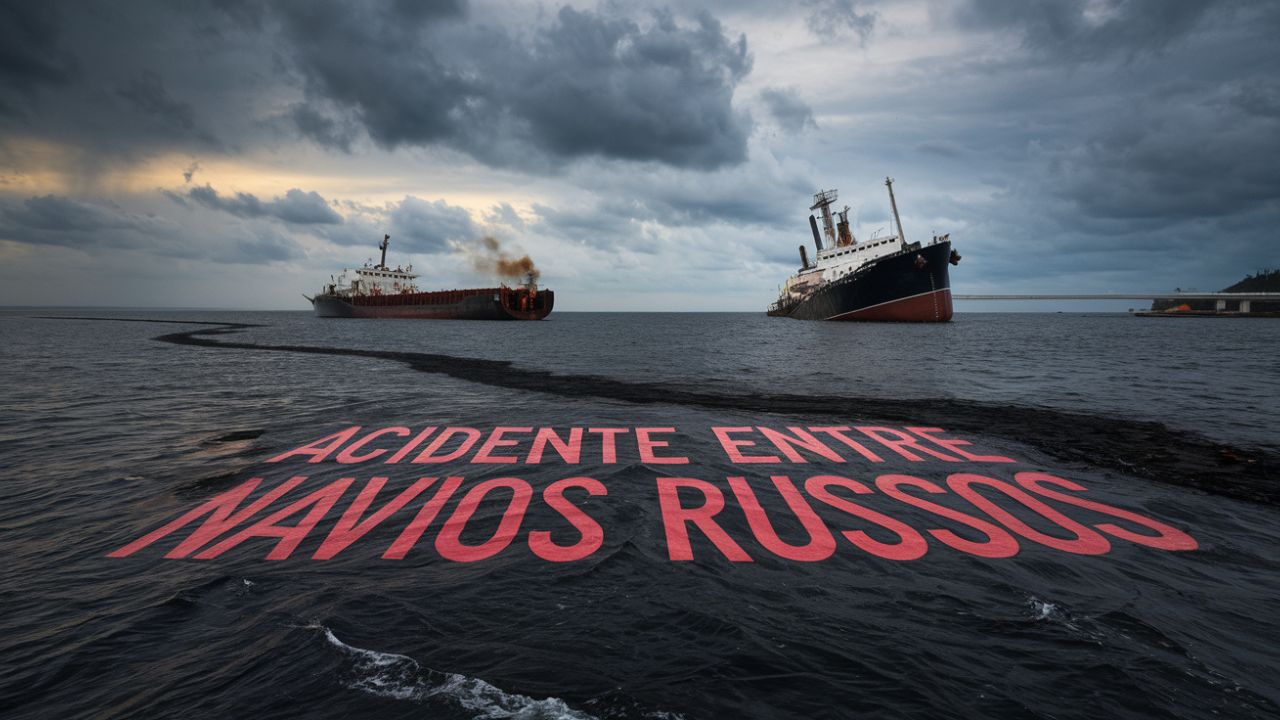
Two Russian Ships Accident During Storm, Releasing 4 Thousand Tons of Oil Into the Sea. The Oil Spill Has Left One Crew Member Dead, Two Seriously Injured, and Threatens the Ecosystem of the Black Sea and the Sea of Azov.
Two Russian ships faced a tragic fate in the Kerch Strait, which connects the Black Sea to the Sea of Azov. The disaster caused a large-scale oil spill, leaving a trail of destruction and environmental concerns. One vessel is sinking, and the other ran aground near the coast, resulting in one fatality and serious injuries to two crew members.
The question that remains is: how could such a catastrophic event happen? Let’s understand the details of this accident that is already considered one of the most severe in the region in recent years.
What Happened in the Kerch Strait That Led to the Oil Spill?


In the latest maritime incident, two Russian tankers, the Volgoneft-212 and the Volgoneft-239, encountered a severe storm during their crossing. The Volgoneft-212, carrying approximately 4,300 tons of oil, suffered severe structural damage, splitting in two and releasing about 4,000 tons of oil into the strait’s waters.
-
Petrobras surprises the world again by announcing a new discovery in the pre-salt with excellent quality oil.
-
Offshore industrial demand in Macaé skyrockets with the recovery of oil and gas and could grow by up to 396% by 2026 in the Campos Basin.
-
Offshore industrial demand in Macaé surges with the recovery of oil and gas and could grow by up to 396% by 2026 in the Campos Basin.
-
Brazilian giant expands borders in the Southeast: Petrobras confirms new oil discovery in ultra-deep waters in the pre-salt of the Campos Basin.


Meanwhile, the Volgoneft-239 drifted and ended up aground just 80 meters from the coast of Krasnodar. Despite the critical situation, there are no signs of a leak from this second tanker, but the crew is still awaiting rescue. The scene is one of environmental devastation and humanitarian emergency.
The Case of Volgoneft-212: A Vessel Split in Two in the Storm
The Volgoneft-212, a small tanker, did not withstand the force of the storm. The vessel split in two, leaving a visible trail of oil in the sea. The spill reached about 4,000 tons of oil, leading to an environmental disaster of yet unknown scale.
During the rescue, the extreme conditions worsened the situation. One of the 14 crew members died from hypothermia, while 11 others were hospitalized, including two in critical condition. The human impact was as severe as the environmental one.
Volgoneft-239: Ran Aground Near the Coast of Krasnodar
Unlike the Volgoneft-212, the Volgoneft-239 did not sink but ran aground due to the bad weather. The vessel was loaded with 4,000 tons of oil and currently shows no signs of leakage. However, the proximity to the coast raises concerns about a potential break if the weather conditions worsen.
The crew, made up of 14 members, is safe and in constant communication with the Russian Navy, but they have yet to be rescued due to the severe storm.
The Environmental Impact of the Oil Spill
The oil spill in the Kerch Strait raises serious concerns. Experts warn that oil spills can be difficult to contain, especially amid a storm. Paul Johnson from Greenpeace highlighted that winds and currents in the region are carrying the oil northeast, broadening the pollution’s reach.
If the oil reaches the shores of the Sea of Azov or the Black Sea, cleanup will be a complex and long-term process. The local marine ecosystems, already sensitive, are at risk of being severely impacted.
Immediate Measures and Ongoing Investigations
The Russian authorities are mobilizing efforts to contain the damage and investigate the causes of the accident. The establishment of a task force to address the spill’s consequences was announced by President Vladimir Putin.
Possible safety violations in maritime transport are being investigated. The combination of human error and bad weather may have been fatal for both vessels.
Why Was Bad Weather a Decisive Factor?
Bad weather played an unwanted lead role in this disaster. Severe storms in the Kerch Strait make navigation challenging, especially for older vessels like the tankers involved.
Extreme weather conditions require maximum skill and preparation from crews. However, human errors at critical moments can trigger large-scale disasters.
The accident in the Kerch Strait serves as a warning to the world about the risks of transporting oil under adverse conditions. The oil spill endangers fragile ecosystems and highlights the urgent need to reinforce safety measures in maritime transport.







-

-

2 pessoas reagiram a isso.