





 Portuguese
  English
  Spanish
  5 min of reading
  0 comments


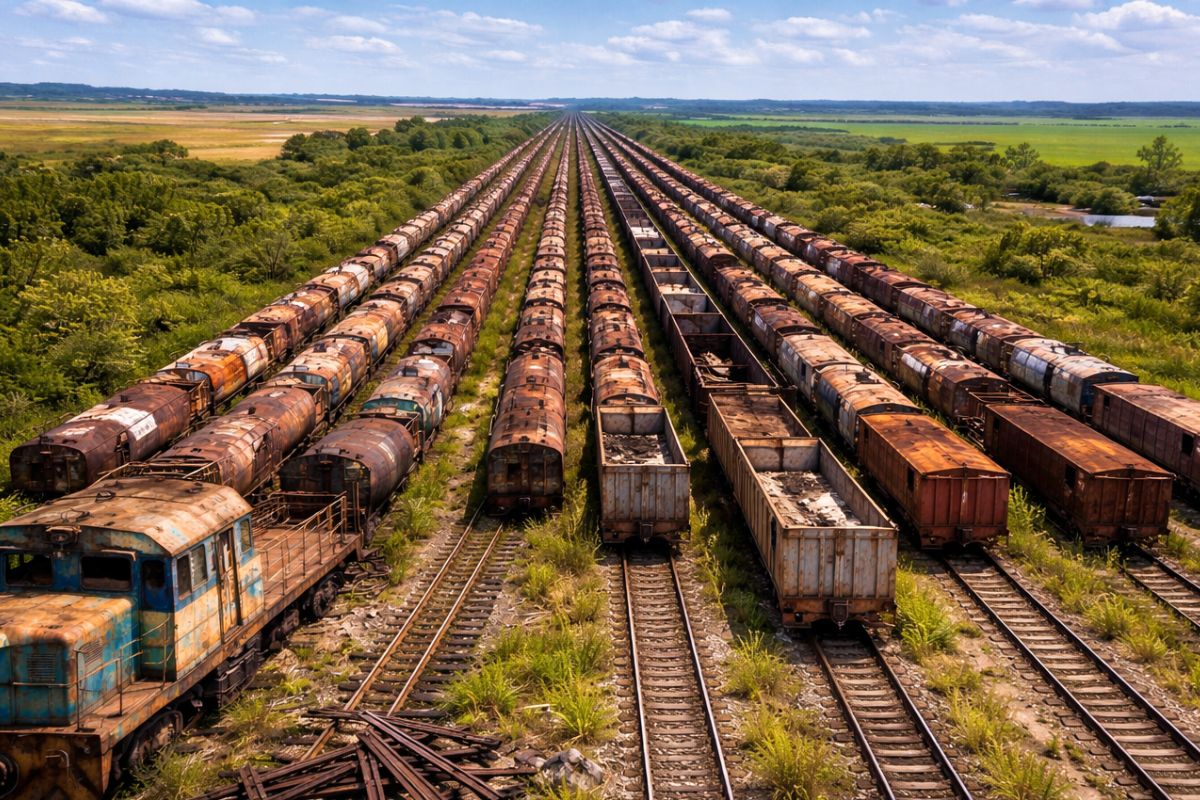
The train in Rio Grande do Sul ceased to represent a connection between cities and cargo flow to become an image of abandonment, with stopped trains, rusting wagons, and a drastically shrunk railway network.
The train that still appears to be in operation has become an exception amidst compositions without destination, empty yards, and unused stretches, while the government promises a recovery of the network in 2026. The extent of the crisis is evident in the numbers: Rio Grande do Sul once had 3,800 km of railway lines, which fell to 1,600 km in 2023 and, after the floods of 2024, was reduced to 900 km.
Over three decades, the railways in Rio Grande do Sul lost 75% of their tracks. What remains is a fragmented network, with stretches that lead nowhere and a direct impact on transportation, jobs, logistics, and economic activity.
Even so, the scenario is not one of complete disappearance. There are still freight trains operating at specific points, tourist operations persisting, and an expectation of recovery that returns to the debate with the federal promise of a bidding process to recover part of the railway network.
-
After sinking 500 years ago with 200 tons of gold, diamonds, and jewels, a Portuguese ship has become the most valuable and sought-after shipwreck of all time.

-
Costco will open the first independent gas station in the company’s history with 40 pumps and no store around it on a 1,500 m² lot where a Bed Bath and Beyond used to operate in California, as fuel prices in the U.S. approach $6 per gallon.

-
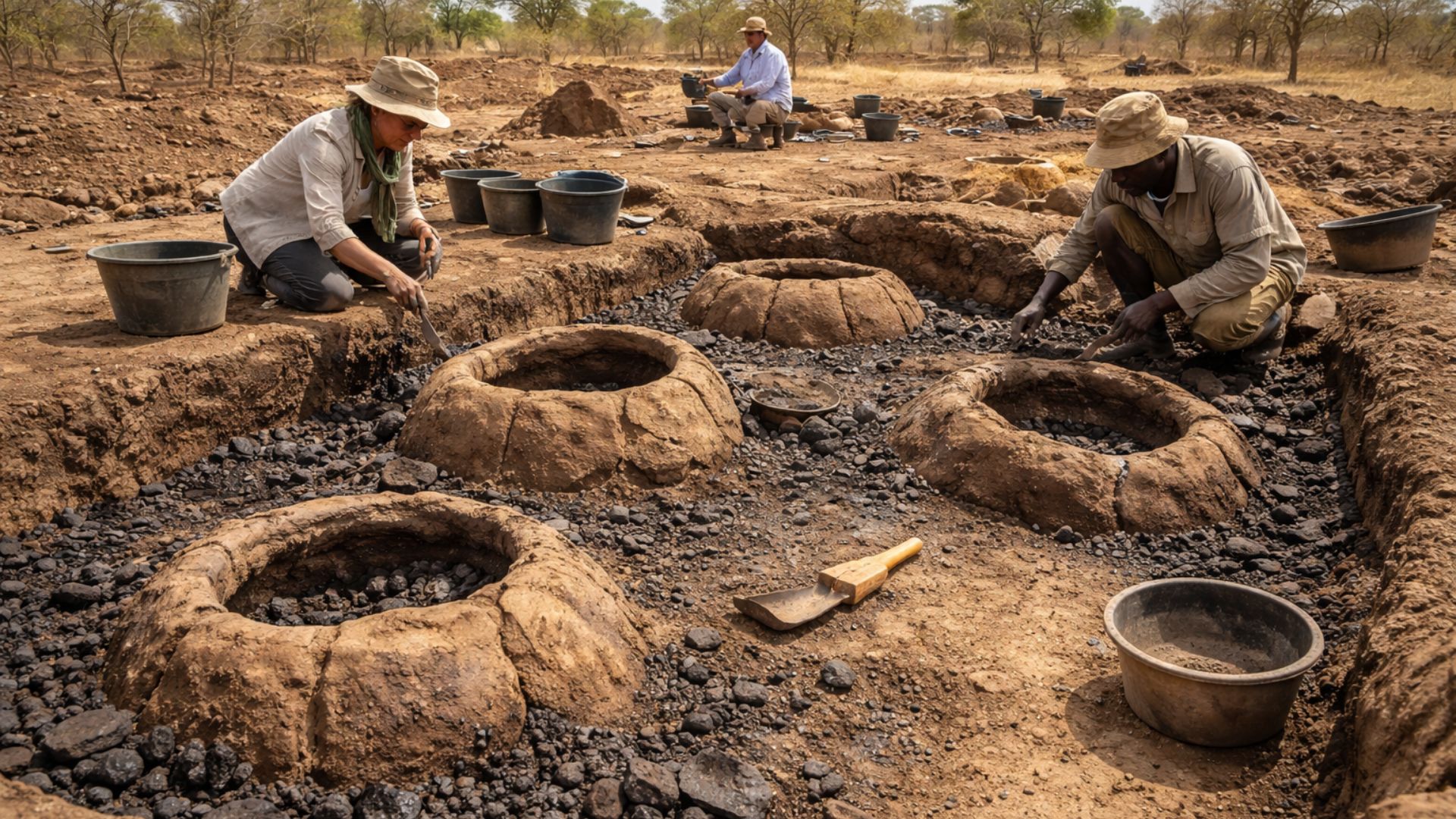
Discovery in Senegal reveals iron factory that operated for 800 years without changing technology, with advanced furnaces, surprising thermal control, and continuous production since the 12th century, challenging everything we knew about ancient innovation.
-
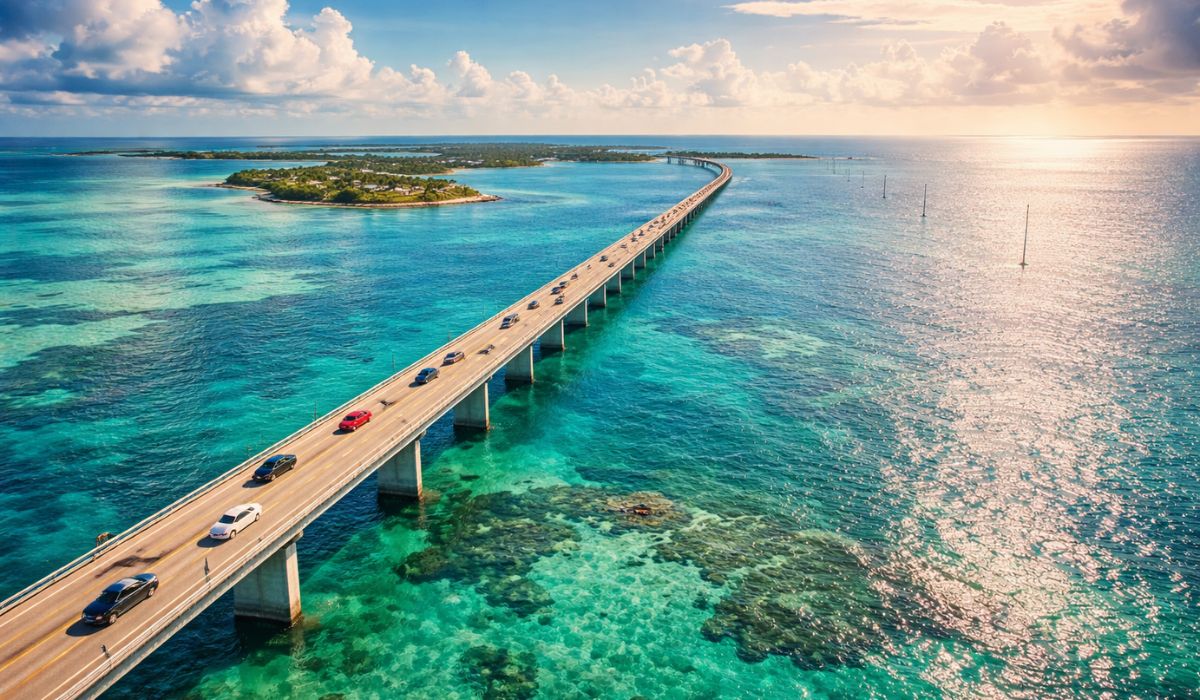
The impressive 180-kilometer highway that seems to float over the sea connects 44 islands and allows you to cross the ocean by car on one of the most incredible routes on the planet.
Stopped trains show the extent of the crisis
One of the strongest images in the video appears in Canoas, where a line of stopped trains begins near BR 116 and extends for almost 3 km. There are more than 500 wagons and locomotives rusting in the open air, even though they are equipment that could still be in operation.
The problem is that these trains have nowhere to go. Without operational continuity, without proper maintenance, and with the network reduced, what is seen is a stalled system. What could be transporting cargo has turned into a line of scrap exposed to the elements.
The railway network has shrunk brutally

The crisis of the railways in Rio Grande do Sul did not start now, but the numbers show how it has deepened. The state once had 3,800 km of railway lines. In 2023, due to lack of maintenance, this total had fallen to 1,600 km.
After the floods of 2024, the situation worsened even further. The operational stretch fell to just 900 km, consolidating a collapse that had been developing for years. When the report states that 75% of the tracks have disappeared in three decades, it summarizes a historically significant loss.
Uruguaiana became a portrait of a structure that has rotted
At the international transshipment station in Uruguaiana, abandonment is even more evident. Wagons, locomotives, and structures are deteriorating in a yard that was once important for cargo circulation.
According to reports shown, until about ten years ago, there were compositions circulating from there to Rio Grande and Porto Alegre. Today, the scenario is different. The yard remains large, with facilities for transshipping different types of cargo, but practically without function, while everything rots in the open air.
Freight train still exists but has lost strength
Despite the shrinkage of the network, rail transport has not completely disappeared. In Rio Grande, the report follows the arrival of one of the last trains still active in the state, loaded with material for export.
Each composition of this type carries between 70 and 100 wagons. Even so, the share of rail transport has dropped significantly. Previously, it accounted for more than 30% of the volume of cargo received.
Today, this percentage is around 14%. The train remains important, but much smaller than it once was within the logistics of Rio Grande do Sul.
Serra Gaúcha kept the train almost solely as a tourist attraction
In Serra Gaúcha, the train has survived mainly through tourism. In Bento Gonçalves, the only operating train in the region operates in a tourist manner, far removed from the role that freight trains once had there in the past.
The change is profound. Where millions and millions of liters of fuel once passed towards São Paulo and the center of Brazil, today freight trains have not returned to operation. What remains is a tourist operation and the attempt to keep alive a part of the railway memory of the region.
Tourist train helps to reactivate the circulation of people
Even with the loss of the freight network, tourist trains show that there is still demand and interest in the mode. The Trem dos Vales, for example, appears in the report as an important piece for the resumption of movement in the region after the floods.
The first season operated with 5,000 tickets. Later, the space was expanded, and the number exceeded 5,300 people. After the floods, the activity was zero for eight months until it resumed. With the resumption, tourists returned to circulate, and this helped to revive part of the local economy.
Abandonment also destroys work and perspective


The testimonies gathered in the video make it clear that the loss is not just material. For those who worked on the railway, seeing abandoned locomotives, deteriorated wagons, and tracks covered in weeds is also witnessing the disappearance of a service that once had economic and social value.
It is not just the equipment that is rusting. A structure that generated jobs, connected regions, and helped to move the state’s economy is also rusting. In various statements, the desire to see the trains back in operation appears so that others can work and so that the mode can grow again.
Government promises to recover the network in 2026
At the end of the report, the main signal of resumption emerges. The federal government announces for September 2026 a bidding process aimed at recovering the railway network in Rio Grande do Sul, including in regions like Uruguaiana, where the tracks have been abandoned for about ten years.
The promise puts the topic back at the center of discussion. After the loss of 75% of the tracks, the reduction of the network to 900 km, and the image of hundreds of wagons without destination, the promised recovery is seen as a decisive test of the capacity to rebuild the system.
The train in the state today carries crisis, memory, and hope for recovery
The train in Rio Grande do Sul has come to symbolize two things at once. On one side, abandonment, scrap, interruption, and loss of infrastructure. On the other, there are still compositions in operation, tourist experiences, and the expectation that part of the network can be recovered.
The railway crisis in Rio Grande do Sul is not just a transportation problem. It reveals a loss of competitiveness, jobs, regional connection, and logistical capacity. Therefore, the discussion about trains in the state goes far beyond nostalgia.
In your opinion, can the trains in RS still play a strategic role, or has abandonment compromised this recovery too much?





Seja o primeiro a reagir!