





 Portuguese
  English
  Spanish
  3 min of reading
  1 comment





A Technological Advancement That Promises to Transform the Market: The CVT RatioZero Transmission Eliminates Belt Wear, Delivers Greater Torque and Efficiency, and Debuts in Partnership with Yamaha T-Max.
A CVT transmission system that doesn’t use pulleys or belts, but rather gears in an infinite variation? It sounds like science fiction, but that is exactly what engineer Edyson Pavilcu has created with the RatioZero system. Let’s explore this innovation and understand how it promises to transform the automotive industry and other markets.
What Is CVT Transmission and Why Is It Important?
The CVT (Continuously Variable Transmission) is famous for offering a smooth and constant acceleration. Popularized in cars such as those from Honda and Toyota, and also in scooters like those from Yamaha, this system uses variable pulleys and a belt to continuously adjust the transmission ratio. This results in greater driving comfort and fuel efficiency.
The concept of CVT transmission dates back to the Dutch DAF cars, where the system stood out for its simplicity and efficiency. Over time, it gained traction among various brands and models, especially due to its ability to keep the engine in the optimal power range.
-
Honda performs miracles in fuel consumption with a hatch that marks 13.2 km/l in the city and 15 km/l on the highway, leaving Polo, HB20, 208, and Onix behind and becoming a reference among compact cars without resorting to turbo or hybrid systems.

-
Six diseases that seem common but can prevent the renewal of the driver’s license for the elderly throughout Brazil and surprise experienced drivers — could any of them affect you without showing clear signs?

-
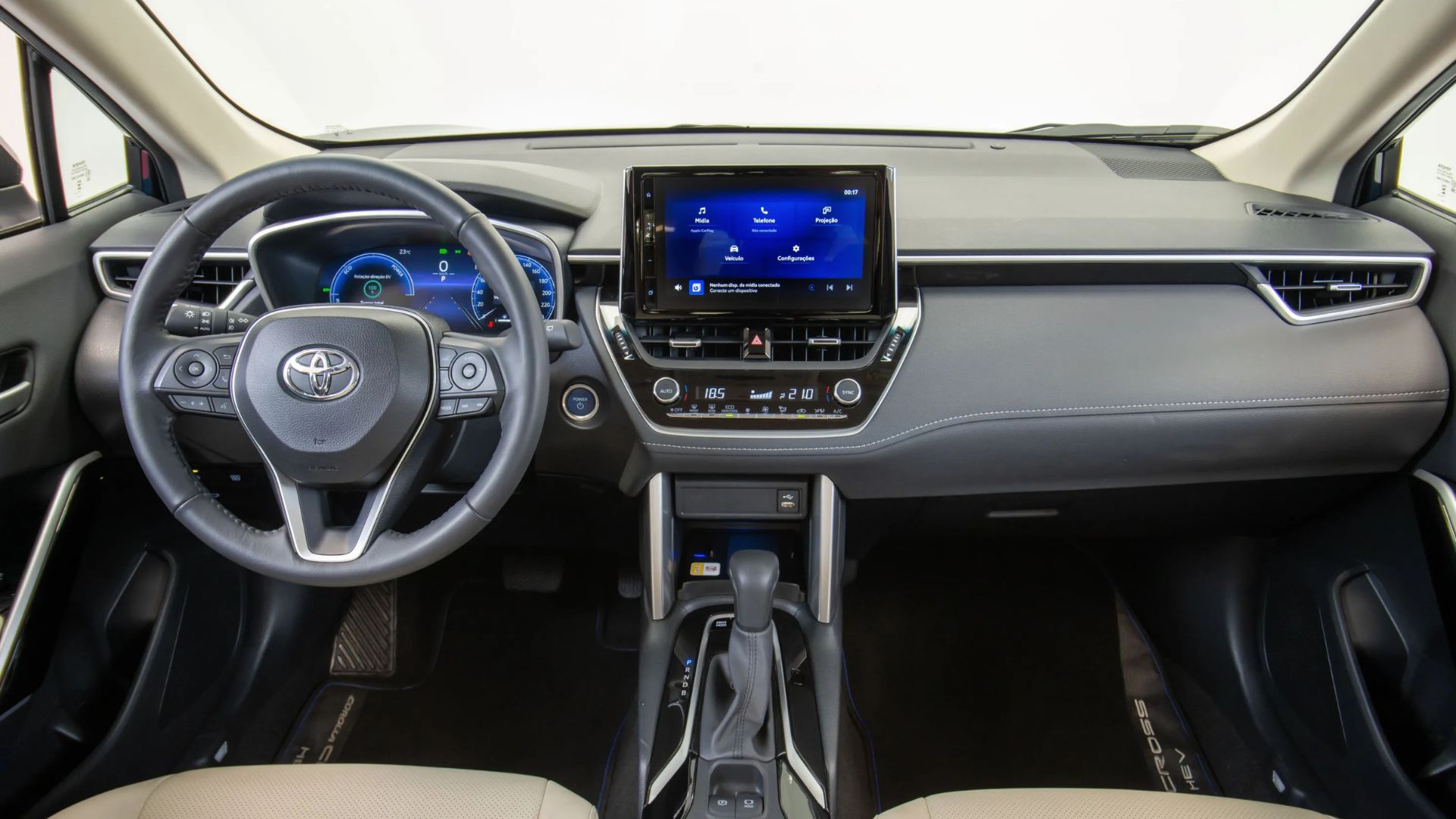
With 122 hp, fuel consumption of up to 17.7 km/l, and a trunk capacity of 440 liters, this hybrid SUV impresses even though it costs up to R$ 47,000 more than the Yaris — meet the Toyota Corolla Cross.
-
600 km with three Chinese plug-in SUVs, same mode and air conditioning on: Jaecoo 7, BYD Song Plus, and Haval H6 hit the road, and the pump reveals who was truly the most economical.


In the world of motorcycles, CVT is widely used in scooters due to its reliability and practicality. In cars, it is ideal for optimizing performance in urban traffic, offering a more linear driving experience. However, a weak point is the potential slippage of the belt, which can compromise torque and response.
RatioZero: A New Approach to CVT Transmission

In an effort to overcome these limitations, Edyson Pavilcu developed the RatioZero, a revolutionary system that completely eliminates pulleys and belts, replacing them with gears.
The RatioZero uses a set of modified planetary gears, with individual satellites that create virtually infinite gear variations. These sets operate independently, disengaging those not in use and avoiding the movement of the entire gearbox. The result is a more efficient transmission with quicker responses.
In addition to preventing belt wear, the RatioZero offers greater torque and energy efficiency. This means that vehicles equipped with this technology will be able to achieve better performance, less maintenance, and an enhanced driving experience.
The RatioZero has already attracted the attention of major market players. Yamaha will be the first to implement the system in its T-Max scooter, but the possibilities go far beyond.
Yamaha T-Max: The First Vehicle with RatioZero
The choice of Yamaha to launch RatioZero was not by accident. Scooters like the T-Max are perfect for testing the technology due to their use in urban routes, where quick response and efficiency are essential.
The versatility of RatioZero is impressive. It can be applied in automobiles, enhancing performance without compromising fuel economy, and even in bicycles and wind turbines, where efficiency is crucial.
Although the system is already ready for production, there are still important steps to fulfill before its implementation in automobiles.
Practical tests in vehicles are essential to validate the durability and performance of RatioZero under different conditions. Despite this, the innovation already holds two registered patents, ensuring its exclusivity in the market.
The Role of Patents and the Automotive Industry
With Yamaha as the initial client, RatioZero has a promising future. If the tests are successful, other manufacturers may adopt the technology, marking a new era for CVT transmissions.
RatioZero promises to be more than just a simple innovation – it could redefine the concept of CVT transmission. By eliminating the limitations of the traditional system, this technology opens doors for more efficient and versatile vehicles. Now, it remains to follow its journey to the market and await the next revolutions in the automotive engineering world. Who knows, soon we may be driving cars equipped with RatioZero, enjoying a totally new driving experience.









Sin que suene prepotente Yo tengo diseñado y creado un prototipo funcional de una CVT totalmente mecánica más sencilla que esta, funciona con levas móviles montadas en piñones sucesivos, aún no lo he patentado, estoy acabando de desarrollarlo.