





 Portuguese
  English
  Spanish
 4 min of reading
  1 comment


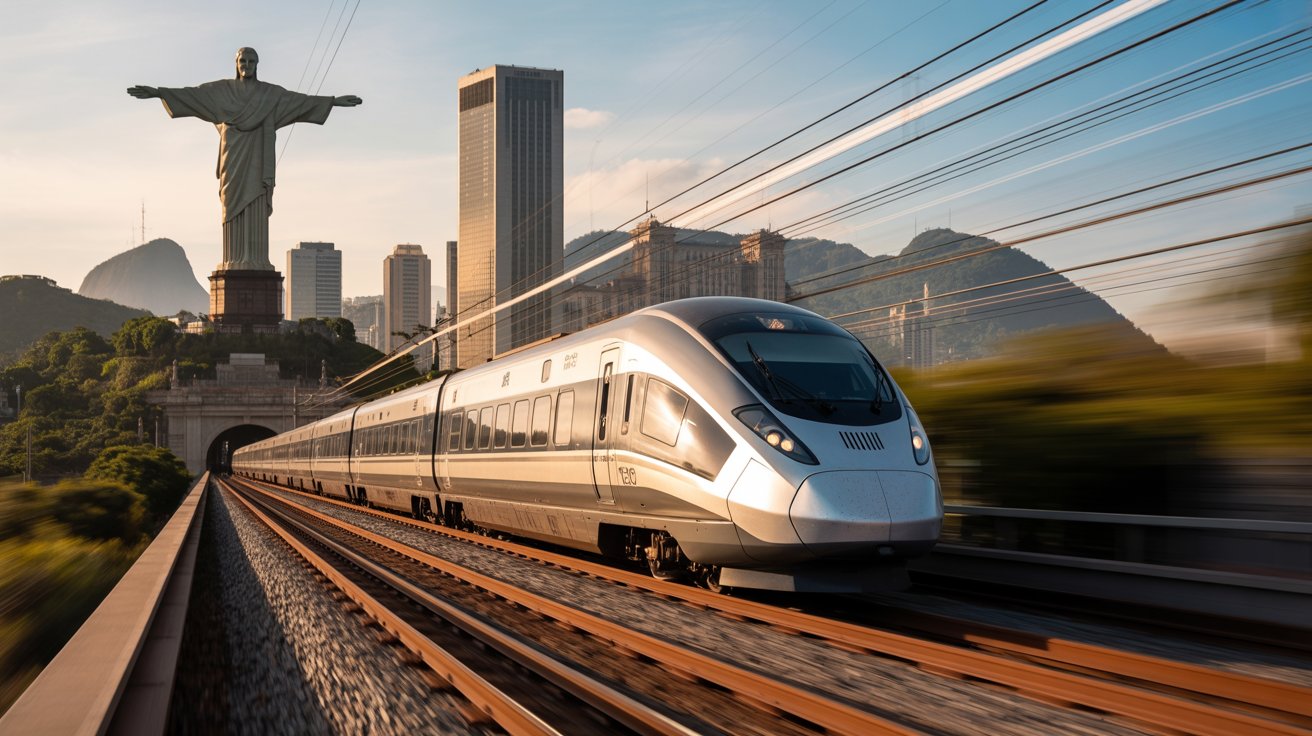


Project Promises to Connect Rio and São Paulo by High-Speed Rail in Just Over 100 Minutes, with Billion-Dollar Investment, Operations Expected to Start in 2032, and Anticipation to Revolutionize Transportation Between the Two Largest Cities in the Country.
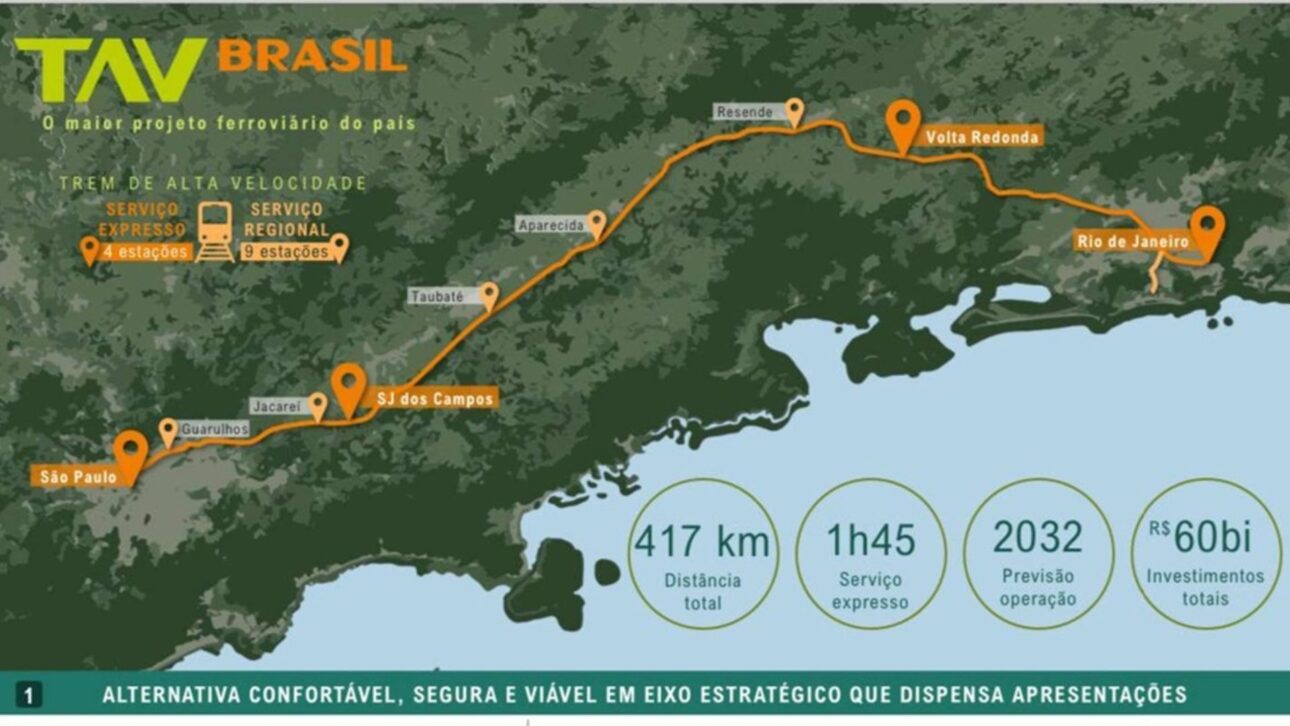
Expected to start operations in 2032, the high-speed train project linking Rio de Janeiro and São Paulo aims to cover 417 kilometers in about 105 minutes, with trains traveling at 320 km/h.
TAV Brasil, the company authorized to develop and operate the service, estimates a investment of R$ 60 billion and a fare of R$ 500 for the full stretch; intermediate trips are expected to cost R$ 250 per segment, according to the company itself.
What Is Known About the Project
The proposal revives the idea of a bullet train between the two largest metropolises in the country under a new regulatory arrangement.
-
The institute that trained the greatest aerospace engineers in Brazil has just opened its first campus outside São Paulo after 75 years: ITA Ceará will have R$ 445 million, new courses in energy and systems, and classes are expected to start in 2027.
-
Luciano Hang, owner of Havan, goes to Juiz de Fora after the tragedy in February, brings R$ 1 million, hands out R$ 2,000 cards, and donates up to R$ 15,000 to victims in the region.

-
The Brazilian passport allows legal residence in dozens of countries without the need for a prior visa, and most Brazilians are unaware that they can apply for residency directly upon arriving in nations in South America, Africa, and even Europe.

-
Petrobras sends a message to Brazilian truck drivers after fuel collapse and reveals plan to have 100% domestic diesel.

Based on the legal framework for railways, TAV Brasil obtained federal authorization to conduct studies, licensing, and implementation.
The company claims that the service will be 100% private and operated under long-term authorization, with revenues from ticket sales and commercial exploitation of station areas.
Route and Planned Stops
The itinerary will connect the capitals of Rio de Janeiro and São Paulo and will include stops in Volta Redonda (RJ) and São José dos Campos (SP).
The goal is to serve, in addition to the capitals, the industrial and university axis of the Paraíba Valley and the South of Fluminense.
The exact location of the stations will depend on negotiations with municipalities and environmental approval.
The company indicates a preference for central areas to facilitate integration with local networks and stimulate urban requalification in the surrounding areas.
Travel Time and Performance
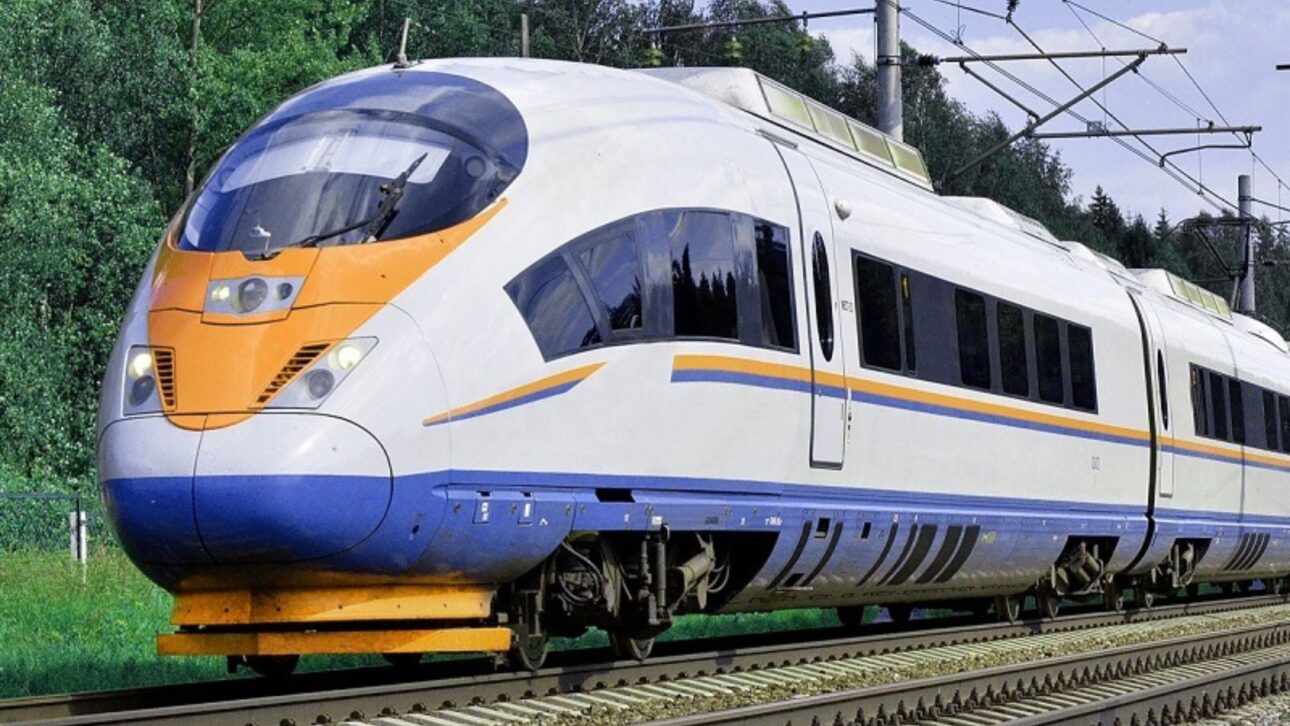
The estimated time of 105 minutes takes into account commercial operation at 320 km/h on internationally standardized high-speed trains.
The projection includes acceleration, braking at intermediate stops, and operational margins.
Under usual conditions, the complete journey should take less than two hours.
Partial journeys will have reduced duration depending on the boarding and alighting of each passenger.
Prices and Fare Policy
TAV Brasil works with a fare of R$ 500 for the complete trip between Rio and São Paulo.
For those boarding or alighting at intermediate stops, the stated value is R$ 250 per segment.
The fare policy may vary by service class, time, and advance purchase.
The company takes R$ 500 as a reference to make the initial financial modeling viable.
Timeline: Licenses, Construction, and Start of Operations
The timeline presented by the company places commercial operations in 2032, conditioned upon the completion of the technical, economic, and environmental feasibility study, the licenses, and fundraising.
In public communications, executives indicated an intention to start construction in 2027, if the regulatory steps progress on time.
The detailed schedule for construction sites and work fronts will be defined after receiving the preliminary environmental license and land agreements.
How It Will Be Financed
The total estimated investment of R$ 60 billion includes railway infrastructure, signaling and control systems, rolling stock, and station construction.
Along with indebtedness and equity, TAV Brasil is exploring ancillary revenues related to real estate development in the areas surrounding the stations to strengthen cash flow.
This mechanism is already applied in high-speed projects abroad.
Partnerships with international technology suppliers are also being evaluated, according to the company.
Capacity and Integration
Although the company has not yet disclosed fixed numbers for seat availability, the guideline is to operate frequencies compatible with demand for business and leisure travel between the two capitals.
Integration with subway, metropolitan trains, and bus corridors is considered essential to reduce door-to-door times, especially at terminal stations.
The definition of connections will be detailed in the executive design phase alongside local governments.
Comparison with the Air Shuttle
The point-to-point travel time of the bullet train aims to compete with the air shuttle Rio–SP, especially when considering travel to airports, boarding procedures, and potential delays.
The fare proposal aims for a competitive range compared to average airline fares, maintaining the argument of time predictability and lower operational variability in high-speed rail.
Next Steps and Conditions
For the project to move forward, it relies on environmental assessments, licenses, and agreements with municipalities for land use and expropriations.
TAV Brasil reports that the EVTEA is under development and that, once this cycle is completed, it will submit the set of studies to the relevant authorities.
From there, the executive route, station access, and civil engineering works, including necessary tunnels and viaducts for high-speed standards, will be defined.
What Changes for the Passenger
If the timeline is followed, the connection in approximately 105 minutes between the two capitals will alter the logic of frequent travel.
The fare of R$ 500 for the full stretch and R$ 250 for intermediate segments, along with stops in Volta Redonda and São José dos Campos, form the core of the proposal.
The planned route of 417 km will be completed by trains traveling at 320 km/h, with a promise of greater regularity and lower local emissions in operation compared to road transport modes.
What do you consider the most determining factor for public adoption: the price, travel time, or location of the stations?









Acho que esse