





 Portuguese
  English
  Spanish
  3 min of reading
  0 comments


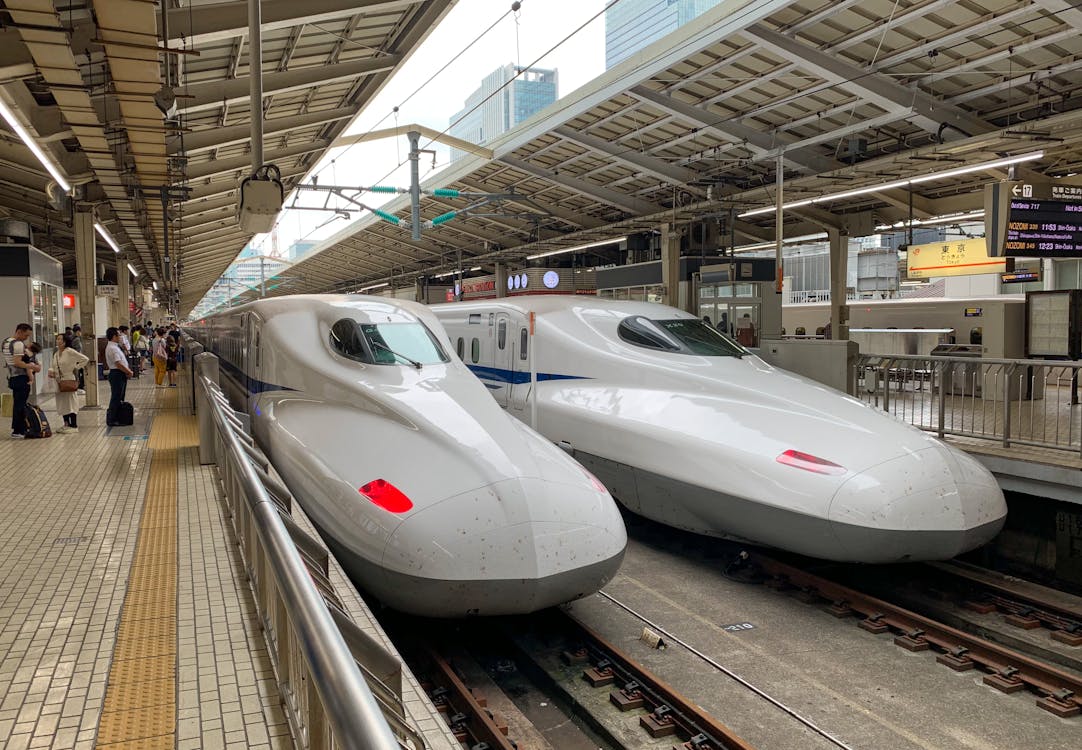
Understand Why Japanese Trains Are Famous for Their Punctuality. Culture, Technology, and Efficiency Combine in the World’s Most Accurate Railway System
In Japan, missing a train is almost a rare event. The country is known for having one of the most punctual railway systems in the world. In many cases, delays are counted in seconds. This extreme punctuality is not by chance. It is the result of a combination of history, culture, technology, and discipline.
A Railway System Built on Precision
The foundation of the Japanese railway system began to be built back in the 19th century. It was during the Meiji Restoration when Japan underwent a process of modernization. Before that, time was measured less accurately, based on incense clocks and other traditional methods.
The adoption of mechanical clocks and a standardized way of measuring time helped create a culture more focused on punctuality.
-
He started running at 66 years old, broke records at 82, and is now a subject of study for having a metabolic age comparable to that of a 20-year-old, in a case that is intriguing scientists and inspiring the world.

-
Oldest tree on the planet reappears after 130 years of searches: Wattieza, 385 million years old, was 10 meters tall and had no leaves or seeds; Gilboa fossils in New York solved the mystery in 2007.

-
A 48-square-meter house assembled in hours with 4,000 bricks made of recycled plastic that does not absorb moisture, has natural thermal insulation, and costs less than 90,000 reais in a complete kit.

-
Luciano Hang revealed that Havan’s air fleet has already accumulated more than 20,000 landings, 10,000 flight hours, and 6 million kilometers traveled, and he says that without the planes, the company would never have grown so quickly.


This cultural shift had direct reflections on how the railways and the Japanese train system were developed. The construction of rail lines began as early as the end of the 19th century.
Over the years, the country accumulated technical knowledge and experience. It has been more than 140 years of evolution and continuous improvements.
An important milestone came in 1972 when the then Japanese National Railways implemented scheduled route control. This system helped synchronize train schedules and marked the beginning of a new era for punctuality in Japan.
Technologies That Make a Difference
But it is not just history that explains punctuality. Technology plays an essential role in this process. Japan has adopted modern systems like ATOS and COSMOS.
ATOS is used to control train operations precisely, which reduces delays and improves efficiency. COSMOS focuses on safety, maintenance, and operation of the Shinkansen, the famous Japanese bullet train.
These systems operate with a combination of automation and human supervision. The result is almost total control over operations. Everything is planned in minute detail, which allows trains to keep their schedules even in adverse situations.
Culture of Respect for Time
Another factor that cannot be overlooked is Japanese culture. In Japan, being punctual is not just a quality; it is an expectation. Society values the collective and expects each individual to contribute to the good functioning of the whole. This is also directly reflected in public transportation.
Meticulous planning is part of daily life. The idea of avoiding uncertainties and ensuring everything runs as expected is part of people’s behavior. This applies to both passengers and the professionals who operate the trains.
Discipline is a central element. In a country with high population density and frequent seismic risks, order becomes essential. Railway workers not only follow strict rules but also undergo intense and rigorous training.
Japan Trains: Training and Discipline
The employees working with Japanese trains are highly qualified. They receive constant training to ensure that all processes are executed perfectly. This includes drivers, conductors, and also attendants at the stations.
A well-known technique is “pointing and calling,” or shisa kanko. In this technique, employees associate gestures and verbal commands with each task. This helps to avoid mistakes. Studies indicate that this technique can reduce errors by up to 85%. It is yet another example of how seriously Japan takes every detail of its railway system.
Visible Result
With all this combination of history, technology, culture, and discipline, the result could not be different. Japan today has one of the most efficient railway systems on the planet. Japanese trains rarely experience delays, even in difficult situations like natural disasters.
The average delays, including for high-speed Japanese trains, are counted in seconds. Not in minutes, nor in hours. Seconds. This precision is admired worldwide and serves as an example for other countries.
The commitment to punctuality has become part of the national identity. More than just a logistics issue, it is a demonstration of respect for others’ time. A value deeply rooted in Japanese society.
In an increasingly fast-paced world, Japan shows that it is possible to maintain a standard of excellence. The punctuality of Japanese trains continues to be a clear symbol of efficiency, respect, and organization.
With information from Science ABC.








Seja o primeiro a reagir!