





 Portuguese
  English
  Spanish
  4 min of reading
  38 comments


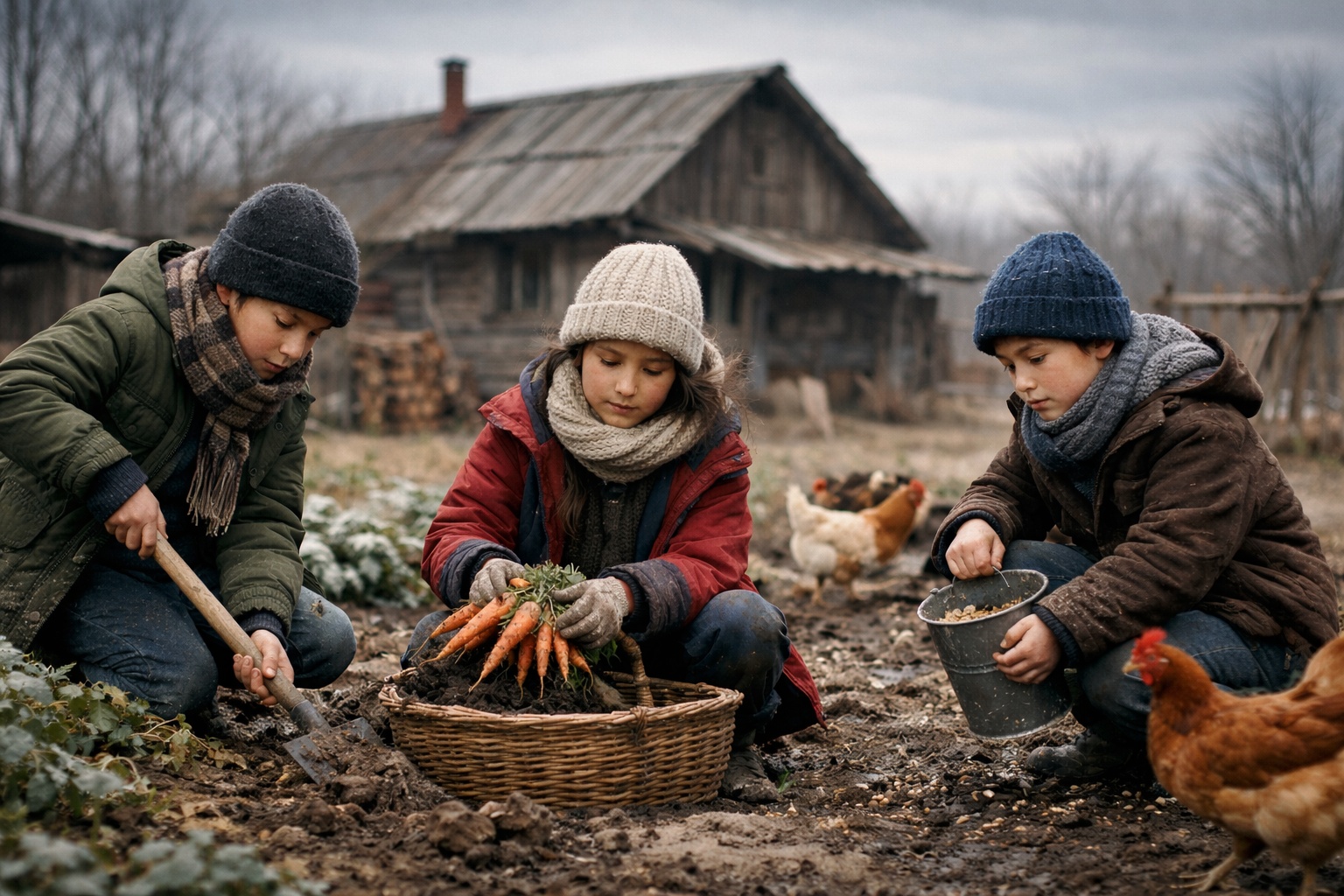


Documentary Shows Three Siblings Living Alone in the Chinese Countryside, Taking Care of the House and the Crops While Their Parents Work Far Away in the Cities.
In the interior of China, in agricultural villages that are miles away from the nearest cities, there is a silent phenomenon that has been studied for years by sociologists, journalists, and filmmakers: that of children who remain in the countryside, while their parents migrate to work in urban areas.
Among these stories, a documentary published by the portal ChinaFile has gained attention precisely for recording — without a script, without dramatized narration, and without makeup, the daily lives of three siblings who grow up practically alone, managing their own agricultural routine.
The film follows the everyday life inside a simple rural house, with a wood stove, a chicken coop, some livestock, and a small garden. There, the siblings wake up before sunrise to feed the animals, start the fire, put rice on to cook, and ensure breakfast is ready before walking to school. When they return, they take on tasks that, in other contexts, would be assigned to adults.
A Childhood With Adult Responsibilities
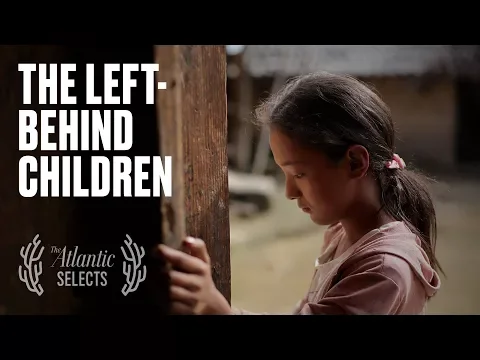

The documentary shows that child labor there is not romanticized. It is part of a specific social structure, where divided families are a side effect of internal mass migration — a phenomenon that has marked China’s economic development since the 1990s.
-
He started running at 66 years old, broke records at 82, and is now a subject of study for having a metabolic age comparable to that of a 20-year-old, in a case that is intriguing scientists and inspiring the world.

-
Oldest tree on the planet reappears after 130 years of searches: Wattieza, 385 million years old, was 10 meters tall and had no leaves or seeds; Gilboa fossils in New York solved the mystery in 2007.

-
A 48-square-meter house assembled in hours with 4,000 bricks made of recycled plastic that does not absorb moisture, has natural thermal insulation, and costs less than 90,000 reais in a complete kit.

-
Luciano Hang revealed that Havan’s air fleet has already accumulated more than 20,000 landings, 10,000 flight hours, and 6 million kilometers traveled, and he says that without the planes, the company would never have grown so quickly.


Throughout the filming, the siblings:
• chop wood
• cook using heavy pots on the wood stove
• harvest vegetables from the garden
• take care of chickens and pigs
• till small plots of land
• sell some of the surplus to buy oil, rice, and coal
The most impressive aspect is their autonomy, a strong contrast to contemporary urban childhood, marked by screens, constant supervision, and packed schedules.
Absent Parents, But Not Indifferent
The parents have not disappeared. They call, send money when they can, and return to visit. But they work far away, in industrial cities, where a factory shift can exceed 10 hours and housing does not allow children to live together.

Researchers call this phenomenon “left-behind children” — a phrase that encompasses millions of young people in rural Asian areas. In the documentary, the absence of parents appears raw, but not caricatured: the children feel the lack, but they have also developed a culture of resilience, mutual aid, and partnership among siblings.
Rigorous Winter, Scarcity, and Adaptation
When winter arrives, the scene changes. The footage shows:
• snow covering the crops
• frozen waters, making access to animals and crops difficult
• wood being counted to last for weeks
• food stored in cloth bags and sealed jars
The siblings learn to cook porridge, rice, and pickled vegetables, use old coats to withstand the cold nights, and reorganize the house to keep the fire going. There is a stark beauty in all of this — not of childish bravado, but of forced adaptation.
A Social Portrait, Not a Spectacle
The most curious aspect of the material is that it does not try to create a “hero” or “villain”. It does not criticize the parents who work to support the family and does not romanticize abandonment. It simply lays bare a social fact that few see up close: the countryside has not fallen silent, it continues to function thanks to the work of those who stayed.

The scenes show play, laughter, small childhood fights, pride in preparing a successful dish, and relief when the parents finally arrive for a visit. It is a hard but vibrant daily life.
It does not answer all the questions nor does it need to. The strength lies in the silence of the images, in the details of the kitchen, in the steam rising from the pot, in the snow accumulated on the eaves, and in the fact that three children managed, together, to keep a house standing while the world was changing very fast outside.









¡Impactante! Para meditar sobre los cambios sociales que deben experimentar hoy en día las familias para poder subsistir!
Este documental me servirá para que los estudiantes de undécimo y duodécimo año del centro educativo donde laboro, en Costa Rica, conozcan la resiliciencia de estos niños, reflexionen y dejen de quejarse de su entorno cuando deben realizar las pasantías y prácticas profesionales que su formación académica y técnica requiere.
Gostaria de saber o nome do Documentário…
Gostaria muito de assistir esse documentário. Uma realidade incrível e crianças corajosas.
The atlantic, está aí em cima o canal é só prestar atenção.