





 Portuguese
  English
  Spanish
  3 min of reading
  0 comments


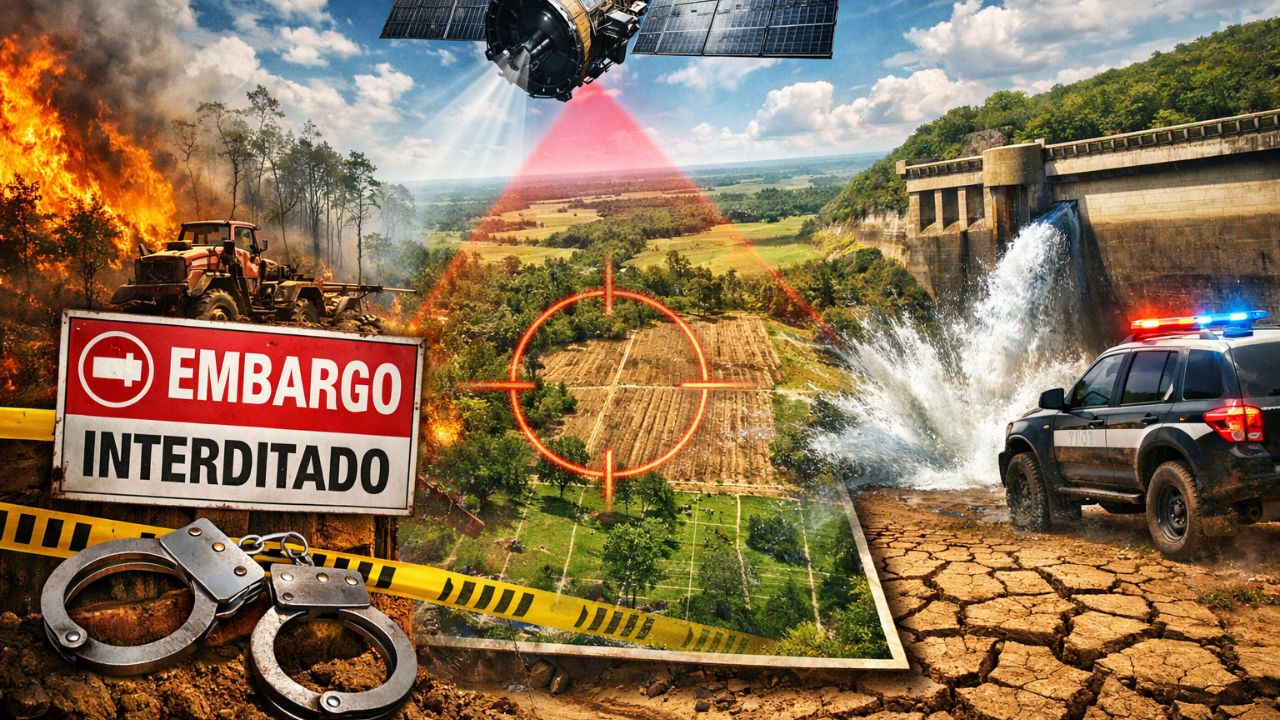
Routine Practices in the Field Involving Fire, Water, and Forest Are Now Monitored by Satellite, and When Done Without License, They Become Serious Environmental Violations That Catch Producers by Surprise.
Many producers make common mistakes in the field that seem normal, repeated for decades, believing there is no real risk. The problem is that the scenario has changed: today, any changes involving fire, water, or vegetation are detected almost in real-time by satellites and environmental systems.
These common mistakes in the field that seem normal can result in immediate fines, area embargoes, prolonged financial loss, and, in specific situations, even arrest in flagrante based on environmental legislation.
Burning to Clean Pasture or Crop Residues

The use of fire for area cleaning is the top cause of environmental fines in Brazil. Even when producers believe they have total control over the burn, heat and smoke are detected by satellites and generate automatic alerts to environmental agencies.
-
Countries may be required to pay up to R$150,000 for emotional abandonment: new law changes rules and expands parental responsibility in Brazil.

-
New vaccination and mandatory testing rules in Brazil raise alarms, redefine public health regulations, and spark debate on sanitary control and individual rights.

-
The noise ban in Germany will no longer be at 10 PM starting in June with a new rule valid during the 2026 World Cup.

-
New vaccination rules and mandatory exams in Brazil raise alarms, redefine public health regulations, and spark debate on sanitary control and individual rights.

A small fire can get out of control, reach a legal reserve or APP, and become an impossible problem to hide. Burning without authorization is a serious violation, regardless of the intention or size of the area.
Altering Watercourses Without Authorization

Another frequent mistake involves water resources. Building ponds, dams, diverting streams, or damming water with soil, even on a small scale, is considered a water intervention.
The reflection of the accumulated water clearly appears in satellite images, denouncing the alteration. Without authorization or license, this type of intervention is an environmental crime, and the notification usually arrives before the producer realizes the mistake.
Deforesting APP or Thicket Thinking It’s a “Clean” Area

Among the common mistakes in the field that seem normal, this is the one that most trips up beginners. Deforesting riverbanks, springs, slopes, gullies, or even thin thicket without authorization constitutes an environmental crime.
There are cases where a producer buys an already embargoed area unknowingly, makes further interventions, and ends up receiving another fine, keeping the embargo for years. APP and legal reserves cannot be touched without express authorization, even when the vegetation seems “low” or regenerating.
Why These Mistakes No Longer Go Unnoticed


Today, satellite images cross property data with official registrations, quickly identifying the responsible party. The inspector arrives with coordinates, historical records, and technical evidence.
Therefore, informed producers do not suffer. Legislation allows interventions in specific situations, as long as there is a license, authorization, and adequate technical guidance.
Information and License Are the Cheapest Route
Before dealing with fire, water, or forest, the producer should seek the environmental agency in their region. The goal is not to hinder production but to provide technical guidance to avoid environmental impacts and future losses.
When one understands what is allowed, what is not, and when to request authorization, everything becomes simpler, safer, and cheaper, avoiding fines, embargoes, and headaches that last for years.
Which of these common mistakes in the field that seem normal have you seen happen or thought was not an environmental issue?








-

-

2 pessoas reagiram a isso.