





 Portuguese
  English
  Spanish
  5 min of reading
  0 comments


The Nursing Home Is Temporarily Prohibited from Accepting New Residents After State Regulator Sanctions, Requiring a Correction Plan with Protocol Review, Increased Supervision, and Enhanced Staff Training
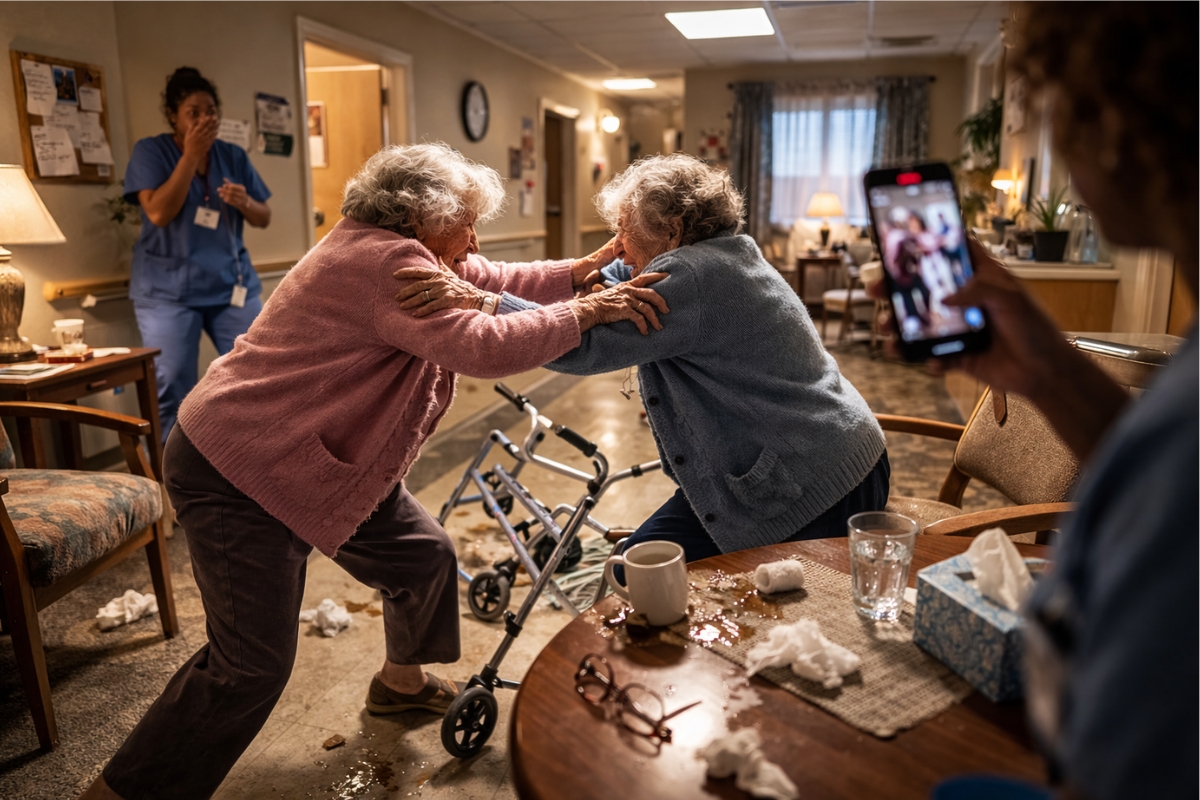
Three workers at a nursing facility in North Carolina have been accused of encouraging fights among residents with dementia and recording the assaults on video. The case, which occurred in 2019 in Winston-Salem, shocked public opinion in the United States and reignited the debate about the safety and dignity of elderly individuals living in long-term care facilities.
“Fight Club” Among Vulnerable Elderly Women
The incidents took place at Danby House, a nursing home with a specialized unit for patients with Alzheimer’s and other types of dementia. According to police and court documents, the workers not only failed to intervene during violent moments but also allegedly encouraged physical confrontations between two women over 70 years old, turning the scene into a kind of spectacle.
The assaults were recorded on video by the workers themselves, using their cell phones. In the footage, the elderly women appeared disoriented, pushing each other and trying to hit one another, while voices in the background laughed, made mocking comments, and incited the continuation of the fight. Instead of protecting the residents, the group allegedly took advantage of their fragile cognitive condition to stimulate violence.
-
A 68-year-old pizza delivery driver went off route to buy a soda that was missing from a visually impaired customer’s order, refused an extra tip, and now Dan Simpson has over R$ 546,000 in donations from people around the world who want to ensure he can retire peacefully on April 30.

-
Amateur archaeologists were searching a forest in Poland with metal detectors when they found a ceramic pot buried for over 1,500 years. Inside was a pure gold necklace weighing 222 grams, folded to fit in the vessel, and when experts examined the piece, they discovered it was the first Gothic torque ever found in Polish territory.

-
Millions of people have been eating pomegranates for centuries without knowing that this ancient fruit contains punicalagins, which scientists are studying for their possible effects on memory and vascular health.

-
Argentina patrols the South Atlantic with ships built in France and monitors over 1.1 million km² with 87 m OPVs, a range of 7,500 miles, 360° radar, and a 30 mm cannon against illegal fishing in the 200-mile zone.

The allegations surfaced when the content of these recordings began circulating among individuals connected to the facility, generating immediate outrage. Family members and other workers, alarmed by what they saw, brought the case to local authorities, who decided to open a formal investigation into suspected abuse.

Investigation, Arrests, and Emergency Measures
The Winston-Salem police launched an investigation in conjunction with the state’s Department of Health and Human Services, collecting videos, testimonies, and internal reports. The evidence indicated that the residents not only suffered physical assaults but were also exposed to verbal humiliation and a complete disregard for proper care. The situation constituted a hallmark case of abuse against individuals in vulnerable conditions.
Based on the gathered evidence, the three workers were arrested and charged with assault against vulnerable individuals, a category of crime that takes into account the victims’ inability to defend themselves. The management of Danby House terminated the involved employees and began cooperating with authorities in an attempt to mitigate damage to the institution’s image and respond to rising community criticism.
Meanwhile, the state health regulatory agency imposed sanctions on the facility, which was temporarily prohibited from accepting new residents. The center was required to present a correction plan, including internal protocol reviews, improved daily supervision, and enhanced training for staff responsible for the direct care of the elderly.
Public Outrage and a Necessary Debate
When the case became public, the reaction from organizations defending the rights of the elderly was immediate. Aging specialists and civil society organizations warned that, while extreme, the incident reflects failures that can exist in different institutions, where abuse does not always appear on video but can manifest quietly through negligence and dehumanization in daily care.
The international press dubbed the scandal a “fight club” for dementia patients, highlighting the brutal contrast between the expected role of a caregiver and the behavior revealed in the recordings. The circulation of the footage in media outlets and social networks amplified collective outrage and generated pressure on state authorities to strengthen oversight in nursing homes.
The case also raised uncomfortable questions about the effectiveness of existing oversight mechanisms. How often are institutions audited? How can we ensure that internal complaints are taken seriously? What emotional support and training do workers who deal daily with difficult situations, such as aggression associated with dementia, receive to prevent it from turning into abuse?


Structural Failures and Challenges in Institutional Care
Experts point out that episodes like the one in Winston-Salem rarely arise spontaneously; they are generally associated with structural problems. Among them are inadequate staffing for the number of residents, low wages, high employee turnover, and lack of ongoing training on mental health, ethics, and human rights. In this context, the risk of dehumanization increases, and abusive behavior can dangerously come to be seen as “play” or “relief” for stress.
In light of this case, entities began advocating for stricter reforms in the regulation of long-term care institutions. Among the proposed measures are increased on-site inspections that are unannounced, the creation of safe channels for anonymous complaints from workers and family members, as well as mandatory training programs on person-centered care, managing difficult behaviors, and preventing violence against the elderly.
Some discussions also involve the use of cameras in common areas, with clear rules to preserve privacy and prevent monitoring abuses. The idea is to create additional layers of protection without turning spaces into oppressive surveillance environments while ensuring that serious situations do not remain invisible behind closed walls and doors.
Dignity, Empathy, and Responsibility
More than just a criminal case against three workers, the Winston-Salem incident has become a symbol of the fragility of those who are entirely dependent on others for daily activities. For many families, placing a loved one in a facility is a difficult decision made with the expectation of ensuring safety and specialized care that cannot be provided at home. When that trust is betrayed, the feeling is one of helplessness and guilt.
The incident highlights the need to strengthen a culture of care based on dignity, empathy, and shared responsibility. Individuals with dementia, even when they no longer recognize faces or places, maintain feelings, fears, and emotional needs, and have the right to an environment free from physical and psychological violence. Treating them as mere objects of entertainment is an extreme form of dehumanization.
By bringing to light what happened at Danby House, the case serves as a warning to health and support systems in different countries. More than punishing those responsible, it is essential to create conditions that prevent similar abuses from happening again, ensuring that facilities aimed at elderly care are truly spaces of protection, respect, and dignity until the end of their lives.
According to the The New York Times, the incident at Danby House in Winston-Salem caught the attention of state authorities, gained national attention, and reignited the debate about elder abuse and oversight of long-term care institutions in the United States.









-

Uma pessoa reagiu a isso.