





 Portuguese
  English
  Spanish
 4 min of reading
  0 comments


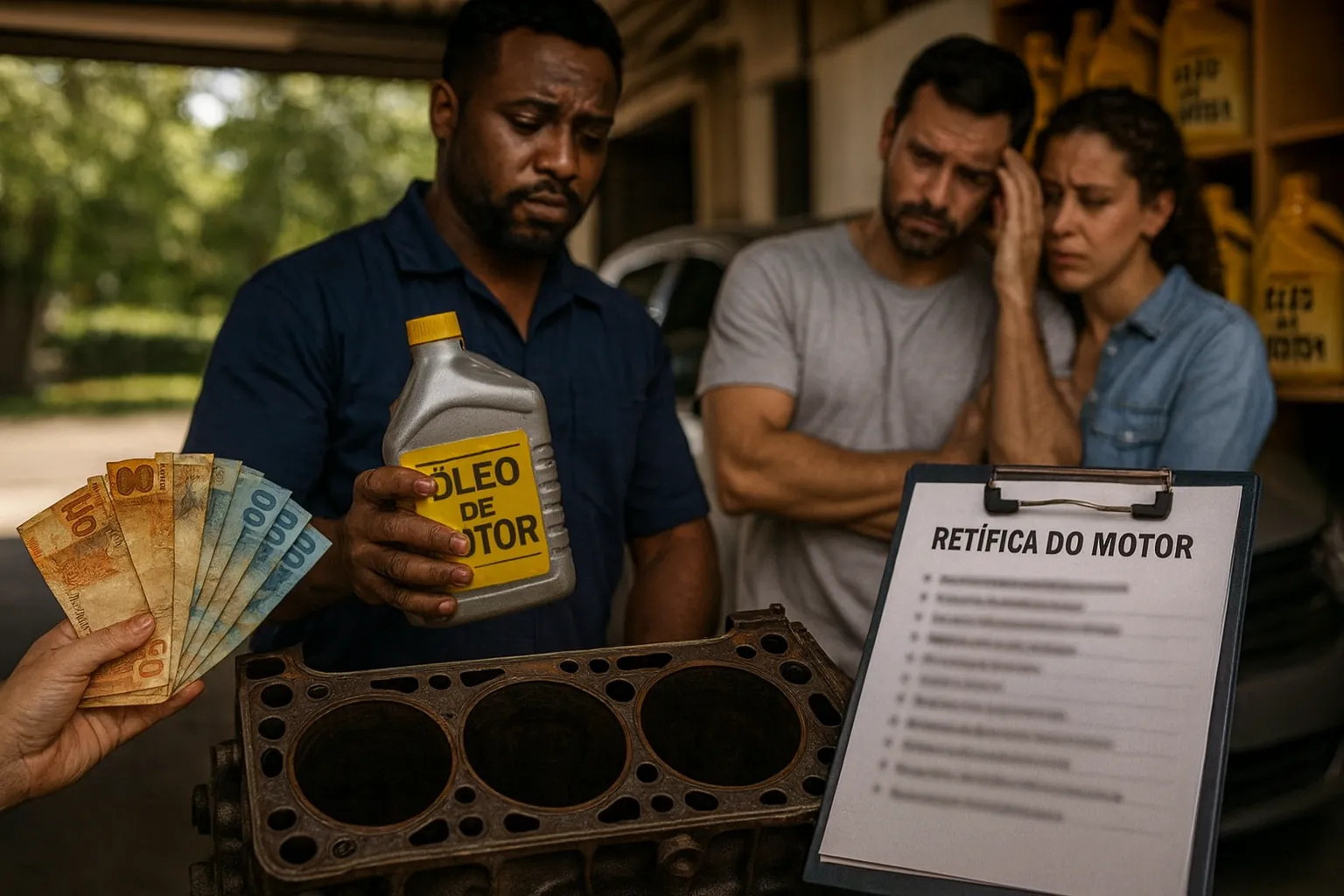
Have you ever stopped to think that a simple delayed oil change can cost more than many Brazilians earn in a month? Stories of drivers who postponed this care and ended up with a seized engine on the road are not rare. The average loss? Around R$ 8 thousand, an amount sufficient to renovate a house, travel with family, or even buy a used car. The detail is that this disaster gives signs before it happens — and most ignore them.
Delayed Oil Change
When we talk about a delayed oil change, it’s not just about an aesthetic care or a basic maintenance checklist. Oil is the engine’s “blood”: it lubricates the parts, reduces friction, prevents overheating, and slows down natural wear. Ignoring the mileage or the time recommended by the manufacturer means driving with degraded fluid, unable to protect the internal components.
The problem is that the oil doesn’t give an obvious warning like a burned-out light or a flat tire. It loses efficiency silently until small signs appear — strange noises, abnormal smoke, loss of power. Many drivers only realize when the workshop has already delivered the verdict: “we will have to open the engine.”
-
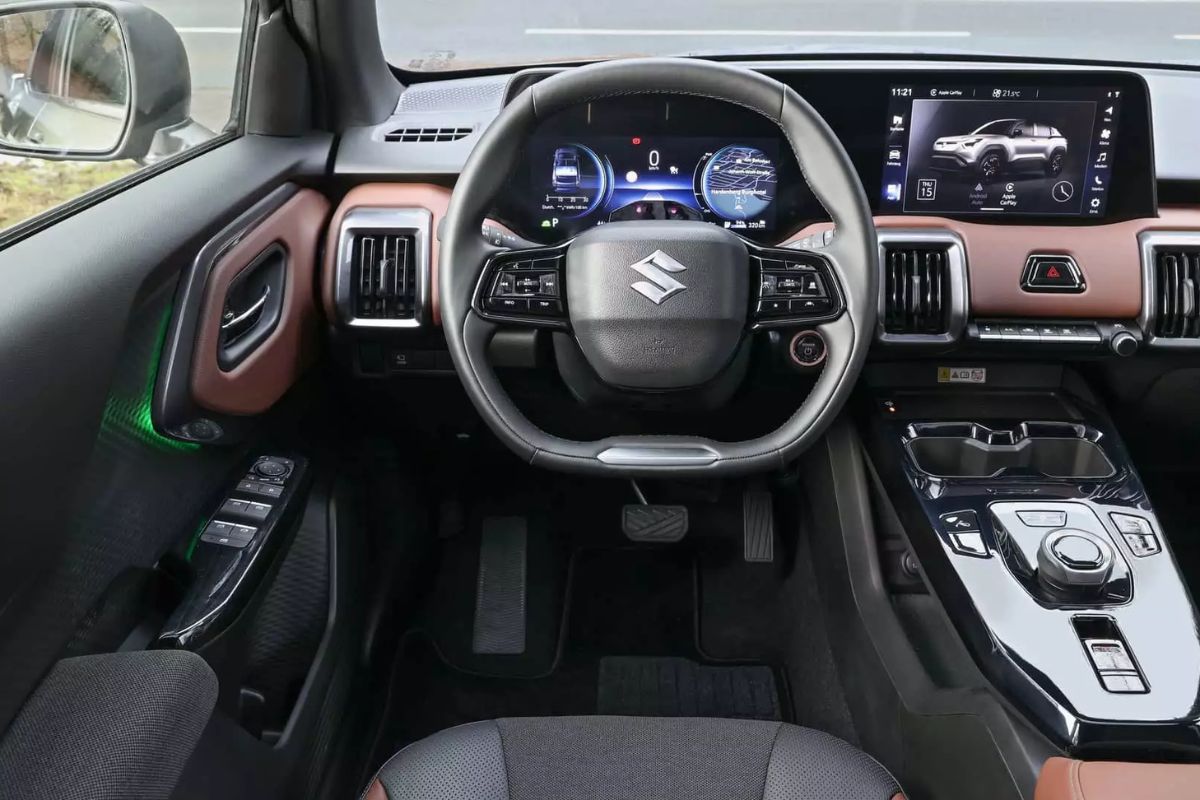
The 2026 electric Vitara arrives in Brazil and proves that Suzuki is not leaving: 4×4 traction, 184 hp, 61 kWh LFP battery, 293 km range, R$ 259,000, and a trunk capacity of 224 L.
-
Hyundai has unveiled the Boulder, a square SUV with a body-on-frame design, 37-inch mud tires, and carriage-style doors that seems to be made to take on the Ford Bronco and the Scout Traveller in the United States.

-
The Toyota Hilux is R$ 75.5 thousand cheaper and bets on the 2.8 turbodiesel engine with up to 204 hp and 50.9 kgfm to catch up with the VW Saveiro, which leads with 4,472 sales.

-
The new Renault Koleos has a screen exclusively for the passenger that is invisible to the driver, heated rear seats, and 29 assistance systems, but its Chinese competitors cost R$ 40,000 less and deliver more power.

Signal 1: Metallic Noises That Didn’t Exist Before
One of the first signs that the oil change is overdue is the emergence of metallic knocks, like a persistent ticking sound. This happens because the oil loses viscosity and no longer forms the protective film between pistons, valves, and the crankshaft. Friction increases, and the noise appears. Ignoring this sign can accelerate wear to the point that a complete reconditioning is required.
Signal 2: Bluish Smoke Coming from the Exhaust
When the oil no longer fulfills its function, part of it flows into the combustion chamber and is burned along with the fuel. The result is bluish smoke, visible especially when accelerating hard. This detail indicates that the engine is already suffering and that the sealing rings may be compromised. In addition to the mechanical loss, there is also the risk of a fine for excessive pollutant emissions.
Signal 3: Excessive Fuel Consumption
A delayed oil change also directly affects your wallet at the gas station. With parts working under greater friction, the engine requires more energy to perform the same task. Fuel consumption noticeably increases, and many drivers blame “bad fuel,” not realizing that the culprit is inside the oil pan.
Signal 4: Dashboard Light Coming On Unexpectedly
The modern dashboard is equipped to alert the driver about oil pressure and quality. If the red oil light flashes or stays on, even after topping up, it might be that the fluid is so degraded that it cannot circulate properly. It is a clear warning that the engine is asking for help before total failure.
Signal 5: Sudden Loss of Power
An engine without efficient oil works harder, heats up quickly, and loses performance. In overtaking or uphill situations, the car seems unresponsive, requiring more acceleration to deliver minimal performance. This symptom is dangerous not only for the engine but for the safety of the driver and passengers.
Why Does the Loss Reach R$ 8 Thousand?
The math is simple: with a delayed oil change, wear affects expensive components like bearings, pistons, and even the cylinder head. To recover the engine, the workshop needs to disassemble everything, replace parts, recondition blocks, and reinstall the assembly. The budget quickly exceeds R$ 8 thousand, especially for newer cars, with integrated electronic parts.
Compared to this, spending between R$ 150 and R$ 400 on a regular oil change is almost symbolic. It’s the classic saying: “who doesn’t spend on prevention pays dearly for correction.”
The Importance of Following the Car Manual
Each manufacturer sets the mileage or maximum time for an oil change, ranging between 5,000 and 10,000 kilometers, or every 6 months. A common mistake is to rely on mileage alone, ignoring the time. Even a car that drives little needs to have its oil changed periodically because it also degrades while stationary, accumulating moisture and impurities.
Another crucial point is to use the oil specified in the manual. Many drivers try to save money with generic versions, but the difference in viscosity or additives can drastically reduce the engine’s lifespan.
Stories That Serve as Warnings
Workshops across Brazil have collections of reports from clients who “forgot” about the oil change. One striking example was a rideshare driver in São Paulo who drove more than 250 km a day. After delaying two consecutive changes, the engine seized on the Marginal Tietê. The car sat for three weeks, the repair cost R$ 9,200, and he also lost income during that period.
Another case was a family that only used the car for occasional trips. Since they drove little, they believed the oil didn’t need to be changed. The result: during the year-end holiday, the engine overheated on the road, leaving everyone stranded on the shoulder.
How to Avoid Falling into the Same Trap
- Track the Odometer: set a reminder every 5,000 or 10,000 km.
- Use Maintenance Apps: many allow you to log maintenance and generate automatic alerts.
- Check the Level Regularly: a simple dipstick can indicate abnormal oil consumption.
- Follow the Manual’s Recommendation: don’t rely solely on tips from others.
- Don’t Skimp on Prevention: the cost of the oil change is trivial compared to a compromised engine.
A delayed oil change is not just negligence, it’s a calculated risk that can cost too much. Observing the signs, respecting the deadlines, and valuing preventive maintenance is the difference between driving with peace of mind or facing a financial nightmare.










Seja o primeiro a reagir!