





 Portuguese
  English
  Spanish
  6 min of reading
  1 comment


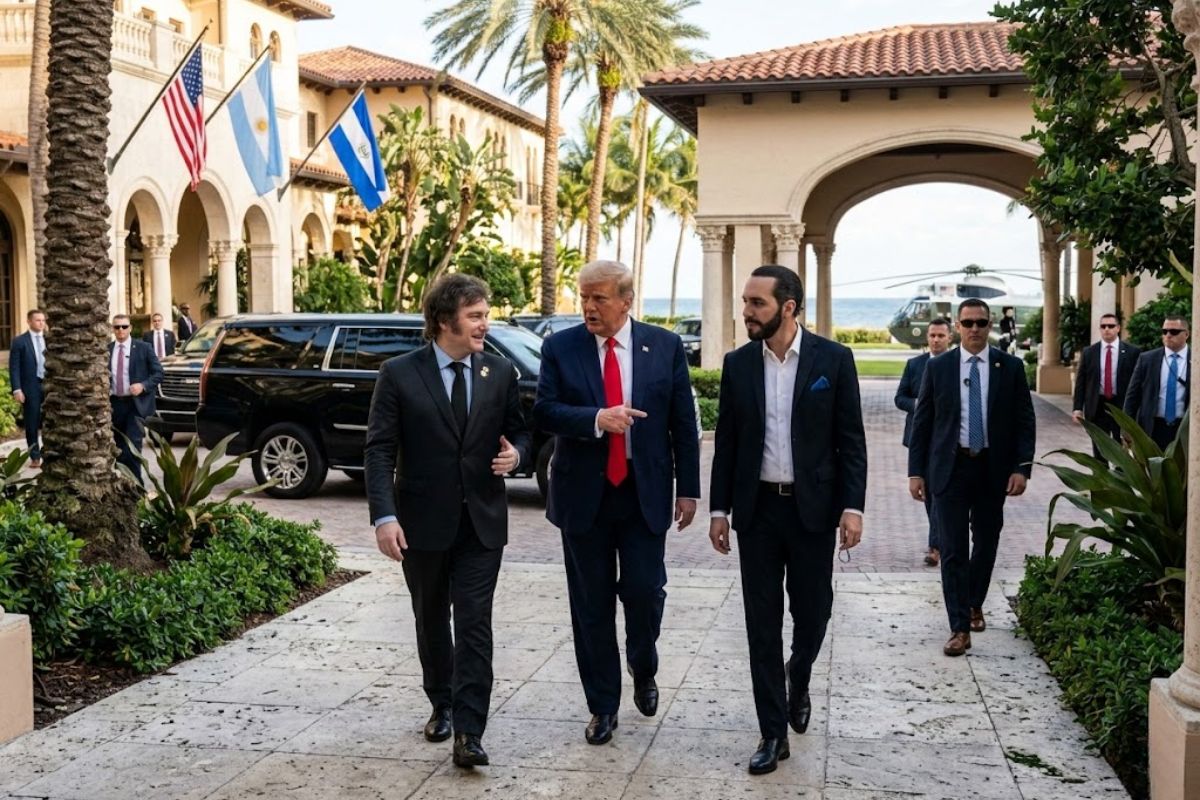

In The City Of Doral, Near Miami, Trump Gathers Latino Allies At His Resort To Launch A Coalition Focused On Security, Immigration, And Combating Foreign Interference While Bringing Together Names From The Regional Right, Isolating Lula And Reinforcing The US Offensive To Contain The Chinese Advance In The Latin American Region.
Donald Trump gathers allies from Latin America this Saturday (7) in Doral, Florida, for the first summit of the Shield of the Americas, a group recently created by his administration and presented as an alliance among countries with shared ideals in the hemisphere. The meeting takes place at a resort and golf course owned by the American president himself, which already turns the agenda into a political and symbolic gesture at the same time.
The guest list helps explain the weight of the event. Among the invitees are names from the regional right and far-right, such as Javier Milei from Argentina, Nayib Bukele from El Salvador, and José Antonio Kast, the elected president of Chile. On the other hand, the absence of Luiz Inácio Lula da Silva stands out because it does not seem coincidental: it adds to the exclusion of other leftist leaders such as Claudia Sheinbaum, Gustavo Petro, and Delcy Rodríguez.
A Block Created To Gather Allies And Set Political Boundaries
The Shield of the Americas is born with a very clear identity. According to the White House, the participating countries form a group of “the strongest allies” of the United States in the hemisphere, united by the proposal to promote freedom, security, and prosperity in the region. This is not just a diplomatic meeting, but an attempt to organize a defined political space, with a common discourse and very specific priorities.
-
The largest food company on the planet, JBS, has just opened a 4,000 square meter laboratory in Florianópolis to develop customized proteins that modulate muscle mass gain, immune response, and metabolic performance.

-
After nearly 30 bids and competition among industry giants, a Spanish company purchases one of the largest airports in Brazil for almost R$ 3 billion and takes over the management of Galeão in a concession that will last until 2039.

-
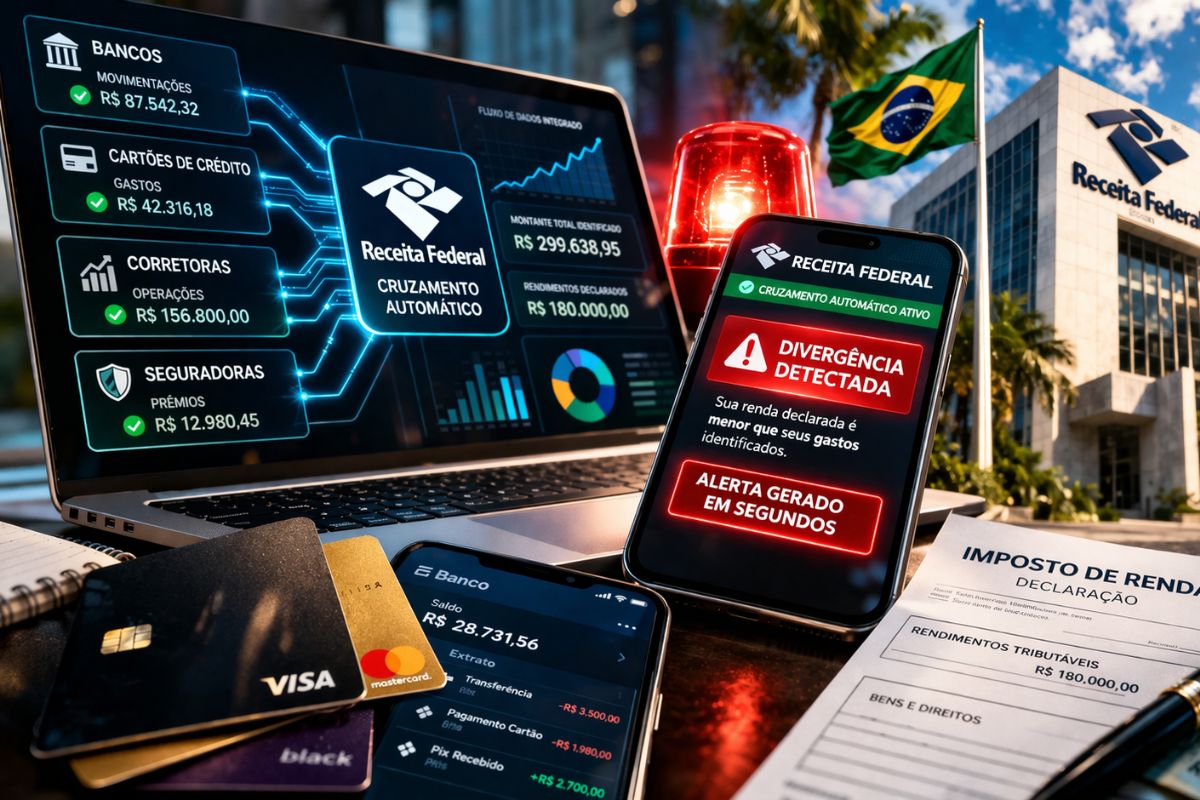
The Federal Revenue Service now automatically cross-references everything you declare with data from banks, credit cards, brokerage firms, and insurance companies, and any discrepancy between your income and your expenses triggers an alert in seconds.
-
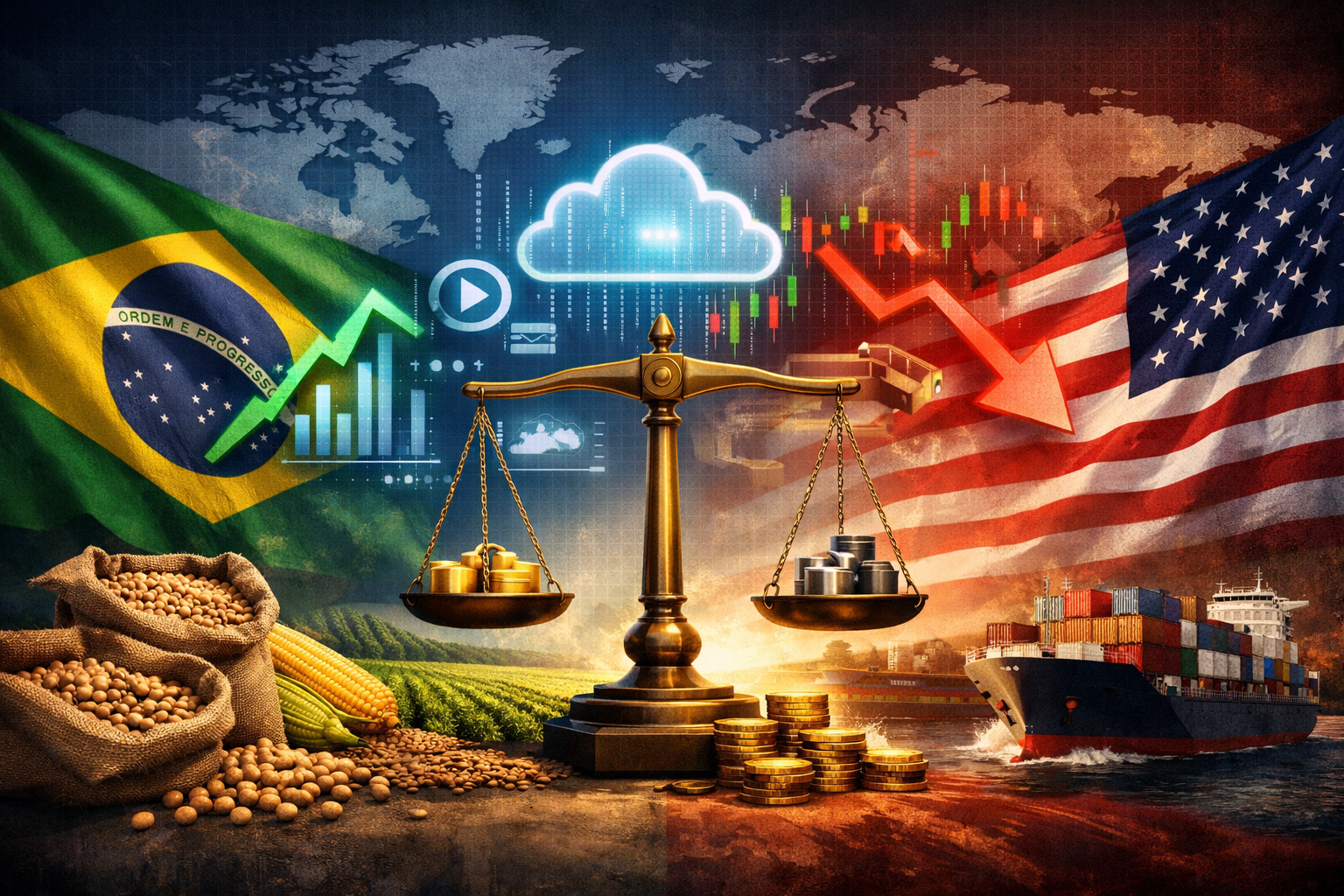
Amid global tensions, Brazil blocks the United States’ proposal at the WTO and paves the way for a trade crisis and possible retaliations.

In practice, the group is presented as a coalition to act together against foreign interference, gangs, criminal cartels, narco-terrorists, and mass illegal immigration. This formulation shows that the project mixes security, migratory control, and ideological alignment. The result is a block where allies are chosen not only by geography but also by political affinity with the White House.
Who Gets In, Who Is Left Out And Why It Matters
The presence of Milei, Bukele, and Kast gives the meeting a clear profile. They are leaders or figures associated with a hard right agenda, with a strong discourse on order, security, sovereignty, and confronting ideological opponents.
By bringing them together under the brand of the Shield of the Americas, Trump creates a powerful political image: that of a circle of allies who intends to speak on behalf of a significant part of Latin America.
The absence of Lula further amplifies this message. The Brazilian president was not invited, and this is significant because Brazil is the largest economy in the region and a central player in any continental rearrangement.
By leaving Lula out, Trump not only excludes an important head of state; he also signals that the new block does not want to accommodate broad disagreements. The main criterion seems to be alignment, rather than the political or economic size of each country.
Doral Becomes The Stage For A Calculated Message
The location of the meeting also communicates a lot. Doral, near Miami, was not chosen just for geographical convenience. By hosting the meeting at a resort and golf course he owns, Trump mixes diplomacy, personal branding, and demonstration of power.
The luxurious setting reinforces the idea of control of the scene, as if the summit had been designed to unite allies in an environment entirely shaped by the host.
The event also includes the signing of the so-called Doral Charter, a document that defends the rights of the peoples of the hemisphere to define their own destiny free from interference. The formulation is broad, but the context makes the political target clear.
The charter seeks to provide a conceptual basis for the Shield of the Americas and to transform the meeting into something more lasting than a simple photo opportunity among selected presidents and guests.
Marco Rubio, Kristi Noem, And The Political Gears Of The New Project
Trump does not appear alone in this construction. Secretary of State Marco Rubio is expected to be present, which shows that the initiative is not restricted to the rhetorical field and also involves the official diplomacy of the United States.
The anticipation surrounding Kristi Noem’s participation amplifies this message, as her presence connects the meeting to a stricter discourse on domestic security and immigration.
According to available information about the event, Noem, referred to by opponents as “Barbie of ICE,” was fired from her current position, in which she remains until the end of March, and will take on the role of US ambassador to the Shield of the Americas.
This detail is revealing, as it suggests that the group is not being treated as an improvised initiative. There is an intention to provide political structure and its own representation to the project, signaling continuity beyond the launch in Doral.
China Appears As The True Backdrop Of The Summit
Although the official discourse speaks of security, prosperity, and freedom, the strategic backdrop is the dispute for influence with China. Analysts see the Shield of the Americas as an attempt to steer Latin America away from the Chinese sphere.
This helps explain why the meeting goes far beyond ideological affinities between Trump and his regional allies: it is a broader geopolitical offensive.
This movement fits into a line that recalls the Monroe Doctrine, frequently evoked in Trump’s initiatives to restore American hegemony in the Americas.
The continent, viewed by the government as “our backyard,” is once again seen as a priority space for strategic containment.
The language of foreign interference, in this context, serves as a political signal to frame China’s economic and technological presence as a direct threat to the interests of the United States.
The Chinese Advance Helps Explain American Urgency
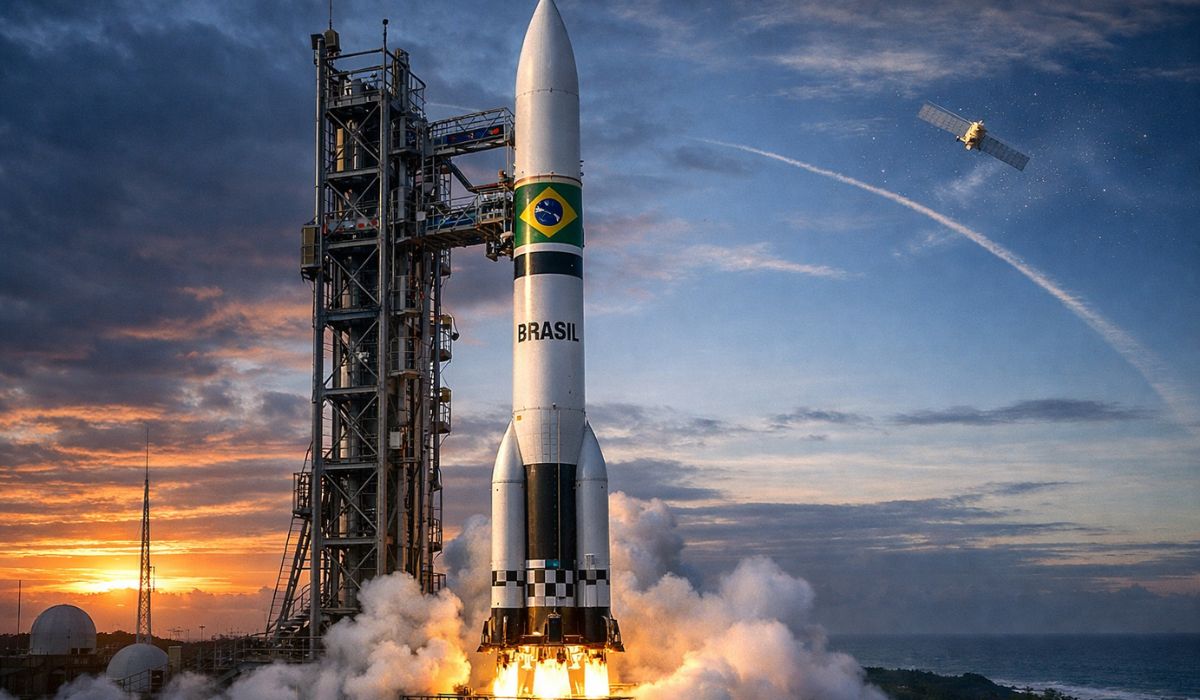
The pressure did not arise from nowhere. This week, a report by a congressional commission with a Republican majority warned about Chinese initiatives in the aerospace sector in the Americas, including Brazil.
According to lawmakers, these bases could be used by China for military purposes. This argument reinforces the urgent tone surrounding the Doral meeting and provides political justification for the launch of the Shield of the Americas.
The trade numbers help measure why Washington treats the issue as a decisive dispute. In 2001, Cuba was the only country in the region that did more business with China than with the United States.
Twenty years later, all countries in South America, except Paraguay and Colombia, were trading more with the Chinese than with the Americans. In two decades, the economic map has changed profoundly, and this explains how much influence Beijing has grown on the continent.
The Message For Latin America Goes Beyond The Ceremony
By gathering allies in a space controlled by him, launching a block with a strong name, signing the Doral Charter, and leaving Lula out, Trump constructs a political gesture with regional reach.
The event serves to bring together aligned governors and leaders, but also to clearly divide who is inside and who is outside of the new arrangement. This type of movement reignites disputes that mix ideology, commerce, security, and international influence.
At the center of it all is the attempt to redefine the paths of Latin America at a time of growing competition between Washington and Beijing. The Shield of the Americas is thus born as a platform for rapprochement between the regional right and as a geopolitical pressure instrument for the United States.
The big question now is how far this block will manage to advance and how much this exclusion of leaders like Lula may deepen continental polarization.
And for you, does this movement strengthen the US in the region, or does it tend to increase political division in Latin America even further?





Milei faz o que a direita SEMPRE fez aqui no BRASIL, ficar de joelhos perante FMI.