





 Portuguese
  English
  Spanish
  6 min of reading
  0 comments


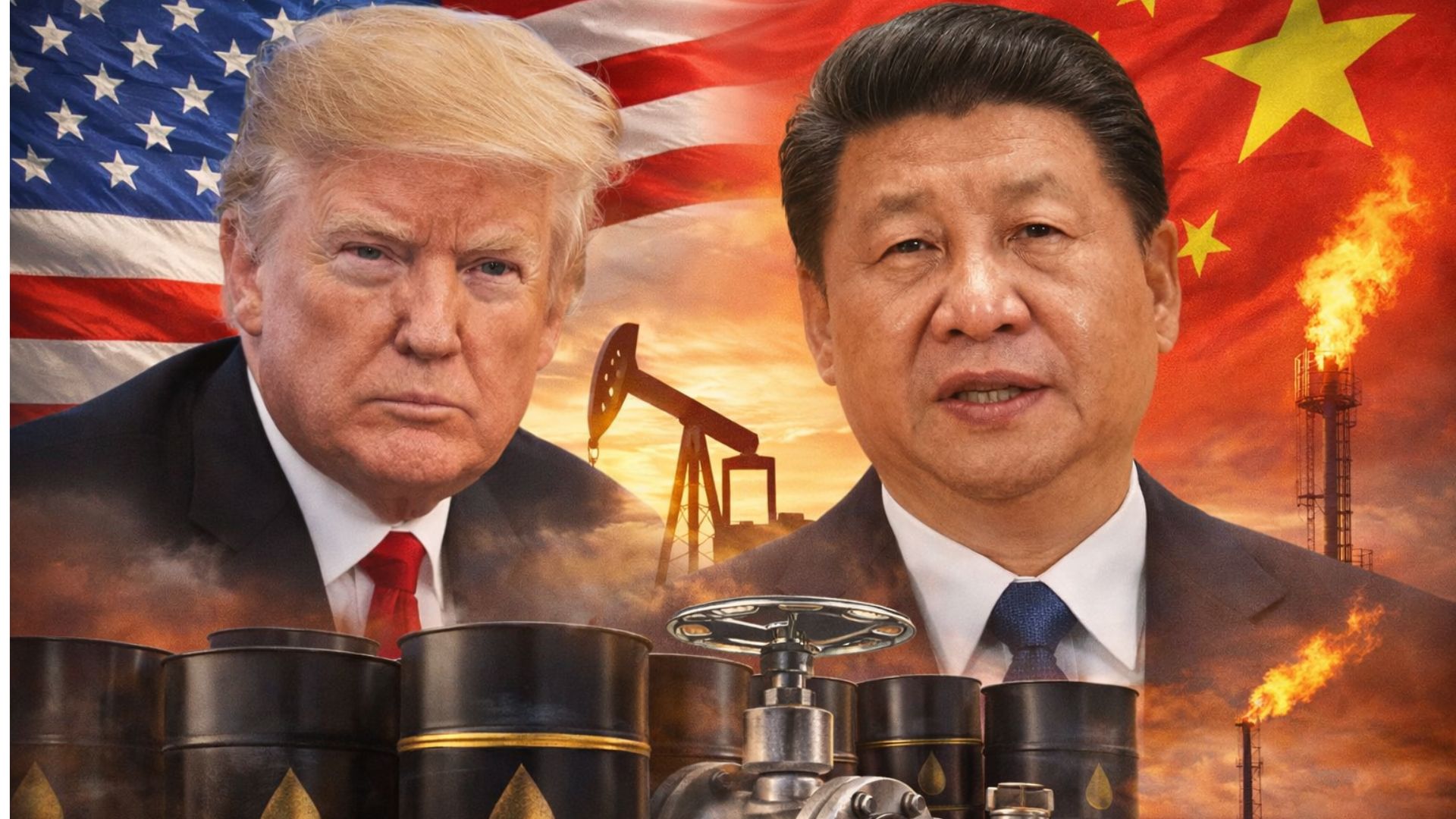
Conversation Between Leaders of the United States and China Highlights Energy, Tariffs and Impacts on the Global Market, With Special Attention to Oil Purchases and Economic Reflections
The then president of the United States, Donald Trump, stated on Wednesday that he had a “long and detailed” phone call with the president of China, Xi Jinping, to discuss bilateral trade, energy, tariffs, and purchases of oil and natural gas. According to a report published by G1 on Wednesday (4), the information was published by Trump himself on the Truth Social network and was later circulated by international media and Chinese state media. The oil emerged as one of the central axes of the dialogue, alongside agricultural products, international security, and diplomatic stability between two of the world’s largest economies.
Contact Between Trump and Xi Jinping Coincides With Volatility in the Energy Market
Trump highlighted that China is considering expanding its purchase of American oil and gas, in addition to considering an increase in import quotas for agricultural products, especially soybeans. Xi Jinping, as reported by Chinese state media, indicated a willingness to strengthen cooperation and maintain open diplomatic channels.
The timing of the contact coincided with a scenario of volatility in the energy market, where any indication of rapprochement between Washington and Beijing tends to influence expectations about supply, demand, and the price of oil.
-
Lula reveals a masterstroke by Petrobras to undo a deal made by Bolsonaro, which involves the return of an important refinery that currently produces less than half of what was expected and makes Brazil dependent on international diesel.

-
A study confirms that the natural gas sector will reduce greenhouse gas emissions in Brazil by 0.5% and accelerate the energy transition by 2026.

-
Petrobras implements a severe adjustment and confirms a 55% increase in the price of aviation kerosene with a proposal for installment payments for the companies.

-
The rise in oil prices could ensure an extra revenue of R$ 100 billion for the Federal Government, indicates a recent economic study.


The immediate relevance of the announcement lies not only in the content of the conversation but also in the symbolic and economic impact that statements of this magnitude carry. The international energy market reacts not only to contracts made but also to the political tone adopted by global leaders.
Trump, Oil and China at the Center of a Sensitive Economic Agenda
The call between Trump and Xi Jinping occurred during a period marked by global economic instability and heightened attention to the energy sector. Oil, being a strategic commodity, serves as both a geopolitical and financial thermometer. When two powers signal rapprochement in this segment, the dominant interpretation is an attempt at commercial stabilization or, at the very least, a reduction in immediate tensions.
In addition to the energy issue, Trump mentioned discussions on military topics, the war between Russia and Ukraine, the situation involving Iran and Taiwan, as well as the possibility of an official visit to Chinese territory in the coming months.
Even so, the point that attracted the most attention was the direct reference to the purchase of oil and gas, as China is among the largest energy importers in the world, while the United States holds a significant position in production and export.
The combination of oil, tariffs, and agricultural products reveals that the dialogue did not limit itself to a single sector. On the contrary, it was a broad conversation, with potential effects across multiple production chains. According to official reports, Xi Jinping emphasized the importance of maintaining stable relations and managing differences through diplomatic channels, a stance that is often interpreted as a sign of institutional predictability.
Oil and Commercial Tariffs as Pieces of the Same Board
Commercial tariffs and oil go hand in hand when it comes to international economic balance. The eventual expansion of Chinese purchases of American energy could alter logistical flows, future contracts, and price expectations for oil. At the same time, any tightening of tariffs tends to increase costs and create uncertainty in the markets.
The dialogue disclosed by Trump did not represent the signing of formal agreements; however, the mere signal of energy cooperation carries significant weight. In international trade, public statements serve as leading indicators of possible government moves. When China is mentioned as a potential additional buyer of oil, the global energy market reacts swiftly, even though the concrete effects depend on subsequent technical negotiations.
Oil is simultaneously an economic asset and a diplomatic tool. Producing and importing countries use the resource as a means of rapprochement or pressure, depending on the political context. In this scenario, Trump’s remarks reinforced the perception that energy continues to be a strategic currency in bilateral relations.
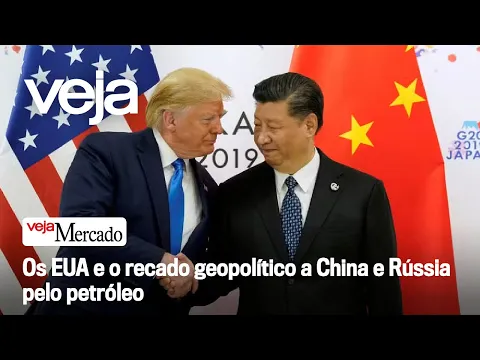

Xi Jinping, Diplomatic Stability and Signals to the Energy Market
The stance adopted by Xi Jinping during the repercussions of the phone call indicated a willingness to preserve institutional stability between the two powers. This type of message tends to reduce short-term noise and convey a sense of economic continuity. For the oil market, predictability means less immediate volatility, even though external factors remain influential.
China exerts direct influence on global energy demand. Any statement involving an increase in imports or a revision of contracts is closely monitored by investors, governments, and companies in the sector.
Xi Jinping emphasized the need to improve bilateral communication and properly handle divergences, reinforcing the discourse of diplomatic cooperation. This approach helps to moderate negative expectations, especially during periods of geopolitical instability.
In this context, oil ceases to be merely fuel and transforms into a political indicator. The fact that it was explicitly mentioned demonstrates that energy remains at the top of global strategic priorities. Markets interpret these signals as thermometers for possible future agreements or tensions.
Reflections on Barrel Prices and Investor Behavior
The price of a barrel of oil is highly sensitive to large-scale political statements. Investors monitor presidential speeches because signals of buying or selling in significant volumes can alter expectations of supply and demand within hours. In the case of the dialogue between Trump and Xi Jinping, the market interpreted the mention of oil as a possible indication of increased energy trade flows.
Volatility can arise from both rapprochement and conflict. If the dialogue evolves into concrete agreements, the oil market tends to find greater relative stability; if tariff impasses or diplomatic divergences emerge, the barrel price may fluctuate with high intensity.
China influences global demand, while the United States impacts supply and export policy, creating a delicate balance that is observed in real-time by stock exchanges and investment funds.
This movement does not occur in isolation. Other factors, such as regional conflicts, production decisions by major exporters, and environmental policies, also shape market behavior. Still, the mere inclusion of oil in presidential discussions is sufficient to generate immediate adjustments in expectations.
Energy, Critical Minerals and the Geopolitics Behind the Dialogue
The phone call occurred just days after U.S. announcements related to the creation of a strategic stockpile of critical minerals, an initiative aimed at reducing supply vulnerabilities in high-tech and electric mobility sectors. This backdrop reinforces that energy and natural resources go hand in hand in contemporary geopolitics. While oil remains dominant, strategic minerals gain parallel relevance.
The relationship between the United States and China alternates between cycles of cooperation and tension. During periods of rapprochement, the trade of oil and energy acts as a diplomatic bridge; in moments of dispute, tariffs and trade restrictions take center stage. The direct dialogue between Trump and Xi Jinping indicated that institutional channels remain open, which is seen as a moderating factor for immediate risks.
Oil remains a global balancing element. It influences transportation, industry, inflation, and public policies, becoming a crucial piece in any large-scale economic negotiation. When leaders place it at the center of the agenda, the message is clear: energy continues to be a strategic priority.
What the Scenario Indicates for Upcoming Economic Movements
The developments depend on technical negotiations and future tariff decisions. Experts pay close attention to the effective volume of oil purchases by China, the evolution of trade tariffs, and new statements from Trump and Xi Jinping regarding energy and trade. The convergence between political discourse and real contracts defines lasting impacts.
In the meantime, the market reacts to each new piece of information, adjusting short- and medium-term projections. Institutional predictability tends to reduce sharp fluctuations, but external events remain capable of rapidly altering the scenario.
In essence, the dialogue on February 4, 2026, repositioned oil at the center of relations between the United States and China. Trump emphasized energy and trade, Xi Jinping reinforced cooperation and stability, and the market responded with immediate attention. When two powers treat oil as a priority, the economic world listens.









Seja o primeiro a reagir!