





 Portuguese
  English
  Spanish
  5 min of reading
  0 comments


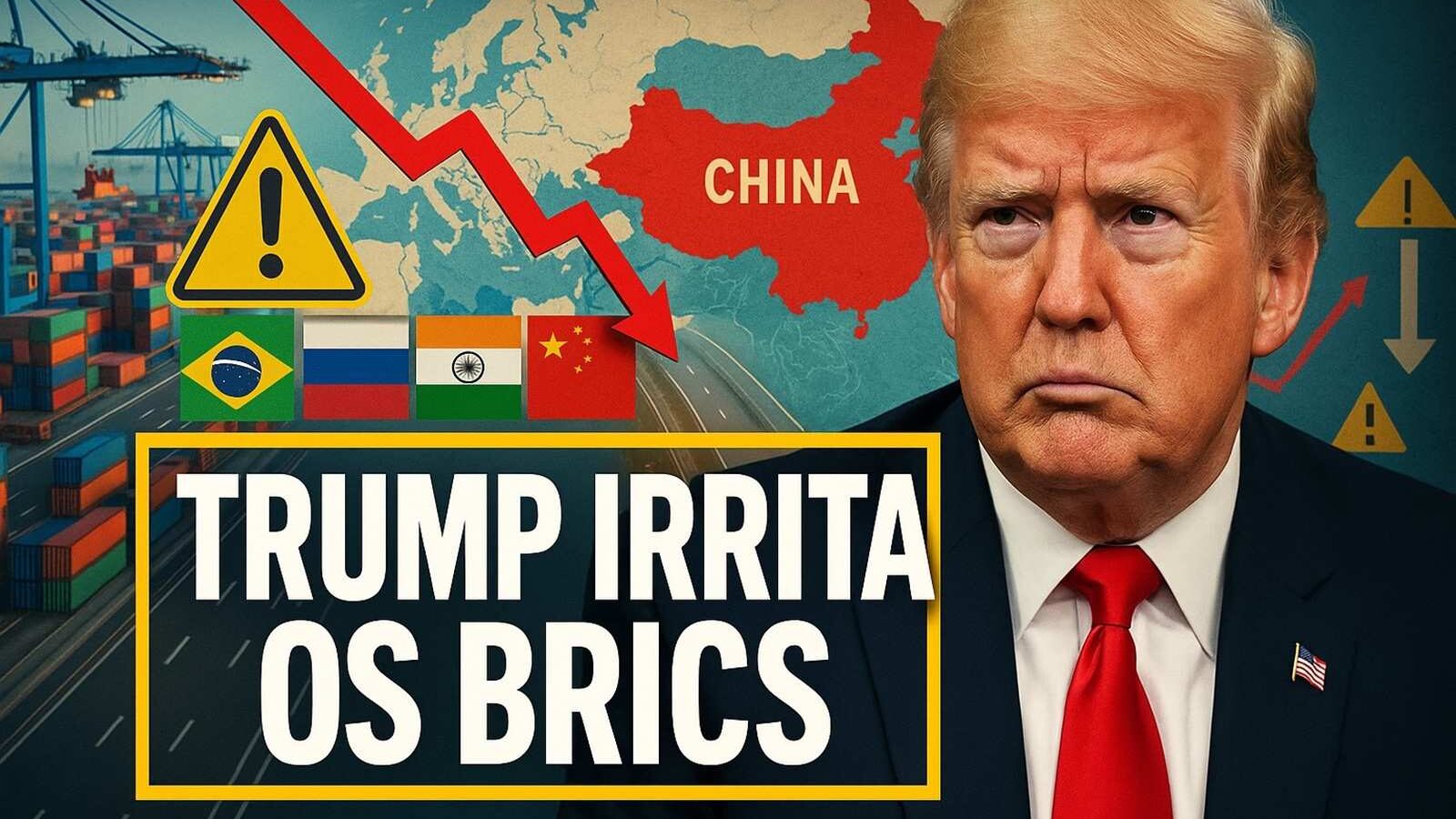
The Commercial Tension Between The United States And The BRICS Has Entered New Chapters Following The Escalation Of Tariffs Announced By Donald Trump. In The Midst Of The Impasse, Different Countries Are Seeking Alternative Alliances To Protect Their Markets, While China Is Working On Internal Adjustments That Could Alter The Global Economic Balance.
The tariffs imposed by U.S. President Donald Trump are triggering a chain reaction. Countries that previously did not work together are now seeking new forms of regional cooperation.
The confrontation strategy in trade agreements has opened the door for alternative coalitions that could reshape global dynamics.
The Formation Of A New Group
According to a report from the Financial Times, diplomats revealed that Singapore and the United Arab Emirates are preparing to launch a small to medium-sized alliance.
-
“No one will make us change the Pix,” says Lula after the US report.

-
Lula responds directly to Trump and says that Pix is from Brazil and will not change under pressure from anyone, after a report from the United States pointed out the Brazilian payment system as an American trade barrier.

-
Amazon has just announced a new fee on all deliveries, and your online purchases will become more expensive starting April 17, including for those buying from the United States here in Brazil.

-
He sold his share for R$ 4 thousand, saw the company become a giant worth R$ 19 trillion, and missed the opportunity of a lifetime.


The group would gather about ten countries to strengthen their trade ties. The proposal even has a name: “Partnership For The Future Of Investment And Trade,” or FIT-P.
New Zealand is expected to join the founding core alongside the Arabs and the Asians. The list of potential members includes Morocco, Rwanda, Malaysia, Uruguay, Costa Rica, Panama, Paraguay, and Norway.
The official definition has not yet occurred, but the intention is clear: to set up a more agile forum to address modern rules.
Digital Trade At The Center Of The Project
The coalition wants to eliminate barriers between physical and digital documents. This means equating electronic signatures and stimulating e-commerce.
The goal is to increase the efficiency of transactions and provide members with a mutual trust structure.
The group plans to kick off activities with a virtual meeting in November and, thereafter, an in-person meeting in July 2026.
Pressure From Trump’s Policies
This movement arises because the U.S. government prioritized bilateral agreements.
In trying to reduce deficits, Trump ended up escalating tensions.
The result was the intensification of regional blocs that advocate for a rule-based system. The European Union and the Indo-Pacific CPTPP bloc, which has 12 members, have already announced plans to expand partnerships.
Direct Conflict With The BRICS
Trump has also turned his sights on the BRICS. The group has expanded financial cooperation and is now seen as a threat to the dollar’s dominance.
The American president threatened to impose additional tariffs against the countries in the bloc.
India has felt a strong impact. Besides the tariffs, the country is criticized for its dependence on Russian oil.
In a post on Truth Social, Trump accused New Delhi of limiting American companies and buying little from the U.S. He further stated that India should have reduced tariffs years ago, calling the situation a “unilateral disaster.”
Chinese Strategy: Pragmatism Instead Of Rupture
Meanwhile, Beijing is building its own architecture. China bets on two fronts: security through the Shanghai Cooperation Organization (SCO) and finance through the BRICS.
The SCO acts against terrorism and regional instability. The BRICS, in turn, offers the New Development Bank and agreements in local currencies.
For China, the blocs complement each other. Security on the periphery ensures trade routes.
The BRICS provides room for financial diversification without alarming the markets. The process is slow, uneven, and based on transactions rather than ideology.
The Limits Of Dedollarization
Despite the rhetoric, abandoning the dollar is not simple. The NDB has reduced loans to Russia due to sanctions. China’s interbank payment system has grown, but it is still small compared to SWIFT.
India and Russia face hurdles in using rupees for settlements. Beijing insists that the internationalization of the yuan should be market-oriented and focused on risk reduction.
China’s Internal Engine As Leverage
The success of this strategy depends on China’s technological advancement.
The government has highlighted semiconductors, industrial software, and advanced manufacturing as priorities.
Premier Li Qiang emphasized the importance of artificial intelligence. Regulators are already working on rules to ensure safety and ethics in the use of these systems.
If China boosts productivity, the yuan may gain traction as a settlement currency. Additionally, Chinese technical standards will have a better chance of imposing themselves in the Global South.
Financial Reforms To Sustain Innovation
Beijing has directed state funds to innovative small and medium enterprises. The stock market is undergoing adjustments with IPOs being simplified.
Pension funds and insurers are pressured to invest more in the domestic market. Xi Jinping has signaled support for the private economy through financing measures and equal treatment in public procurement.
These changes may expand China’s risk capacity. This is seen as essential to offer alternatives to the Western financial system.
Services In Selective Opening
The trade in services has also made it into the plans. Finance, telecommunications, healthcare, and tourism are receiving incentives. Pilot areas in free trade zones are testing flexibilizations.
In practice, Beijing opens spaces where it can gain competitiveness and closes those that pose systemic risk.
This cautious approach is also observed in digital payments, such as the e-CNY being tested with Hong Kong.
Internal Frictions In The Blocs
Internal diversity is both a strength and a weakness. The SCO brings together India and Pakistan alongside China and Russia, limiting security advancements.
The BRICS has incorporated new members, including Gulf countries. Saudi Arabia and the United Arab Emirates balance relations between China and the U.S.
India resists any arrangement that favors Beijing. Meanwhile, Brazil and South Africa focus more on development than on monetary policy.
The result is procedural compromises: working groups, technical standards, and financing projects. There is little room for rigid decisions.
How Markets View This Scenario
For investors, the Chinese message is clear: reduce vulnerability to sanctions and deepen domestic markets.
The focus remains on manufacturing, artificial intelligence, and services. The 14th Five-Year Plan guides this path, while financial measures support long-term capital.
The ambition of the blocs is limited by the diversity of members, but the Chinese foundation continues to strengthen.
The dispute between Trump and the BRICS accelerates global rearrangements. New alliances, such as FIT-P, could alter trade routes.
The BRICS seeks space with support from China, while the SCO ensures regional stability. Amid tensions, tariffs, and new coalitions, the global scenario advances in short but consistent steps.









-

2 pessoas reagiram a isso.