





 Portuguese
  English
  Spanish
  5 min of reading
  0 comments


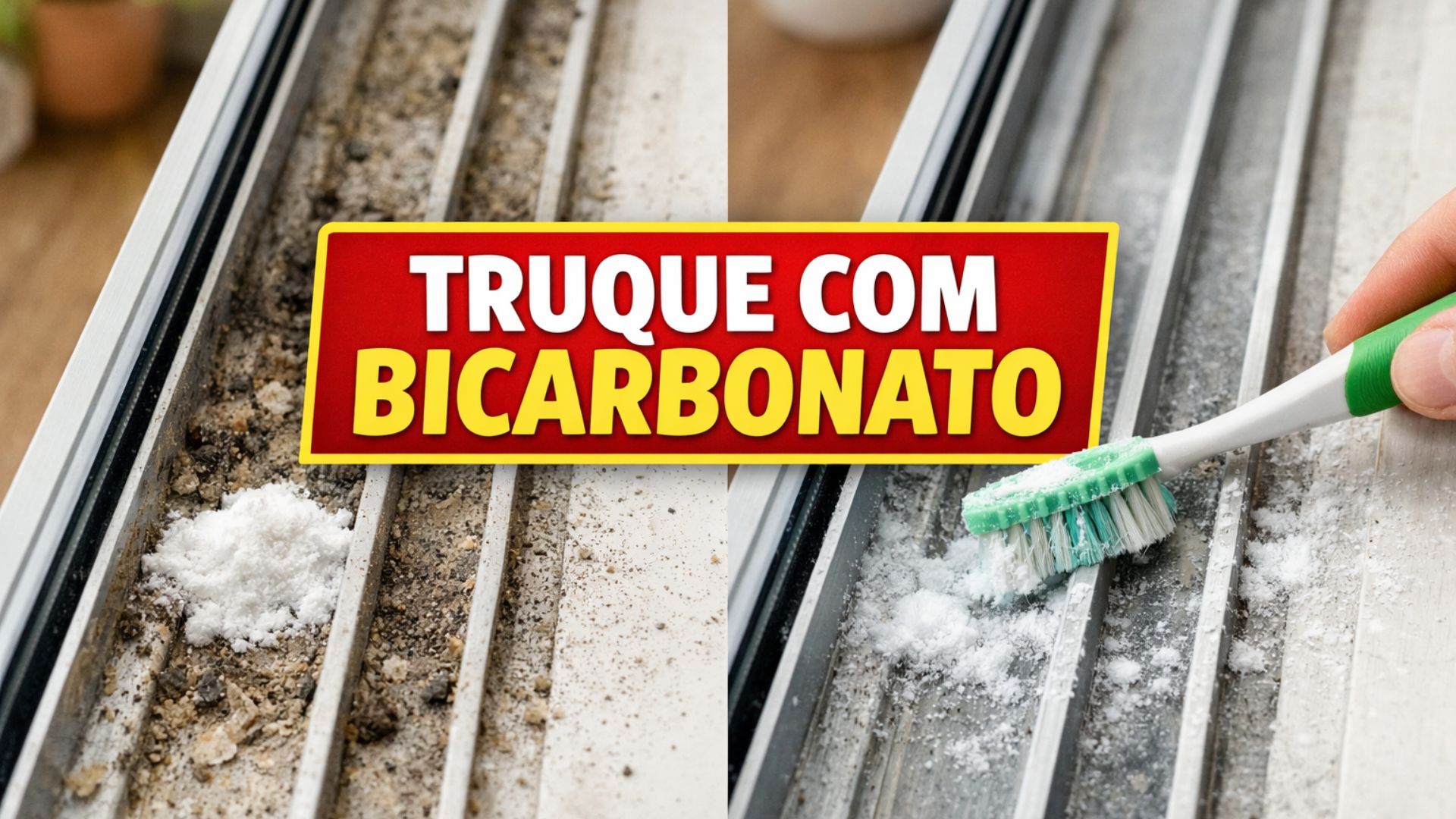
Simple Home Tip Uses Common Product to Remove Hidden Dirt, Reduce Persistent Odors, and Improve Window Sliding, Avoiding Premature Wear of Frames in Environments with Frequent Dust, Sand, and Moisture.
Fine dust, sand grains, insect remnants, and debris that escape the cloth usually concentrate in the window tracks, especially in sliding windows.
With accumulation, the sash starts to scratch, jam, or require more force to open and close.
In humid locations, this combination of dirt and standing water also promotes unpleasant odors and dark marks associated with mold.
-
How to build a 35,000-liter cistern with 60 by 50 cm panels and rainwater for drinking and cooking without relying on water trucks or the city hall.

-
A woman went out for a regular walk and ended up finding a treasure buried for over 900 years, with more than 2,000 medieval silver coins compared by archaeologists to a lottery prize and considered one of the most significant finds in recent years in the country.

-
Scientists revealed 11 signs that very intelligent people exhibit in their daily lives, and most people have no idea that some of these common behaviors are directly linked to an above-average brain.

-
From space, Buenos Aires appears as a colossal spot of light surrounded by kilometers of darkness, revealing at a single glance the exact boundary between the metropolis and the countryside, seen from 400 km altitude.


In recent months, a simple tip has been circulating on social media to address the problem: apply baking soda directly to the track, moisten it, and scrub the crevices with small brushes.
The idea is to combine mechanical cleaning of narrow areas and odor control, using a common product in kitchens and utility areas.
Why Baking Soda Is Used in Window Track Cleaning
Baking soda is known for its household use in helping to absorb odors and for functioning as a mild abrasive on surfaces, which aids in removing adhered dirt without resorting to harsher products.
In educational materials that describe its applications, it appears as a low-cost and high-yield compound, often associated with everyday cleaning and combating unpleasant smells.
In practice, the most sought effect in the tracks is the action of a gentle “polisher.”
The powder settles in corners and, when rubbed with a fine brush, helps release particles trapped in grooves that larger brushes cannot reach.

The expected result is a track with less debris and, consequently, with less resistance to window sliding.
Another reason for the popularity of the tip is related to the maintenance routine.
When sand and dust accumulate, these grains can act like “sandpaper” during opening and closing, accelerating wear and increasing the risk of jamming.
By reducing this material in critical points, cleaning tends to decrease the effort needed to move the sash, which also preserves rollers and fittings over time.
Moisture, Unpleasant Odor, and Mold in Tracks
Tracks installed near laundries, kitchens, bathrooms, or coastal areas tend to receive splashes, condensation, and rainwater laden with particles.
If moisture remains for a long time, dirt creates a film that retains water and serves as an environment for unpleasant odors.
In these cases, baking soda is often used as an ally by <strong helping to reduce odors present in accumulated residues and facilitating the removal of the material that keeps the surface moisture trapped in the track.
The change does not replace ventilation of the area or drying after heavy cleaning, but it can help ensure that the area does not retain a closed smell for too long.
Still, the central point of the tip is straightforward.
The less compacted dirt in the crevices, the less chance there is for water to be retained there for hours, and the faster the track tends to dry after a pass with a cloth.
How Cleaning with Baking Soda Is Usually Done


The most common guidance begins before the baking soda.
First, the cleaning removes what is loose to prevent water from turning dust into mud.
At this stage, many people use a brush, small brush, or vacuum cleaner to remove sand and debris, especially from the track’s edges.
Then, the baking soda is spread in small amounts along the channel, paying special attention to crusty spots and corners.
After that, water is applied gradually until it turns into a light paste, sufficient to “stick” to the area without dripping onto walls, wood, or sensitive crevices.
The action time is usually short, because the goal is to soften the dirt and facilitate controlled friction.
After a few minutes, the recommendation is to scrub with fine tools, such as an old toothbrush or narrow brushes, focusing on corners that fingers cannot reach.
Finally, the residue is removed with a damp cloth or absorbent paper.
Complete drying concludes the process, as leaving accumulated water in the track usually worsens odor and shortens the interval until the next cleaning.
Does Baking Soda with Vinegar Really Work?
Some versions of the trick suggest dripping vinegar over the baking soda to generate effervescence.
The reaction creates bubbles that help dislodge dirt in crevices and give the sensation of “unsticking” old crusts.
This explains why the mixture has become one of the most talked-about combinations for household cleaning.
At the same time, there are technical sources of hygiene and cleaning that make a reservation.
The reaction between the vinegar’s acid and the baking soda’s base neutralizes part of the compounds, and the effervescence alone does not guarantee a more efficient cleaning than the mechanical action of scrubbing and removing dirt from the location.
In other words, the visual effect may help dislodge residues, but the result depends, above all, on friction and complete removal of the material.
When this combination is used, the most important care is usually practical.
Avoiding excess liquid and not allowing the mixture to drip onto delicate surfaces, such as unprotected wood and paint that stains easily, reduces the risk of damage.
Impact of Regular Cleaning on Window Maintenance

The main advantage reported by those who adopt regular cleaning is the prevention of extreme accumulation.
Tracks with less residue tend to require less force to open and close, in addition to reducing the friction noise caused by compacted sand.
Another gain is aesthetic and hygienic.
Corners stop accumulating dark dirt, and the track does not become a point of persistent odor in areas with little airflow.
The habit also helps to early identify issues such as clogged drainage, poor sealing, and points where water frequently stands.
The frequency varies according to the environment.
Houses on busy streets, near construction sites, and with constant winds tend to gather dust faster, while areas with high humidity require attention to drying after rain and cleaning.
The essential thing is to observe the track and act before the material becomes a crust and compromises the sliding.
With a simple product and a cleaning focused on the corners, the track ceases to be a forgotten point in the house and begins to receive preventive maintenance that avoids jamming and reduces unpleasant odors in daily life.
In your routine, what is the most neglected place in cleaning that ends up revealing dust and moisture before the rest of the house?








-

Uma pessoa reagiu a isso.