





 Portuguese
  English
  Spanish
  4 min of reading
  0 comments


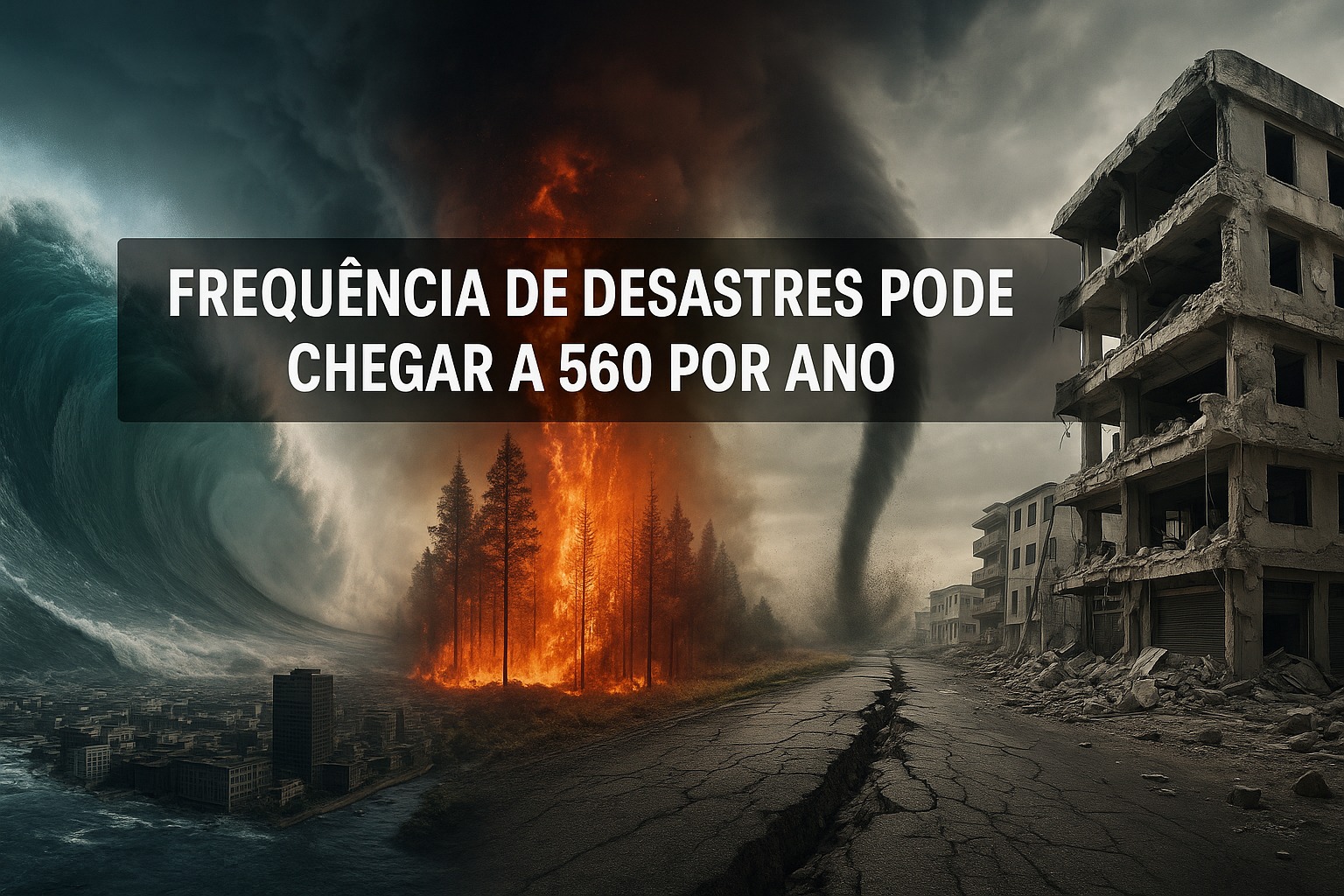
Historical And Recent Tragedies, Such As Floods In Rio Grande do Sul, Highlight The Urgency Of Preventive Measures In Light Of The Worsening Global Climate Change; See Four Natural Disasters That Marked Humanity
Tsunamis, earthquakes, and hurricanes are among the most destructive forces of nature ever recorded. Throughout history, these phenomena have claimed millions of lives and transformed entire landscapes. However, with climate change altering the planet’s balance, their frequency and intensity have been alarmingly increasing.
Since 1989, the United Nations (UN) has established the International Day for Disaster Risk Reduction, celebrated on October 13.
The date aims to “promote a global culture focused on prevention and reduction of risk and losses from disasters,” according to the Brazilian Ministry of Development and Social Assistance.
-
How an innovative city combines high technology, well-being, and sustainability to become the largest reference in clean energy on the planet.
-
Couple buys 1846 church in ruins for R$ 660,000, invests R$ 3.2 million in renovations, transforms it into a millionaire mansion, and even preserved a historic cemetery with over 300 graves.

-
He started running at 66 years old, broke records at 82, and is now a subject of study for having a metabolic age comparable to that of a 20-year-old, in a case that is intriguing scientists and inspiring the world.

-
Oldest tree on the planet reappears after 130 years of searches: Wattieza, 385 million years old, was 10 meters tall and had no leaves or seeds; Gilboa fossils in New York solved the mystery in 2007.


Recent studies indicate that by 2030, the world will face about 560 disasters per year if climate projections hold steady.
In addition, more than 37.6 million people could live in extreme poverty due to the direct impacts of environmental catastrophes.
To mark the date, National Geographic recalled four major natural tragedies that changed the course of history — and a recent episode that shook Brazil.
Tragedies That Marked The 20th Century
According to Encyclopaedia Britannica, “a natural disaster is any calamitous occurrence generated by natural phenomena, and not caused by humans, that results in significant human losses or destruction of property and ecosystems.”
These events can have meteorological origins, such as hurricanes and droughts; geological, such as earthquakes and eruptions; or even hydrological, such as floods and tsunamis. “No place on Earth is immune to a natural disaster,” the platform emphasizes.
1. The Flood Of The Yangtze River In 1931 – The Deadliest Tragedy In History
The flood of the Yangtze River in China is considered one of the worst ever recorded. According to Britannica, about 3.7 million people died after the waters invaded cities and agricultural fields.
Located in the central-eastern region of the country, the river usually overflows during the summer, but in 1931 the volume was devastating.
The cities of Nanjing and Wuhan were submerged, and 50 million people were affected.
2. The Indian Ocean Tsunami In 2004 – A Global Disaster
On December 26, 2004, a submarine earthquake of 9.1 magnitude struck the coast of the Indonesian island of Sumatra.
The quake generated a tsunami that swept across the Indian Ocean, reaching India, Sri Lanka, the Maldives, Thailand, and even parts of Africa.
There were more than 228,000 deaths and tens of thousands reported missing. Waves over nine meters high hit coastal areas, destroying entire communities in just a few hours.
The tragedy led to the creation of early warning systems in several Asian countries, a measure that became essential for saving lives in subsequent events.
3. Hurricane Katrina In 2005 – The Devastating Force Of The Winds
Hurricane Katrina was one of the most significant weather phenomena in the United States. In just a few days, it turned entire cities into ruins.
The system began as a tropical storm on August 23, 2005, in the Bahamas. By August 28, it had become a Category 5 storm, with winds exceeding 257 km/h.
Britannica reports that 1,400 people died during Katrina’s passage. New Orleans, Louisiana, was one of the hardest-hit cities, with levees broken and entire neighborhoods submerged. Winds reached 273 km/h, affecting Alabama and western Florida as well.
4. The Earthquake In Haiti In 2010 – Total Destruction In A Small Country
On January 12, 2010, an earthquake of magnitude 7.0 shook Haiti. The epicenter occurred near the capital, Port-au-Prince.
The consequences were devastating: between 200,000 and 316,000 deaths, thousands injured, and millions displaced. Aftershocks with magnitudes of 5.9 and 5.5 hit the region days later, further worsening the humanitarian crisis.
Basic infrastructures, such as hospitals, schools, and roads, were destroyed. The country, already socially and economically vulnerable, took years to begin reconstruction.
The Brazilian Disaster: The Floods In Rio Grande do Sul In 2024
In 2024, Brazil experienced one of its most challenging moments. Between late April and early May, Rio Grande do Sul was hit by historic rains that caused unprecedented flooding.
According to Agência Brasil, the precipitation exceeded 100 millimeters on average, reaching 500 millimeters in some municipalities, such as Porto Alegre. The cities of Canoas, Lajeado, and Esteio were practically submerged.
The National Institute of Meteorology (INMET) explained that the disaster was the result of a combination of low pressure, intense heat, and high humidity, exacerbated by the El Niño phenomenon. Global warming further worsened the scenario.
An official survey released in 2025 showed that the floods affected 478 of the 497 cities in Rio Grande do Sul, impacting around 2.4 million people.
The death toll reached 184, with 806 injured and 25 missing. More than 3,000 animals were rescued, while thousands more lost their lives in the floods.
Natural Disasters: Lessons From A Planet On Alert
The cited catastrophes show that the impact of natural disasters is not only environmental but also human, economic, and social.
The case of Rio Grande do Sul exposed the vulnerability of cities to extreme events and the urgency of preventive measures.
The UN emphasizes that reducing the risk of disasters means investing in urban planning, environmental preservation, and efficient alert systems. It is a collective effort to save lives and protect the future.
In a world increasingly subject to the consequences of climate change, these tragedies serve as a global alert.
They remind us that the challenge is not only to survive the force of nature but to learn to coexist with it — and to respect it.
With information from National Geographic.






-

-

2 pessoas reagiram a isso.