





 Portuguese
  English
  Spanish
  5 min of reading
  0 comments


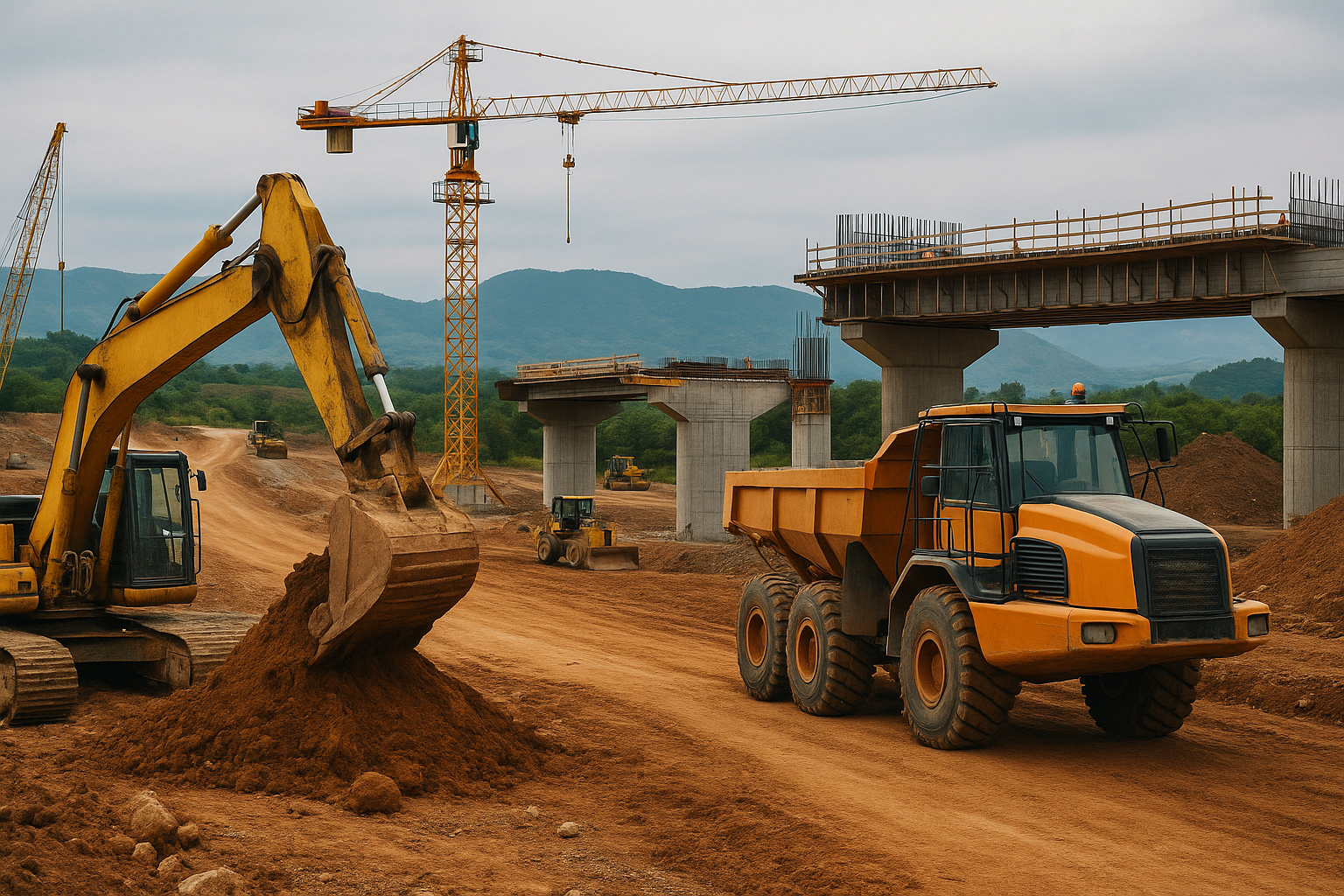
Understand What Heavy Construction Is, Its Historical Importance, and How This Sector Transforms Brazil with Large Infrastructure Projects.
Heavy construction, therefore, plays a fundamental role in a country’s development.
According to the Brazilian Institute of Geography and Statistics (IBGE), it includes large infrastructure projects such as highways, railways, ports, airports, dams, tunnels, and sanitation systems.
Unlike light construction, which focuses on residential and commercial buildings, heavy construction, consequently, requires high investments, advanced technological equipment, and specialized teams to execute complex, long-term projects.
-
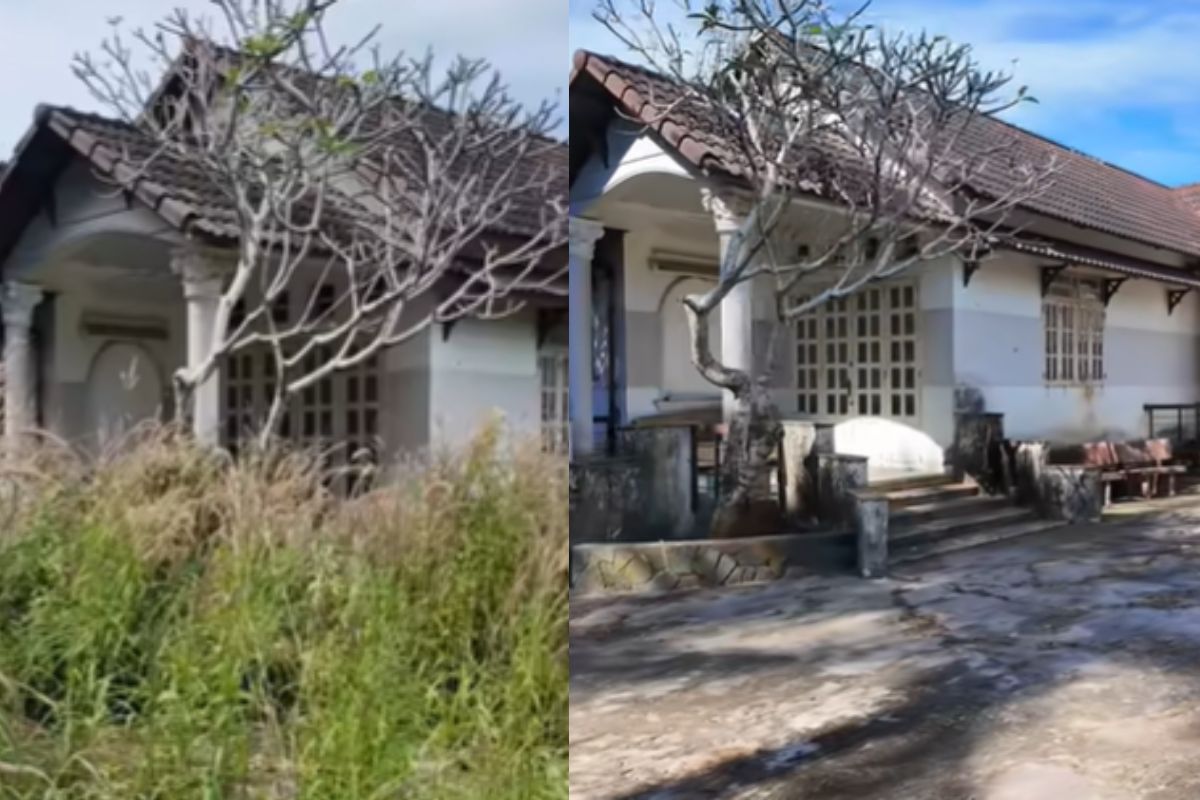
Abandoned house for 15 years disappears in the woods, shocks owner with unrecognizable scenery and is reborn in an intense transformation after almost 90 hours of work in just 10 days.
-
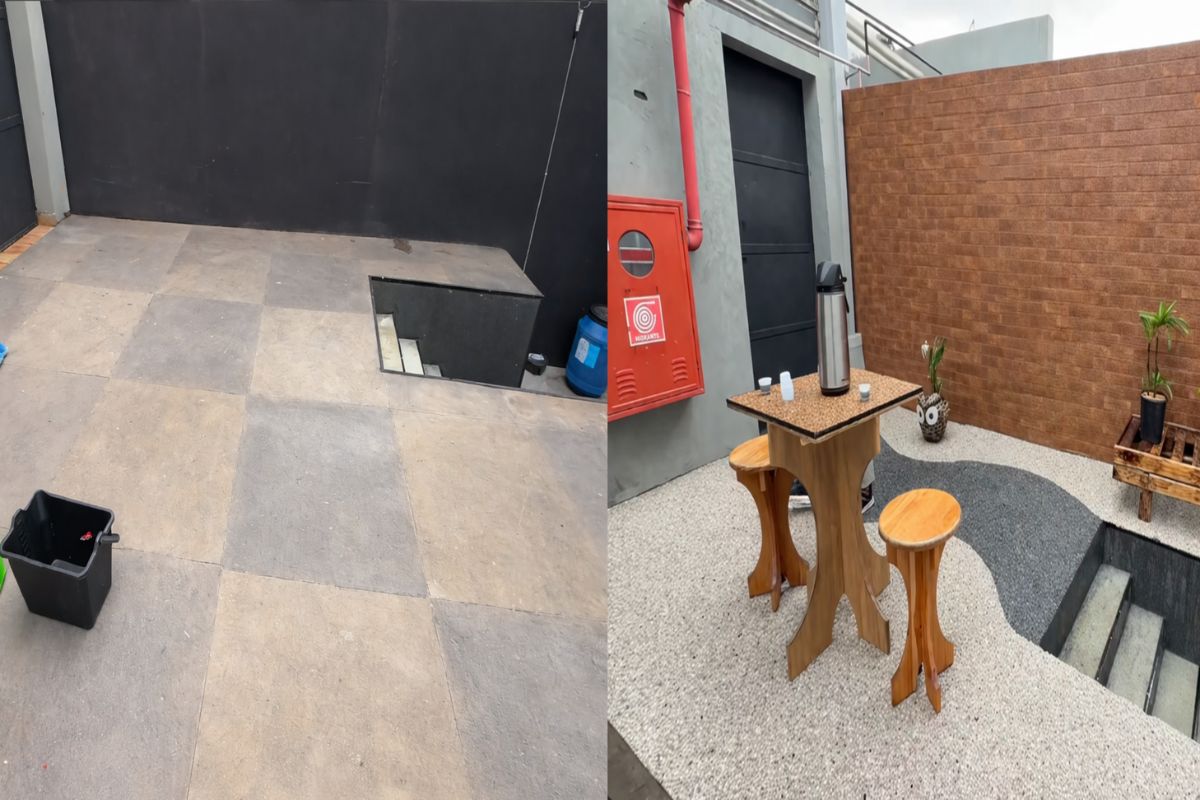
In just three hours, a natural stone floor transforms the entrance of the house with an organic effect, immediate drainage, and a sophisticated non-slip finish that doesn’t puddle water, dries quickly, and impresses with the final result.
-
‘Interlocking brick’ made of earth arrives in the construction industry with cost reductions of up to 40% on the project.

-
Espírito Santo will receive the largest engineering project in its history with the duplication of BR 262, which will have 50 viaducts, 28 bridges, and 2-kilometer tunnels cutting through the most challenging mountainous region of the entire state.


Historically, heavy construction has grown as Brazil sought to expand its territory, transport goods, access natural resources, and integrate distant regions.
According to the IBGE, the country intensified this growth in the 20th century, especially during the government of Getúlio Vargas (1930-1945).
During this period, the state invested in the foundation of the National Steel Company in 1941, which was crucial for Brazilian industrial development.
Additionally, the inauguration of the Presidente Dutra Highway in 1951 connected important economic centers, consolidating national road infrastructure.
According to information from the Ministry of Infrastructure, in the 1960s and 1970s, the military regime implemented a series of major projects that marked Brazilian engineering.
Examples include the Rio-Niterói Bridge, inaugurated in 1974, the construction of the Transamazônica Highway, which began in 1970, and the Itaipu Hydroelectric Power Plant, whose construction began in 1975 and was completed in 1984.
These projects structured the country, facilitating economic development and integrating previously isolated regions.
These historical investments, according to the Ministry of Infrastructure, allowed Brazil to keep pace with the economic and social growth of major world powers.
Moreover, the rise in urbanization and demand for energy, transport, and supply made heavy construction essential to ensure the quality of life for the population and sustainable development.
Steps and Fundamental Techniques in Heavy Construction
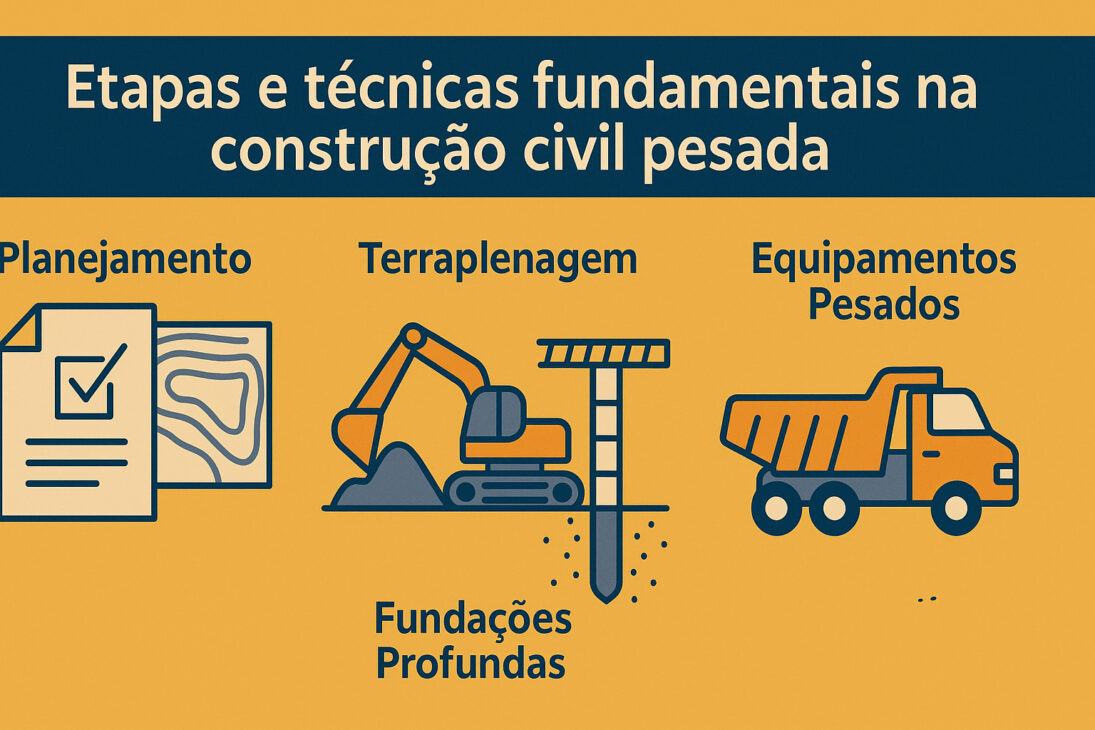
Heavy construction, therefore, goes through several stages, from planning to execution.
According to the Brazilian Association of Engineering and Infrastructure (ABEMI), projects begin with technical and environmental feasibility studies, followed by soil analysis, topography, and licensing, until the machinery and teams mobilize at the construction site.
Earthworks stands out as one of the main activities, as it involves moving large volumes of earth to prepare the ground for foundations.
In addition to earthworks, deep foundation techniques ensure the stability of projects in unstable soil.
The construction of massive structures, such as dams and overpasses, also requires high precision to avoid future problems, such as landslides or structural failures that jeopardize safety.
Robust and durable materials, such as reinforced concrete, steel, and asphalt, make up the structures, while constant quality control ensures the durability of the works.
Excavators, bulldozers, dump trucks, cranes, and pavers form the base of the heavy equipment used.
Qualified professionals, including civil engineers, geotechnical engineers, building technicians, and machine operators, conduct these processes.
Today, heavy construction maintains an essential role in Brazil.
Despite advancements, the National Department of Transport Infrastructure (DNIT) emphasizes that the national road network still faces challenges, with poor roads and demand for upgrades.
The railway infrastructure, neglected for decades, is gaining new momentum with projects such as the Northern-Southern Railway, initiated in 1987, and the Ferrogrão, expected to be completed in the coming years, according to information from the Ministry of Infrastructure.
Ports and airports are also undergoing constant modernization to support the growth of international trade and tourism.
Sustainability, Technology, and Economic Impact
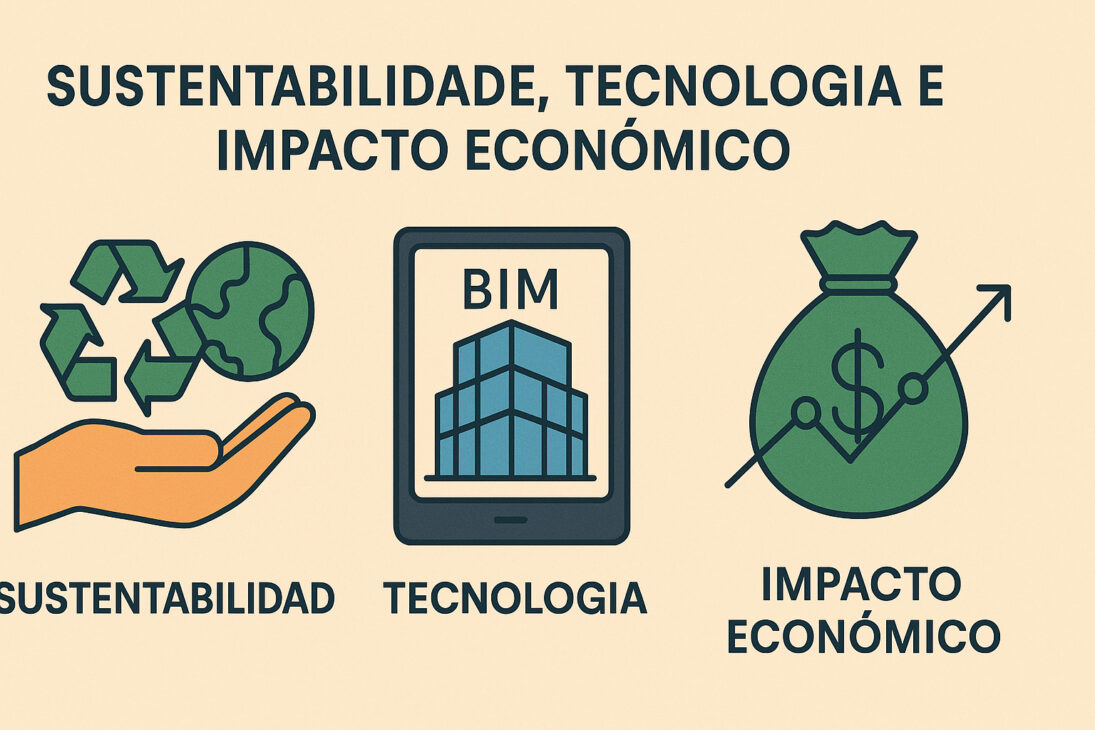
With technological advancement and increasing environmental concerns, the sector adopts more sustainable practices.
Techniques that reduce environmental impact, such as reusing materials and efficient drainage and erosion control systems, are becoming common.
According to the Institute of Technological Research (IPT), the digitalization of processes through BIM (Building Information Modeling) software increases planning precision and generates resource savings.
Sustainable heavy construction is not limited to reducing immediate impacts.
The IPT emphasizes that it also involves the rational use of natural resources and concern for the durability of projects, so they require less maintenance and repairs in the future.
This results in lower costs and waste for society, as well as preserving the environment for future generations.
This sector generates jobs and drives the economy.
Large projects employ hundreds of workers and boost various sectors, such as transport, food, hospitality, suppliers of materials, and maintenance services.
Therefore, the Ministry of Economy states that the government usually invests in heavy construction during economic crises to stimulate the economy and improve infrastructure simultaneously.
Additionally, the sector stimulates innovation, as it frequently demands technical solutions that are later applied in other areas of engineering and construction.
This dynamic makes heavy construction a strategic activity for economic and technological growth.
Those wishing to work in the field find good opportunities, especially with technical or higher education in engineering.
Field experience, mastery of technological tools, and leadership skills are valued.
Work safety remains fundamental, as construction environments present high risks.
The Ministry of Labor and Employment emphasizes that the correct use of personal protective equipment (PPE), regular training, and supervision contribute to preserving the integrity of workers.
Heavy Construction: Public Policies, Financing, and Future Prospects
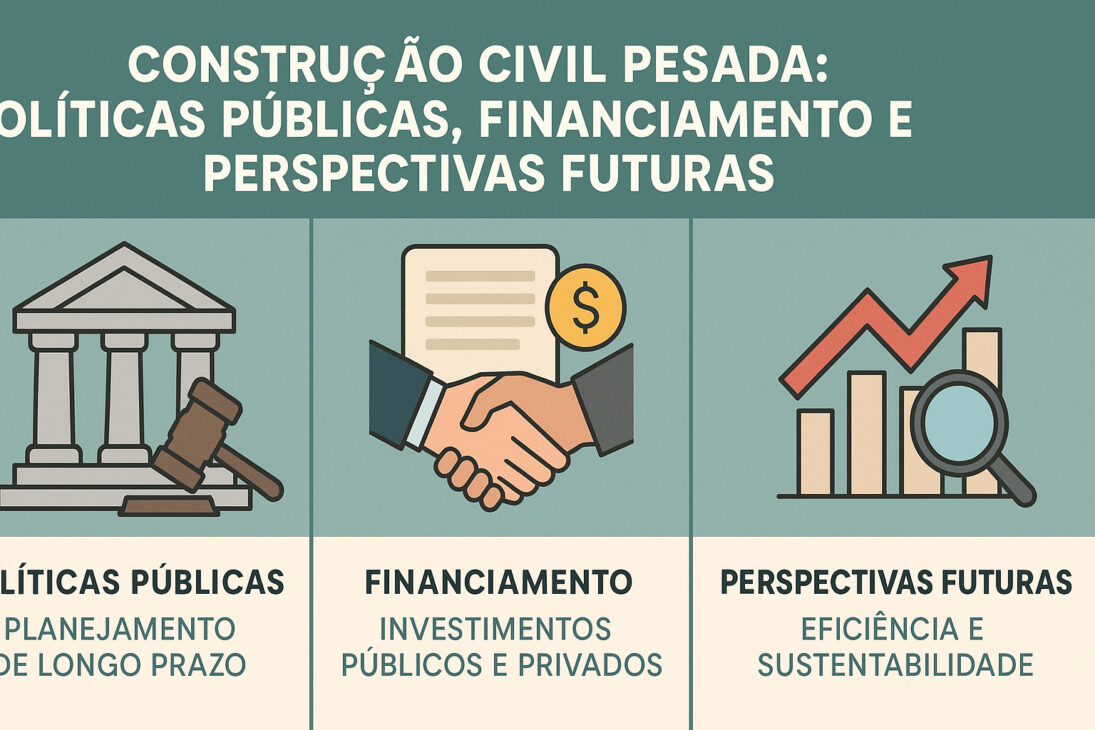
Heavy construction is closely linked to public policies and long-term planning.
As it involves large projects, it relies on public financing or partnerships with the private sector.
According to the National Land Transportation Agency (ANTT), the recent model of concessions and public-private partnerships (PPPs) allows companies to build and operate highways or airports, exploiting services for a defined period.
These financings require rigor and transparency, given the large amounts of resources and the social impact of the projects.
The success of the projects depends on technical competence, effective financial management, and collaboration between government, the private sector, and civil society.
In summary, heavy construction forms the foundation of national infrastructure. It demands technical knowledge, large investments, and high responsibility.
Throughout history, it has transformed landscapes, connected regions, and driven Brazil’s development.
With technology advancing and the search for sustainable solutions, the sector is likely to evolve, becoming more efficient, safe, and environmentally conscious.
Understanding heavy construction is of interest to students, professionals, and the curious.
Knowing this topic reveals the complexity of the projects that support our daily lives — from the roads we travel to the airports we use, from the hydropower plants that generate energy to the dams that store water for supply and agriculture.











Seja o primeiro a reagir!