





 Portuguese
  English
  Spanish
  5 min of reading
  0 comments


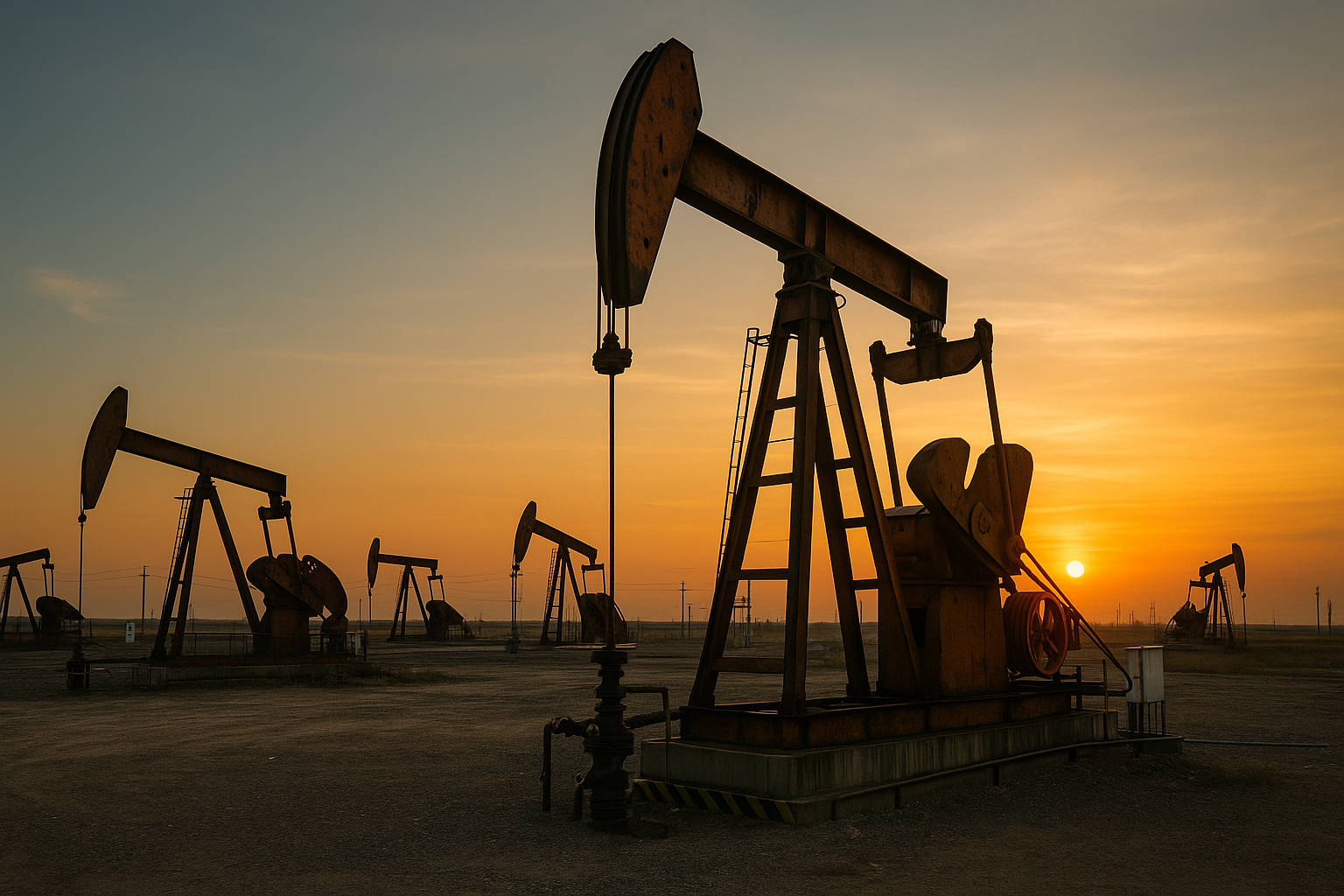
Understand How the Oil and Gas Market Works, Its Historical, Economic and Environmental Importance, and the Strategic Role of This Industry in the Global Energy Landscape.
The oil and gas market plays a fundamental role in the global economy and daily life.
As pointed out by the International Energy Agency (IEA), this industry has shaped geopolitical relations, driven industrial development, and sustained the functioning of the modern world over the past centuries.
Understanding this sector helps to grasp a significant part of the international economic and political dynamics.
-
Lula reveals a masterstroke by Petrobras to undo a deal made by Bolsonaro, which involves the return of an important refinery that currently produces less than half of what was expected and makes Brazil dependent on international diesel.
-
A study confirms that the natural gas sector will reduce greenhouse gas emissions in Brazil by 0.5% and accelerate the energy transition by 2026.

-
Petrobras implements a severe adjustment and confirms a 55% increase in the price of aviation kerosene with a proposal for installment payments for the companies.

-
The rise in oil prices could ensure an extra revenue of R$ 100 billion for the Federal Government, indicates a recent economic study.


After all, oil and natural gas are energy sources present in almost every aspect of our routine, from fuel for vehicles to raw materials for chemical products.
Therefore, the influence of this market goes far beyond the economy, directly affecting geopolitics, the energy security of countries, and environmental policies, according to the Organization of the Petroleum Exporting Countries (OPEC).
Origin and Evolution of the Oil and Gas Industry
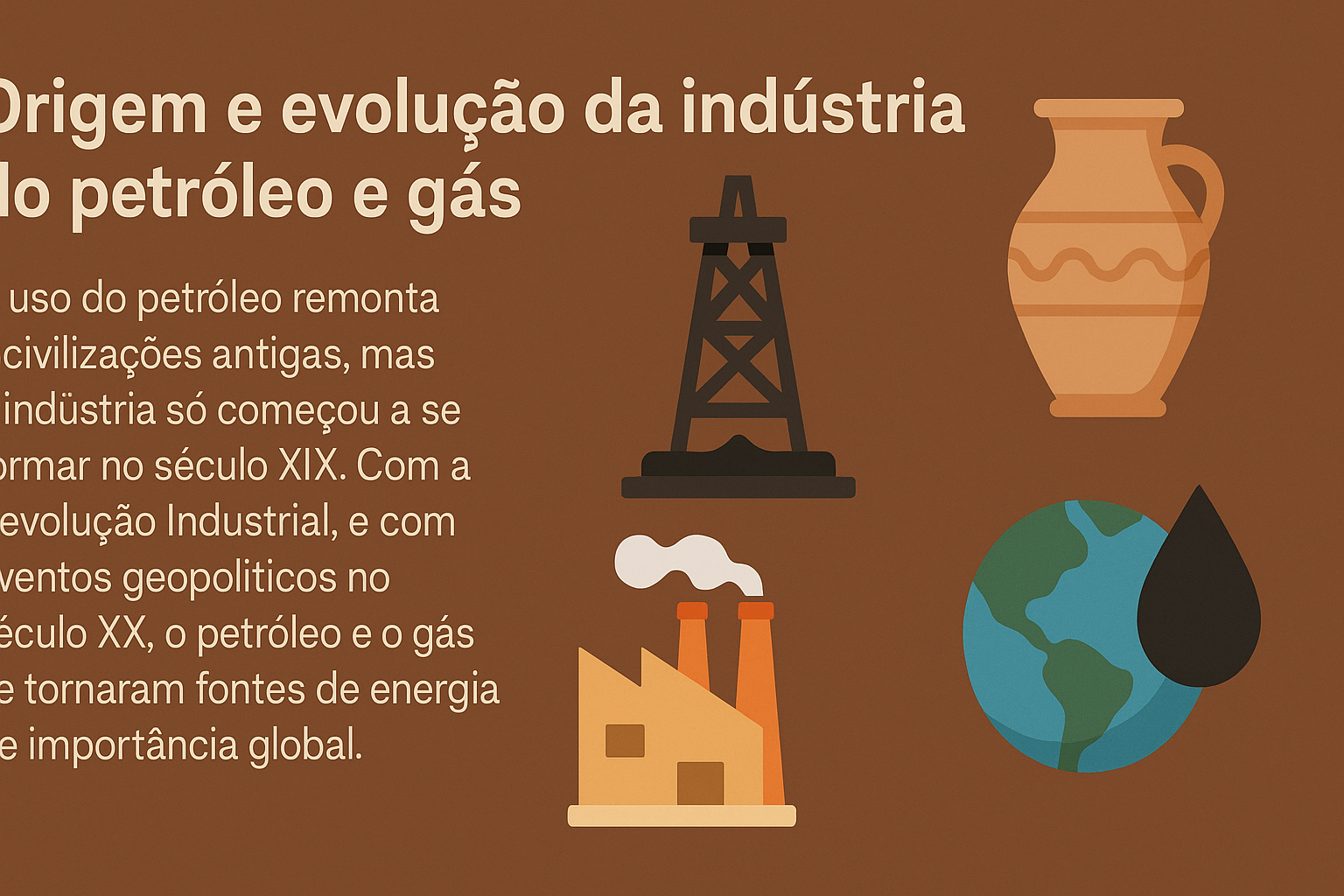
The use of oil has very ancient origins. Historical records indicate that civilizations such as the Sumerians and Egyptians, over 4,000 years ago, already used bitumen.
A natural form of oil — for construction and mummification processes, as documented by the U.S. Oil Museum.
However, the oil industry as we know it today only began to form in the mid-19th century.
In 1859, according to the Oil Museum, Edwin Drake drilled the first commercially viable oil well in Pennsylvania, United States. This event marked the beginning of industrial oil exploration.
With the advancement of the Industrial Revolution and the invention of the internal combustion engine, the use of oil expanded rapidly.
In the 20th century, oil became the world’s primary source of energy, as studies from the International Energy Agency (IEA) point out.
Moreover, geopolitical conflicts involving oil, such as the 1973 Oil Crisis and the Gulf War in 1991, had a significant impact on the global economy.
As reported by the United Nations (UN), these events demonstrated the strategic importance of oil for international power.
Simultaneously, natural gas gained relevance by offering a cleaner and more efficient alternative, according to the IEA. Discoveries of reserves in regions like the North Sea and the Gulf of Mexico, coupled with technological development, allowed for the expansion of production and international trade.
In recent years, OPEC has been publishing reports indicating a continuous growth in the liquefied natural gas (LNG) market, due to its flexibility and lower environmental impact, according to 2023 data.
Organization and Functioning of the Oil and Gas Market
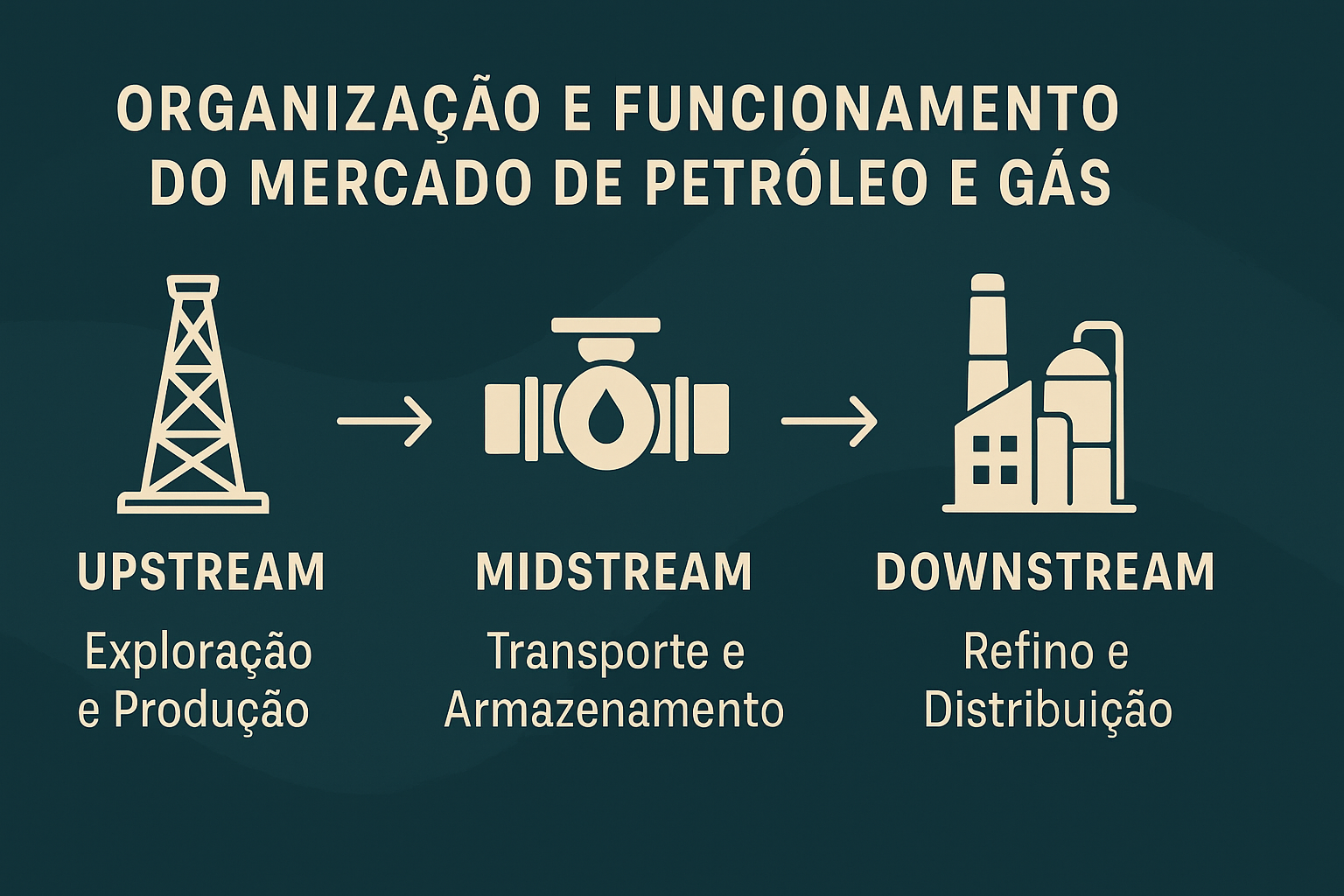
According to OPEC, the oil and gas market is divided into three main segments: upstream, midstream, and downstream.
The upstream segment involves exploration and production, which consists of searching for underground reserves and extracting oil and gas.
The midstream takes care of the transportation and storage of oil and gas, while the downstream is responsible for refining and distributing the final products, such as gasoline, diesel, and cooking gas.
According to Petrobras, the largest Brazilian company in the sector, these segments require large investments in infrastructure, technology, and safety.
The sector is also subject to geopolitical factors, as many reserves are located in politically unstable regions.
Countries like Saudi Arabia, Iran, Russia, and Venezuela play a central role in global supply, according to OPEC’s 2024 annual report.
Additionally, governmental regulation varies from country to country.
While some nations maintain state control over exploration and production, others allow the entry of private and foreign companies, directly influencing the market dynamics.
Petrobras also emphasizes that technological innovation has transformed industrial processes, increasing efficiency and reducing environmental impacts.
The use of artificial intelligence and real-time monitoring are current examples of technologies applied to optimize production and prevent accidents.
Economic Impacts and Global Influence
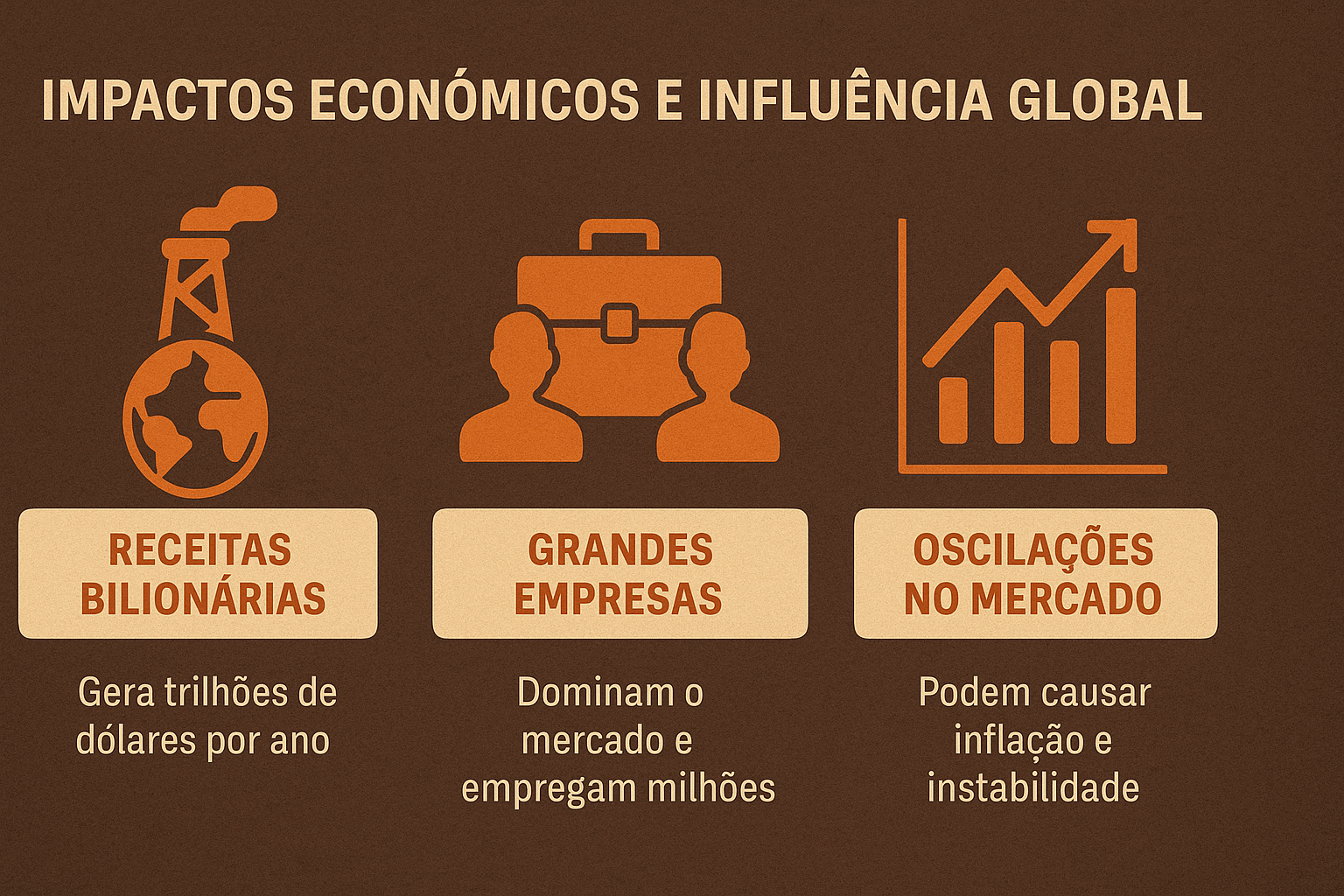
The oil and gas sector generates billion-dollar revenues for many countries, especially OPEC members.
According to the World Bank, the industry moves trillions of dollars annually, influencing energy, transportation, and food prices.
Large multinational companies, such as ExxonMobil, Shell, Chevron, Petrobras, BP, and TotalEnergies, dominate the market.
They are responsible for a significant portion of global production and refining, in addition to employing millions directly and indirectly, fostering various supply chains.
Oil is also essential for the petrochemical industry, which is responsible for producing plastics, fertilizers, and other basic materials.
Thus, dependence on oil goes beyond energy, impacting the entire industrial chain.
According to studies from the World Bank in 2023, fluctuations in the oil market can cause inflation, unemployment, and instability, especially in countries that are heavily reliant on the sector.
In light of this, many governments seek to diversify their economies to reduce this vulnerability.
Sustainability and Environmental Challenges
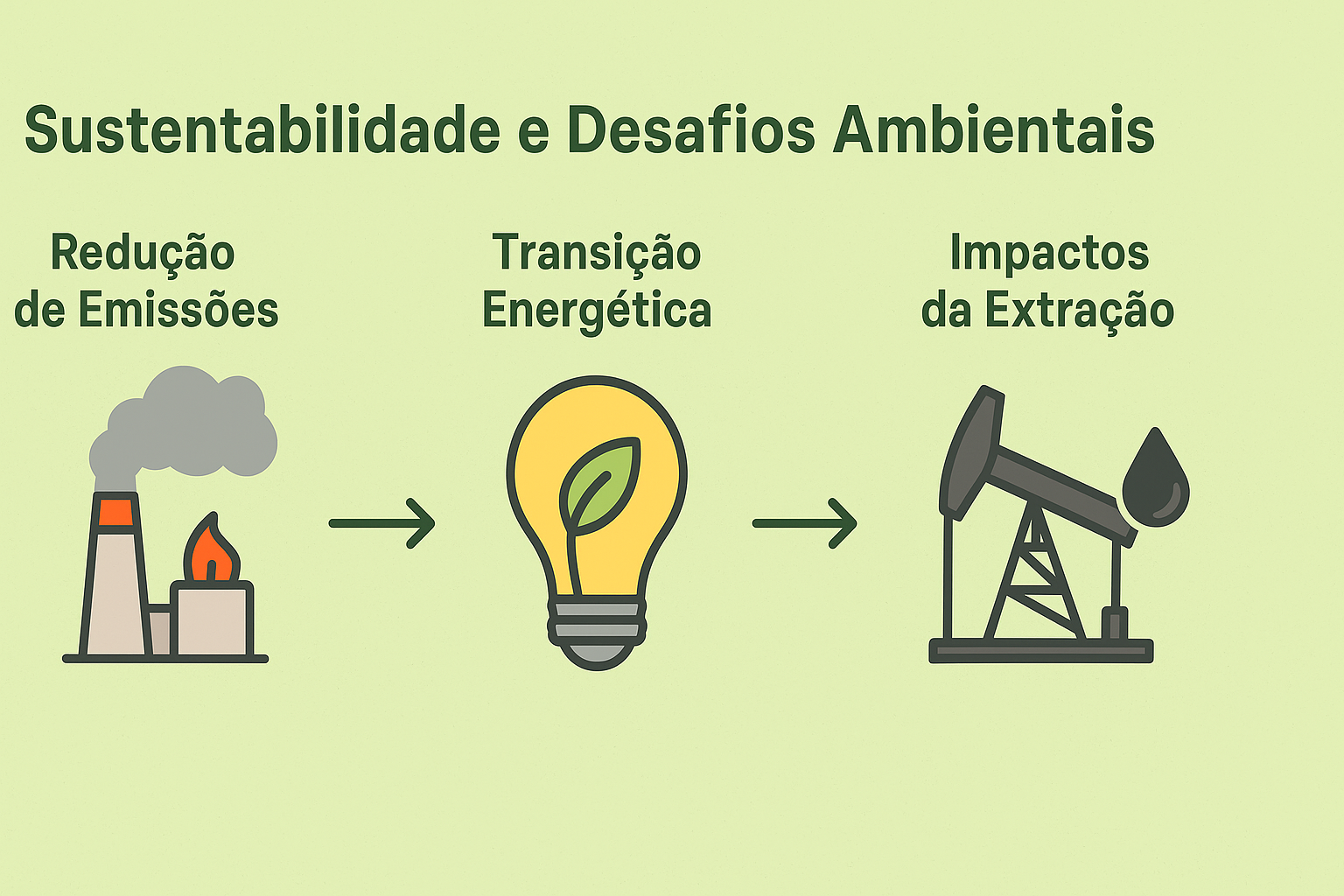
According to the Intergovernmental Panel on Climate Change (IPCC) in its 2023 report, the oil and gas sector faces increasing pressure to reduce its greenhouse gas emissions.
The energy transition, which aims to replace fossil fuels with renewable sources, constitutes a significant current challenge.
Experts agree that oil and gas will remain essential for several decades.
Complete replacement requires time, investments, and technological advances, as pointed out by the International Energy Agency.
In addition to the impacts of burning fuels, extraction poses environmental risks.
The accident in the Gulf of Mexico in 2010, for example, highlighted the need for greater safety and care, as reported by the U.S. Environmental Protection Agency (EPA).
Today, innovative technologies and stricter regulations help mitigate these impacts. Companies invest in research to reduce emissions, increase efficiency, and develop alternatives to dependence on fossil fuels.
Perspectives for the Future
The future of the oil and gas market depends on technological advancements, changes in consumption, government policies, and the transition to renewable energies, according to the IEA.
Digitalization and automation are already transforming the sector, making operations more efficient.
Despite uncertainties, oil and gas will maintain a strategic role in the coming decades, especially in developing countries, where energy demand is growing.
The sector also keeps pace with advances in alternative energies, such as hydrogen, biofuels, and solar energy, which can complement or replace fossil fuels.
The carbon market is also growing, promoting sustainable practices through credits to offset emissions.
The future of the market will depend on balancing economic development and sustainability, ensuring its relevance as the world’s energy foundation.










Seja o primeiro a reagir!