





 Portuguese
  English
  Spanish
  6 min of reading
  1 comment


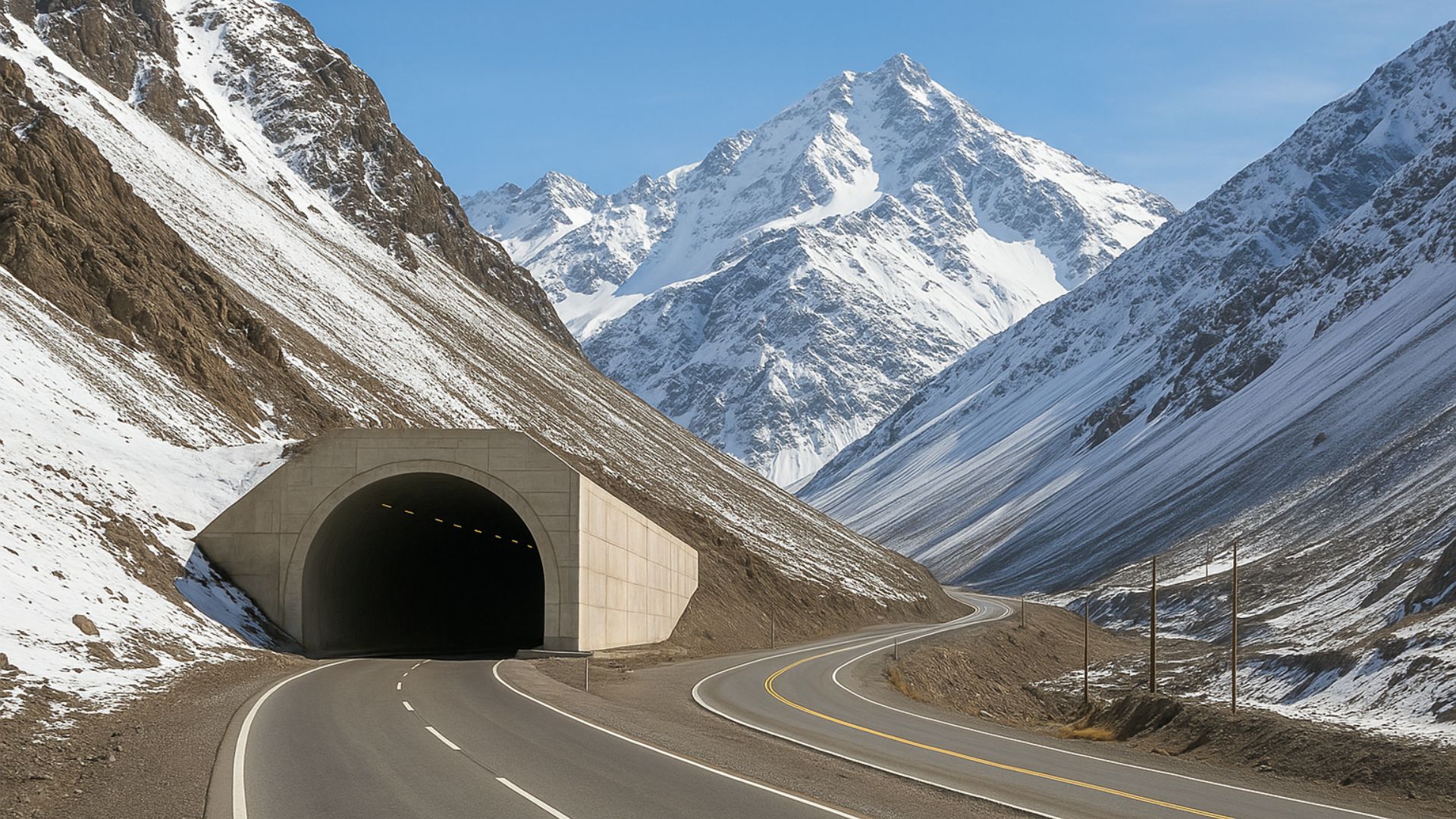


Binational Project in the Andes Reignites Debates on Logistics, Regional Integration, and Access to Pacific Ports, Involving Argentina and Chile, Promising More Predictable Crossing in an Area Historically Affected by Snow, Ice, and Seasonal Restrictions.
A road tunnel designed to cross the Andes Mountains has returned to the center of debate between Argentina and Chile for promising to reduce the vulnerability of one of the international routes most affected by snow, ice, and seasonal closures.
Called Aguo Negra Tunnel, the project is intended to connect the Argentine province of San Juan to the Coquimbo Region in Chile, and integrate a land corridor that targets Pacific ports.
The proposal is to partially replace the high mountain section of the current Aguo Negra border crossing with an underground passage capable of maintaining more stable traffic year-round, directly impacting the circulation of goods and travelers.
-
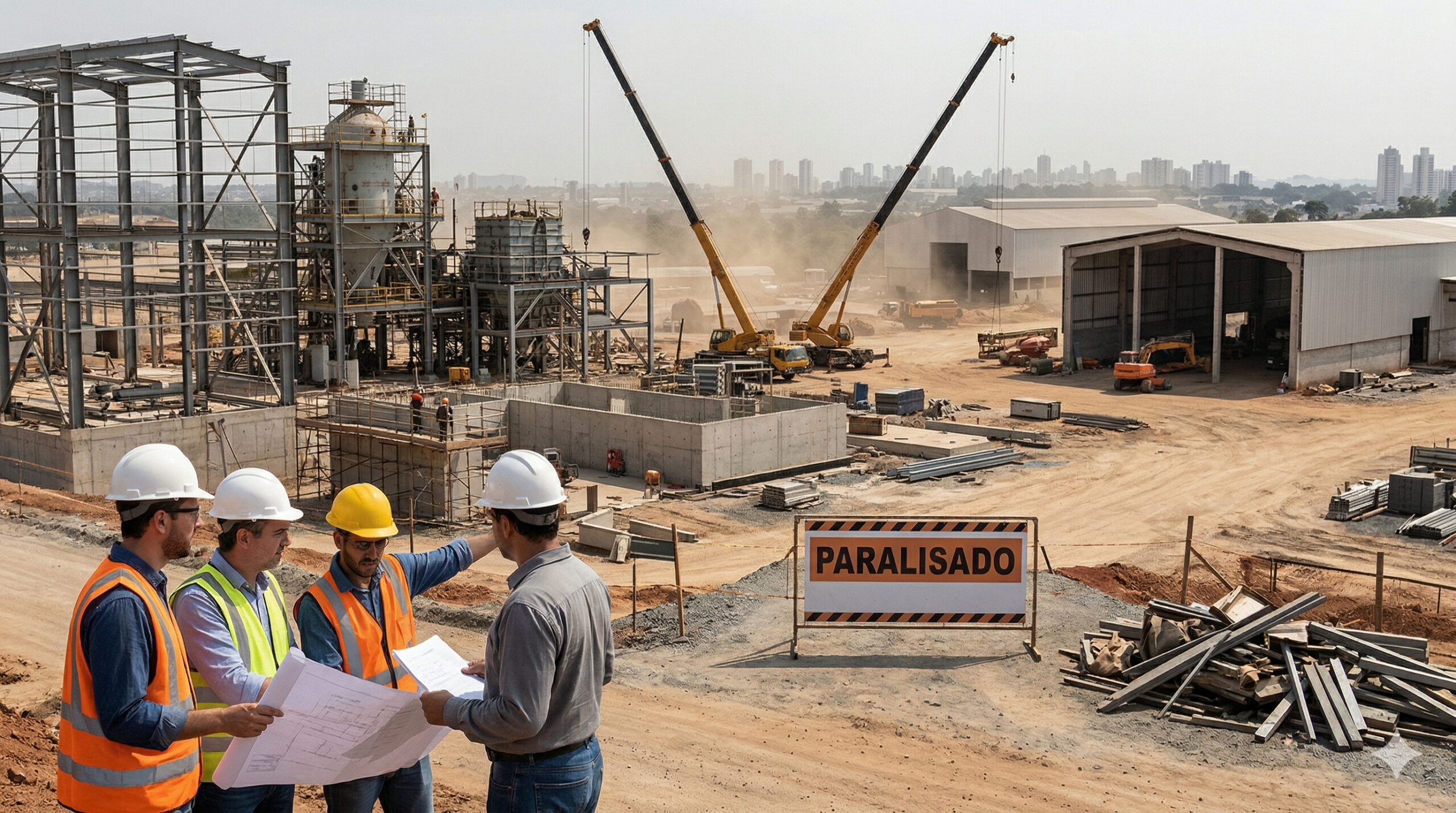
The lack of welders, electricians, and operators becomes a structural threat in 2025, with the construction industry and manufacturing already suffering from delays, cost pressures, and labor shortages in Brazil.
-
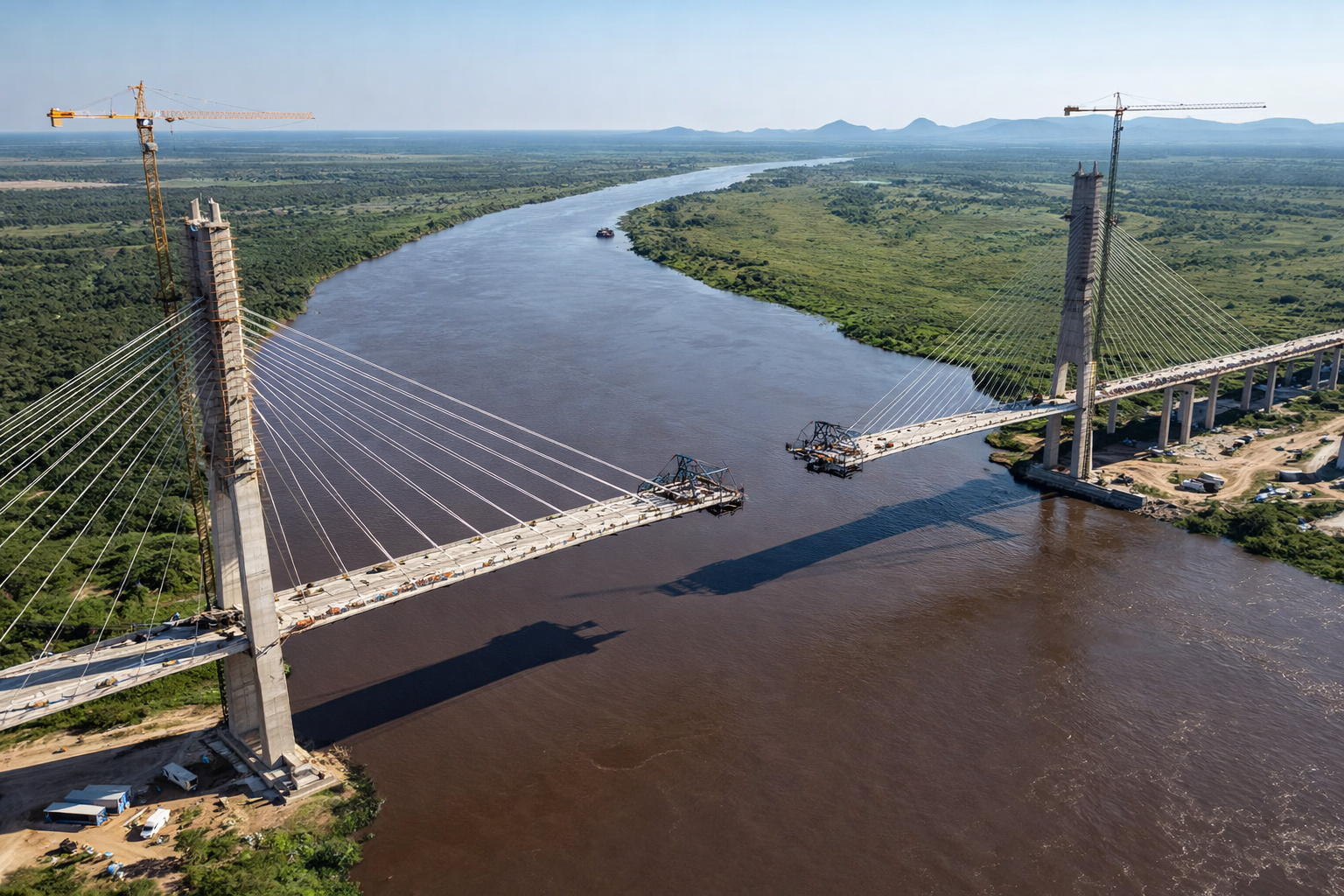
Brazil and Paraguay are just 46 meters away from a historic union on the bioceanic bridge that promises to revolutionize trade between the Atlantic and the Pacific.
-
With 55 km over the sea, a cost of US$ 20 billion, and enough steel to build 60 Eiffel Towers, China’s largest project has connected Hong Kong, Zhuhai, and Macau in a colossal bridge that defies the logic of engineering.

-
A trick with joint compound transforms a Styrofoam ceiling into a plaster-like ceiling: leveled panels, wires and mesh at the joints, sand, paint, and change the environment while spending little today.


At the same time, governments and local agencies are discussing how to enable the work amid financial hurdles and changes in political priorities.
Project of the Aguo Negra Tunnel and Technical Characteristics
The most cited technical design for the project foresees two parallel road tunnels, one for each direction of traffic, with a length of about 13.9 kilometers.
The crossing was conceived to occur at high altitude, in a section that seeks to lower the crossing level compared to the current pass, which is among the highest on the Andean border.

Although the original text mentions 4,080 meters, some public technical references point to slight variations in this number depending on the point considered in the work, such as the tunnel mouths or the profile of the route.
In a widely circulated technical summary, for example, it indicates the Argentine entry point near 4,085 meters and the Chilean entry around 3,620 meters, with average gradient for the tunnels.
On the institutional side, EBITAN is cited as the binational entity responsible for promoting the project, created under the Maipú Treaty and formalized by law in Argentina in 2009.
The official description also associates the work with the corridor that would connect Porto Alegre in Brazil and Coquimbo in Chile, crossing Argentine territory.
Aguo Negra Pass and Impacts of Andean Winter
The Aguo Negra pass has historically been used as an international route, but its operation suffers interruptions and restrictions due to weather conditions, especially during the cold season.
Official communications from San Juan record closures and changes in the operation of the pass depending on the weather scenario and road safety, highlighting the instability that the project intends to mitigate.
Meanwhile, Chilean authorities have discussed improvements in access infrastructure in the mountain range, including paving and works to raise the international standard of the route.
The assessment, according to regional agencies, is that interventions of this type would help to approach the goal of keeping the corridor open longer, even though the construction of the tunnel itself is still in another phase.
Bioceanic Corridor and Connection Between Atlantic and Pacific
In practice, the Aguo Negra Tunnel appears as part of a larger design, the Central Bioceanic Corridor, which seeks to integrate the Atlantic with the Pacific through a land route.
In documents and institutional descriptions, the logic is to shorten paths to the Chilean coast, expanding access to international markets and creating a logistical alternative for export and import flows.
This type of connection is pointed out as strategic because it brings productive areas of inland South America closer to the Pacific port terminals, which concentrate navigation routes to Asia.
Nonetheless, the final effect on costs and timelines depends on factors beyond the tunnel, such as the quality of access roads, customs capacity, availability of logistics services, and regulatory integration among the countries involved.
Logistics, International Trade, and Operational Predictability

The expectation surrounding the project relies, above all, on the promise of predictability.
If the crossing ceases to depend so much on weather conditions to operate, transport companies and foreign trade operators gain margin to plan routes with a lower risk of interruption, which tends to be decisive in chains that depend on delivery windows and time control.
Another point often associated with this type of corridor is the possibility of reorganizing flows.


Freight that currently uses other Andean crossings could, in theory, consider the route through San Juan and Coquimbo, provided that the overall infrastructure delivers speed and safety compatible with the demand.
Nevertheless, there is no single public consensus on the potential traffic volume because studies and investment decisions have been discussed in phases and with revisions over the years.
Regional Economy, Tourism, and Binational Cooperation
Beyond the transport of goods, authorities in Coquimbo have argued that the project can strengthen regional integration and unlock broader economic benefits, ranging from services to joint initiatives.
In June 2025, the Chilean regional government reported meetings to “reactivate” the binational instance related to the tunnel and to resume organizing pending commitments, including regarding the complementary works of the pass.
The progress of access improvements also appears as a work topic in Chile.
In July 2025, the Coquimbo Regional Council recorded discussions with the Ministry of Public Works to pave sections of the Ruta 41-CH in the high mountain range and mentioned pre-investment and pre-feasibility studies related to connectivity between Coquimbo and San Juan.
The understanding, in this context, is that the tunnel is likely to be discussed alongside a larger package of infrastructure and institutional coordination.

This includes everything from safety standards for works at high altitude to the functioning of border complexes and the requirements for oversight and control for a more intense operation of goods and passengers.
Current Stage of the Project and Main Obstacles
Despite remaining present in the discourse of physical integration, the Aguo Negra Tunnel faces the central challenge of financing and execution model.
The Inter-American Development Bank appears in public documents as a supporter of the structuring and preparation process for the project, focusing on technical studies, specialized assistance, and institutional strengthening.
On the political front, the Coquimbo regional government itself acknowledges that reactivating the binational entity is seen as fundamental to unlock coordination and seek new financing mechanisms, after years in which the project was stalled.
At the same time, the construction scenario in 2025 appears uneven.
There are records of progress and planning of road interventions on the Chilean side, while the resumption of the main project depends on broader binational decisions and a contracting and execution path that has not yet consolidated a public start and completion date.
If the promise is to open a more predictable new Andean route and give traction to a corridor toward the Pacific, what is still missing to turn this integration project into effective work?








É isso ai, a nossa América Latina precisa de uma melhor infra estrutura, para escoar com mais rapidez e segurança os produtos produzidos pelos países da América do Sul.