





 Portuguese
  English
  Spanish
  4 min of reading
  0 comments


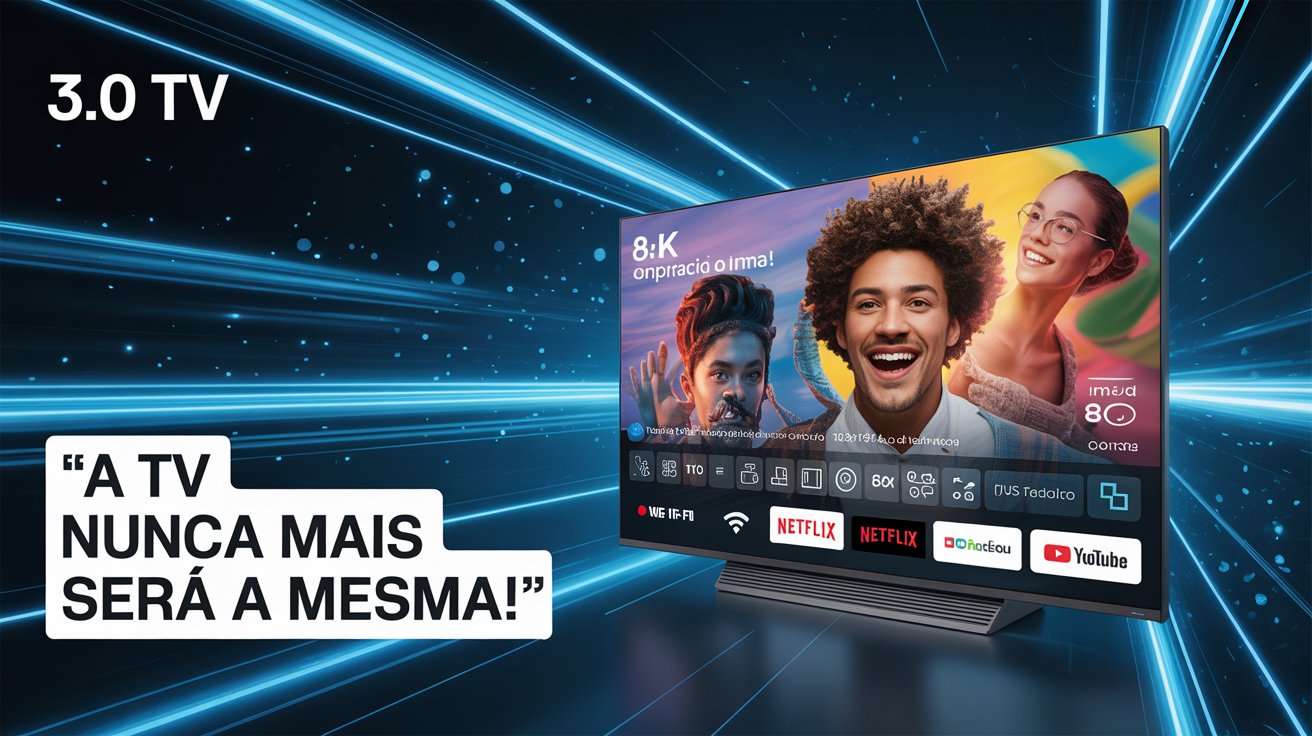
Technological Changes Advance in Brazil with the Arrival of TV 3.0, Which Promises to Revolutionize Home Media Consumption with 8K Image, Artificial Intelligence, and New Experiences of Interactivity and Connectivity.
A silent yet decisive revolution is advancing in the Brazilian television sector.
The so-called TV 3.0 is already pointed out as the next standard to definitively replace the traditional model of open television in the country, bringing together 8K resolution, artificial intelligence, and full connectivity.
The new system will begin to gain traction in 2025, promising to deeply transform the relationship of Brazilians with home entertainment.
-
With a cost per shot close to zero, the DragonFire laser could change naval warfare in 2027 and provide British ships with nearly unlimited defense against drones.

-
A British startup creates tires that generate electricity in electric vehicles when passing over potholes, speed bumps, and cracks.

-
Scientists have created robots made with living cells that have their own nervous system, swim on their own, explore the environment, and self-organize without any genetic engineering, and now they want to do the same with human cells.

-
Students create a solar-powered ambulance that operates without a plug, without fuel, and still keeps medical equipment running in remote areas.
The arrival of TV 3.0 in Brazil represents a structural change, integrating innovative features that go beyond mere image quality.
In addition to ultra-clear images, the technology provides immersive experiences, content personalization, real-time interactivity, and, above all, an unprecedented convergence between television, the internet, and applications.
How the TV 3.0 Technology Works
TV 3.0 adopts advanced digital transmission standards, using state-of-the-art compression and supporting higher resolutions, such as 4K and 8K.
This allows, for example, broadcasting more channels on a single frequency and delivering images with details and colors much truer to reality.
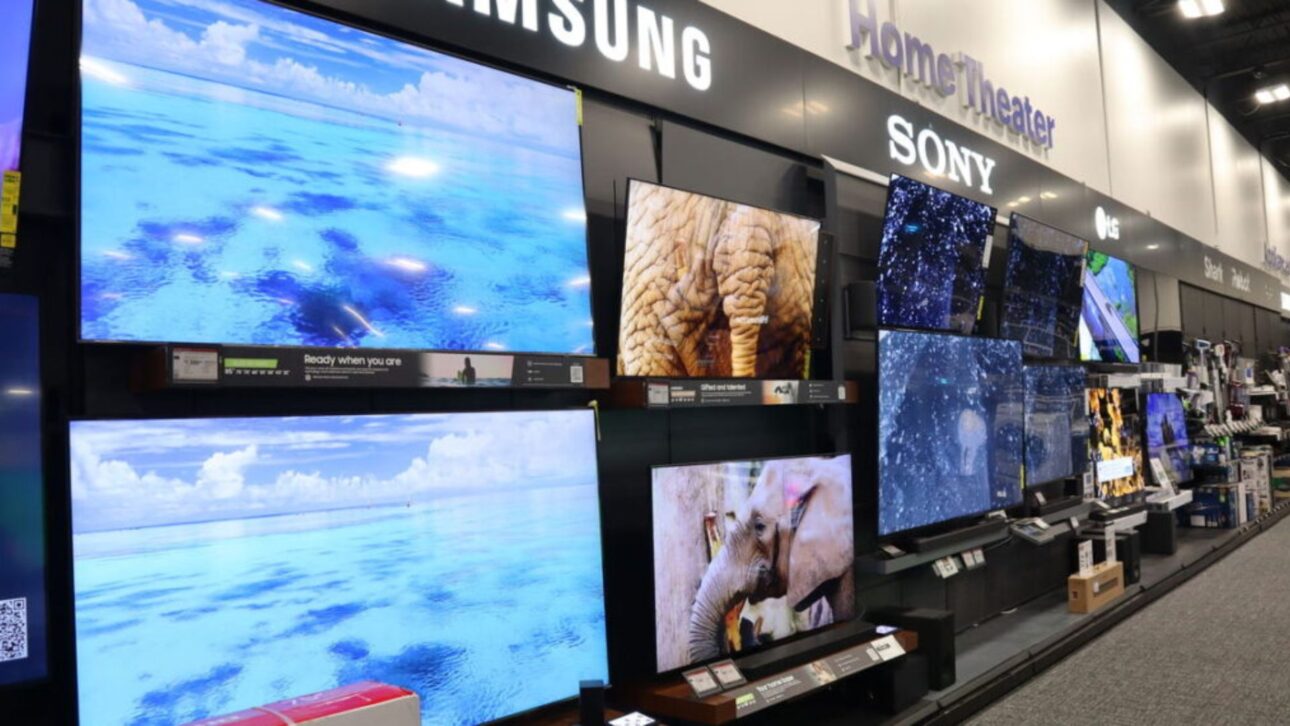
The audio is also enhanced, with immersive systems that recreate a sense of three-dimensional sound in the home environment.
Another pillar of the new television generation is personalization, provided by the artificial intelligence embedded in the devices.
Through algorithms, televisions learn and analyze user habits, suggesting content, programs, and even ads according to individual preferences.
Direct access to streaming apps, social networks, and other services occurs without the need for additional devices.
Benefits and Differentials of the New Generation of Television
The viewer’s experience is completely renewed with TV 3.0.
Among the main differentiators, ultra-definition image, HDR (High Dynamic Range) features that enhance contrast and brightness, and three-dimensional sound stand out, bringing closer the sensation of cinema.
According to manufacturers and industry associations, movie screenings, series, and sporting events become much more engaging.
Besides technical quality, TV 3.0 is also distinguished by its high level of interactivity.
Viewers can participate in live polls, access additional information during broadcasts, and even make purchases directly from the screen, in total integration with e-commerce.
Personalization reaches new heights, with content suggestions shaped according to each user’s profile.
Another significant advancement is native connectivity, which eliminates barriers between TV, the internet, and applications.
Streaming platforms, social networks, and a wide variety of apps become available in an integrated manner, without the need for cables, converters, or multiple remote controls.
Energy efficiency has also been improved: TV 3.0 devices consume less energy and offer more sustainable usage options, responding to the global demand for environmentally responsible electronics.
TV 3.0 and the Transformation of Media Consumption
With the arrival of TV 3.0, the traditional model of television consumption undergoes a radical transformation.
The Brazilian viewer gains more control over what they watch, integrating on-demand content, live broadcasts, and applications into a single device.
Navigation becomes more intuitive and faster, with AI-optimized searches that, according to recent research, can reduce the average time spent finding a program or movie by up to 40%.
The audiovisual market also undergoes profound changes.
TV stations gain unprecedented opportunities to create interactive formats, explore targeted advertising, and increase engagement with ever more connected audiences.
For advertisers, the ability to direct campaigns according to the viewer’s profile and behavior represents a leap in efficiency and results.
Main Challenges of Adopting TV 3.0 in Brazil
Despite technological advancements, the implementation of TV 3.0 still faces significant obstacles in Brazil.
One of the main hurdles is the need to update televisions, as a large part of the population still uses old devices that are incompatible with the new standard.
Replacing or adapting equipment requires investment from both families and manufacturers.
Another challenge involves the modernization of transmission networks and the training of professionals capable of creating interactive content and fully exploring the new features offered by TV 3.0.
In remote or hard-to-access regions, the expansion of high-speed internet is essential to ensure that everyone can benefit from the new generation of television.
According to the Brazilian Association of Radio and Television Broadcasters (ABERT), “the evolution to TV 3.0 will require a joint effort among government, industry, and companies in the sector to expand access and ensure that the population is prepared for the changes.”
The Future of TV 3.0 in Brazilian Homes
The trend is that TV 3.0 will become the predominant standard in Brazilian homes in the coming years, consolidating itself as the main platform for home entertainment.
According to data from the Brazilian Digital Terrestrial TV System Forum (SBTVD), the expectation is that, by 2028, most open broadcasts will already be conducted under the new standard, bringing direct benefits to millions of families.
Market studies indicate that the popularization of TV 3.0 is likely to stimulate the national production of innovative content, create jobs in the technology sector, and promote a leap in the quality of entertainment accessible to the population.







-

-

2 pessoas reagiram a isso.