





 Portuguese
  English
  Spanish
  4 min of reading
  36 comments


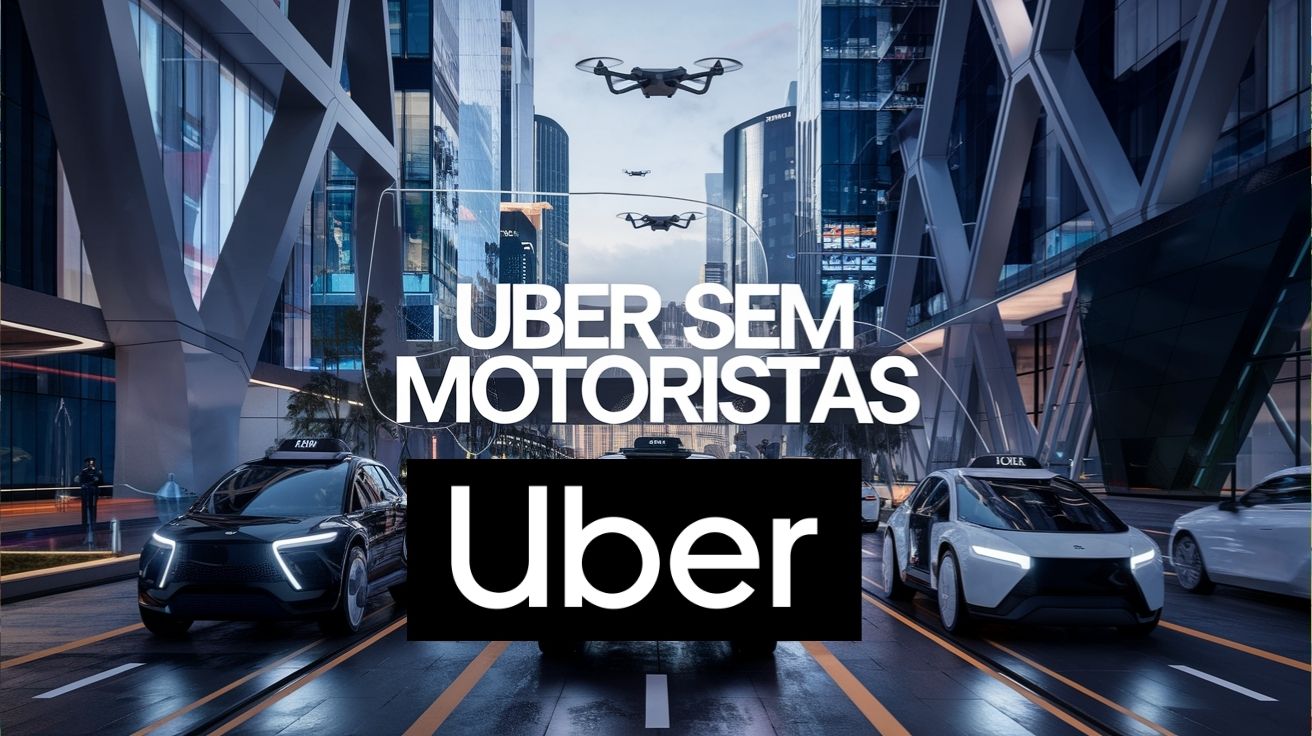


Uber CEO Announces That Ride-Hailing Drivers Have Days Numbered. According to Him, Autonomous Vehicles Will Dominate The Streets, Making The Profession Obsolete. The Revolution In Transportation Is Closer Than We Imagine, And Society Needs To Prepare For This Inevitable Transformation.
Autonomous driving emerges as one of the most promising innovations, promising to transform the way we move and redefine the future of urban transportation.
Technology and mobility companies are investing billions in the development of vehicles that eliminate human intervention, aiming for a future where artificial intelligence takes control of the streets.
Uber CEO Predicts Gradual Transition To Autonomous Vehicles
During the World Economic Forum in Davos, Switzerland, Dara Khosrowshahi, CEO of Uber, shared his vision for the future of ride-hailing drivers.
-
Expedition 501: Scientists drill into the ocean floor and discover a giant reserve of fresh water hidden beneath the sea, extracting nearly 50,000 liters and revealing an invisible system that could reshape the map of water scarcity.
-
Larger than entire cities in Brazil: BYD is building a 4.6 km² complex in Bahia with a capacity for 600,000 vehicles per year, but the discovery of 163 workers in conditions analogous to slavery has shaken the entire project.

-
Archaeologists find an intact tomb over 2,500 years old, with more than 100 preserved objects, weapons, jewelry, and human remains never touched.

-
Volcanic lava transforms into threads as fine as human hair that travel over 30 kilometers by wind and fall like cutting rain on roofs and backyards in Hawaii and Iceland.


He stated that in the next ten years, a coexistence between human drivers and autonomous vehicles is expected.
However, on a horizon of 15 to 20 years, machines may surpass humans in driving, accumulating real training hours and eliminating distractions.
Currently, over one million fatal accidents occur annually on global roads. According to Khosrowshahi:
“In the next ten years, I believe we will have hybrid networks of human drivers and machines. But if you think about 15 or 20 years, the machine will be a better driver than the man, as it will have real training hours and won’t get distracted.”
Impact On The Job Market
The replacement of drivers by autonomous systems will not occur abruptly.
Khosrowshahi emphasizes that companies and authorities need to discuss the impact of this transformation on current occupations.
He acknowledges that there are no easy answers to the issue, and it is a real problem that society needs to confront.
“The replacement of drivers by machines will happen, although it is not something that will happen tomorrow.”
Uber Expands Services To Help Drivers Transition
The Uber has diversified its operations to assist drivers during this transition.
The company started with ride-sharing services, expanded to deliveries, and introduced features for shoppers and map labelers, essential for training artificial intelligence.
Additionally, it considers offering training to help drivers with potential career changes or activities.
China And The U.S. Advance With Robotaxis
Meanwhile, countries like China and the United States are advancing in tests of “robotaxis” — driverless vehicles intended for passenger transport.
In China, companies like Baidu and Didi (owner of 99) are already conducting experiments. In the U.S., Waymo, owned by Alphabet (parent company of Google), is conducting tests in California.
“In the U.S., Waymo, from Alphabet (the company that owns Google), has been conducting experiments in California.”
Traffic Safety And Technology Challenges
Studies indicate that autonomous vehicles may offer greater traffic safety.
A study from the University of California analyzed 2,100 accidents involving autonomous cars and 35,000 with human drivers.
The results suggest that autonomous vehicles tend to adopt more effective safety precautions in most cases.
However, they are more prone to accidents during nighttime or dawn, which still presents a challenge for the technology.
The Future Of Work In Light Of Automation
The transition to autonomous vehicles also raises concerns about the future of work.
According to a model from University of Oxford, more than half of current jobs may disappear in the next twenty years due to technological advancement.
In Brazil, researchers estimate that 58.1% of formal jobs and 62% of informal jobs are at risk of extinction.
Pace Of Transformation Divides Experts
Experts disagree on the pace of this transformation.
While Khosrowshahi believes that ride-hailing drivers will lose ground in a decade, others argue that mass adoption of autonomous vehicles will face regulatory, technical, and cultural barriers.
Uber is already preparing for this future, investing in research and partnerships to develop its autonomous fleet, aiming to reduce costs and increase efficiency.
Khosrowshahi notes that the widespread use of technology will start with simpler routes and gradually expand to other areas.
Transformation Of Urban Transport
The revolution of autonomous vehicles promises to transform urban transport, bringing benefits such as greater security and efficiency.
However, it also presents significant challenges, especially regarding the impact on the job market and obstacles to large-scale adoption.
Society needs to prepare for these changes by fostering discussions and implementing policies that ensure a fair and balanced transition for all involved.




Kkkk o que vai ter de carros autônomos roubados e batidos aqui no Brasil não vai estar escrito, brasileiros não tem educação no trânsito, sem contar os bêbados matando os carros autônomos, kkkkkk quero mais é que a Uber gaste todo o seu dinheiro, dinheiro que roubou de nós, e que se fhoda.
Vai ser bem legal esses carros aqui no Brasil. O povo sujar o tapete e vomitar nos carros, quero ver se o software vai limpar e botar regras dentro do carro. Sem falar que vão levar os acessórios todos do carro. Vai ser hilário ver outra pessoa entrando num carro todo sujo e descuidado, fedendo a urina e faltando peças internas do veículo. Sem falar nas manutenções dos carros. Esses aplicativos pegam o **** passando a responsabilidade da manutenção nas costas do motorista. Quero ver dar conta por conta própria mantendo corridas baratinhas. Esperar pra ver. Kkkk.
No Brasil,kkkkk não temos s nem suporte para smartphone, tem lugares que nada funciona, n internet e nem telefone, nncarro elétrico tem suporte, imagina carro autônomo, NO BRASIL COM SORTE TALVEZ DAQUI A 50 ANOS
….