





 Portuguese
  English
  Spanish
  7 min of reading
  0 comments


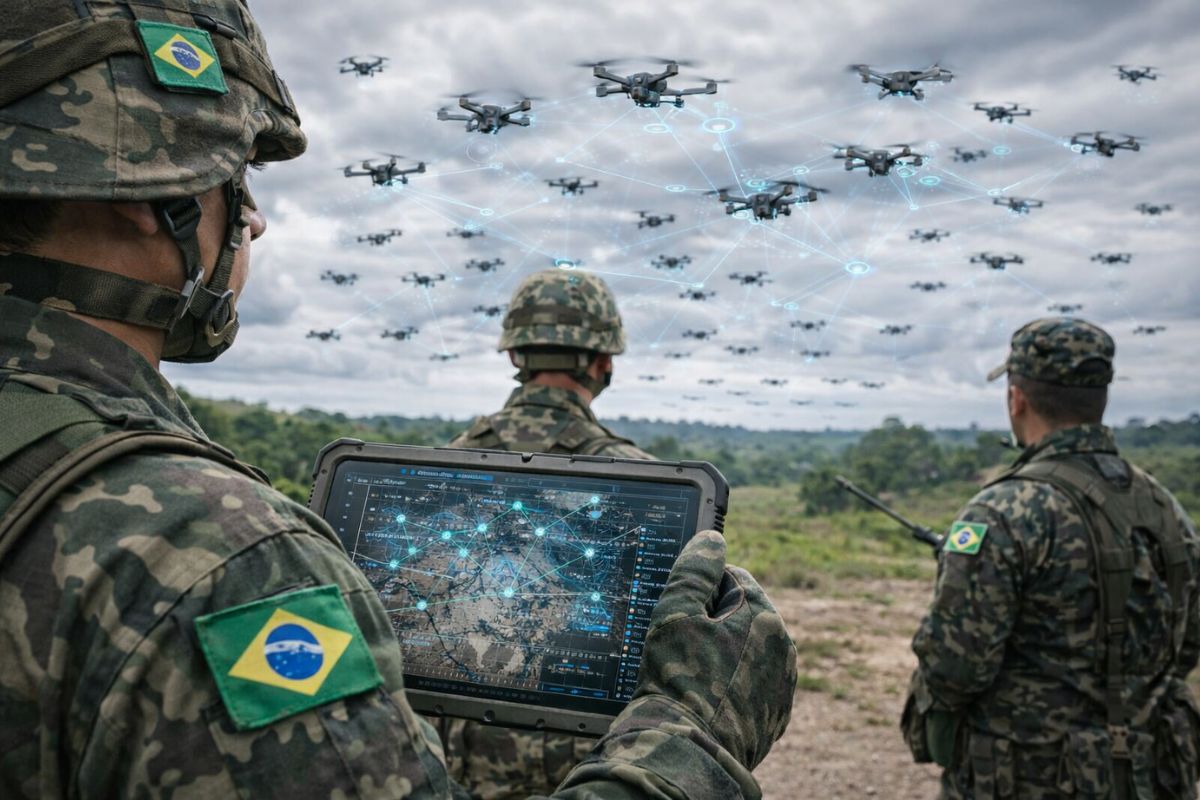
The Brazilian Army develops a swarm of autonomous drones that communicate with each other and make decisions without centralized control, using artificial intelligence in a project led by the Military Engineering Institute with universities and funding from FINEP, while Ukraine is already testing similar systems on the battlefield and hundreds of drones operate together in real combat.
The drones have ceased to be merely eyes in the sky and have become the most lethal weapon in modern conflicts. In the war between Ukraine and Russia, small drones are already responsible for a large part of the casualties on both sides. But the next step of this technology goes far beyond an operator controlling an aircraft: the concept of a swarm of drones allows dozens or hundreds of autonomous vehicles to act together, sharing data in real-time and acting without relying on a central command. The Brazilian Army is developing its own system with artificial intelligence, and the project is already in an advanced stage.
What once seemed like science fiction is now operational reality. Ukraine already has companies testing swarms in the field. Iran has used thousands of drones in coordinated attacks in the Middle East. And Brazil, through the Military Engineering Institute and the Army’s Department of Science and Technology, has entered the race with a program that combines aerial and ground autonomous drones. The technology promises to change not only how wars are fought but also how borders are monitored, disasters are responded to, and rescue operations are conducted.
Why Drones Dominate the Modern Battlefield
The transformation began gradually and accelerated in recent years. Drones that once served only for reconnaissance began to carry explosives, launch guided munitions, and neutralize armored vehicles.
-
Few people know, but the most nutritious part of wheat has been discarded for decades to produce white flour, and the “polyamine” spermidine activates cellular cleaning, reduces mortality, and may slow down memory loss.

-
NASA and China issued a joint alert because a 60-meter rock could hit the Moon, and the impact could generate a storm of debris in space that would knock out the internet, satellites, and GPS worldwide for years.

-
What the James Webb telescope found on the planet K2-18b is raising alarms in the scientific community: gases that on Earth only exist because of living organisms have been detected in the atmosphere of an oceanic world 124 light-years away from us.

-
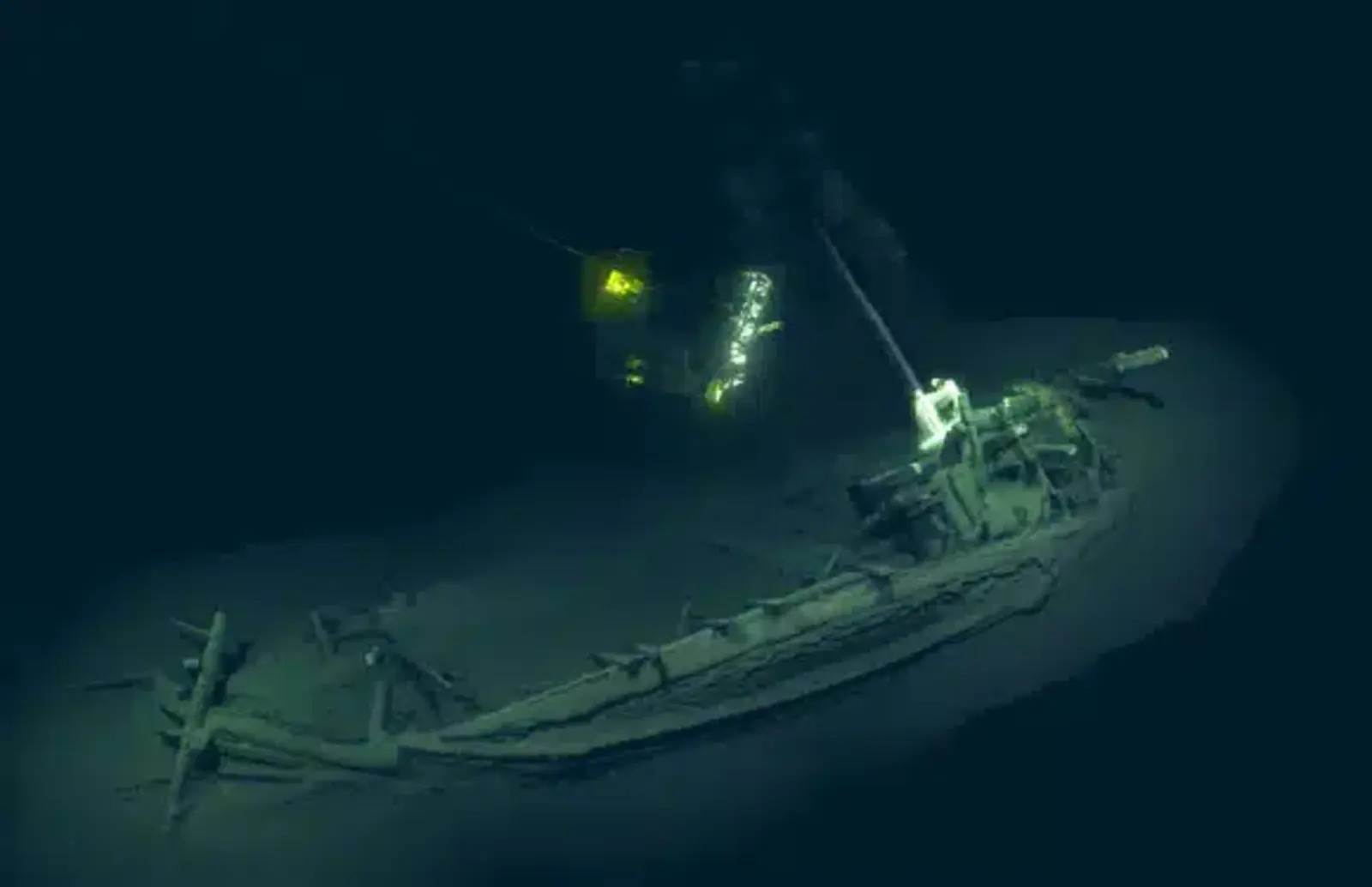
Divers found a nearly intact 23-meter Greek ship on the bottom of the Black Sea, so well preserved that it seems to have been frozen in time for 2,400 years.

In the war between Ukraine and Russia, the efficiency of small and cheap drones against expensive targets like tanks and armored vehicles has inverted the logic of military investment. A drone costing a few hundred dollars can destroy equipment worth millions.
Despite their individual efficiency, current drones require a lot of manpower. In some cases, up to six people are needed to operate a single piece of equipment: pilot, observer, maintenance technician, and support team.
This limitation creates a bottleneck: it is pointless to have thousands of drones if there are not enough people to operate them. The concept of a swarm of drones precisely addresses this problem, allowing a single operator to coordinate dozens of aircraft that communicate with each other through artificial intelligence.
Iran has also demonstrated the potential for attacks with a large volume of drones by launching thousands of them against cities, airports, and oil facilities in the Middle East.
These episodes have confirmed that the next evolution of aerial warfare is not in fifth-generation fighters, but in swarms of cheap and numerous drones that overwhelm any defense system.
What is a Swarm of Drones and How Does It Work
The concept comes directly from nature. Flocks of birds, schools of fish, and colonies of insects can move in a coordinated manner without a single leader, following simple rules of collective behavior. Applied to the military context, the swarm of drones replicates this logic: each drone follows artificial intelligence algorithms that allow for instant communication, task division, and autonomous reaction to changes in the environment.
In practice, this means that dozens or even hundreds of drones can operate together, sharing information about target positions, obstacles, and threats. If one drone is shot down, the others automatically redistribute the functions.
There is no single point of failure: taking out the operator does not disable the swarm, because the drones make decisions in a decentralized manner. This resilience is what makes the technology so attractive to armed forces around the world.
The difference between a swarm of drones and simply launching many drones at the same time is coordination. Without artificial intelligence, individually operated drones can collide, duplicate efforts, or lose targets. With swarm algorithms, each drone knows exactly what the others are doing and adjusts its behavior in real-time, maximizing the efficiency of the group as a whole.
Ukraine is Already Testing Swarms of Drones on the Battlefield
Ukraine has become the world’s leading laboratory for combat drones, and the next chapter of this evolution is swarms.
Several Ukrainian companies are already working on such projects, transforming the experience accumulated over two years of war into applied technology. The need has accelerated development: with fewer resources than Russia, Ukraine needs force multipliers, and swarms of drones fulfill exactly that role.
Among the companies is Sine Engineering, which created the Pasika system capable of coordinating drones to find and engage targets autonomously. Swarmer has already tested small swarms with reconnaissance and attack drones controlled by just one operator. And Fourth Law goes further: it uses artificial intelligence for drones to make decisions almost independently, without human intervention in the combat cycle.
In recent operations, hundreds of drones have already been observed acting simultaneously against Russian positions. Although not all are part of AI-coordinated swarms, the trend is clear.
The Economist magazine highlights that swarms with dozens or hundreds of drones could become the operational standard in the coming years an evolution that armed forces around the world are closely monitoring.
The Brazilian Army Enters the Swarm of Drones Race

Brazil is not watching from the sidelines. The Brazilian Army presented on March 5 its own drone swarm project, called EVAAT-GCN Swarm of Aerial and Ground Autonomous Vehicles.
The program is led by the Military Engineering Institute and the Army’s Department of Science and Technology, with funding from FINEP and participation from universities and research centers.


The proposal is to develop drones that operate collaboratively, sharing data in real-time and making decisions without relying on centralized control. The project has been under development for about a year and is in an advanced stage.
The next phases include the integration of virtual and augmented reality for the operator, as well as increasing the number of drones operating simultaneously.
The initiative involves the Federal University of Pernambuco, the National Institute of Pure and Applied Mathematics, and the National Laboratory of Scientific Computing.
The expectation is that the project will be completed this year and that, in the future, the systems can be produced by the national industry an important step for the Brazilian Army to not depend on foreign technology in an area that is becoming increasingly strategic.
Why Artificial Intelligence is the Heart of Drone Swarms
Without artificial intelligence, a swarm of drones is just a group of aircraft flying at the same time. What transforms a set of drones into a functional swarm are the algorithms that allow for autonomous communication, real-time learning, and decision-making without human intervention.
It is artificial intelligence that enables each drone to understand its relative position, identify targets, avoid obstacles, and redistribute functions when a member of the swarm is lost.
The technical challenge is immense. Each drone needs to process information from sensors, communicate with others, and make decisions in fractions of a second all in environments where communication signals may be blocked or interfered with.
Ukraine has already faced this problem: Russia uses intensive electronic warfare to block drone control signals. Autonomous swarms, which do not depend on external signals to operate, are the answer to this type of countermeasure.
In the Brazilian Army’s project, artificial intelligence is developed in partnership with academic centers that are references in computing and applied mathematics.
This integration between military and universities is what allows Brazil to develop cutting-edge technology without relying on imports and is also what differentiates the Brazilian program from simple acquisition of foreign equipment.
Beyond War: What Drone Swarms Can Do in Times of Peace
Although the main focus is military, the technology of drone swarms has civilian applications that can transform operations in various areas.
Border monitoring, environmental surveillance, search and rescue operations, and response to natural disasters are scenarios where dozens of autonomous drones coordinated by artificial intelligence make a real difference.
In the case of disasters like floods or landslides, swarms of drones could cover large areas in minutes, identify survivors, map risk zones, and transmit data in real-time to rescue teams.
Brazil, with its continental dimensions and extensive border areas, is one of the countries that can benefit the most from this technology. The Brazilian Army has already indicated that the EVAAT-GCN will have applications beyond the combat context.
The race for drone swarms is no longer a bet on the future; it is a developing reality.
Ukraine tests in the field, China demonstrates in exercises, and now Brazil develops its own system. The question is not whether drone swarms will change wars and civil operations, but when and who will be ready when that moment arrives.
With information from the portal Xataka.
What do you think about Brazil developing its own swarm of drones with artificial intelligence? Is it a necessary investment or a wrong priority for the country’s moment? Leave your opinion in the comments; the debate on military technology and national sovereignty needs your voice.







Seja o primeiro a reagir!