





 Portuguese
  English
  Spanish
  4 min of reading
  0 comments


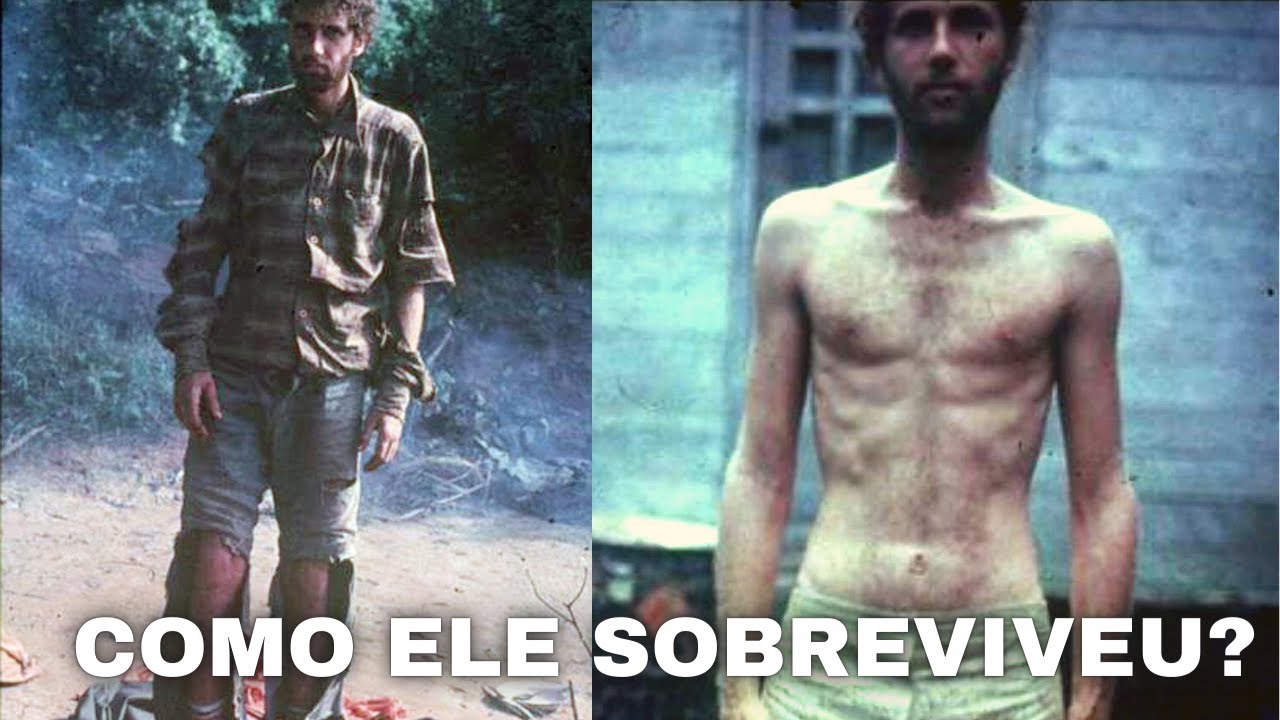
An Israeli Was Isolated for Nearly Three Weeks in the Bolivian Amazon, Facing Full Rivers, Storms, Infections, and the Limits of Human Survival.
When discussing real stories lived in extreme environments, the journey of Yossi Ghinsberg, a young Israeli who found himself lost alone in the Bolivian Amazon in 1981, ranks among the most documented and debated. Unlike scripted content or adventure festivals, the story became known precisely for the opposite: there was no preparation for such an extreme scenario, no team, no script—only the jungle, the rain, the river, and the struggle to stay alive.
Although it’s natural for the collective imagination to romanticize survivals in the jungle, Ghinsberg’s own account dismantles this myth. What he lived through was an accidental event, marked by uncertainties, fear, vulnerability, and severe environmental conditions. Decades later, his testimony was published in a book and turned into a film, allowing the case to become public in a contextualized and safe manner.
The Setting: Bolivian Amazon, 1981
The geographical context of the case helps to understand the complexity involved. The Amazon region of Bolivia, especially in the area near the Tuichi River, features dense forests, voluminous rivers, abundant fauna, and a rainfall regime capable of transforming the environment within hours.
-
He started running at 66 years old, broke records at 82, and is now a subject of study for having a metabolic age comparable to that of a 20-year-old, in a case that is intriguing scientists and inspiring the world.

-
Oldest tree on the planet reappears after 130 years of searches: Wattieza, 385 million years old, was 10 meters tall and had no leaves or seeds; Gilboa fossils in New York solved the mystery in 2007.

-
A 48-square-meter house assembled in hours with 4,000 bricks made of recycled plastic that does not absorb moisture, has natural thermal insulation, and costs less than 90,000 reais in a complete kit.

-
Luciano Hang revealed that Havan’s air fleet has already accumulated more than 20,000 landings, 10,000 flight hours, and 6 million kilometers traveled, and he says that without the planes, the company would never have grown so quickly.


Some data that help to gauge the environment:
• Intense rains can quickly raise rivers.
• Peripheric sunlight under the forest canopy is reduced.
• Biodiversity includes insects, reptiles, mammals, and countless species of tropical plants.
• Navigation in narrow rivers filled with logs is complex even for experienced locals.
This is not a tourist park or an “adventure route.” The jungle there is primarily a living and unpredictable ecosystem.
The Separation of the Group and the Beginning of Isolation
According to Ghinsberg’s own account, the trip began as an excursion among friends, but the group ended up separating after disagreements about the route and difficulties with the terrain and the river. From there, natural events, especially heavy rains and river behavior—led to complete isolation.
With the separation, Ghinsberg faced:
• prolonged tropical rains,
• constant humidity,
• dark nights under the jungle canopy,
• progressive food scarcity,
• and difficulties orienting in a biome where even compasses can have limited use due to lack of visibility and references.
It is important to highlight that this was not a survival expedition, but rather a trip that spiraled out of control, something that Yossi himself emphasizes in later interviews.
Hostile Environment, Fear, and Adaptation
Subsequent accounts describe a series of environmental challenges:
• rivers that rose rapidly with the rain,
• mud pits that made movement difficult,
• insects that caused irritations and infections,
• and the psychological impact of total isolation.
There was no manual, no satellite communication (technology inaccessible to civilian travelers in 1981), and no guarantee of rescue. The rhythm of days and nights ultimately shaped his experience: each night brought the fear of the unknown; each morning, the chance to continue.
During this period, Ghinsberg also reported infections and wounds, resulting from constant humidity and the difficulty of keeping the body clean. The focus here is not to describe procedures but to contextualize that the Amazon environment imposes intense physical and mental wear, even when no one intends to engage in risky situations.
The Rescue and the Reconstruction of the Story
The outcome was only possible because Ghinsberg’s friends did not give up on searching for him, and with the help of local residents knowledgeable about the area, organized searches for the region. After nearly three weeks, he was located alive, weakened, and showing clear signs of physical exhaustion.
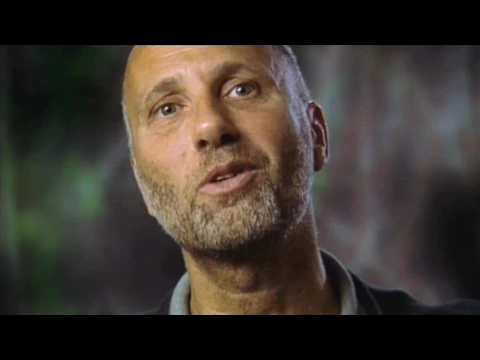
None of this would have emerged from the private sphere if Ghinsberg had not decided to write a book about the experience. Later published, it allowed researchers, journalists, and readers to access a contextualized view of the facts, without mythologizing.
Decades later, in 2017, the account became a film titled “Jungle”, bringing a cinematic adaptation of the experience. Ghinsberg himself gave interviews, lectured, and contextualized his story with a clear message: it was not a planned adventure—it was accidental survival.
The Cultural and Scientific Impact
Stories like this often spark interest for various reasons:
• they offer a window into extreme environments,
• highlight the strength of tropical ecosystems,
• show the physiological and psychological limits of human beings,
• and open debates about safety and responsibility.
Another relevant point is that the case reinforced the need for communication and safety protocols for activities in isolated regions, something that has evolved significantly since the 1980s with:
• GPS,
• satellite telephony,
• SPOT tracking,
• signaling equipment,
• and map and weather-oriented planning.
Today, experts and organizations emphasize that one should not attempt to replicate extreme experiences, as wild environments can involve real and unpredictable risks.
A Reminder About Nature and the Human Limit
More than an “adventurous feat,” Yossi Ghinsberg’s case remains a wake-up call about the power of natural environments, especially tropical biomes. It also shows how an accidental event can turn into journalistic, literary, and cinematic material, as long as it is contextualized and documented.
The Amazon is not a “movie set”—it is a complex, living ecosystem full of biological, climatic, and hydrological interactions that require respect and preparation from specialists, scientists, and local communities.









-

-

-

-

-

9 pessoas reagiram a isso.