





 Portuguese
  English
  Spanish
  5 min of reading
  0 comments


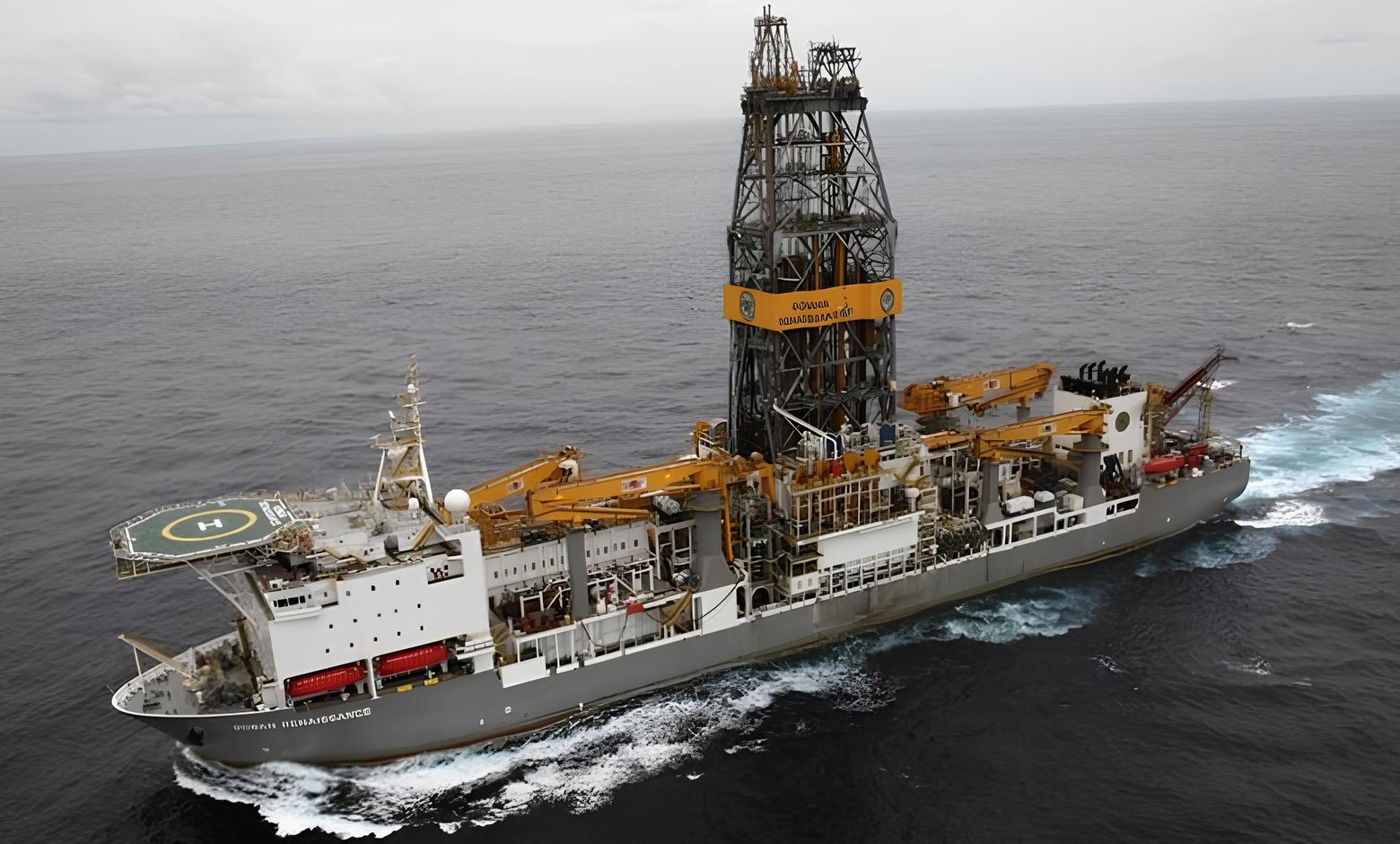
Meet the Valaris DS‑15, the 228-Meter Drillship Operating in Brazil’s Pre-Salt, Capable of Drilling Up to 12,000 Meters in Ultra-Deep Waters. A Floating Colossus Representing the Advancement of Offshore Engineering in Brazil.
Imagine a vessel the size of two football fields, floating over the Atlantic Ocean, right in the heart of the Santos Basin. At first glance, it looks like a city at sea — but it is one of the most sophisticated pieces of modern offshore engineering. We are talking about the Valaris DS-15, a 228-meter-long drillship capable of drilling in ultra-deep waters of up to 3,600 meters of water depth and reaching over 12,000 meters into the seabed. This true technological fortress is a key asset for exploring the resources of Brazil’s pre-salt, one of the world’s greatest energy treasures.
What is a Drillship?
A drillship is a floating drilling platform with its own propulsion, used to drill the seabed in search of oil and natural gas. Unlike fixed or semi-submersible platforms, it can move between fields and adjust its position with dynamic positioning systems (DPS), remaining stable even in strong currents and waves.
The Valaris DS-15, owned by the multinational Valaris, is one of the most advanced in its category. Originally commissioned by Ensco (later merged with Rowan), it began operations in 2013 and has been gaining prominence in Petrobras’s operations.
-
The rise in oil prices could ensure an extra revenue of R$ 100 billion for the Federal Government, indicates a recent economic study.

-
Naturgy begins an investment of R$ 1.6 million to expand the gas network in Niterói and benefit thousands of new residences and businesses.

-
A major turn in the Justice system suspends tax increases and directly impacts oil and gas companies in Brazil by affecting costs, contracts, and financial planning, leaving uncertain what could happen to the sector if these costs had increased.

-
Brava Energia begins drilling in Papa-Terra and Atlanta and could change the game by reducing costs in oil while increasing production and strengthening competitiveness in the offshore market.
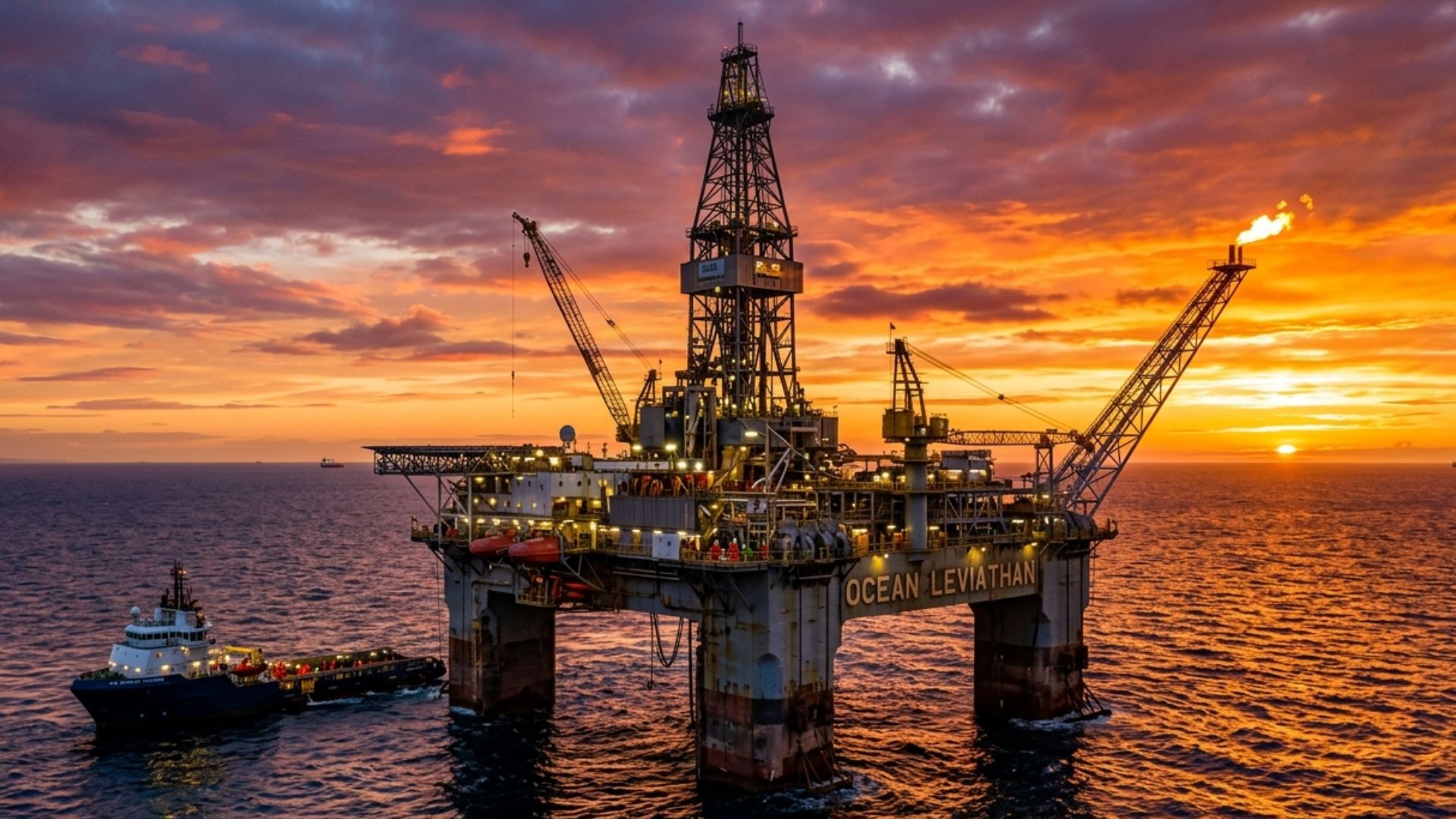

Valaris DS‑15: The Technical Profile of an Elite Drillship
With a length of 228 meters, a width of 42 meters, and capacity for over 200 crew members, the Valaris DS-15 is equipped with the latest technology for operations in ultra-deep waters. Its dual derrick system allows simultaneous drilling and casing operations, speeding up the well construction process.


But the standout feature is the depth:
- Total Vertical Drilling Capacity: Up to 12,192 Meters (~40,000 Feet)
- Maximum Water Depth: 3,658 Meters (~12,000 Feet)
For comparative purposes: this means drilling to a depth greater than the deepest point in the Atlantic Ocean.
Additionally, the vessel has:
- State-of-the-art BOP (Blowout Preventer) system with 6 safety lines.
- Drilling Riser over 6,000 meters.
- Air-conditioned cabins, a medical area, a helipad, and a self-sufficient structure for weeks of continuous operation at sea.
The Role of DS-15 in Brazil’s Pre-Salt
Since its arrival in Brazil, the Valaris DS-15 has been deployed to strategic areas of the pre-salt, such as the Mero Fields, Búzios, Sépia, and Tupi — true crown jewels of Petrobras. The pre-salt is an oil province beneath a thick layer of salt, located over 5 km below sea level, and requires extreme technology to be accessed.
The high pressure, high temperatures, and corrosive salt make the pre-salt one of the most challenging environments on the planet. Only sixth or seventh-generation drillships like the DS-15 can operate safely and efficiently in these conditions.
The vessel has been used for both exploratory drilling and production wells, which are later connected to FPSOs (floating production storage and offloading units).
A Millimeter-Precision Operation
Operating the Valaris DS‑15 requires an orchestra of highly qualified professionals. The central control room of the vessel monitors hundreds of variables in real-time — from drilling fluid pressure to the position of the riser relative to sea currents.
The stability of the vessel, even in 6-meter waves and winds exceeding 70 km/h, is guaranteed by a sophisticated system of computerized azimuth thrusters. This allows the vessel to remain fixed over the drilling point with a margin of error of less than 1 meter — even in open sea.
During drilling, embedded sensors continuously analyze the return of fluid, the penetration rate, and the composition of the rocks traversed. With each meter drilled, the drillship generates seismic, geological, and operational data crucial for decision-making on whether to continue.
Safety, Environment, and Autonomy
Petrobras and Valaris follow strict environmental protocols. The DS‑15 has an atmospheric emissions control system, waste treatment, recycling, and energy generators with lower environmental impact.
Moreover, the emergency response teams conduct continuous training on evacuation, fire, leakage, and BOP system failures — which, as is known, serve as the last safety barrier against a blowout (uncontrolled gas and oil explosion).
The vessel can operate for over 60 days without the need to return to the mainland, with logistics managed via helicopters and supply ships. All food, water treatment, energy, and communication are generated on board.
Billion-Dollar Investment to Produce Oil at 7,000 Meters Depth
The use of vessels like the DS-15 requires a heavy investment: a single well in the pre-salt can cost up to US$ 100 million. The daily operating cost of the Valaris DS‑15 is around US$ 400,000, including crew, supplies, maintenance, and logistics.
Despite this, Petrobras considers the investment strategic. The pre-salt currently represents over 75% of Brazil’s total oil production, with increasing efficiency and low cost per barrel.
Vessels like the DS-15 make it possible to reach reservoirs with pressures of over 10,000 psi and temperatures exceeding 130 °C — conditions that would have been impossible 20 years ago.
The Future of DS‑15 and the Giants of the Seafloor
With the advance of exploration in areas such as Sagittarius Fields, Itapu, and Búzios 9, Brazil will continue to be one of the major markets for ultra-deep drillships. The DS‑15, with its active contract with Petrobras, is expected to operate for years in Brazilian waters.
Furthermore, the trend is for drillships like it to integrate advanced digital systems, with embedded artificial intelligence, predictive failure forecasting, and even partial automation of drilling processes.
The Valaris DS‑15 is not just a gigantic ship, but a symbol of how Brazil has mastered one of the most complex technologies in the global industry: drilling in ultra-deep waters. It represents the link between the seafloor and the surface, between billions of barrels of oil and the country’s energy security.
With it, the pre-salt ceases to be a technical challenge and becomes an economic reality. And Brazil, which once depended on imports, now positions itself among the world’s largest oil exporters, thanks to equipment like this floating giant of steel and technology.






Seja o primeiro a reagir!