





 Portuguese
  English
  Spanish
  6 min of reading
  3 comments


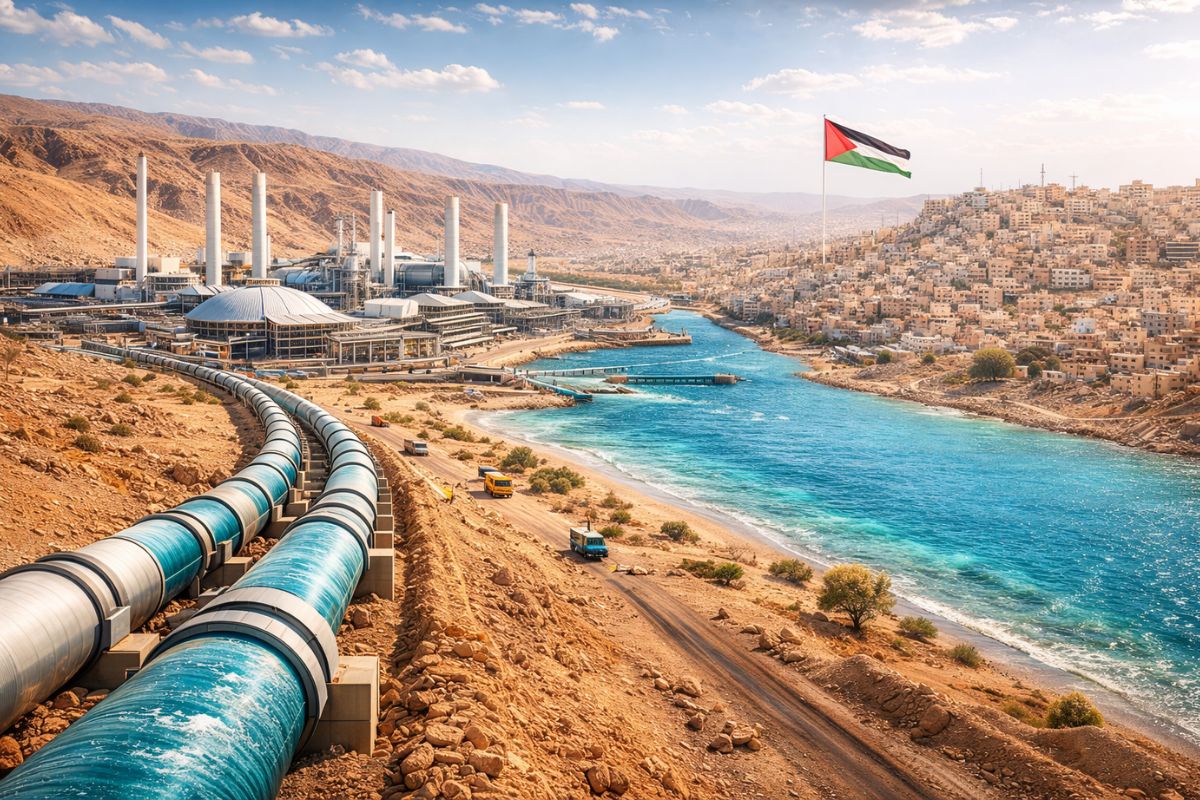


With Support from France, Jordan Launches Desalination Project of Up to US$ 6 Billion, Builds 450 km Aqueduct between Aqaba and Amman, and Plans to Ensure Stable Drinking Water for More than 3 Million People in One of the Planet’s Most Critical Water Scenarios.
Jordan is among the countries with the highest water scarcity in the world and, in recent decades, has lived under a permanent regime of rationing and uncertainty. Now, the country has decided to heavily invest in an unprecedented scale desalination project to try to change this scenario, combining a seawater plant in Aqaba, a 450 km aqueduct, and an energy and pumping infrastructure package that should change the national water map.
A consortium led by the French companies Meridiam and Suez, with participation from Vinci Construction and the Egyptian Orascom Construction, signed a 30-year contract with the Jordanian government to design, build, finance, operate, and then transfer the infrastructure. The plan is to put into operation, by 2029, the second largest desalination plant in the world and a system capable of delivering up to 40 percent of the drinking water consumed in Jordan, in a package estimated between 5 and 6 billion dollars.
Jordan Bets on Desalination to Escape Water Limit
The starting point is simple and harsh: Jordan consumes about 1 billion cubic meters of water per year, but each inhabitant has, on average, only 90 cubic meters annually, an extremely low figure by international standards. In many regions, water is still rationed, reaching homes only a few days a week.
-
Created by George Lucas with over $1 billion, a futuristic museum in the shape of a spaceship with 1,500 curved panels is about to open in Los Angeles and will house one of the largest private collections of narrative art in the world.

-
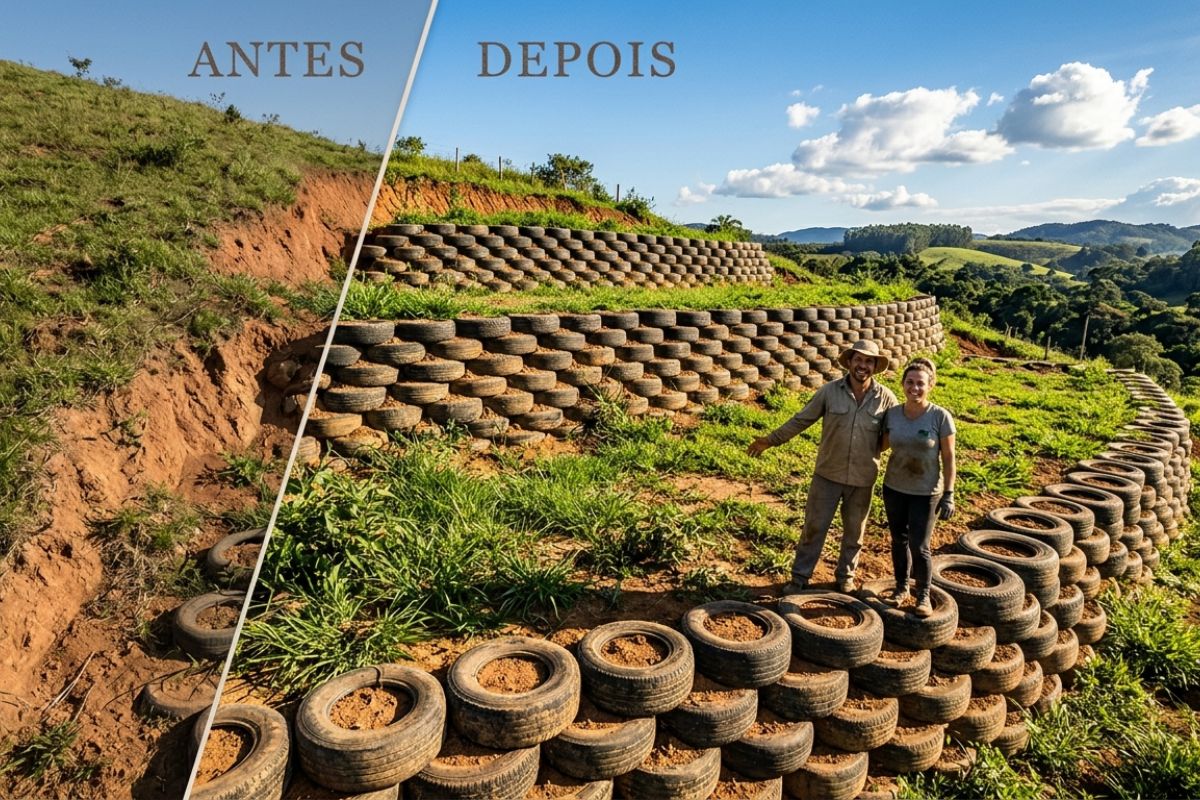
Couple shows how they built a retaining wall on their property using 400 old tires: sloped land turned into plateaus, tires are aligned, filled, and compacted with layers of soil, with grass helping in support and at almost zero cost.
-
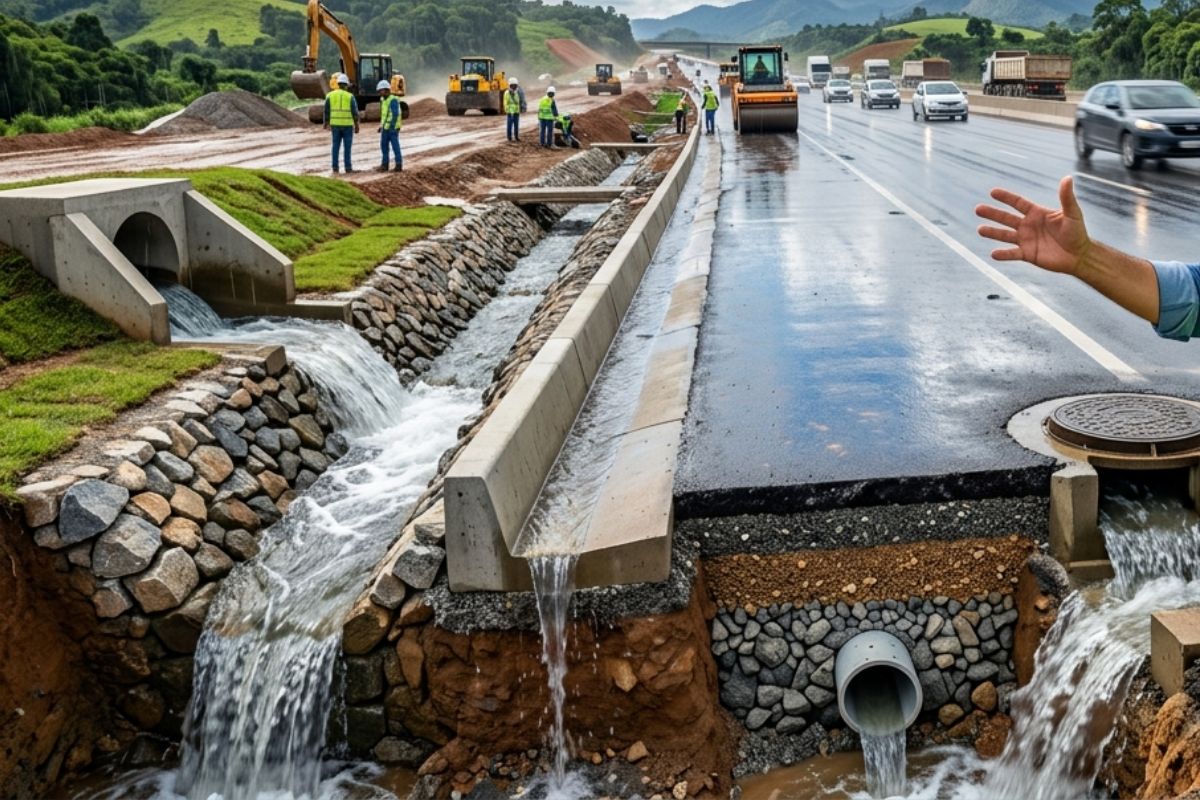
Engineer explains drainage during the rainy season: the difference between surface water and deep water, ditches, gutters, and water outlets on the road, as well as drains and drainage mattresses, to prevent erosion, aquaplaning, and flooding at the construction site today.
-
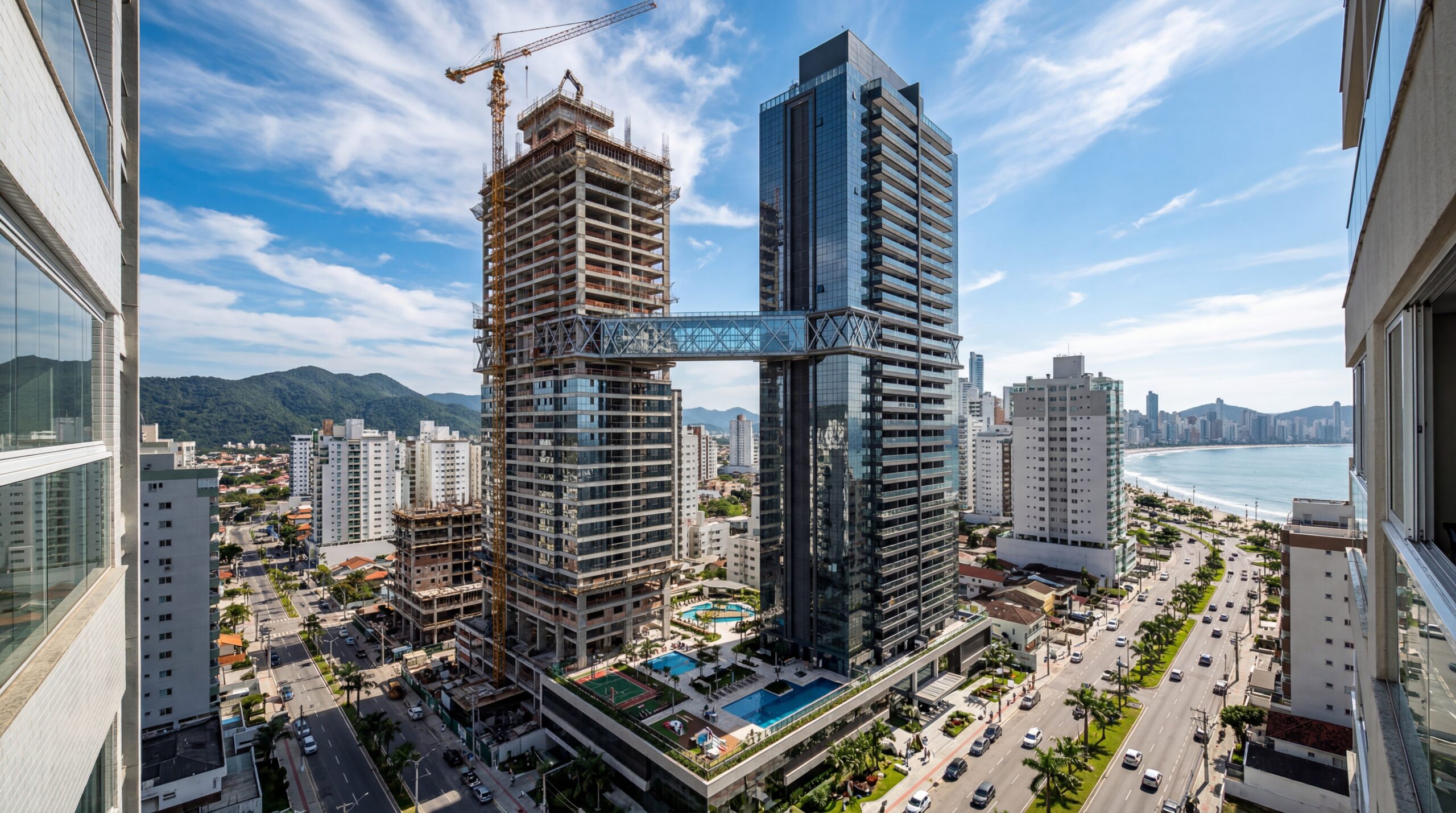
With 55 floors, 177 meters in height, a 15-meter walkway between the twin towers, ventilated facade, and 6,300 m² of leisure space, Ápice Towers already has one tower completed and another nearly at the top.

It is in this context that the Aqaba Amman Water Desalination and Distribution Project is born, considered the largest infrastructure project ever undertaken in the country.
For the Jordanian Ministry of Water and Irrigation, the initiative is classified as a national priority, precisely because it offers a long-term solution to a problem that threatens the daily lives of 11 million people and the economic stability of the Hashemite Kingdom itself.
According to Suez and Meridiam, when desalination is fully operational, the system could meet up to 40 percent of Jordan’s drinking water demand, ensuring a more reliable source for more than 3 million people and reducing pressure on already over-exploited aquifers.
How the Desalination Plant in Aqaba Works

At the port of Aqaba, on the shores of the Red Sea, the plant that sustains the entire project will be built. The facility will employ reverse osmosis desalination technology, a process in which seawater is forced through membranes that retain salts and impurities, delivering drinking water at the outlet.
The estimated capacity of the plant is 851,000 cubic meters of drinking water per day, a volume sufficient to supply large urban centers and relieve rationing in currently more critical areas.
To avoid severe impacts on the marine ecosystem, the desalination plant will have a deep water intake, reducing the entry of coral larvae, and a high-speed brine discharge system, designed to return salinity levels to normal within 20 to 50 meters from the outlet.
In practice, desalination in Aqaba transforms Jordan’s geographic position into a strategic advantage, allowing the country to convert water from the Red Sea into internal water security, with direct control over production.
450 km Aqueduct and Five Pumping Stations to Amman
Producing water is only half of the challenge. The other half is transporting this desalinated water from Aqaba to Amman, the capital located over 1,000 meters above sea level and hundreds of kilometers away.
To this end, the project includes an aqueduct of approximately 450 kilometers, which will run from the port eastward to the Disi aquifer, near the border with Saudi Arabia, and then follow the corridor already occupied by an existing aqueduct northward to Amman.
Along the route, five high-capacity pumping stations will be installed to overcome the elevation difference between sea level and the mountainous region where the capital is located, ensuring sufficient pressure and flow to integrate the desalinated water into the national network.
Additionally, the reservoirs of Abu Alandra and Al Muntazah will be expanded to absorb the increased supply and stabilize distribution.
With the operation of the Aqaba Amman aqueduct, Jordan hopes to gradually reduce the extraction of water from the Disi aquifer, an underground source that has been intensely used since 2013 and is now seen as a strategic resource that cannot be depleted.
Desalination, in this context, acts as a form of water insurance that allows for the preservation of underground reserves for the future.
Solar Energy to Reduce the Cost of Desalination
Desalinating seawater is an energy-intensive process. To reduce operational costs and associated emissions, the consortium itself will be responsible for building a new solar power plant dedicated to the project, in the Al Quweira region.
The photovoltaic plant will have a capacity of about 281 megawatts and is expected to supply around 28 percent of the energy needed to operate the desalination plant and the pumping system.
The energy will be transported by a transmission line of approximately 60 kilometers, also the responsibility of Vinci and Orascom, the main ones responsible for the engineering, procurement, and construction of the set.
With this, desalination in Jordan will be partially powered by solar energy, which reduces dependence on fossil fuels, helps stabilize costs over the 30-year concession period, and aligns directly with global climate goals.
Who Funds the Mega Desalination Project in Jordan
As reported by the portal ENR, the project’s model follows the DBFT logic, an acronym for design, build, finance, operate, maintain, and transfer. In other words, the consortium takes on the risk of construction and operation for 30 years, and at the end, the asset is transferred to the Jordanian State.
The total budget is estimated between 5 and 6 billion dollars, with 15 percent of that amount coming in the form of private capital contributed by the consortium led by Meridiam and Suez.
The remainder will be financed by a package of multilateral institutions and international funds, including the Green Climate Fund, the European Bank for Reconstruction and Development, the Asian Infrastructure Investment Bank, the International Finance Corporation, and donations and loans from various countries.
Financial closure is expected in early 2026, a crucial stage that consolidates long-term commitments and allows for expedited construction. Only then will desalination in Aqaba and the 450 km aqueduct be able to advance at full pace to meet the goal of operating by 2029.
What Desalination Changes for the Future of Jordan
For Meridiam’s founder and CEO, Thierry Déau, the project is described as essential, transformative, and historic for Jordan.
In practice, the success of desalination in Aqaba and the conveyance to Amman can redefine the country’s water security level, reducing rationing in various cities and providing a more solid foundation for economic and urban growth in the coming decades.
The combination of large-scale desalination, use of solar energy, and reconfiguration of groundwater flows also makes the project a case study for other arid countries facing similar dilemmas between growing demand, climate change, and aquifer overload.
At the same time, the work raises debates about cost, dependence on energy-intensive technology, and the need for efficient water use policies so that the new supply is not quickly wasted.
In a scenario where more regions of the world approach the limits of water availability, Jordan’s experience with desalination may serve both as a model for solutions and as a warning about the cost of delaying structural decisions for decades.
Knowing that this mega desalination project will consume billions of dollars to ensure long-term water supply, do you think other water-scarce countries should follow the same path or focus first on saving and better reusing the water they already have?








El proyecto se lo tenían que haber dado a Israel, es el más avanzado en el mundo en esta materia, y la reutilización de esta en zonas verdes que falta hace.
Reciclar cada gota en invernaderos de última generación solar, y en poder cambiar poco a poco las zonas más húmedas en bosque o al menos poner arbolitos que resistan el calor exuberante de esta región, y poco a poco introducir especies de ****ño, que también será positivo para el medio ambiente y regeneración.
Corregir en el título: dice 6 millones, debe decir 6 MIL millones.
por favor, falta la palabra mil en el titulo, el coste seran hasta 6 mil milliones – y faltan tambien tres ceros en el caudal producido: 850 000 m3 al dia