





 Portuguese
  English
  Spanish
  8 min of reading
  3 comments


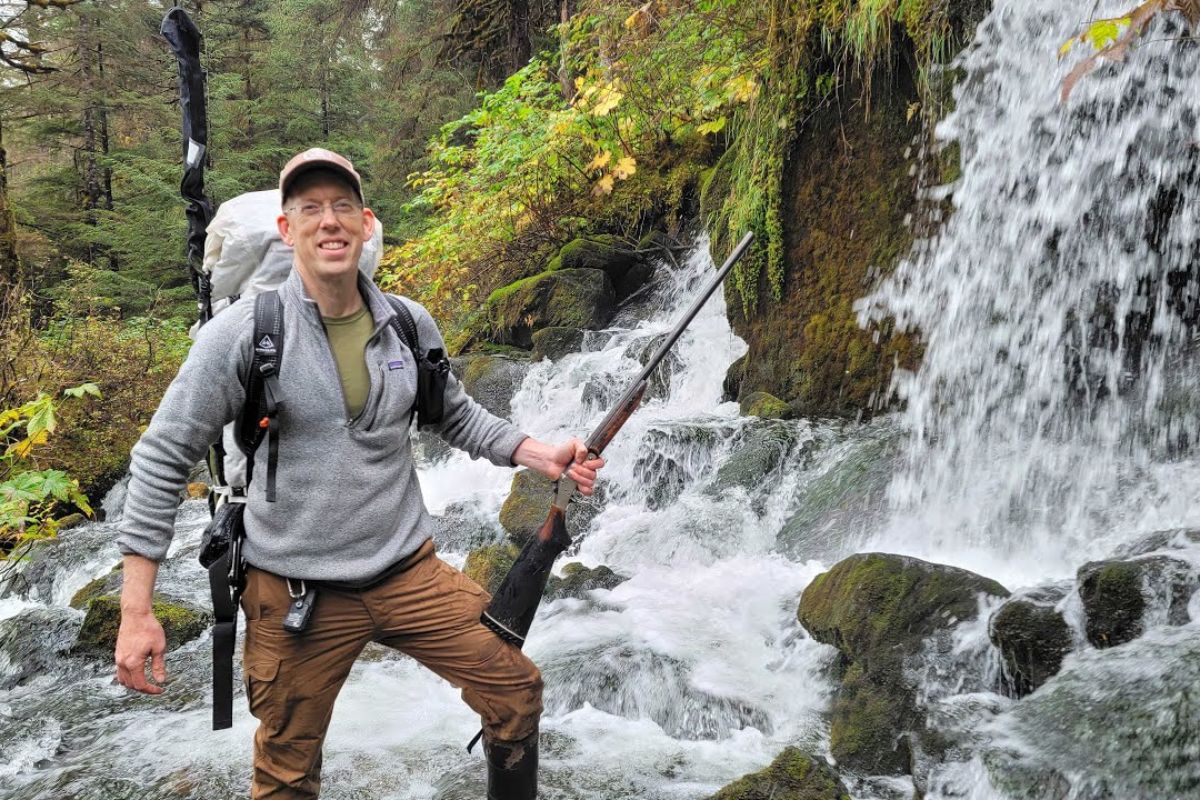

Isolated In The Alaskan Forest, Luke From Outdoor Boys Camps For Three Days In The Humid Temperate Forests Of Southeast, 72 Km Northeast Of Catch Can, While The Plane Does Not Appear. In Rain For Over 270 Days A Year, He Sets Up A Tent, Seeks Heat In Hot Springs, And Improvises Food
The isolation in the Alaskan forest began to become routine when Luke, from the YouTube channel Outdoor Boys, realized that the plane that was supposed to pick him up that morning simply did not arrive. He was in the wilderness of southeast Alaska, in a humid temperate forest area described as a “cold jungle,” covered in moss, with recurring rain and constant cold.
About 72 kilometers northeast of Catch Can, he traveled alone through lakes, soaked woods, and old structures in the area, trying to balance shelter, fire, water, food, and safety. Not knowing how he would get home, he started to rely on what he found along the way, on improvised logistics, and on intermittent messages about a rescue delayed by time.
Rain Almost Every Day And A Territory That Does Not Forgive Distractions

The scene is presented as one of the hallmarks of southeast Alaska: it rains more than 270 days a year.
-
He started running at 66 years old, broke records at 82, and is now a subject of study for having a metabolic age comparable to that of a 20-year-old, in a case that is intriguing scientists and inspiring the world.

-
Oldest tree on the planet reappears after 130 years of searches: Wattieza, 385 million years old, was 10 meters tall and had no leaves or seeds; Gilboa fossils in New York solved the mystery in 2007.
-
A 48-square-meter house assembled in hours with 4,000 bricks made of recycled plastic that does not absorb moisture, has natural thermal insulation, and costs less than 90,000 reais in a complete kit.

-
Luciano Hang revealed that Havan’s air fleet has already accumulated more than 20,000 landings, 10,000 flight hours, and 6 million kilometers traveled, and he says that without the planes, the company would never have grown so quickly.

Humidity appears as the main enemy of comfort and safety because it soaks clothes, branches, moss, and grass, makes it hard to start a fire, and causes the cold to “stick” to the body.
Even with the rain, Luke described the place as stunning: giant trunks, everything covered in moss, a large and beautiful lake, but also confusing navigation that landed him on the wrong side of the lake.
Along the way, he found an old structure, resembling a tram, with rotting wood and some metal parts still visible, as well as canoes left by the National Forest Service for public use, as long as they are well cared for and returned to their original location.
Shelter From 1937 Becomes Temporary Base In The Midst Of Isolation

Without a guarantee of a quick rescue, the shelter became the first strategic decision.
Luke found a cabin described as built in 1937, made only with logs and cedar shingles, featuring an upper shelf for sleeping or storing items, large sturdy benches, and even a bit of wood stored away.
The choice did not eliminate the cold but reduced direct exposure.
Saturated and cold, he set up the tent and began to organize a routine to survive in an environment that does not allow clothes to dry easily, not even when hung out.
Remote Hot Springs As A Lifeline Against The Cold

The most decisive resource appeared when he found a “volcanic hot ring,” with steam rising from the water.
Luke improvised to dam and fill an area with hot water, describing spots with cold water, boiling water, and an inlet of hot water that could be mixed to adjust the temperature.
There was also a hose bringing hot water downhill, and he tried to understand why it wasn’t working.
The logic was simple: heat is survival. He used the hot waters to recover his body and endure wet clothes, reporting the sensation of going out without towels, putting everything back on, and letting it dry slowly, but with his body warmed.
In one of the dips, he described the discomfort of fine-tuning: half of his body “boiling,” half freezing, until finding an ideal point with the right mixture, including hot water from the “waterfall” blending with the bath.
Quick Food, Constant Hunger, And Improvisation In The Pan And Aluminum Foil
Hunger appears as the thread of isolation.
On the first day, he heated pre-cooked bratwurst using a simple method: a bit of water in the skillet, boiling, letting it evaporate, and using the steam to heat the insides.
It wasn’t sophisticated, but it was hot and quick, exactly what he said he needed at that moment.
He also prepared bread dough with wheat flour and water to ferment overnight, planning fresh bread in the morning.
For breakfast, he improvised a dish of clear calories: fresh bread fried in a skillet with butter and honey, accompanied by pork gel bacon, describing the taste as one of the best things about camping.
Later, he set up a dinner in aluminum foil with salt, pepper, pork gel, bacon, green onions, and plenty of cilantro, mentioning that at home, he would use Italian sausage or kielbasa instead of bratwurst.
To top it off, he roasted marshmallows, had hot chocolate, and even mentioned a lemon cake as a possible dessert in the cold.
Hunting, Fishing, And The Frustration Of Depending On The Lake
Luke was armed and made it clear he brought varied ammunition, with lead bullets for bears and shot for birds, highlighting the versatility of the shotgun.
Even so, hunting did not become an immediate solution: he saw ducks on the lake, tried to get close, woke up early to try another approach, used calls, and described that mallards have their own “language,” with different types of sound.
When a duck responded to the call and approached, he identified that it was not a mallard, but a diving duck, and decided not to shoot considering the taste would be worse.
After that, he spent about three hours paddling and searching without firing, tired and hungry.
Fishing was also an attempt and uncertainty.
He said there were rumors of brook trout in the lake, rigged a rod with a small fly, a “black leech with a golden bead,” and explained that many lakes in Alaska have leeches and that trout like them.
Still, fishing did not take off, the rain increased, and he returned saturated to the bones.
Fire Against Humidity: Drying Wood Becomes A Survival Task
With the rain letting up at times, he took the opportunity to look for firewood and bring it to the shelter to try to dry it.
The difficulty was direct: the wood was almost dry inside, but very wet outside, requiring heat to catch fire properly.
He described the central problem of southeast Alaska: soaked twigs, moss, and grass.
To workaround, he cut dry wood pieces found in the shelter and protected them to use as kindling.
He also mentioned charcoal as a great starter, but soaked, so he improvised to dry it, in addition to using the stove to dry other pieces.
Even when he managed to light it, the fire did not “spread strongly” because there was too much humidity in the air.
He piled wet wood on top to dry and at the same time created a kind of roof in case it rained again, protecting the flame.
The crackling of the fire became a sign of relief, even helping to dry his pants.
Water, Gravity Filter, And The Challenge Of Sediments
Water was abundant, but cleaning required method. Luke explained that if the filtered water has too many sediments, the filter clogs quickly.
To reduce this, he used the filter’s transport case as an initial screening, trapping sand, twigs, and other particles.
The process was gravity-based: hang dirty water, let it flow down the hose, and fill the bottle.
In an environment where everything is wet, clean water is routine, not luxury, and the filter became continuity equipment to maintain energy and avoid risks.
Rats In The Camp And The Invisible Risk Of The Night
When it finally seemed like he would have a dry and warm night, “visitors” showed up.
Luke reported rats around the tent, driving them away and warning about the damage they can cause: gnawing holes in the sleeping bag, pulling hair, chewing jackets, and invading food, ruining the little that remains.
He even noticed differences between the animals, spotting one that was more “chubby,” and decided to clean everything up and remove items from the floor to avoid facilitating access.
The problem was not just an annoyance: it was loss of equipment and food, two things that weigh heavily when the exit depends on time.
Rescue Delayed By The Weather And Messages That Change The Mood Of The Day
After days of rain, cold, and improvisation, came the decisive information: a message from the pilot informing that they were trapped in the “oil collection reservoir” due to the weather and that they could not pick him up.
The pilot promised to return in two hours, and Luke summarized the local pattern: you have to adapt to the weather because the weather does not bend to anyone.
With the delay, he needed to economize.
He said he had no fuel left to cook and that the remaining food was little, so he made a very simple lunch.
To keep warm without getting soaked even more, he exercised under a tarp, waiting for changes in the weather and new messages.
The rain alternated between a lull and a return.
He walked along the beach to warm up, saw a seal, and later received another update: the pilot was still trapped in the fog, and he would not be rescued anytime soon, maybe in hours, maybe in another day or two.
The Sound Of The Plane And The Exit By The Most Improvised Route Possible
After about five hours, a final message indicated an attempt to depart. Then, he heard a plane and spotted the aircraft, marking the end of the isolated period.
The rescue did not end at the airport: he said he was dropped off at a dock, outside the airport, and from there he needed to go to catch a flight to Anchorage.
As he put on dry clothes and reunited with his family, the change is immediate: from the damp shelter to the warmth of home.
The whole sequence becomes a portrait of what it is like to wait for rescue in unstable weather, with hunger always lurking, the humidity sabotaging fire and clothing, and the hot springs functioning as the difference between trembling and recovering the body.
In your opinion, being isolated in the Alaskan forest is more dangerous because of the weather that prevents rescue or because of the small problems that turn into disasters, like a fire that won’t catch and rats attacking food?








Ketchikan Alaska- Not Catch can . His protection for a bear is laughable as is the story on a whole.
Shitty ai written article
Muito difícil sobreviver ao local como essa…